
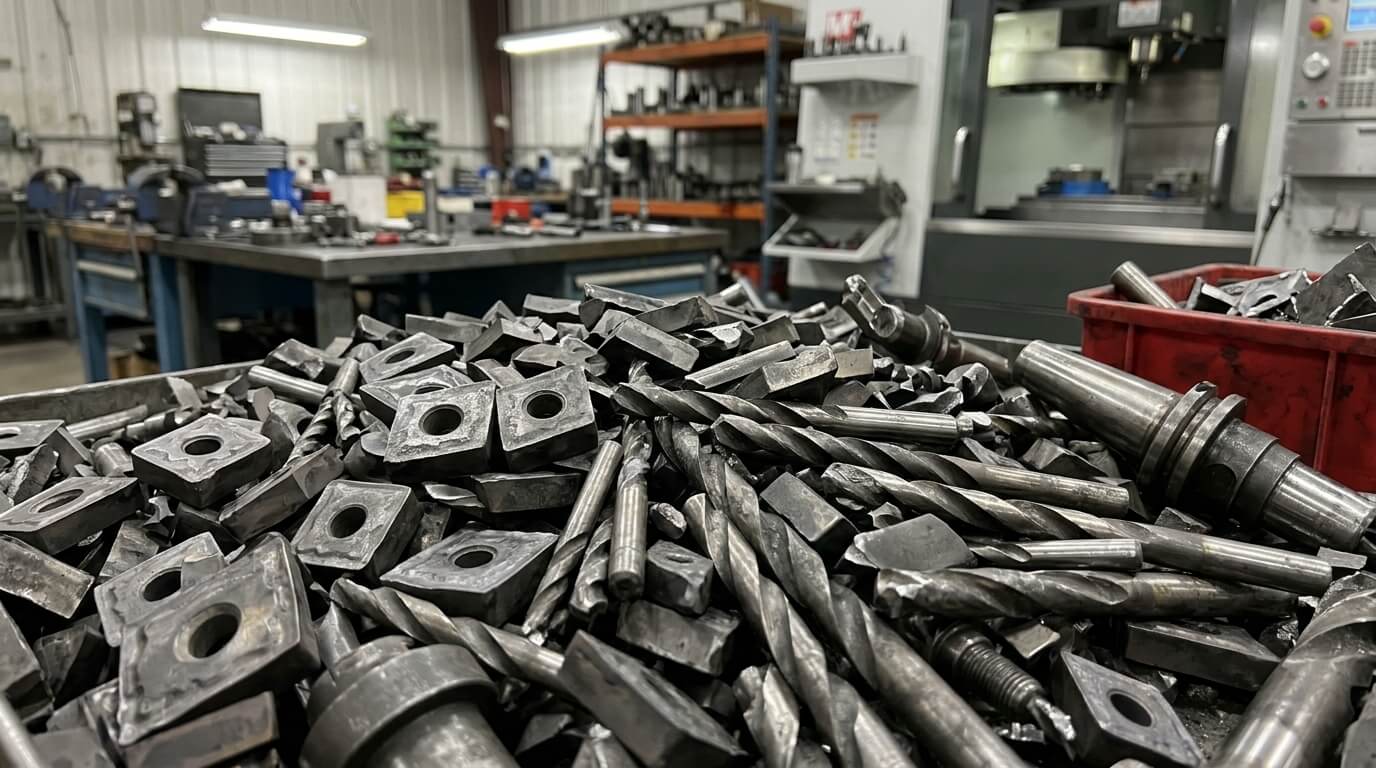
Confusion around carbide scrap prices is common because pricing varies widely based on purity, form, and market demand. Many sellers assume carbide tools are just industrial waste, but tungsten carbide is actually one of the highest-value metal scraps in recycling markets. The challenge is knowing what qualifies as carbide scrap, how it is evaluated, and where to sell it for the best return.
In this guide, you’ll learn how tungsten carbide scrap price is determined, what affects valuation, and how to correctly sort and sell carbide tools and inserts. Whether you are dealing with worn-out drills, end mills, inserts, or industrial cutting tools, this breakdown will help you convert scrap into consistent profit while avoiding undervaluation by buyers.
What Carbide Scrap Really Is and Why It Has High Value
Carbide scrap comes primarily from tungsten carbide-based industrial tools used in machining, drilling, mining, and metal cutting applications. These tools include inserts, end mills, drill tips, and wear-resistant components designed to withstand extreme heat and abrasion.
The reason carbide holds high scrap value is its composition. Tungsten carbide typically contains a very high percentage of tungsten, combined with a cobalt binder that improves strength and durability. Unlike ordinary steel, this material is difficult to mine and refine, which makes recycled carbide an important source of tungsten supply for global industries.
Because of this structure, carbide scrap is not treated as generic metal waste. It is considered a strategic industrial material with direct demand from recycling processors who recover tungsten powder for reuse in manufacturing.
Why Carbide Scrap Prices Are Higher Than Steel Scrap
The main reason carbide scrap commands premium pricing is its material composition.
Steel scrap is primarily iron, which is abundant and inexpensive. Carbide scrap, however, contains tungsten, cobalt, and sometimes nickel binders.
Key reasons for higher value:
- Tungsten content: Directly tied to global commodity pricing
- Industrial demand: High demand in tooling and machining sectors
- Refining recovery: Carbide can be recycled into powder form
- Scarcity: Limited tungsten mining sources globally
Carbide Scrap Prices (Market Rates Overview)
Carbide scrap pricing fluctuates based on purity, form, and contamination level. Below is a general industry reference:
Typical Carbide Scrap Price Range
| Scrap Type | Condition | Estimated Price (USD/kg) |
|---|---|---|
| Clean carbide inserts | No contamination | $25 – $40/kg |
| Mixed carbide tools | Light steel contamination | $18 – $30/kg |
| Drill bits & end mills | Used industrial grade | $15 – $28/kg |
| Powdered carbide scrap | Recovered material | $20 – $35/kg |
| Contaminated carbide | High steel bonding | $8 – $18/kg |
How Sorting and Preparation Directly Increase Value
One of the most overlooked aspects of selling carbide scrap is preparation quality. Sellers who properly separate carbide from steel components consistently receive higher payouts because buyers can process the material more efficiently.
The most valuable material is clean carbide with no attachments. Once steel shanks, holders, or brazed components are removed, the purity level increases immediately. Even visual cleanliness matters because oil, coolant, or machining residue can reduce buyer confidence and lead to price deductions.
Weight measurement accuracy also plays a major role. Industrial buyers prefer clearly separated batches rather than mixed scrap loads because it simplifies valuation and reduces dispute risk. Proper sorting essentially converts low-grade scrap into high-grade recyclable material.
How to Sell Carbide Scrap for Maximum Value
Selling carbide scrap is not just about finding a buyer it’s about finding the right processing channel.
Best selling options:
1. Industrial scrap buyers
They offer bulk pickup and fast settlement but may discount heavily for contamination.
2. Specialized carbide recyclers
Best pricing option as they process tungsten recovery directly.
3. Online scrap marketplaces
Helps you compare buyers and get competitive pricing.
Common Mistakes That Reduce Carbide Scrap Prices
Many sellers unintentionally lower their payout.
Avoid these mistakes:
- Mixing carbide with steel scrap
- Selling unclean or oily inserts
- Not separating high-grade inserts
- Accepting first buyer quote without comparison
- Ignoring global tungsten price trends
Even a 10–15% improvement in sorting can significantly increase your overall return.
Carbide Scrap Market Trends
The global tungsten market directly influences carbide scrap pricing. Demand is increasing due to:
- Growth in CNC machining industries
- Mining expansion in developing countries
- Aerospace manufacturing recovery
- Supply constraints in tungsten mining regions
As demand rises, carbide scrap prices are expected to remain strong in the long term, making it a stable recycling category.
FAQs
1. What is the current carbide scrap price per kg?
Carbide scrap prices typically range from $15 to $40 per kg depending on purity, contamination, and market demand. Clean tungsten carbide inserts usually fetch the highest rates.
2. How do I identify tungsten carbide tools?
Carbide tools are extremely hard and dense compared to steel. They are commonly used in drilling, milling, and cutting applications and often have a gray, matte finish.
3. Is carbide scrap better than steel scrap?
Yes, carbide scrap is significantly more valuable because it contains tungsten, a high-demand industrial metal. Its price per kg is many times higher than standard steel scrap.
4. Where can I sell carbide scrap safely?
You can sell to industrial recyclers, certified scrap buyers, or global platforms like scrap marketplaces that specialize in metal recovery and bulk trading.
5. Does contamination reduce carbide scrap price?
Yes, oil, steel bonding, and mixed materials can reduce value by 20–50%. Clean, sorted carbide always fetches better pricing.
Conclusion
Understanding carbide scrap prices is essential if you want to maximize returns from tungsten carbide tools and inserts. The key is proper identification, careful sorting, and choosing the right buyer. Since carbide contains high-value tungsten, even small improvements in classification can significantly increase profitability.