

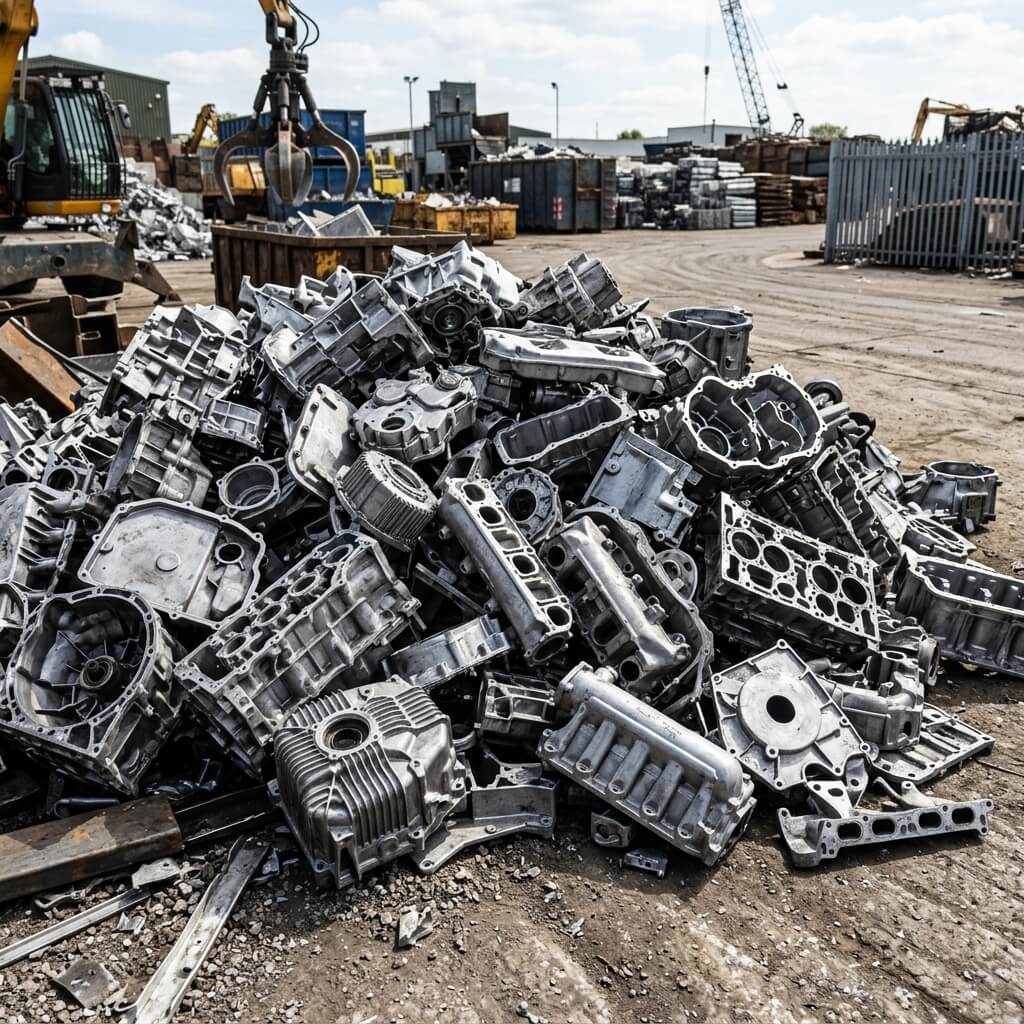
Die cast aluminium scrap is one of the most widely traded non-ferrous metals in Australia, commonly sourced from automotive parts, machinery components, and industrial equipment. Many sellers are often surprised to find that die cast aluminium is priced lower than clean aluminium despite still being highly recyclable and in steady demand across the scrap industry.
You will typically find die cast aluminium in items such as engine blocks, gear housings, brackets, door handles, and various manufactured metal components. While these materials contain valuable aluminium content, they are usually mixed with other alloys such as silicon, magnesium, and trace metals, which increases processing complexity for recyclers.
What Is Die Cast Aluminium Scrap?
Definition of Die Cast Aluminium
Die cast aluminium is a type of aluminium alloy that is formed by melting metal and injecting it into moulds under high pressure. This manufacturing process allows for precise, mass-produced components, but it also introduces additional elements into the material composition.
Typically, die cast aluminium includes alloying elements such as silicon and magnesium, along with trace metals that improve strength and durability but reduce overall purity for recycling purposes.
Common Sources of Die Cast Scrap
Die cast aluminium is commonly recovered from a wide range of automotive, industrial, and household applications, including:
- Car engine blocks and gear housings
- Door handles, brackets, and hardware fittings
- Motorcycle and bicycle components
- Electrical housings and industrial machinery parts
- Pump casings and heavy equipment components
These items are widely available in scrap streams, especially from automotive dismantling and manufacturing waste.
Why It Is Different from Pure Aluminium
Although die cast aluminium is still valuable, it differs significantly from clean aluminium extrusion or sheet aluminium.
Key differences include:
- Mixed alloy composition rather than near-pure aluminium
- Higher levels of impurities such as silicon and other metals
- Additional processing requirements before it can be efficiently recycled
Because of these factors, recyclers classify it separately and generally offer lower pricing compared to clean aluminium grades.
Die Cast Aluminium Scrap Price in Australia (2026)
Typical Price Per Kg
| Scrap Type | Price Range (AUD/kg) | Notes |
|---|---|---|
| Clean aluminium extrusion | $1.80 – $2.80 | Highest value grade |
| Die cast aluminium | $1.20 – $2.20 | Mixed alloy content |
| Contaminated cast scrap | $0.80 – $1.50 | Requires processing |
| Mixed non-ferrous scrap | $0.50 – $1.20 | Low-grade batch |
Die cast aluminium consistently trades below clean extrusion-grade aluminium because it contains mixed alloys and requires additional refining during recycling.
Why Die Cast Aluminium Pays Less Than Pure Aluminium
Alloy Contamination
Die cast aluminium typically contains multiple alloying elements rather than being close to pure aluminium. Common additives include silicon, copper traces, magnesium, and zinc.
These mixed metals reduce overall material purity and make the recycling process more complex, which lowers its scrap value compared to clean aluminium extrusion.
Higher Processing Costs
Recycling die cast aluminium requires additional processing steps before it can be reused in manufacturing.
Key challenges include:
- Extra melting and refining to separate alloy components
- Higher energy consumption during reprocessing
- Lower metal recovery yield compared to clean aluminium grades
Because recyclers spend more time and energy processing it, the payout per kg is reduced.
Sorting Complexity
Die cast aluminium often comes attached with other materials that must be removed before recycling.
This includes:
- Steel inserts and fasteners
- Plastic housings or coatings
- Mixed components from automotive or machinery parts
The additional labour required for sorting and cleaning increases handling costs, which further reduces the final scrap price offered to sellers.
How to Identify Die Cast Aluminium Scrap
Physical Characteristics
Die cast aluminium can usually be identified through its appearance and structural properties. Compared to clean aluminium sheet or extrusion, it has a denser and more industrial form.
Common visual indicators include:
- Heavier feel compared to standard aluminium profiles
- Dull grey or matte surface finish
- Irregular, bulky, or complex moulded shapes
These features are typical of high-pressure cast components used in automotive and industrial manufacturing.
Common Identification Tests
Simple checks can help distinguish die cast aluminium from other metals:
- Magnet test: not magnetic, confirming it is non-ferrous
- Weight comparison: noticeably heavier than extruded aluminium pieces
- Break pattern: tends to fracture in a more brittle manner rather than bending
These tests are commonly used in scrap yards for quick material classification.
Typical Examples
Die cast aluminium is commonly found in industrial and automotive applications such as:
- Engine blocks and related components
- Gearboxes and transmission housings
- Alloy wheel housings and brackets
- Machinery casings and pump bodies
These sources are among the most consistent suppliers of die cast aluminium scrap in Australia.
How to Get the Highest Price for Die Cast Aluminium Scrap
Separate from Other Metals
One of the most important steps in maximising value is proper segregation before sale.
Keep die cast aluminium isolated from steel, copper, and other mixed metals, and avoid blending it with clean aluminium extrusion, as this reduces grading quality and lowers the final payout.
Remove Contamination
Clean material consistently achieves better pricing in the scrap market.
Key actions include:
- Removing plastic attachments or housings
- Detaching steel bolts, screws, or inserts
- Ensuring the scrap is free from excessive dirt, oil, or non-metal materials
Cleaner die cast loads reduce processing costs for buyers and improve per-kg offers.
Sell in Bulk When Possible
Volume plays a direct role in pricing outcomes for die cast aluminium.
Loads of 100kg or more generally attract better rates because industrial buyers prefer consistent, bulk supply that reduces handling and logistics costs.
FAQs
What is die cast aluminium scrap?
Die cast aluminium scrap refers to aluminium that has been formed using high-pressure moulding processes and mixed with other alloying elements. It is commonly found in automotive parts, machinery components, and industrial equipment.
How much is die cast aluminium worth in Australia?
In Australia, die cast aluminium typically sells for around $1.20 to $2.20 per kg, depending on cleanliness, supply volume, and current market conditions.
Why is die cast aluminium cheaper than pure aluminium?
It is priced lower because it contains alloy impurities such as silicon, copper, and magnesium. These elements require additional processing and reduce recycling efficiency compared to clean aluminium.
Where can I sell die cast aluminium scrap?
You can sell it through scrap metal yards, industrial scrap traders, export buyers, or online scrap trading platforms. Online platforms often provide more competitive pricing due to wider buyer access.
Is die cast aluminium recyclable?
Yes, die cast aluminium is fully recyclable. However, it requires more energy and processing compared to clean aluminium due to its mixed alloy composition and contamination levels.
Conclusion
Die cast aluminium scrap is a common and consistently traded material across Australia’s automotive, manufacturing, and industrial sectors. While it holds strong recycling value, its price is typically lower than clean aluminium due to alloy contamination, additional processing requirements, and lower material purity.
Sellers can still achieve strong returns by focusing on proper segregation, removing contaminants, and selling in bulk where possible. These steps reduce processing costs for buyers and directly improve per-kg pricing.