

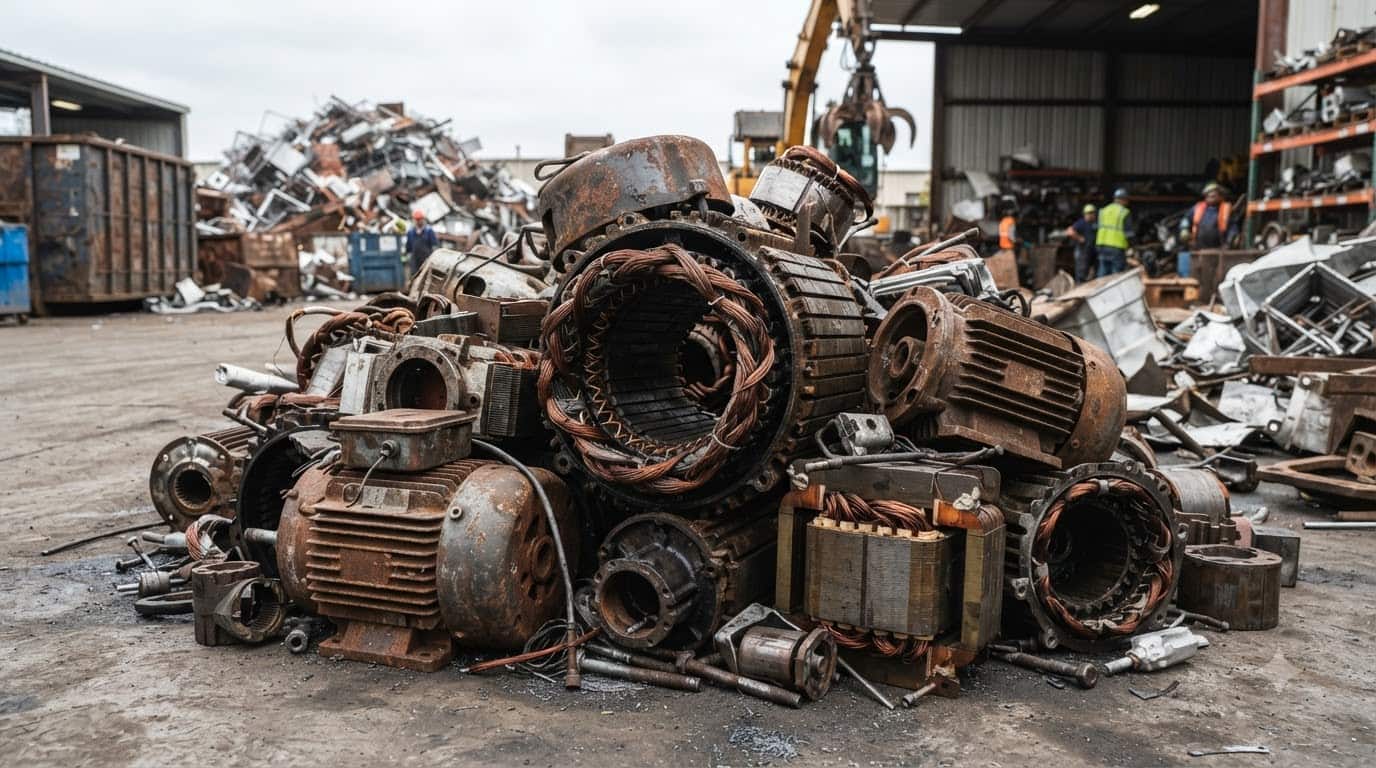
Electric motors and transformers are valuable sources of recyclable metals used across manufacturing, construction, energy, transport, and industrial operations. When equipment reaches the end of its service life, it may contain copper or aluminium windings, steel components, metal housings, and other recoverable materials.
For scrap dealers, recyclers, dismantlers, and industrial businesses, understanding what is inside this equipment helps determine how to prepare it for sale and which buyers may be interested. However, the value of a motor or transformer depends on more than its total weight. Winding material, equipment condition, processing requirements, contamination, and transport costs can all influence an offer.
This guide explains the main types of electric motor and transformer scrap, how buyers assess them, and how to list them on ScrapTrade's global marketplace.
Why Motors and Transformers Are Valuable Scrap
Electric motors convert electrical energy into mechanical movement, while transformers transfer electrical energy between circuits at different voltage levels. Both contain materials that can be recovered and reused through appropriate recycling processes.
Common recoverable materials include copper, aluminium, and steel. Depending on the equipment, there may also be cast iron, brass, electrical connections, insulation, and other components.
The commercial value of this scrap comes from its recoverable material content and the work required to separate it. A large motor may contain substantial metal, but dismantling and sorting take time. A transformer may contain valuable windings, yet its design, insulation system, oil, and internal construction can make recovery more complex.
For traders, the main opportunity is to match the equipment with a buyer who understands its type, condition, and processing requirements. Selling complete units may suit some buyers, while specialist processors may prefer dismantled or separated materials.
What Is Inside: Copper Windings, Steel Laminations, Aluminium Housings
Copper windings: Copper is commonly used in electric motor and transformer windings because of its electrical conductivity. Depending on the design, windings may be made from copper or aluminium. The winding material is an important factor when buyers assess equipment for recovery.
Steel laminations: Many electric motors contain stacks of thin steel laminations that form parts of the magnetic circuit. Transformers also use magnetic cores made from specialised electrical steel. These components may be recoverable, although their construction and separation requirements vary.
Aluminium housings: Some motors have aluminium housings or other aluminium components. Other designs use cast iron or steel. The external appearance alone does not establish the material inside the equipment.
Cast iron and steel components: Frames, shafts, brackets, casings, and structural parts can contribute to the ferrous scrap content. The quantity and type depend on the equipment's size and design.
Insulation and other materials: Motors and transformers may contain varnished wire insulation, paper, resin, plastics, or other non-metallic materials. These can affect dismantling, recovery, and disposal requirements.
Not every motor or transformer contains the same combination of materials. Model information, nameplates, manufacturer documentation, and appropriate inspection can help identify the equipment before a transaction.
Types of Motor and Transformer Scrap
Electric motor scrap can come from industrial machinery, pumps, fans, compressors, manufacturing equipment, appliances, and other electrical systems. Small motors may be traded in bulk, while larger industrial units may be sold individually or by lot.
Common categories include:
- Industrial electric motors: Used in factories, processing plants, pumps, and heavy equipment.
- Small electric motors: Recovered from appliances, tools, fans, and other electrical products.
- Alternators and generators: Electrical machines that can contain copper or aluminium windings and ferrous components.
- Distribution transformers: Equipment used to change voltage levels within electrical distribution systems.
- Power transformers: Larger units used in electricity transmission and industrial power systems.
- Dry-type transformers: Transformers that use solid insulation systems rather than an insulating liquid.
- Oil-filled transformers: Units containing insulating oil that require additional assessment before handling, transport, dismantling, or recycling.
These categories should not automatically be treated as interchangeable. Buyers may have different requirements for equipment size, winding material, completeness, oil status, and processing condition.
How Motors and Transformers Are Graded and Priced
There is no single universal price for all electric motor or transformer scrap. Buyers generally assess the equipment's material composition, condition, quantity, and the work required to recover usable metals.
Important factors include:
- Winding material: Copper-wound and aluminium-wound equipment may receive different offers.
- Equipment type and size: Motor design, transformer capacity, construction, and weight can affect handling and recovery.
- Completeness: Missing components or prior dismantling can change the material mix and buyer's assessment.
- Processing requirements: Labour, dismantling, sorting, and separation costs influence the economics of a purchase.
- Quantity and consistency: A clearly described bulk lot may suit a specialist processor better than a small, mixed load.
- Location and logistics: Loading access, transport distance, packaging, and shipment arrangements can affect the net return.
- Market conditions: Relevant metal reference prices can inform offers, but they do not determine the final scrap price on their own.
Provide clear photographs, estimated weights, equipment descriptions, and known material details when requesting offers. If winding composition is unknown, describe it as unconfirmed rather than assuming the equipment contains copper.
Whole Units vs Stripped and Processed Material
Whole motors and transformers can be suitable for buyers with the equipment, facilities, and workforce needed to dismantle them. Selling complete units may reduce the seller's preparation work and avoid the need to separate multiple material streams.
Stripped or processed material is different. Windings, steel parts, aluminium housings, and other components may be separated and sold according to their respective grades. Buyers can assess these materials more directly, but processing requires suitable tools, labour, and safe working procedures.
Neither option is always more profitable. The result depends on the whole-unit offer, achievable prices for recovered materials, processing costs, material losses, transport, and the time required to complete the sale.
Before dismantling equipment, compare buyer requirements and confirm that the work can be performed safely and lawfully. Specialist equipment may also contain components that require separate treatment.
Copper vs Aluminium Windings
Copper and aluminium are both used in electrical windings, but they are not equivalent materials in a scrap transaction.
Copper windings may attract interest from non-ferrous metal recyclers, while aluminium windings have a different material value and processing profile. The final offer depends on the recoverable quantity, cleanliness, insulation, and the buyer's acceptance criteria.
Do not classify a motor or transformer as copper-wound based only on its size, brand, or external casing. Where the winding material is unknown, state that clearly in the listing. Buyers may request inspection or other evidence before confirming an offer.
For more information about copper grades and trading, read the copper scrap trading guide.
Safety and Handling Considerations: Oil-Filled Units and Stored Energy
Electric motors and transformers can present electrical, mechanical, chemical, and environmental hazards. Equipment should not be assumed safe simply because it is old, disconnected, or no longer operating.
Motors, capacitors, and associated electrical systems may retain hazardous stored energy. Electrical equipment should be isolated, tested, and made safe by appropriately qualified personnel before dismantling. Heavy units can also present lifting, crushing, and handling risks.
Oil-filled transformers need particular care. The insulating liquid should be identified and assessed before the unit is opened, moved, or processed. Depending on the equipment's history and condition, oil or other components may require testing and specialised handling. Older equipment may also contain hazardous substances.
Do not drain, discharge, cut, or dismantle equipment without the appropriate expertise, equipment, and procedures. Requirements for storage, transport, waste classification, and disposal vary by jurisdiction and by the specific unit. Check the applicable requirements before arranging collection or shipment.
When listing oil-filled transformers, identify them as oil-filled and disclose known information about the oil, leaks, and equipment condition. Never describe an oil-filled unit as clean, drained, or ready for processing unless that status has been confirmed.
How Buyers Assess Motor and Transformer Scrap
A buyer typically begins by identifying the equipment type, estimated quantity, condition, and likely recoverable materials. The buyer may then request photographs, nameplate details, dimensions, weights, or an inspection.
For motors, useful information includes the application, size, whether the unit is complete, and whether the winding material is known. For transformers, buyers may also need the equipment type, nameplate information, approximate weight, winding details, and confirmation of whether it is oil-filled or dry-type.
Buyers may distinguish between an indicative offer and a firm offer subject to inspection. If the final composition differs from the description, the buyer may need to reassess the price or acceptance conditions.
A detailed listing helps reduce uncertainty. It also allows potential buyers to decide whether the equipment fits their processing capability, quantity requirements, and logistics arrangements.
How to Sell on ScrapTrade
ScrapTrade provides an online marketplace where businesses can list scrap materials and connect with potential buyers. Sellers of electric motor and transformer scrap can use the platform to present equipment details and explore commercial offers.
To prepare a useful listing:
- Identify the equipment. State whether it is an electric motor, alternator, generator, dry-type transformer, or oil-filled transformer.
- Describe its condition. Indicate whether the unit is complete, used, damaged, dismantled, or processed.
- Provide quantity and weight. Include available unit counts and estimated total weight, making clear whether weights are measured or estimated.
- Upload clear photographs. Show the equipment, nameplate where available, external condition, and any already separated materials.
- Disclose known composition and risks. Identify copper or aluminium windings only when confirmed, and state known oil or contamination issues.
- Review offers and conditions. Compare price, quantity, inspection requirements, collection arrangements, and payment terms before agreeing to a deal.
Sellers should confirm who will arrange loading and transport, what documentation is required, and whether any special handling is needed. Payment and transaction protections depend on the agreed terms and available services.
Ready to connect with potential buyers? List your motor or transformer scrap on ScrapTrade.
FAQs
Is electric motor scrap valuable?
It can be valuable because motors may contain copper or aluminium windings, steel, cast iron, and other recoverable materials. The offer depends on the equipment, material composition, condition, quantity, and processing costs.
Do all electric motors contain copper?
No. Some motors use aluminium windings, and construction varies by design. Confirm the winding material before describing or pricing a motor as copper-bearing scrap.
Can I sell a complete electric motor without dismantling it?
Yes, if a buyer accepts complete motor units. Some buyers process whole equipment, while others prefer dismantled or sorted materials. Confirm the buyer's specifications before arranging delivery.
Is transformer scrap different from motor scrap?
Yes. Both can contain recoverable metals, but their construction and handling requirements differ. Transformers may contain specialised magnetic cores, insulating materials, and, in some cases, insulating oil that requires additional assessment.
Conclusion
Electric motors and transformers can provide recoverable copper, aluminium, steel, and other materials, but their scrap value depends on composition, condition, preparation, and buyer requirements. Understanding the difference between whole units and processed materials helps sellers choose a suitable route to market.
Accurate descriptions and responsible handling are especially important for oil-filled transformers and equipment that may retain stored electrical energy. Before committing to a deal, confirm the material specification, buyer acceptance criteria, logistics, and payment terms.
ScrapTrade helps businesses list scrap materials and connect with potential buyers through an online marketplace. Prepare your equipment details and list your motor or transformer scrap to explore trading opportunities.