

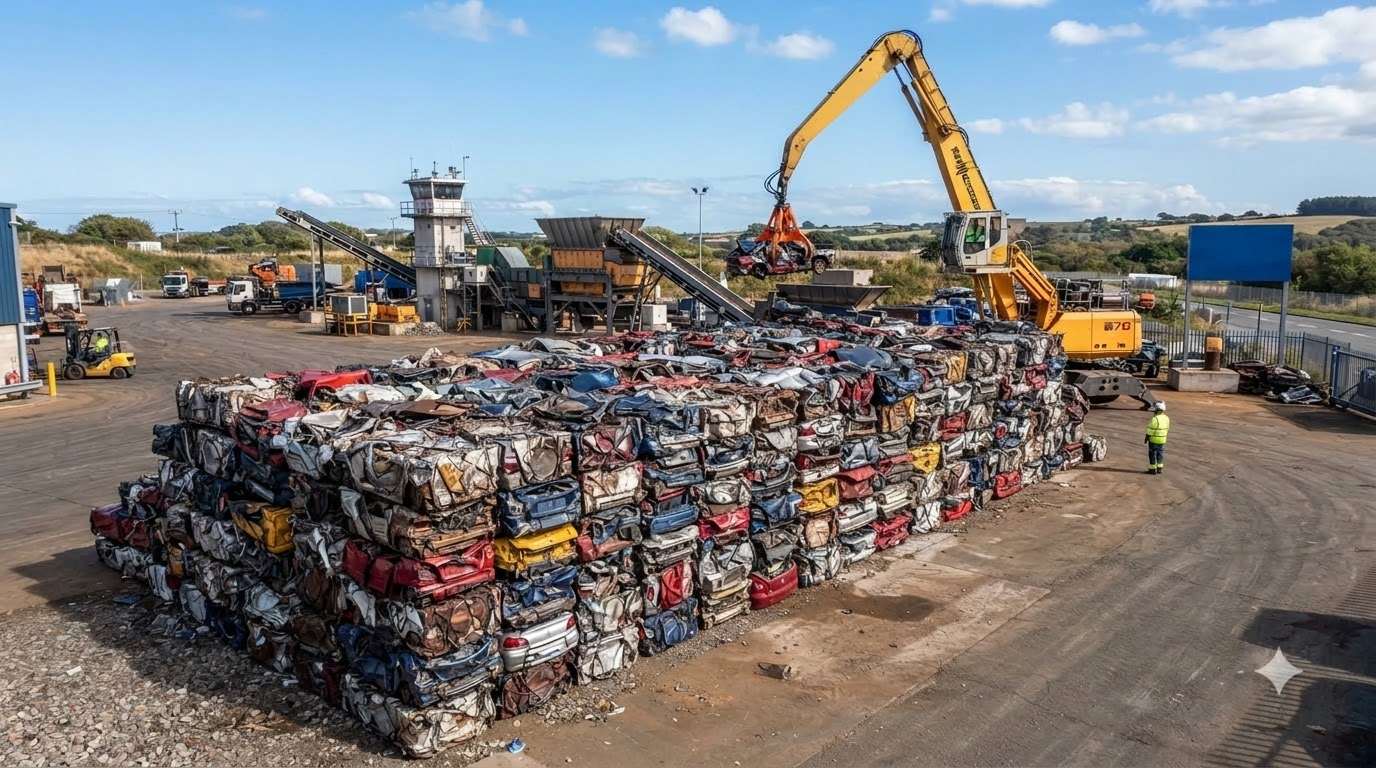
“How much is my car worth as scrap?” It is a common question when an old, damaged, unwanted, or non-running vehicle is ready to be recycled. However, there is no single scrap car price that applies to every vehicle. The amount you may receive depends on several factors, including the vehicle’s weight, metal composition, usable parts, overall condition, location, and current buyer demand.
It is also important to understand the difference between the theoretical value of the metals in a vehicle and the actual amount offered by a wrecker, scrap buyer, or recycler. Processing, transport, dismantling, and market conditions can all affect the final offer.
ScrapTrade does not tow vehicles or provide cash on the spot. Instead, the platform can help connect sellers with buyers and facilitate the process of listing and selling scrap material.
What Determines a Scrap Car's Value?
The value of a scrap car is influenced by more than its age or whether it still runs. Buyers typically consider the vehicle's weight, metal composition, reusable components, condition, and completeness before making an offer.
Vehicle Weight
Heavier vehicles generally contain more recoverable metal, which can increase their potential scrap value. A small hatchback will usually contain less metal than a large SUV, van, or commercial vehicle.
However, gross vehicle weight is not the same as recyclable metal weight. A vehicle's total weight includes glass, fluids, plastics, tyres, upholstery, electronics, and other non-metal materials. Buyers therefore consider the amount and type of material that can actually be recovered.
Metal Mix
End-of-life vehicles contain several recyclable metals, including steel, aluminium, copper, cast iron, and other metals. Steel usually makes up a large portion of a vehicle, while aluminium and copper can be found in components such as wheels, radiators, wiring, and electrical systems.
The specific metal mix can affect the vehicle's overall value because different metals have different market prices and processing requirements.
Working Parts and Components
A vehicle can have value beyond its raw metal content. If useful components remain in good condition, the vehicle may be worth more as a wrecking or parts vehicle than as pure scrap.
Potentially valuable components can include the engine, transmission, catalytic converter, wheels, alternator, starter motor, electronic components, and usable body panels. The actual value depends on the condition, demand, vehicle model, and buyer.
Condition and Completeness
The condition and completeness of the vehicle can significantly influence the offer.
Complete vehicle → potentially higher overall value
Stripped vehicle → potentially lower value
A complete vehicle may contain more recoverable metal and reusable components. If major parts such as the engine, transmission, catalytic converter, wheels, or other components have already been removed, the buyer may have less material or fewer reusable parts to recover.
As a result, a complete end-of-life vehicle may receive a different offer from a heavily stripped vehicle, even when both vehicles are similar in size.
How Much Is Scrap Price for a Car?
Online searches for “scrap price for a car” can produce confusing numbers because there is no single rate that applies to every vehicle. A car contains several materials, and its final value can also depend on reusable parts, condition, location, transport, and the buyer's current demand.
Scrap Car Value Is Not Simply Weight × One Metal Price
A vehicle is not normally valued as one uniform metal grade. It contains steel, aluminium, copper, cast iron, and other materials, along with plastics, glass, rubber, electronics, and other non-metal components.
Therefore, the total vehicle weight should not simply be multiplied by one scrap-metal price. Buyers generally assess the when determining an offer.
Basic Per-Tonne Calculation
A simplified way to estimate the theoretical metal value is:
Estimated metal value = Recoverable metal weight × applicable scrap rate per tonne
This calculation is only an illustrative estimate. It does not represent a guaranteed price that a wrecker, recycler, or buyer will pay for the vehicle.
Worked Example
Consider a vehicle weighing 1,400 kg, with an estimated 1,000 kg of recoverable ferrous metal.
If the illustrative scrap rate is $X per tonne:
1,000 kg = 1 tonne
1 tonne × $X = $X estimated metal value
Scrap Metal Car Worth vs. Whole-Car Value
When calculating a scrap metal car worth, it is important to distinguish between the value of the vehicle as recyclable material and its potential value as a complete vehicle or parts source. A car can sometimes be worth more to a wrecker than its basic metal value.
Scrap Metal Value
The scrap value comes primarily from the materials and components that can be recovered and processed. This includes ferrous metals such as steel and cast iron, non-ferrous metals such as aluminium and copper, and certain recoverable components.
The amount depends on the vehicle's recoverable metal weight, material mix, cleanliness, and current scrap-metal market rates.
Vehicle or Wrecker Value
A wrecker may value the vehicle based on its potential for parts reuse and resale, rather than only its metal content. Factors can include the make and model, age, demand for parts, overall condition, engine condition, transmission condition, and availability of replacement parts.
A vehicle with sought-after components may therefore have greater value as a parts vehicle than if it were simply processed for scrap metal.
Why Two Similar Cars Can Get Different Offers
Two vehicles with similar weights can still receive different offers. One may have a desirable engine, a valuable catalytic converter, good wheels, reusable body panels, or other components that are in demand.
The other vehicle may be missing important parts or have significant damage. As a result, scrap metal value and whole-car value are not always the same, and the buyer's intended use of the vehicle can significantly influence the final offer.
How to Estimate Your Car's Scrap Value Before Selling
Before selling an old or damaged vehicle, collect basic information about the car and its condition. This makes it easier for buyers to assess its scrap value, parts value, and potential collection costs.
Step 1 — Identify the Vehicle
Start by recording the make, model, year, body type, and approximate vehicle weight. This information can help buyers understand the vehicle's likely metal content and potential demand for reusable parts.
Step 2 — Check the Condition
Note whether the vehicle is complete, running, non-running, damaged, accident-damaged, or missing major components. A complete vehicle may have greater overall value because it contains more recoverable metal and reusable parts.
Step 3 — Identify Valuable Components
Check whether important components are still present, including the catalytic converter, wheels, engine, transmission, battery, alternator, and other reusable parts. Their condition and market demand can influence the vehicle's whole-car or wrecker value.
Step 4 — Take Photos
Take clear photos of the front, rear, both sides, interior, engine bay, wheels, and any visible damage. Where appropriate, include identification or specification information. Good photos allow buyers to assess the vehicle without relying only on a written description.
Step 5 — Compare the Available Options
Finally, compare the scrap-only value, parts or wrecker value, buyer offers, collection and logistics costs, and final net amount. The highest headline offer is not always the best option if transport or other costs significantly reduce what you actually receive.
Common Mistakes When Selling a Scrap Car
Selling a scrap car is not always as simple as checking one metal price and accepting an offer. Understanding the factors behind the valuation can help you avoid unrealistic expectations and compare offers more effectively.
Assuming Every Car Has the Same Scrap Value
Not every vehicle contains the same amount or type of recyclable material. A small hatchback, SUV, van, and commercial vehicle can differ significantly in weight, metal composition, and recoverable components. Vehicle condition and completeness can also affect the final valuation.
Using the Highest Online Metal Price as Your Expected Payout
Online metal prices are useful market indicators, but they are not necessarily the price a buyer will pay for a complete vehicle. A scrap-car offer may account for processing, dismantling, transport, depollution, labour, and other costs. Therefore, the highest published metal rate should not automatically be treated as your expected payout.
Ignoring Parts Value
A complete vehicle can have value beyond its raw metal content. Components such as the engine, transmission, catalytic converter, wheels, alternator, and reusable body panels may have demand in the used-parts market. Depending on the vehicle and its condition, a wrecker may value it differently from a scrap-metal buyer.
Forgetting Transport Costs
The amount quoted by a buyer is not always the same as your final net return. Towing, collection, transportation, and other logistics costs may reduce the amount you actually receive. Always understand whether collection is included in the offer or charged separately.
Accepting the First Offer Without Comparing
If possible, compare offers from multiple legitimate buyers. Look beyond the headline price and check the vehicle classification, collection arrangements, additional charges, payment terms, and final amount you will receive. Comparing the complete terms can help you identify the offer that provides the best overall value.
FAQs About Scrap Car Value
How much is my car worth as scrap?
A scrap car's value depends on its weight, metal composition, condition, valuable components, local demand and buyer terms. A complete vehicle can also have parts value beyond its raw metal value, so there isn't one universal price for every scrap car.
How much is scrap price for a car?
Scrap car prices vary according to vehicle size, recoverable metal, current scrap-market conditions and processing costs. A per-tonne metal rate can provide a rough starting point, but it should not be treated as a guaranteed cash offer for an entire vehicle.
Is a car worth more as scrap or as parts?
It depends on the vehicle. A damaged or obsolete vehicle may have greater value as scrap, while a vehicle with a desirable engine, transmission, catalytic converter or other usable components may be worth more to a wrecker or parts buyer.
Does ScrapTrade tow scrap cars?
No. ScrapTrade does not provide vehicle towing. Sellers should not assume that creating a listing automatically includes vehicle collection. Any transportation or pickup arrangements should be confirmed as part of the transaction.
Conclusion
A scrap car's value is not determined by one fixed number. Vehicle weight, metal mix, condition, reusable parts, and current market demand can all influence what a buyer is willing to offer.
A scrap-metal calculation can provide a useful estimate of the vehicle's potential material value, but it should not be treated as a guaranteed buyer offer. Processing, transport, labour, depollution, and other costs can affect the final amount. It is also worth comparing the scrap-metal value with potential parts or wrecker value, especially when the vehicle is complete and contains usable components.
ScrapTrade does not provide vehicle towing or cash-on-the-spot services. Sellers should provide accurate vehicle details, clear photos, condition information, and approximate weight, then compare legitimate buyer offers and their terms before making a decision.