

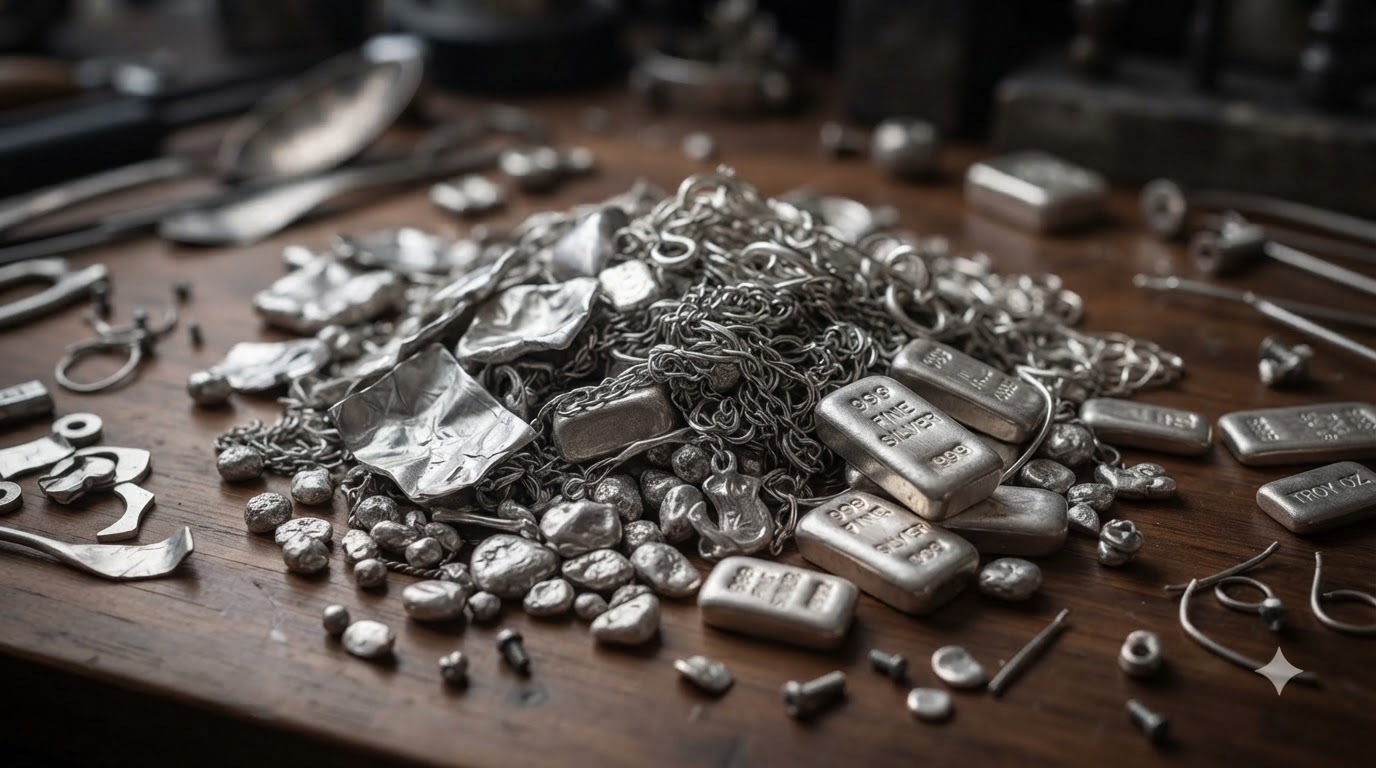
Not every item that looks silver is actually worth much as scrap. A shiny piece of cutlery, jewelry, decoration, or household item may contain valuable silver or it may contain only a thin silver coating over a cheaper metal. Understanding the difference between fine silver, sterling silver, silver-plated items, and mixed-metal products is essential before estimating their value.
So, how much is scrap silver worth depends on more than appearance. The key factors include silver purity, total weight, the current silver market price, and any deductions made by the buyer for testing, processing, refining, and margins.
What Determines the Value of Scrap Silver?
The value of scrap silver depends mainly on purity, weight, the current silver market price, and the costs involved in buying and refining the material. An item's appearance alone cannot tell you how much recoverable silver it contains.
Silver Purity
Purity is one of the most important factors when calculating scrap silver value.
| Type | Typical Silver Content |
|---|---|
| Fine silver | 99.9% |
| Sterling silver | 92.5% |
| Coin silver | Varies, commonly around 90% |
| Silver plate | Usually only a thin silver layer |
Fine silver contains almost entirely silver, while sterling silver contains 92.5% silver with other metals added for strength. Silver-plated products are different because only a thin outer layer contains silver.
This is why purity matters more than appearance. Two items may look identical, but one could contain substantial silver while the other contains very little recoverable silver.
Weight
Silver is commonly measured in grams and troy ounces. One troy ounce equals approximately 31.1 grams.
However, the total weight of an item is not necessarily its silver weight. Jewelry, cutlery, electronics, and decorative products can contain stones, steel, copper, plastic, or other non-silver components.
For example, a 100g item marked as sterling silver would theoretically contain about 92.5g of silver, assuming the entire item is sterling alloy. If only part of the item is silver, the recoverable amount will be lower.
Current Silver Market Price
The silver spot price is the current market benchmark for silver, generally quoted per troy ounce. It provides a useful reference when estimating the theoretical value of silver-containing material.
However, online scrap silver price per ounce figures should not automatically be treated as the amount a seller will receive. A market price reflects the value of silver under market conditions, while a scrap buyer's offer accounts for purity, testing, refining, processing, and other costs.
Therefore, market value and actual buyer payout are not necessarily the same.
Buyer and Refining Costs
A scrap buyer may incur several costs before recovering and reselling the silver, including:
- Testing: Determining the material's actual composition and purity.
- Sorting: Separating silver from mixed or non-silver materials.
- Refining: Recovering usable silver from the material.
- Transportation: Moving scrap between sellers, facilities, and refiners.
- Processing: Handling, melting, and preparing the material.
- Buyer margin: Covering business expenses, market risk, and profit.
Scrap Silver Per Gram: How to Calculate Its Value
Calculating scrap silver value per gram is straightforward once you know the item's weight, silver purity, and current silver price. The calculation helps you estimate the metal's theoretical value before comparing offers from buyers.
The Basic Silver Melt Value Formula
Use this formula:
Silver Melt Value = Item Weight × Silver Purity × Silver Price per Gram
First, multiply the item's weight by its silver purity to determine how much pure silver it contains. Then multiply that amount by the applicable silver market price per gram.
This calculation gives you an estimated theoretical melt value. It does not necessarily represent the amount you will receive from a scrap buyer because the final offer may include deductions for testing, sorting, processing, refining, transportation, and the buyer's margin.
Worked Sterling Silver Example
Suppose you have 100 grams of sterling silver:
Item weight: 100g
Silver purity: 92.5%
Pure silver content: 100 × 92.5% = 92.5g
Estimated melt value: 92.5g × applicable silver price per gram
For example, if the applicable silver price were $1 per gram, the theoretical melt value would be:
92.5g × $1 = $92.50
However, the actual buyer offer could be lower. The buyer may need to test and process the material, pay refining and transportation costs, account for potential recovery losses, and maintain a commercial margin.
Sterling Silver vs. Fine Silver vs. Silver-Plated
Not every silver-colored item contains the same amount of silver. For scrap purposes, the difference between sterling silver, fine silver, and silver-plated products can have a major impact on value.
Sterling Silver
Sterling silver is typically marked 925, meaning it contains approximately 92.5% silver and 7.5% other metals, usually added for strength.
It is commonly used in:
- Jewellery
- Flatware and cutlery
- Decorative items
- Household silverware
When genuine and sufficiently heavy, sterling silver generally has meaningful scrap value because it contains a high percentage of recoverable silver.
Fine Silver
Fine silver has a much higher silver content than sterling silver and is commonly marked 999 or 9999.
- 999: Approximately 99.9% silver
- 9999: Approximately 99.99% silver
Fine silver is often found in bullion, investment products, coins, and specialized silver items. Because of its higher purity, the same weight generally contains more recoverable silver than sterling silver.
Silver-Plated Items
Silver-plated products are made from a base metal covered with a thin layer of silver. They can look almost identical to solid silver, making visual identification difficult.
However, the amount of silver in the coating is usually very small compared with a solid sterling or fine-silver item. As a result, silver-plated products typically have dramatically less scrap value.
In some cases, the silver coating may contain so little recoverable material that it does not justify a typical scrap-silver valuation.
How Silver Hallmarks Help
Hallmarks can provide an initial indication of an item's silver content:
| Marking | Typical Meaning |
|---|---|
| 925 | Approximately 92.5% silver |
| 999 | Approximately 99.9% silver |
| 9999 | Approximately 99.99% silver |
| Sterling | Generally indicates sterling silver |
However, a hallmark should be treated as a starting point, not absolute proof. Stamps can be worn, inaccurate, altered, or incorrectly applied. Professional buyers may test the material to verify its composition before determining the final scrap value.
What Silver Items Actually Have Scrap Value?
Not every silver item has the same scrap potential. The amount of recoverable silver depends on purity, weight, construction, and whether the item has collectible or industrial value.
Silver Jewellery
Common silver jewellery that may have scrap value includes:
- Rings
- Chains
- Bracelets
- Earrings
- Pendants
Items marked 925 or Sterling may contain substantial silver. However, gemstones, clasps, springs, coatings, and other non-silver components can increase the total item weight without increasing the payable silver weight.
Sterling Silver Flatware
Genuine sterling silver flatware can contain a significant amount of recoverable silver, particularly when the pieces are heavy and made primarily from sterling alloy.
However, some handles may contain fillers, cement, steel, or other materials. These components need to be considered when determining the actual silver content.
Silver-plated flatware is different. It usually contains only a thin silver coating over a base metal and generally has much lower scrap value.
Silver Coins
Silver coins can have different purities depending on the coin, country, and issue. Some may contain high-purity silver, while others use silver alloys.
Importantly, a coin's numismatic or collectible value can sometimes be greater than its metal melt value. Before selling collectible-looking coins as scrap, check whether they have rarity, age, condition, or collector demand that could make them worth more than their silver content.
Industrial Silver Scrap
Industrial operations can generate various forms of silver-bearing scrap, including:
- Silver-bearing components
- Electrical contacts
- Manufacturing residues
- Industrial materials
These materials can have different silver concentrations and may contain other metals or contaminants. Professional identification and testing are often necessary before assigning a reliable scrap value, particularly for larger industrial lots.
Where ScrapTrade Fits Into Scrap Silver Selling
ScrapTrade can support the buyer-discovery and transaction side of scrap silver selling, but sellers should understand that it does not currently provide a live silver valuation.
ScrapTrade Does Not Provide a Live Silver Price
Silver is not currently a live-priced category in ScrapTrade's 24-material live-price list. Therefore:
- ScrapTrade does not provide a live silver price.
- This article should not be interpreted as a ScrapTrade silver quote.
- The ScrapTrade market-prices page should not be treated as a live silver-price source.
Sellers should use an appropriate silver market benchmark separately when estimating the theoretical value of their material.
Connecting With Verified Buyers
A marketplace can be useful when sellers want to explore potential buyers and compare transaction terms. Depending on the material and transaction, ScrapTrade can help facilitate opportunities involving:
- Buyer verification
- Offer comparison
- Greater transaction transparency
- Higher-value silver-bearing material
- Commercial scrap opportunities
For larger quantities or commercial silver-bearing scrap, comparing multiple potential buyers can help sellers better understand available market terms.
Escrow and Transaction Confidence
For eligible transactions, escrow can provide an additional layer of transaction confidence by helping structure payment around agreed transaction conditions. However, escrow should not be assumed to apply automatically to every silver transaction.
Sellers should review the specific transaction terms, payment arrangements, fees, and applicable protections before completing a deal.
- Precious Metal Scrap — Learn more about precious-metal scrap and recovery.
- Trust & Safety — Understand marketplace safety and transaction considerations.
- Market Prices — Explore ScrapTrade's supported market-price categories.
FAQs
How much is scrap silver worth per gram?
Scrap silver value depends on silver purity, weight, and the applicable market price. Genuine sterling silver contains approximately 92.5% silver, while silver-plated products may contain only a very small amount of recoverable silver. Testing and buyer deductions can also affect the final payout.
How much is scrap silver worth per ounce?
Silver is commonly priced using the troy ounce, which equals 31.1035 grams. The market price per troy ounce provides a useful benchmark, but the final scrap payout can be lower depending on purity, testing, refining costs, processing expenses, and the buyer's margin.
Is sterling silver worth more than silver-plated items?
Yes. Genuine sterling silver is approximately 92.5% silver, while silver-plated products typically have only a thin silver layer over a different base metal. As a result, sterling silver generally has significantly greater recoverable scrap value than silver-plated material.
How can I tell if something is real silver?
Look for hallmarks such as 925, 999, 9999, or Sterling as an initial indication of silver content. A magnet test can also provide basic screening, although it cannot prove purity. For valuable, unusual, or uncertain items, professional purity testing is a more reliable way to confirm the silver content.
Conclusion
The value of scrap silver isn't determined by appearance alone. An item that looks silver may be genuine sterling or fine silver, or it may simply be silver-plated over a base metal. The key valuation factors are purity, weight, and current silver market conditions.
Genuine sterling and fine silver can have meaningful scrap value, while silver-plated products often contain too little recoverable silver to deliver the value sellers expect. Before accepting an offer, verify the material, confirm its purity and weight, and understand how the buyer calculated the payout.
ScrapTrade can help sellers connect with verified buyers and explore trading opportunities, but it should not be treated as a live silver-price provider. Silver is not currently included in ScrapTrade's 24-material live-price list.