

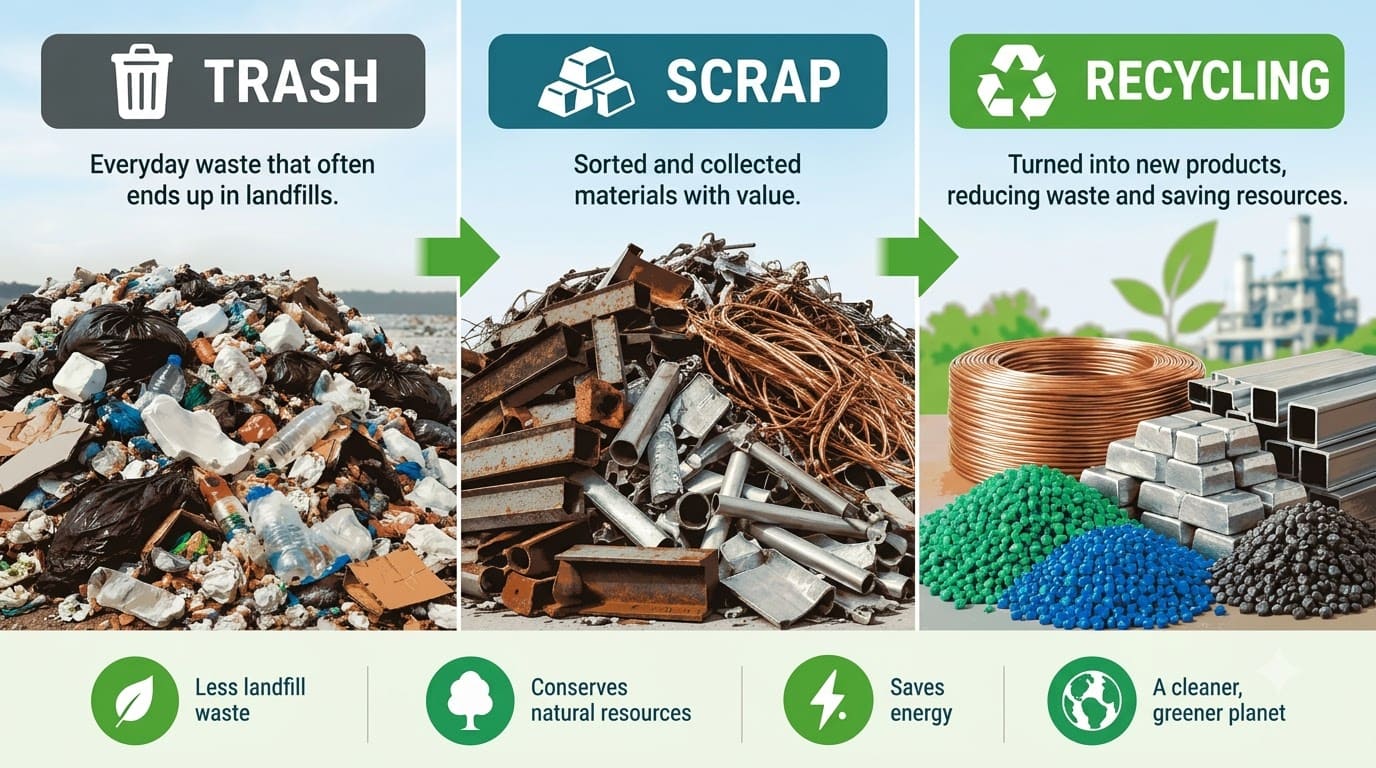
Scrap yards turn discarded metal into a commercial commodity by collecting, sorting, processing, and selling recyclable materials to buyers that need metal feedstock.
From copper and aluminium to steel, brass, and stainless steel, scrap yards can generate revenue by purchasing or collecting material at one price and selling properly sorted and prepared material at a higher value. The difference between revenue and the yard's total operating costs determines its actual profit.
For anyone selling scrap, understanding how scrap yards make money can also explain why different buyers may offer different prices for the same material.
Where Scrap Yards Get Their Metal
Scrap yards source metal from many different channels. Individuals may bring household or vehicle scrap, while businesses can supply much larger quantities from manufacturing, construction, demolition, maintenance, and industrial operations.
Common sources include:
- Manufacturing offcuts and production scrap
- End-of-life vehicles and vehicle components
- Construction and demolition material
- Electrical cable and copper-bearing products
- Old machinery and industrial equipment
- Aluminium products and extrusions
- Plumbing and brass components
- Household and commercial metal waste
The quality and consistency of supply are important. A scrap yard with reliable access to well-sorted material may be able to operate more efficiently than one that mainly handles mixed loads requiring extensive processing.
How Scrap Yards Buy Scrap
Scrap yards generally evaluate material based on factors such as metal type, grade, weight, cleanliness, contamination, and current market conditions.
A seller may bring a mixed load containing several metals. The yard identifies and weighs the different materials before determining an offer.
For example, clean copper wire will generally be evaluated differently from insulated cable containing a lower proportion of recoverable copper. Similarly, clean aluminium extrusion may be assessed differently from mixed aluminium containing attachments or other materials.
The buying price needs to leave enough room for the yard to cover its costs and generate a margin when the material is eventually sold.
Sorting Creates Commercial Value
One of the most important activities at a scrap yard is sorting.
A mixed collection of metal can contain several grades and material types. Separating them makes the material easier to process and sell to downstream buyers.
Ferrous and non-ferrous metals are typically handled differently. Further sorting can separate copper, aluminium, brass, stainless steel, steel, and other categories.
The more accurately a yard can identify and separate material, the easier it becomes to match individual lots with buyers looking for specific specifications.
However, sorting is not free. Labour, equipment, space, electricity, maintenance, and handling all contribute to the yard's operating costs.
Processing Scrap Before Resale
Some scrap can be sold after basic sorting, while other material benefits from additional processing.
Depending on the material and the yard's capabilities, processing may include cutting, baling, compacting, stripping, dismantling, shredding, or other mechanical preparation.
Processing can make material easier to transport, store, handle, or sell. It may also help produce a more consistent specification for a downstream buyer.
The economics depend on whether the additional processing creates enough commercial value to justify the cost.
A scrap yard therefore needs to decide not only what to buy, but also how much processing makes sense before resale.
How Scrap Yards Make Money on the Sale
The basic business model is straightforward:
Buy or acquire scrap → sort and process it → sell it to a buyer → cover costs → retain the remaining margin.
The final selling price can depend on the material grade, quality, quantity, market conditions, buyer requirements, and logistics.
A yard may sell material to metal recyclers, processors, mills, foundries, manufacturers, exporters, or other industrial buyers.
Large quantities can create opportunities to negotiate different commercial terms, but they can also require more storage, handling, transportation, and working capital.
This is why a scrap yard's profit cannot be calculated simply by looking at the difference between its buying and selling prices.
Why Scrap Prices Change
Scrap prices are not fixed permanently.
Market conditions can change the value of recyclable metals. Supply and demand, broader commodity markets, material quality, regional demand, transportation costs, and buyer requirements can all affect the price available for a particular lot.
This creates an important challenge for scrap yards.
If a yard purchases a large quantity at one price and the market changes before the material is sold, its expected margin can change as well.
Successful operators therefore need to monitor market conditions and manage inventory carefully.
For sellers, this is also why comparing current buyer offers can be more useful than relying on an old scrap price.
The Role of Volume and Repeat Supply
Volume is an important part of scrap yard economics.
A yard that receives consistent quantities can develop repeat purchasing and selling relationships. Regular supply can make inventory planning easier and may allow the business to build relationships with larger downstream buyers.
However, more volume does not automatically mean more profit.
Large quantities require storage space, equipment, labour, transportation, insurance, and working capital. If material sits in inventory for too long, the yard also carries additional market and storage risk.
The objective is to maintain a healthy flow of material from supplier to buyer while keeping operating costs under control.
Scrap Yards Are Moving Beyond the Traditional Model
Traditional scrap yards have historically depended heavily on local suppliers and nearby buyers. Digital trading is changing how some businesses approach the market.
An online marketplace can complement physical yard operations rather than replace them.
The yard still collects, sorts, weighs, stores, and processes physical material. The digital platform provides another channel for finding buyers and presenting available inventory.
For a yard owner, this can mean greater visibility for specialised materials, more potential trading relationships, and an additional way to manage B2B sales.
Businesses can explore the ScrapTrade marketplace to see how digital scrap trading can support physical scrap yard operations.