

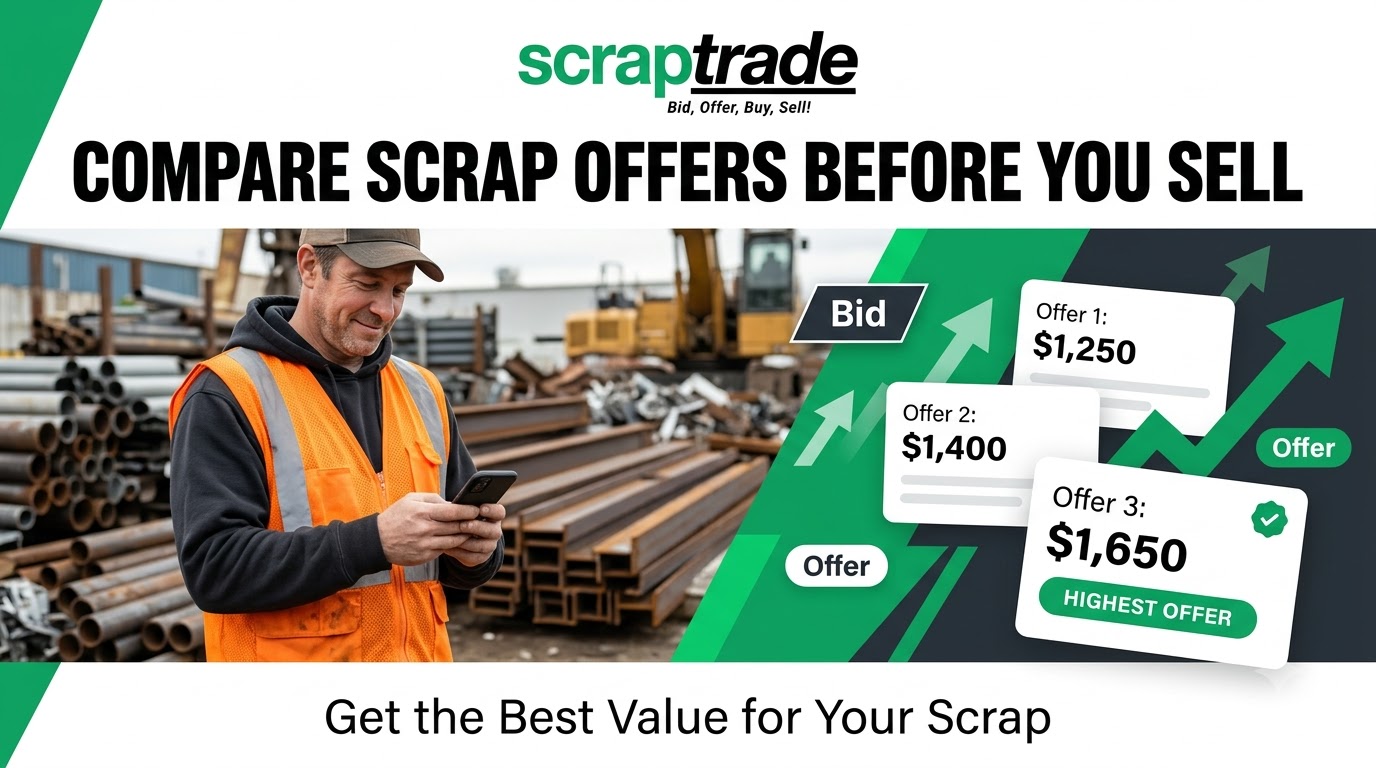
Selling scrap metal is not just about finding a buyer. It is about choosing an offer that delivers the best overall return after accounting for material grade, accepted weight, transportation, processing costs, payment terms, and other transaction expenses.
Whether you sell copper, aluminium, steel, stainless steel, electronic waste, or mixed scrap, different buyers may offer different prices for the same load. One buyer may quote a higher rate but require you to arrange transportation, while another may offer a lower rate with more convenient collection terms.
Understanding how to compare scrap offers helps recyclers, scrap dealers, contractors, manufacturers, and businesses make informed selling decisions. With clear material information and a consistent comparison process, sellers can evaluate offers more accurately and reduce the risk of unexpected deductions.
Why Should You Compare Scrap Offers Before Selling?
Scrap prices can vary according to local demand, material quality, buyer requirements, quantity, and market conditions. Accepting the first quotation may mean missing a more suitable offer.
Comparing offers allows sellers to understand what different buyers are willing to pay and which commercial terms best match their needs.
However, the highest quoted price is not always the most profitable option. Transportation, loading, inspection, payment timing, and possible grade adjustments can change the final amount received.
A useful comparison considers both the quoted price and the complete terms of the transaction.
1. Identify the Scrap Type and Grade Correctly
Before requesting offers, identify the material as accurately as possible. Buyers cannot make a meaningful comparison if each quotation is based on a different understanding of the scrap.
For example, bare bright copper wire, No. 2 copper, and insulated copper cable have different characteristics and should not be treated as interchangeable. Similarly, aluminium extrusion, cast aluminium, and used beverage cans may attract different offers.
Prepare a description that includes:
- Material type and grade, where known.
- Approximate quantity and unit of measurement.
- Condition, contamination, and unwanted attachments.
- Photographs showing the actual material.
- Location and collection or delivery requirements.
If the grade has not been confirmed, describe the material honestly rather than assuming it qualifies for a particular category.
Accurate descriptions help buyers quote against the same material specifications and make the resulting offers easier to compare.
2. Request Quotations From Multiple Buyers
Once the material is identified, request quotations from several suitable buyers where possible. This provides a clearer picture of available trading opportunities than relying on a single offer.
When contacting buyers, provide the same material description, quantity, photographs, location, and delivery conditions. Ask each buyer to confirm the grade they are pricing and whether the quotation depends on inspection.
Also check how long each offer remains valid. Scrap prices can change, so quotations received at different times may not be directly comparable.
For bulk loads, ask whether the buyer has a minimum quantity requirement or expects the material to be sorted, baled, or prepared in a particular way.
The goal is to obtain comparable offers based on the same commercial assumptions.
3. Compare the Price Per Kilogram or Tonne
The quoted rate is an important starting point. However, ensure every buyer is quoting the same unit and material grade.
A quotation per tonne should not be compared directly with a quotation per kilogram without converting the units. One metric tonne equals 1,000 kilograms.
Consider this illustrative example for a load of 5,000 kg of scrap:
| Offer | Quoted price per kg | Gross value |
|---|---|---|
| Buyer A | $1.20 | $6,000 |
| Buyer B | $1.25 | $6,250 |
| Buyer C | $1.18 | $5,900 |
In this example, Buyer B offers the highest gross value. However, this does not automatically mean Buyer B provides the best final return. Transportation costs, accepted weight, inspection requirements, and payment terms must still be considered.
These figures are illustrative only and are not current market prices.
4. Calculate the Net Amount You Will Receive
To compare offers fairly, calculate the expected amount remaining after relevant selling costs.
Net proceeds = Expected payment − Seller-paid costs and deductions
Depending on the deal, these costs may include transportation, loading, handling, sorting, processing, testing, applicable taxes, and agreed service charges.
Using the previous example, suppose the sellers' estimated costs are as follows:
| Item | Buyer A | Buyer B |
|---|---|---|
| Gross value | $6,000 | $6,250 |
| Transportation and handling | $250 | $500 |
| Other seller-paid costs | $100 | $100 |
| Estimated net proceeds | $5,650 | $5,650 |
Although Buyer B offers a higher quoted price, the additional transportation expense makes the estimated net proceeds equal in this example.
This is why comparing the final economics matters more than focusing exclusively on the price per kilogram.
The calculation should include only costs relevant to the actual transaction. Confirm who is responsible for each expense before accepting an offer.
5. Check Accepted Weight and Inspection Conditions
The quoted value depends on the quantity the buyer ultimately accepts. Differences between estimated and accepted weight can affect the final payment.
Before agreeing to a deal, clarify how the material will be weighed, where weighing will take place, and how discrepancies will be handled.
For example, confirm whether the transaction uses a weighbridge, platform scale, or another agreed method. For bulk shipments, ask how gross weight, tare weight, and net scrap weight will be documented.
Inspection requirements also matter. A buyer may need to check material composition, contamination, moisture, or grade before confirming the final amount.
Agreeing on inspection procedures and recording the material's condition can help reduce disputes after collection or delivery.
6. Review Payment Terms and Transaction Reliability
Price is only one part of a scrap transaction. Payment arrangements can influence cash flow and the overall risk of the deal.
Compare the payment method, payment schedule, conditions for releasing funds, and any agreed inspection or acceptance requirements. Ask whether payment is due before collection, after weighing, after delivery, or following inspection.
For larger transactions, confirm the identity and business details of the counterparty and keep written records of the agreed terms.
Be cautious if a buyer introduces unexpected fees, refuses to document the agreement, or changes payment conditions without a clear explanation. A quotation that looks attractive may not be suitable if the transaction terms are unclear.
The objective is to select an offer that combines competitive economics with clearly defined responsibilities and an acceptable level of risk.
7. Consider Collection, Delivery, and Logistics
Logistics can have a significant impact on the final return, particularly for large or heavy scrap loads.
Some buyers may arrange collection, while others expect the seller to deliver the material. Confirm who is responsible for loading, transport, packaging, permits where applicable, and any other required arrangements.
If the seller must organise transport, obtain a realistic cost estimate before comparing the offers. For international transactions, also account for freight, insurance where applicable, customs documentation, and relevant import or export requirements.
Check the collection schedule and whether the buyer can handle the available quantity. Delays may create additional storage, labour, or operational costs.
A practical offer should match your material, location, available equipment, and delivery capacity.
8. Compare Scrap Offers Online Through ScrapTrade
Finding buyers independently can take time, particularly when a business has multiple material categories or bulk quantities to sell. Digital marketplaces provide another way to present available scrap and connect with potential trading partners.
ScrapTrade is a global online scrap trading marketplace where businesses can list materials, connect with potential buyers, and explore trading opportunities across different markets.
To make your listing useful, provide an accurate material grade where known, quantity, location, condition, and clear photographs. Include relevant collection or delivery requirements so buyers can assess the opportunity.
When reviewing offers, compare the quoted price, accepted quantity, logistics, payment terms, and inspection requirements. Do not assume that the highest price is automatically the best deal.
ScrapTrade facilitates connections between buyers and sellers and does not take ownership of listed materials. Both parties should confirm the complete transaction terms before proceeding.
Common Mistakes to Avoid When Comparing Scrap Offers
One common mistake is comparing quotations for different grades as though they refer to the same material. Confirm the specification behind each offer before deciding which is better.
Another mistake is ignoring transport and handling expenses. These costs can reduce the final return, especially when buyers are located at different distances.
Sellers should also avoid relying on an old quotation without checking whether it remains valid. Material prices and buyer requirements can change.
Finally, do not overlook payment terms, inspection procedures, and weight verification. A well-documented agreement can help both parties understand their responsibilities and minimise avoidable disputes.
FAQs
How many scrap buyers should I contact before selling?
There is no fixed number, but comparing several suitable buyers can provide a more useful picture of available offers. Ensure each buyer receives the same material description and transaction requirements.
Should I always accept the highest scrap price?
Not necessarily. Compare the expected net proceeds after seller-paid expenses and review accepted weight, inspection conditions, logistics, payment terms, and counterparty reliability.
Why do different buyers offer different scrap prices?
Buyers may have different processing capabilities, demand, operating costs, locations, material specifications, and resale opportunities. Their quotations may also include different transportation or handling arrangements.
How can I compare offers for bulk scrap?
Use the same grade, quantity, measurement unit, location, and delivery terms for every quotation. Calculate the expected gross value and subtract the relevant costs to estimate net proceeds.
Conclusion
Comparing scrap offers before selling helps businesses make better decisions about pricing, logistics, and transaction risk. The most useful comparison considers material grade, quoted rate, accepted weight, transportation costs, inspection requirements, payment terms, and expected net proceeds.
By requesting comparable quotations and documenting the agreed conditions, sellers can evaluate offers more confidently. Businesses looking to reach additional buyers can use ScrapTrade to list available materials and explore opportunities through a global scrap trading marketplace.