

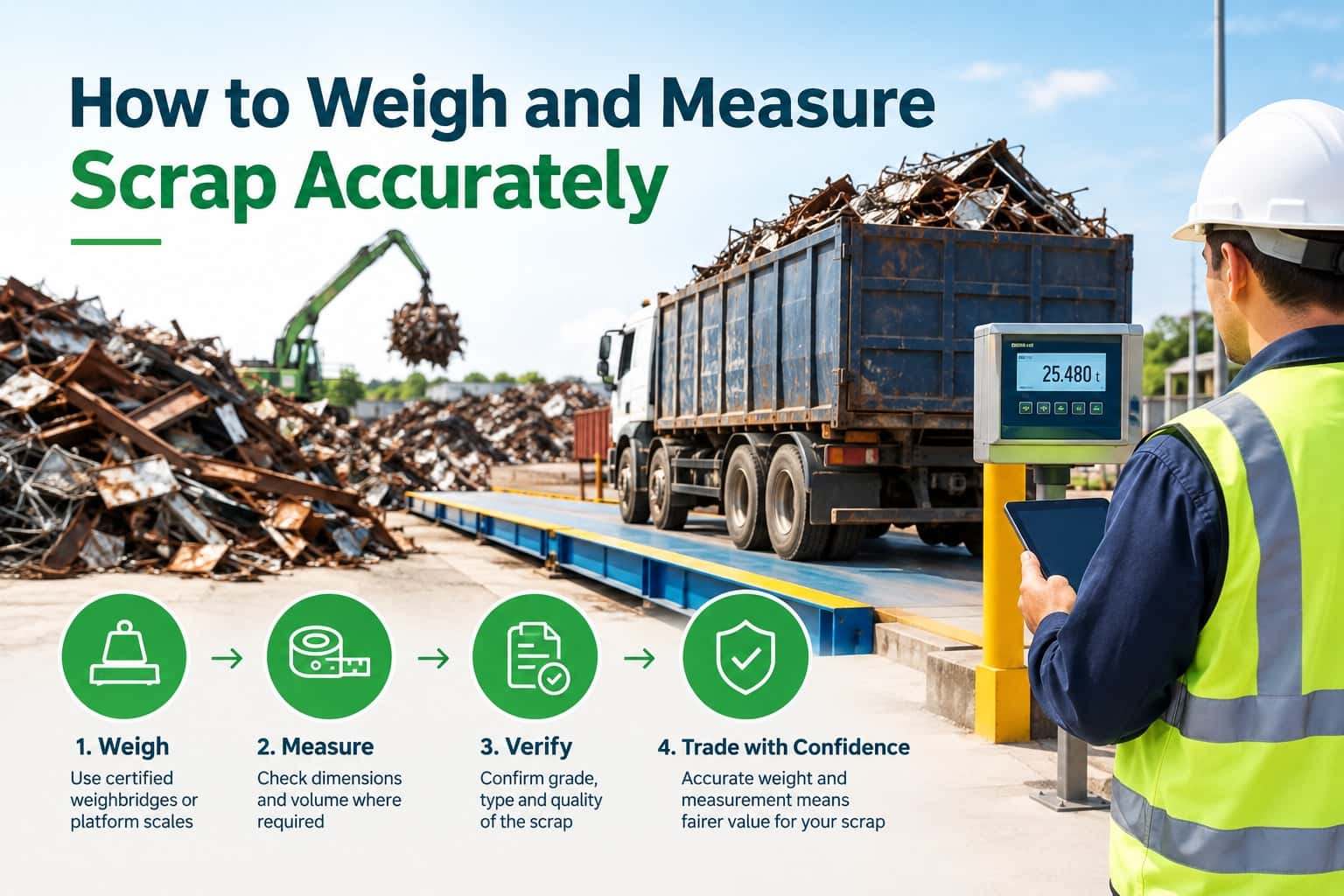
Accurate weighing is essential in scrap trading. Whether a business sells copper, aluminium, steel, paper, plastic, or mixed recyclable materials, the recorded weight can directly affect the value of a transaction. Even a small discrepancy can create disagreements when large quantities are involved.
Scrap is weighed using different equipment depending on the material, load size, and stage of the transaction. Weighbridges are commonly used for trucks and bulk loads, while platform and bench scales are suitable for smaller quantities. However, reliable weighing depends on more than the equipment itself. Moisture, contamination, vehicle tare weight, calibration, loading practices, and recordkeeping can all influence the final figure.
This guide explains how scrap is weighed in practice, how gross, tare, and net weight differ, why weight disputes occur, and how buyers and sellers can document measurements for a clearer transaction.
Why Accurate Weighing Matters in Scrap Deals
Weight is one of the main factors used to calculate the value of a scrap load. If the agreed price is based on kilograms or tonnes, the recorded quantity determines the amount payable, subject to the agreed grade, deductions, and other commercial terms.
Inaccurate weighing can affect both parties. A seller may receive less than expected if the accepted weight is lower than the dispatched weight. A buyer may pay for material that was not delivered or discover that the load contains moisture, dirt, or other unwanted material.
The risk increases in bulk transactions, where a difference between the dispatch and receiving weights can translate into a significant financial discrepancy. Repeated inconsistencies can also damage business relationships and delay future orders.
For this reason, buyers and sellers should agree on the weighing method before a shipment moves. They should clarify where the official transaction weight will be recorded, which scale or weighbridge will be used, how tare weight will be determined, and how any difference will be investigated.
Clear weighing terms support better commercial decisions and reduce the likelihood of avoidable disputes.
How Scrap Is Weighed
The weighing method depends on the quantity, transport arrangement, and type of material being traded. Three common considerations are the equipment used, the location of weighing, and whether the load can be weighed independently of its packaging or transport vehicle.
Weighbridges
A weighbridge is a large weighing platform designed to measure vehicles and their loads. Scrap yards, recycling facilities, industrial sites, and logistics operators may use weighbridges to record the weight of trucks carrying bulk material.
A common method involves weighing the loaded vehicle and then weighing the same vehicle after the scrap has been unloaded. The difference between these readings gives the calculated load weight, provided the weighing conditions and vehicle configuration are comparable.
For example, if a loaded truck records 28,400 kg and the same truck records 11,200 kg after unloading, the calculated load weight is 17,200 kg.
The result depends on reliable readings and consistent conditions. Changes in fuel, passengers, equipment, attached materials, or vehicle configuration between weighings can affect the calculation. Businesses should also check that the vehicle is positioned correctly and that the recorded readings belong to the correct transaction.
Where available, retain the weighbridge ticket showing the date, vehicle identification, gross weight, tare weight, and net weight. The precise information printed on tickets varies by operator and equipment.
Platform and Bench Scales
Platform scales are commonly used for smaller scrap loads, including bins, containers, components, and separated metal fractions. Bench scales are generally suited to lighter items or smaller batches.
These scales can help traders weigh material before it is packed, after it is sorted, or during receiving inspections. Their suitability depends on the scale's capacity, resolution, condition, and the size of the item being weighed.
Before recording a measurement, confirm that the scale is appropriate for the load and that the item sits fully on the weighing platform. Check that the display is stable and that the scale is zeroed correctly. If a container is used, its weight should be accounted for consistently.
A scale that is too small for the load or used outside its intended operating conditions may produce unreliable results. For larger or higher-value transactions, buyers and sellers should agree on an appropriate weighing method and retain supporting records.
Weighing at Origin vs Destination
Scrap may be weighed at the seller's yard, at a collection point, at a processing facility, or at the buyer's destination. The origin weight helps establish what was dispatched, while the destination weight records what was received under the receiving site's weighing process.
These figures may differ for legitimate reasons, including moisture loss, material spillage, differences in vehicle tare, or inconsistent weighing conditions. A difference should not automatically be treated as evidence of wrongdoing.
Before dispatch, agree which weight will determine settlement and whether a second weighing will be used for verification. For higher-value or bulk shipments, recording both origin and destination weights can provide a useful audit trail.
If the destination weight is the agreed settlement basis, the seller should understand that arrangement before shipping. If both readings are to be considered, the parties should agree in advance how discrepancies will be reviewed.
Gross, Tare and Net Weight Explained
Three terms are especially important when checking scrap weight records.
Gross weight is the total recorded weight of the loaded vehicle or weighing unit, including the scrap and the vehicle or container being weighed.
Tare weight is the recorded weight of the empty vehicle or container under the relevant weighing arrangement.
Net weight is the calculated weight of the scrap after subtracting the tare weight from the gross weight.
The basic calculation is:
Net weight = Gross weight − Tare weight
For example, if a truck and its scrap load weigh 32,000 kg, and the truck's tare weight is 12,500 kg, the calculated net scrap weight is 19,500 kg.
The terms must be used consistently. If a ticket records the weight of a loaded container but the wrong tare is deducted, the resulting net weight may be inaccurate. Similarly, a container's tare should not be confused with the tare of the vehicle carrying it when the weighing method requires both to be considered.
Where a transaction uses packaging, bins, pallets, or other containers, clarify how their weight will be treated. Confirm whether the recorded figure represents the scrap alone or includes associated materials.
Common Causes of Weight Disputes
Weight disagreements can occur even when both parties intend to complete a fair transaction. Common causes include:
Moisture and water: Wet scrap, rainwater, or water retained in containers can increase recorded weight. Depending on the material and agreed specification, moisture may affect the accepted quantity or trigger a deduction.
Dirt and contamination: Soil, concrete, plastics, attachments, and other unwanted material may contribute to the measured weight without being part of the agreed scrap grade. Buyers and sellers should clarify acceptable contamination and how it will be assessed.
Calibration and equipment condition: A scale or weighbridge that is poorly maintained, incorrectly configured, or not operating reliably may produce questionable readings. If a discrepancy appears, the equipment and its weighing records should be reviewed.
Different tare weights: Using an outdated tare figure or weighing a vehicle under different conditions can affect the calculated net weight.
Spillage and material loss: Scrap can be lost during loading, unloading, or transport. Packaging damage and handling practices may also affect the amount received.
Recording and communication errors: Incorrect vehicle identification, transposed digits, mixed-up tickets, unit conversions, or misunderstandings about the settlement weight can create disputes unrelated to the physical load.
The best prevention is to agree on weighing procedures before trading, document the material condition, and retain records from each relevant stage.
How to DocumeWhat to Do When Weights Don't Match
When the origin and destination weights differ, start by comparing the original tickets and checking that both records refer to the same vehicle, shipment, and weighing event.
Next, verify the gross, tare, and net calculations. Confirm that the same units were used and that the correct tare figures were applied. Review whether the vehicle configuration changed, whether material was spilled, and whether moisture or contamination could explain part of the difference.
If the cause remains unclear, ask the relevant weighing operator to clarify the readings and available equipment records. Where commercially practical, the parties may agree to a repeat weighing using suitable equipment and a mutually accepted procedure.
Do not automatically accept or reject a weight claim without reviewing the evidence. Record the discrepancy, exchange supporting documents, and follow the dispute-resolution procedure agreed in the transaction.
For more guidance on handling disagreements, see resolving scrap metal disputes. For checks that take place before shipment, the guide to scrap metal inspection and pre-shipment testing can also help businesses plan their verification process.
What to Do When Weights Don't Match
When the origin and destination weights differ, start by comparing the original tickets and checking that both records refer to the same vehicle, shipment, and weighing event.
Next, verify the gross, tare, and net calculations. Confirm that the same units were used and that the correct tare figures were applied. Review whether the vehicle configuration changed, whether material was spilled, and whether moisture or contamination could explain part of the difference.
If the cause remains unclear, ask the relevant weighing operator to clarify the readings and available equipment records. Where commercially practical, the parties may agree to a repeat weighing using suitable equipment and a mutually accepted procedure.
Do not automatically accept or reject a weight claim without reviewing the evidence. Record the discrepancy, exchange supporting documents, and follow the dispute-resolution procedure agreed in the transaction.
For more guidance on handling disagreements, see resolving scrap metal disputes. For checks that take place before shipment, the guide to scrap metal inspection and pre-shipment testing can also help businesses plan their verification process.
How Clear Weight Terms Fit into a ScrapTrade Deal
Weight terms should be part of the commercial discussion before a scrap deal is finalised. Buyers and sellers should confirm the material grade, estimated quantity, accepted weighing location, settlement weight, treatment of tare, and any agreed deductions for moisture or contamination.
ScrapTrade is a global online marketplace that connects scrap buyers and sellers. It does not take ownership of the material or act as a broker. Businesses can use the platform to present material, review offers, and communicate with potential counterparties about transaction details.
Before accepting an offer, clarify the weight basis and any inspection requirements with the other party. For example, confirm whether the final payment will use the destination net weight or another agreed measurement, and what documentation will be shared if the readings differ.
These details are especially important when selling scrap in bulk, where a clear weighing process can help both parties manage quantity and payment expectations.
Businesses estimating the potential value of a load can also use the ScrapTrade scrap calculator. Treat calculator results as estimates rather than guaranteed offers; the final value depends on the actual material, accepted weight, grade, location, and buyer terms.
FAQs
How is scrap metal weight calculated?
Scrap weight is often calculated by subtracting the empty vehicle or container's tare weight from its gross weight when loaded. The result is the net load weight. The method used should be agreed by the buyer and seller.
What is the difference between gross weight and net weight?
Gross weight includes the loaded vehicle or weighing unit and its contents. Net weight is the weight of the scrap after the relevant tare weight is deducted.
Why might a weighbridge show a different weight from another scale?
Differences can result from equipment condition, weighing procedures, vehicle configuration, tare calculations, material loss, or different measurement conditions. Compare the original records before deciding whether the discrepancy is justified.
Should scrap be weighed at origin or destination?
Either may be used, depending on the commercial agreement. For some transactions, recording both can provide additional verification. The parties should agree in advance which measurement determines settlement.
Conclusion
Accurate scrap weighing supports fair settlement, reliable inventory records, and stronger trading relationships. Weighbridges are useful for truckloads and bulk shipments, while platform and bench scales suit smaller quantities. Regardless of the equipment, reliable results depend on suitable weighing methods, correct tare calculations, consistent procedures, and clear documentation.
Buyers and sellers should agree on the settlement weight before dispatch, record relevant measurements, and investigate discrepancies using evidence rather than assumptions. Moisture, contamination, equipment condition, and vehicle tare can all affect the final figure.
If you are preparing a scrap shipment, confirm the weighing terms with your counterparty and document the load carefully. You can also use the ScrapTrade calculator to estimate your scrap value before discussing a deal with potential buyers.