

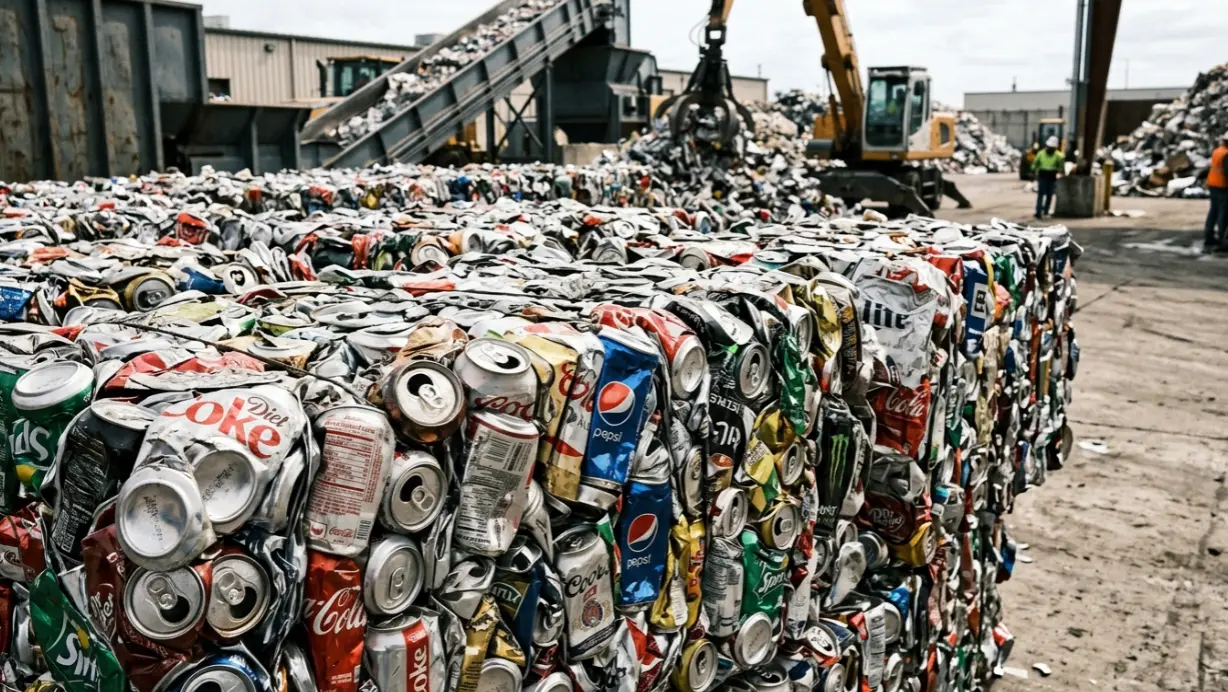
Many people collect aluminium cans and often ask how much aluminium cans are worth as scrap in Australia. While each can is extremely lightweight, aluminium cans are one of the most widely recycled materials in the country and play a major role in bulk aluminium recycling streams across Australia.
The aluminium can recycling price in Australia depends on several factors, including global aluminium market rates, bale density, cleanliness, and whether the cans are crushed, baled, or contaminated with liquids or other waste. On their own, aluminium cans have very low individual value. However, when collected in large volumes such as from households, events, hospitality venues, or recycling programs they can generate consistent and meaningful returns. Understanding how pricing works helps sellers maximise returns while contributing to efficient resource recovery and sustainable recycling practices.
Auminium Cans Scrap Price in Australia (2026 Overview)
The scrap value of aluminium cans in Australia is relatively low per kilogram, but they remain one of the most commonly recycled materials due to their high collection volume and ease of processing. Pricing mainly depends on cleanliness, bale quality, and contamination levels.
Average Aluminium Can Recycling Price Per Kg
| Condition | Price (AUD/kg) |
|---|---|
| Clean, loose aluminium cans | $0.80 – $1.50/kg |
| Baled aluminium cans | $1.20 – $2.20/kg |
| Contaminated cans (liquid/steel mix) | $0.30 – $0.80/kg |
Why Aluminium Can Prices Are Lower Than Other Scrap Aluminium
Aluminium cans in Australia typically achieve lower scrap prices compared to other aluminium types because of their low material density, higher processing requirements, and separation from higher-grade aluminium streams. While they are widely recycled, their per-kilogram value remains limited due to recovery economics.
Key Reasons
Very thin material with low weight per unit
Aluminium cans are extremely lightweight, meaning a large volume is required to produce meaningful metal recovery. This reduces overall value per kilogram compared to denser aluminium forms.
High collection and sorting costs
Recyclers must invest in collection, sorting, and processing infrastructure. The cost of handling large volumes of low-density cans reduces the price paid to sellers.
Contamination from liquids and labels
Cans often contain leftover liquids, food residue, labels, and sometimes mixed materials, all of which increase cleaning and processing costs before recycling.
Requires baling for efficient transport
Loose cans are inefficient to transport and store, so they are typically compressed into bales. This additional processing step influences pricing structures.
Recycling Stream Difference
Aluminium cans are processed separately from higher-value aluminium categories due to differences in purity and density.
- Aluminium extrusions (higher value): Clean, structural aluminium from construction and manufacturing
- Alloy wheels (higher value): Dense cast aluminium with strong recycling demand
- Sheet aluminium (industrial grade): Cleaner, more uniform material used in fabrication and construction
What Affects Aluminium Can Scrap Price in Australia?
The price of aluminium cans in Australia is influenced by a mix of global commodity trends and local processing economics. While cans are widely recycled, their value per kilogram remains relatively low due to their lightweight nature and handling requirements.
Main Pricing Factors
Global aluminium commodity price (LME index)
Aluminium can pricing is closely linked to the London Metal Exchange (LME) aluminium benchmark. When global aluminium prices rise, scrap can prices generally follow the same trend.
Bale density (loose vs compacted cans)
Loose cans are less efficient to transport and process, while compacted or baled cans reduce volume and improve logistics efficiency, often resulting in better pricing.
Contamination level
Cans with liquid residue, food waste, labels, or mixed materials require extra processing, which reduces the payout per kilogram.
Volume collected
Larger quantities typically attract better rates because they reduce handling costs and improve transport efficiency for recyclers.
Transport and processing efficiency
Closer proximity to recycling facilities and lower handling costs can improve overall returns for sellers.
Why Baled Cans Pay More
Baled aluminium cans generally achieve higher prices compared to loose cans because they are more efficient for the recycling supply chain.
Easier and cheaper to transport in bulk
Reduced handling time at recycling facilities
Higher processing efficiency in smelters and recyclers
Scrap Aluminium Can Value Breakdown
The value of aluminium cans in Australia depends heavily on how they are collected and supplied to recyclers. While the material itself is consistent, pricing improves significantly with higher volumes, better compaction, and more efficient handling.
Household Collection
Household aluminium can collection usually involves small quantities gathered in bags or bins. Because these loads are low in weight and require additional sorting and consolidation, they generally receive the lowest per-kilogram payout. Many scrap yards also apply minimum weight thresholds, meaning very small loads may not achieve optimal pricing.
Commercial Collection
Commercial sources such as bars, restaurants, sporting venues, and event organisers generate far larger and more consistent volumes of aluminium cans. This steady supply allows recyclers to reduce collection frequency and processing costs, which typically results in better pricing compared to household loads. Some buyers also offer scheduled pickup arrangements for regular commercial suppliers.
Bulk Recycling Streams
Bulk aluminium can streams represent the highest-value category in this segment. When cans are collected in large, compacted bales, transport and processing efficiency improves significantly, leading to the best available pricing tier. These loads are preferred by industrial recyclers because they reduce handling costs and integrate efficiently into large-scale aluminium recycling operations.
Where to Sell Aluminium Cans in Australia
Selling aluminium cans in Australia depends on volume, convenience, and the type of buyer. Different collection channels offer varying returns, with pricing improving significantly as volume and material quality increase.
Local Scrap Metal Yards
Local scrap metal yards are the most accessible option for small and mixed household collections. They generally accept loose aluminium cans and offer instant payment on delivery. However, because of handling and sorting costs, rates are usually lower for small loads, especially when minimum weight thresholds are not met.
Container Deposit & Recycling Points
In some Australian states, container deposit schemes provide a fixed refund per eligible aluminium can. This option is best suited for small-volume collectors, as returns are based on count rather than weight-based scrap pricing. While not tied to commodity markets, it can sometimes provide better value for low-volume household recycling.
Bulk Scrap Buyers & Recyclers
Bulk recyclers offer the highest pricing tier for aluminium cans, particularly when supplied in large quantities or baled form. These buyers typically service commercial operations such as hospitality venues, events, and waste contractors. They prioritise efficiency, meaning clean and compacted loads receive better rates.
Aluminium Cans vs Other Scrap Metals
Aluminium cans sit at the lower end of the scrap value spectrum in Australia compared to other commonly traded metals. While they are widely recycled and collected in large volumes, their lightweight structure limits per-kilogram returns.
Scrap Metal Value Comparison
| Metal Type | Value Level |
|---|---|
| Copper | Highest |
| Brass | High |
| Aluminium extrusions | Medium-high |
| Aluminium cans | Low-medium |
| Steel | Low |
FAQs
1. How much are aluminium cans worth as scrap in Australia?
Aluminium cans in Australia typically sell for $0.80 to $2.20 per kg, depending on whether they are loose, clean, or baled. Clean, compacted loads generally achieve higher pricing due to lower handling and transport costs for recyclers.
2. Do crushed aluminium cans get more money?
Crushing cans does not increase the price per kilogram, but it can improve storage and transport efficiency. By reducing volume, crushing allows collectors to accumulate larger quantities more easily, which can lead to better overall returns when sold in bulk.
3. Where is the best place to sell aluminium cans?
The best selling options include scrap metal yards, bulk recyclers, and online scrap platforms. Larger quantities, especially baled cans, tend to achieve stronger pricing through industrial recyclers and competitive buyer networks.
4. Why are aluminium cans worth less than other aluminium scrap?
Aluminium cans are thin, lightweight, and require additional processing steps such as sorting, cleaning, and baling. In contrast, aluminium extrusions and alloy wheels are denser and cleaner, making them more efficient to recycle and therefore higher in value per kilogram.
5. Can businesses earn money from recycling aluminium cans?
Yes, businesses such as hospitality venues, stadiums, and event organisers can generate steady income by collecting and selling large volumes of aluminium cans. Consistent supply and bulk quantities often improve pricing and make collection programs financially viable.
Conclusion
The scrap aluminium cans price in Australia (2026) remains relatively low on a per-kilogram basis, but it becomes economically meaningful when collected in large, consistent volumes. Clean, dry, and properly compacted cans consistently achieve better pricing because they reduce processing and transport costs for recyclers.
To maximise returns, the key is scale and quality control focus on bulk collection, avoid contamination from liquids or mixed waste, and ensure cans are stored or baled efficiently. Sellers can further improve outcomes by comparing offers from multiple scrap buyers or using competitive platforms such as ScrapTrade to access more market-aligned pricing.