
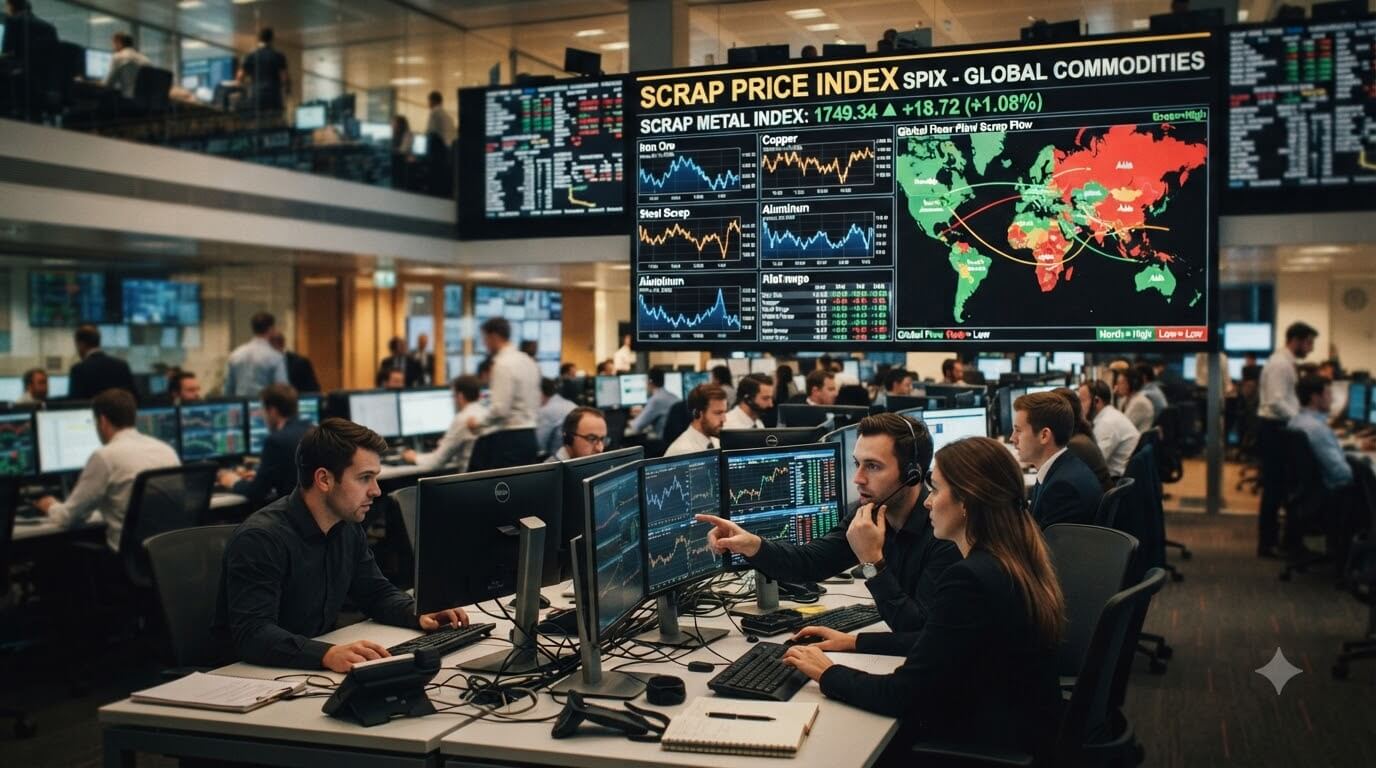
Scrap metal prices can change quickly, making it difficult for buyers, sellers, recyclers, and traders to know whether a quoted price is competitive. A single “scrap price” is rarely enough because copper, aluminium, steel, brass, stainless steel, and other recyclable materials have different grades, specifications, markets, and pricing structures.
A scrap price index provides a structured way to monitor scrap values and understand market direction. Instead of relying on an outdated price list or one local yard's quote, buyers and sellers can use pricing benchmarks and market data as a reference before negotiating a transaction.
What Is a Scrap Price Index?
A scrap price index is a pricing reference designed to track the value of specific scrap materials or categories over time.
Rather than treating all scrap as one commodity, an index can separate materials by:
- Metal type
- Scrap grade
- Material quality
- Geographic market
- Price basis
- Currency
- Measurement unit
- Trading period
Professional price reporting agencies also publish scrap assessments using defined specifications and methodologies. For example, S&P Global publishes assessments for specific ferrous scrap markets, while Fastmarkets publishes ferrous scrap indices based on market data and price-discovery methodologies.
Why Is a Scrap Price Index Important?
Scrap trading is influenced by global commodity markets, regional supply and demand, processing costs, transportation, currency movements, and material quality.
A market index or pricing reference can help businesses:
Understand Market Direction
Tracking prices over time can show whether a particular scrap category is rising, falling, or remaining relatively stable.
Benchmark Buyer Offers
If you receive an offer for copper, aluminium, or steel, a current market reference gives you additional information for evaluating that offer.
Improve Negotiation
Knowing the approximate market value can put sellers and buyers in a stronger position during negotiations.
Support Procurement Decisions
Recyclers, manufacturers, and scrap dealers can use price information when deciding when and how much material to purchase.
Value Scrap Inventory
Businesses holding significant quantities of scrap can estimate the potential value of their inventory using current indicative prices.
ScrapTrade Price Index
The ScrapTrade Price Index is designed specifically around the scrap and recycling market.
ScrapTrade's pricing platform provides material-specific pricing information and an online calculator where users can select scrap type, material or grade, country, currency, unit, and quantity. Prices on the platform are refreshed daily.
The ScrapTrade pricing interface includes categories such as:
- HMS 1 – Heavy Melting Steel
- HMS 2 – Heavy Melting Steel
- Shredded Steel
- Structural Steel
- Light Sheet Metal
- Whitegoods scrap
- Cast iron
- Copper
- Aluminium
- Brass
- Stainless steel
- Other recyclable materials
This gives users a more structured way to research scrap prices than searching for a generic “scrap price.”
Explore the ScrapTrade Price Index
How the ScrapTrade Price Index Works
The ScrapTrade pricing experience is designed to make scrap price research straightforward.
Step 1: Select the Scrap Type
Choose the appropriate category, such as ferrous metals or non-ferrous metals.
Step 2: Select the Material or Grade
Choose the closest material specification.
For example:
Non-Ferrous Metals → Bare Bright Copper
Step 3: Select the Country
Choose the market relevant to your transaction.
Step 4: Select Currency
The calculator supports multiple currencies, allowing users to view pricing in the currency relevant to their market.
Step 5: Select the Unit
You can work with:
- Kilograms
- Pounds
- Metric tonnes
Step 6: Enter the Quantity
Enter the amount of scrap you are evaluating.
Step 7: View the Estimated Value
The calculator uses the selected pricing information to provide an estimated value.
This creates a simple workflow:
Material → Grade → Market → Currency → Unit → Quantity → Estimated Value
Copper Scrap Price Index
Copper is one of the most important non-ferrous scrap materials.
Common copper scrap grades include:
- Bare bright copper wire
- Copper tubing
- Copper pipe
- Insulated copper cable
- Mixed copper
- Copper offcuts
Because these materials differ in copper content and processing requirements, they should not automatically be treated as one price category.
For example, if an indicative price is A$9/kg and a business holds 2,000 kg, the estimated gross value is:
2,000 × A$9 = A$18,000
The actual transaction price may differ because of grade, purity, location, logistics, buyer requirements, and market conditions.
Aluminium Scrap Price Index
Aluminium is another major category in scrap trading.
Typical grades include:
- Aluminium extrusion
- Aluminium cans
- Aluminium sheet
- Aluminium wheels
- Aluminium profiles
- Mixed aluminium
For example:
5,000 kg × A$2.50/kg = A$12,500
A change of only A$0.20/kg would change the value by:
5,000 × A$0.20 = A$1,000
This demonstrates why monitoring current scrap pricing can matter significantly for commercial quantities.
Steel Scrap Price Index
Ferrous scrap is commonly traded in large quantities.
Major categories include:
- HMS 1
- HMS 2
- Shredded steel
- Structural steel
- Light sheet
- Cast iron
- Stainless steel
Industry price assessments often define precise grades, locations, delivery terms, and units because “steel scrap” is too broad to represent one single market price.
For example:
20 tonnes × A$400/tonne = A$8,000
This is an illustrative calculation rather than a guaranteed market rate.
What Causes Scrap Prices to Change?
Understanding the factors behind scrap price movements is essential when using an index.
Global Commodity Markets
Copper and aluminium, for example, are influenced by broader commodity markets.
Supply and Demand
Manufacturing, construction, infrastructure investment, and industrial production can affect demand for recyclable metals.
Scrap Availability
A shortage or surplus of particular grades can influence market pricing.
Energy Costs
Recycling and processing metals require energy, which can affect the economics of scrap processing.
Transportation and Freight
Scrap is often bulky and expensive to move. Freight costs can influence regional pricing.
Currency Movements
International scrap prices can change in local-currency terms even when the underlying commodity price has moved less dramatically.
Material Quality
Clean, sorted material generally has different economics from contaminated or mixed scrap.
Why ScrapTrade Is Different
Traditional scrap pricing often requires sellers to call multiple yards, request quotes, compare spreadsheets, and manually convert currencies or units.
ScrapTrade is designed to bring more of that process online.
Its pricing ecosystem combines:
- Scrap price information
- Material and grade selection
- Daily price updates
- Multiple countries
- Multiple currencies
- Multiple units
- Scrap value calculation
- ScrapTrade Price Index
- Online B2B scrap marketplace
Who Can Benefit From a Scrap Price Index?
Scrap Sellers
Understand indicative market value before negotiating.
Scrap Buyers
Benchmark purchasing decisions against available market information.
Recycling Companies
Monitor material values and manage inventory.
Manufacturers
Evaluate the potential value of production scrap and metal offcuts.
Scrap Dealers
Use market references when buying and selling material.
Exporters and Importers
Compare pricing across international markets and currencies.
Industrial Businesses
Estimate the potential value of recurring scrap streams.
FAQs
What is a scrap price index?
A scrap price index is a reference for tracking the value of specific scrap materials or grades. It helps buyers and sellers understand market pricing and compare offers. Unlike a single yard quote, an index can provide a broader benchmark for evaluating scrap transactions.
How often do scrap prices change?
Scrap prices can change frequently because they are influenced by commodity markets, supply and demand, material availability, transportation, currency movements, and regional conditions. ScrapTrade's pricing platform states that its displayed prices are updated daily.
Is the ScrapTrade Price Index the same as a scrap yard price?
No. An index or online pricing reference should be treated as an indicative benchmark. A scrap yard or buyer may offer a different amount depending on material grade, condition, quantity, location, logistics, and market demand.
Can I calculate my scrap value using ScrapTrade?
Yes. ScrapTrade provides an online scrap price calculator where you can select the material or grade, country, currency, unit, and quantity to estimate the potential value of your scrap.
Conclusion
A scrap price index gives buyers, sellers, recyclers, dealers, and industrial businesses a stronger way to understand the scrap market.
Instead of relying on one outdated price or a single local quote, you can compare material-specific pricing, monitor market movements, consider grade and location, and calculate the potential value of your inventory.
The ScrapTrade Price Index takes this concept into an online scrap trading environment, combining scrap pricing, daily updates, material and grade selection, multiple currencies and units, and an AI-powered scrap calculator.