

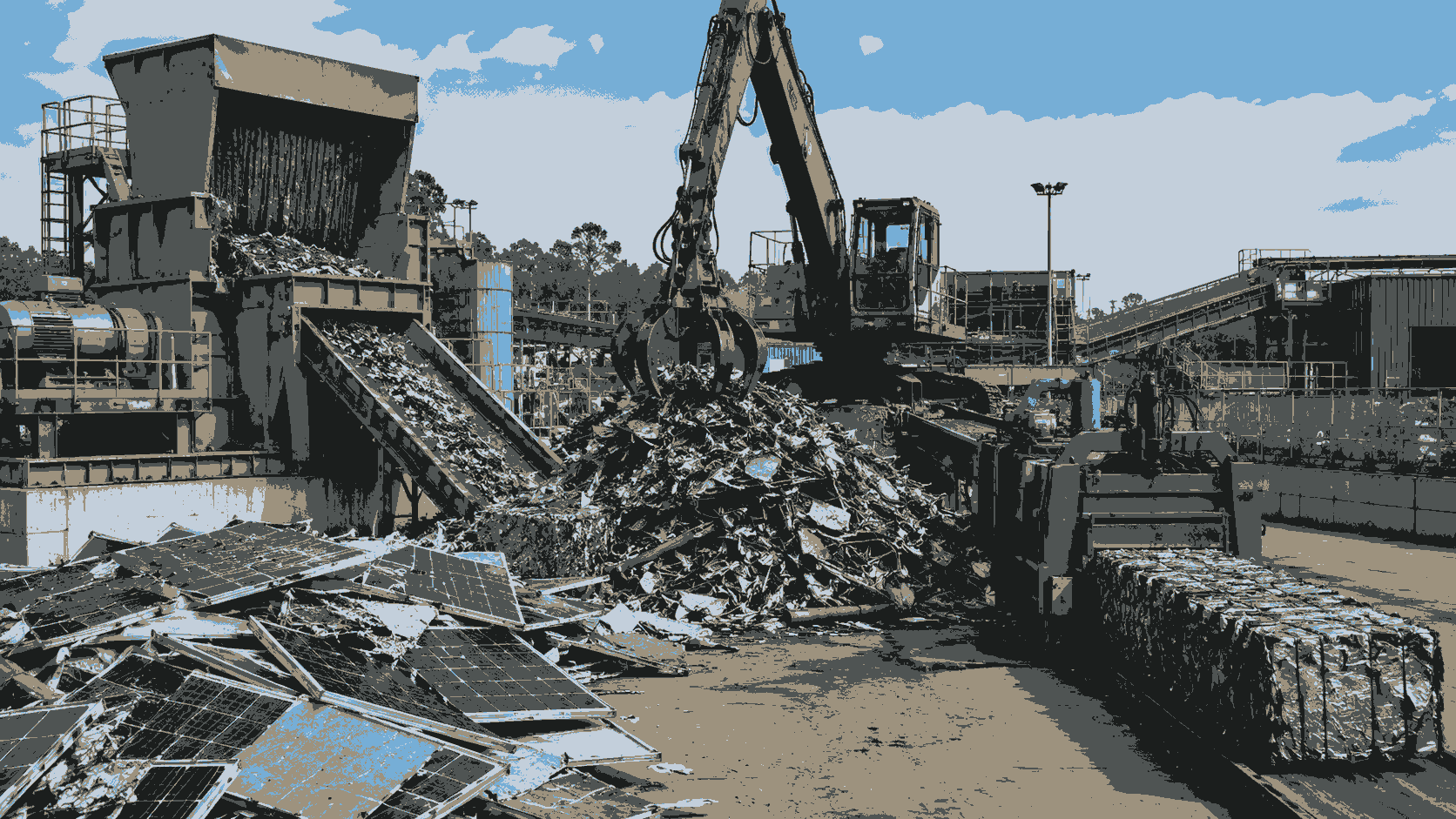
Scrap processing equipment helps recycling businesses prepare metal and other recyclable materials for storage, transport, and resale. From compacting loose material into dense bundles to cutting oversized metal and separating mixed scrap, the right machinery can improve material handling and make loads easier for buyers to assess.
For scrap yard owners, metal recyclers, and industrial processors, choosing equipment involves more than comparing machine features. Material type, incoming volume, required output grade, available space, labour, energy use, maintenance, and safety all influence the decision.
Different machines also serve different purposes. A baler compresses material, a shear cuts it, a shredder reduces it into smaller pieces, and sorting equipment separates materials based on their properties. Understanding these differences helps businesses choose a processing route that suits their operations.
This guide explains the main types of scrap processing equipment, which materials they suit, how processing can affect scrap value, and how businesses can trade processed materials through ScrapTrade.
Why Processing Adds Value to Scrap
Unprocessed scrap often arrives in mixed shapes, sizes, and conditions. It may include bulky components, loose offcuts, tangled material, or items that require separation before they can be sold to a recycler or mill.
Processing can make scrap easier to handle, store, transport, and inspect. For example, compressing suitable material into bales can reduce the space it occupies, while cutting large metal pieces can make them easier to load and prepare for further processing.
Processing may also improve consistency. Separating different metals, removing unwanted attachments, and reducing contamination can help a seller meet a buyer's specifications. However, processing does not automatically increase the value of every load. Machinery requires investment, energy, maintenance, labour, and operating space. Excessive processing can even add costs without producing a better commercial outcome.
The goal is to produce material that matches a defined buyer requirement while keeping the total processing cost under control. Scrap businesses should identify the likely outlet for a material before deciding how much processing it needs.
Main Types of Scrap Processing Equipment
Scrap yards use different machines depending on the materials they handle and the products they intend to sell. Four major equipment categories are balers, shears and cutters, shredders, and sorting and separation systems.
Balers
A scrap metal baler compresses suitable material into compact bundles, commonly called bales. Depending on the machine design and material, balers may process metal offcuts, cans, sheet scrap, and certain other recyclable materials.
Compression reduces the volume of loose material and can make stacking, storage, and transport more manageable. In some operations, baling also creates more consistent loads for downstream buyers.
However, baling is not suitable for every material. Items containing sealed containers, hazardous residues, pressurised components, or unidentified substances may require inspection or special handling before they can enter a baler. Different materials may also need to be kept separate to avoid contamination.
When selecting a baler, businesses should consider the type and condition of the incoming scrap, the required bale dimensions, feeding arrangements, available floor space, power requirements, maintenance needs, and the receiving buyer's specifications. A bale that is convenient to store is not necessarily acceptable to every buyer.
Shears and Cutters
Scrap shears and cutting systems reduce oversized metal into more manageable pieces. They are used in various applications, including processing structural steel, metal sections, selected vehicle components, and other suitable ferrous or non-ferrous scrap.
Cutting can help prepare bulky material for transport, storage, or downstream melting and processing. It may also make inspection easier by allowing oversized pieces to be handled in a controlled manner.
The correct cutting method depends on the metal type, thickness, shape, and condition. Some materials may be suitable for mechanical shearing, while others require different cutting methods or specialist handling.
Before processing, operators should check for enclosed spaces, pressurised components, fuel or oil residues, batteries, electrical equipment, and other potential hazards. Cutting unknown or improperly prepared material can cause fires, releases, or serious injuries.
Businesses should also consider the quality requirements of their intended buyer. Cutting material to the correct size can support acceptance, but it does not replace sorting, grading, or contamination checks.
Shredders
Scrap shredders break suitable materials into smaller pieces using a mechanical size-reduction process. They are used in metal recycling and other recovery operations where the incoming material requires further processing or separation.
Depending on the system, shredders may handle selected metal scrap, end-of-life vehicle components, appliances, and mixed recyclable materials. The material must be compatible with the machine and its operating requirements.
Shredding can make downstream separation easier. For example, a processing line may combine size reduction with magnetic separation to recover ferrous metals and additional systems to separate other material fractions. The final output depends on the incoming material and the equipment configuration.
Shredding is not simply a matter of making scrap smaller. It can generate dust, noise, heat, and sharp fragments, and certain feed materials can create fire or explosion risks. Batteries, sealed containers, gas cylinders, electronic components, and other hazardous items need appropriate identification and handling before material enters the line.
Shredded output should be inspected for contamination, particle-size consistency, and compliance with the receiving buyer's grade specifications. Buyers may have specific requirements for composition, residual non-metallic content, and preparation.
Sorting and Separation Equipment
Sorting and separation systems help recover distinct materials from mixed scrap. The methods used depend on the material stream and may include:
- Magnetic separation: Helps separate ferrous metals, such as iron and steel, from non-magnetic materials.
- Eddy-current separation: Can separate certain non-ferrous metals from mixed material streams.
- Screening: Separates material according to particle size.
- Manual sorting: Allows trained workers to identify and remove selected materials or contaminants.
- Sensor-based sorting: Uses suitable detection technologies to identify and separate certain material types.
No single system separates every material perfectly. Results depend on the feed composition, preparation, machine configuration, and operating conditions.
Effective sorting can improve consistency and help create more clearly defined products for different buyers. Nevertheless, recovered fractions may still require inspection or additional processing before they meet a specific commercial grade.
How Processing Affects Grade, Density and Price
Processing can influence the commercial value of scrap in several ways.
Grade consistency: Sorting and preparation can help produce a material stream that more closely matches a buyer's specification. Mixed or incorrectly identified scrap may attract deductions or be rejected.
Density and transport efficiency: Baling and some other forms of preparation can reduce the volume of suitable materials. This may improve storage efficiency and help transport planning, although weight limits and loading requirements still apply.
Contamination: Removing unwanted attachments or separating materials can improve acceptance. Conversely, processing that introduces oil, plastics, glass, dirt, or other contaminants can reduce the quality of the output.
Particle size and preparation: Shearing or shredding can create material suitable for a particular downstream process. However, buyers may specify size ranges or reject material that is excessively fine, inconsistent, or difficult to handle.
Processing costs: Electricity, labour, consumables, maintenance, equipment downtime, and handling all affect the economics of a processed load.
The final selling price therefore depends on more than the machine used. Buyers may consider metal composition, grade, cleanliness, quantity, market conditions, delivery location, and the costs of further treatment. Sellers should compare the net commercial outcome after processing and logistics costs rather than relying only on a higher quoted price per unit.
Cost, Space and Throughput Considerations
Scrap processing equipment represents an operational investment. Before purchasing or upgrading machinery, businesses should assess the expected material volume, current handling bottlenecks, available space, and the type of scrap they receive consistently.
Throughput should be evaluated in the context of the complete workflow. A machine's advertised processing rate, where provided by its manufacturer, does not necessarily represent the amount a yard can process during normal operations. Feeding, sorting, operator availability, maintenance, material variability, and downstream storage can all limit real-world output.
Space planning should account for incoming material, machine access, safe operating zones, finished products, vehicle movements, and storage areas. Equipment also needs appropriate power, foundations or installation arrangements, and maintenance access.
Safety is essential. Operators should receive suitable training and follow the machine manufacturer's instructions, guarding requirements, lockout procedures, and applicable workplace safety rules. Emergency stops, routine inspections, dust and noise controls, fire prevention, and safe material handling should be considered as part of the operating plan.
Where a business has inconsistent material volumes, outsourcing certain processing steps may be more practical than purchasing equipment. Comparing contract processing costs with the full cost of ownership can help determine which approach fits the business.
Selling Processed vs Unprocessed Scrap
Both processed and unprocessed scrap can be commercially viable. The right choice depends on buyer specifications, transport costs, processing capability, and the amount of additional value created.
Selling unprocessed material may suit businesses that have limited machinery or access to buyers who accept scrap in its current condition. This approach can reduce processing investment, although the buyer may deduct costs for sorting, cutting, contamination, or handling.
Processed material may appeal to buyers seeking a more consistent grade, compact loads, or material prepared for a specific production process. However, the seller must account for processing costs and ensure that the finished product meets the agreed specification.
For example, a yard handling mixed steel offcuts might compare the cost of cutting and sorting them with the price and freight terms offered for the unprocessed load. An aluminium recycler might evaluate whether baling suitable material improves transport efficiency enough to justify the additional operating cost.
The most useful comparison is the net return from each route, taking into account the material price, preparation, labour, freight, handling, inspection, and potential deductions. Buyers should be consulted before significant processing work begins.
How to List Processed Material on ScrapTrade
ScrapTrade is a global online marketplace that connects businesses looking to buy and sell scrap materials. Scrap yard owners and processors can use the platform to present available material to potential buyers and discuss commercial requirements directly.
To create a useful listing, provide an accurate description of the processed output. Include the metal type, grade where known, quantity, location, preparation method, contamination status, and photographs. If the material has been baled, sheared, shredded, or separated, explain that clearly rather than using a broad description such as mixed scrap.
Where available, include weight records, inspection details, and other documentation that helps buyers evaluate the material. Avoid claiming a certified grade unless the material has been assessed against the relevant specification.
Before agreeing to a transaction, confirm the buyer's acceptance criteria, minimum quantity, collection or delivery arrangements, payment terms, and any required inspection. Compare offers based on the complete deal rather than price alone.
You can explore the ScrapTrade marketplace to identify potential trading opportunities. For businesses that process material regularly, accurate listings can help communicate inventory details and make it easier for buyers to assess whether the output fits their needs.
FAQs
What is the difference between a baler and a scrap shear?
A baler compresses suitable scrap into compact bundles, while a shear cuts metal into smaller pieces. A baler primarily reduces volume; a shear changes the size and shape of the material.
What is a scrap metal shredder used for?
A shredder reduces suitable scrap into smaller fragments. It is often used as part of a wider processing line that may include magnetic, mechanical, or sensor-based separation equipment.
Does processing always increase scrap value?
No. Processing may improve grade consistency, reduce volume, or make material easier to handle, but equipment, labour, energy, and maintenance costs can outweigh the benefits. The result depends on the material and buyer requirements.
Which equipment is best for a small scrap yard?
There is no single best machine for every yard. The decision depends on the material handled, incoming volume, available space, staffing, budget, and buyer specifications. Some businesses may benefit more from sorting and basic preparation than from investing in large processing systems.
Conclusion
Balers, shears, shredders, and sorting systems perform different roles in scrap processing. The right combination can improve material handling, create more consistent grades, and prepare scrap for suitable downstream buyers. However, machinery selection must reflect the materials handled, the required output, operating costs, available space, and safety requirements.
Before investing in equipment or changing a processing workflow, identify the buyer specification and calculate the likely net commercial benefit. Processing should solve a real operational or trading problem, not simply add another step to the workflow.
ScrapTrade helps scrap yards, recyclers, and processors connect with potential buyers and sellers through a global online marketplace. Register your scrap yard on ScrapTrade to present your available materials and explore new trading opportunities.