

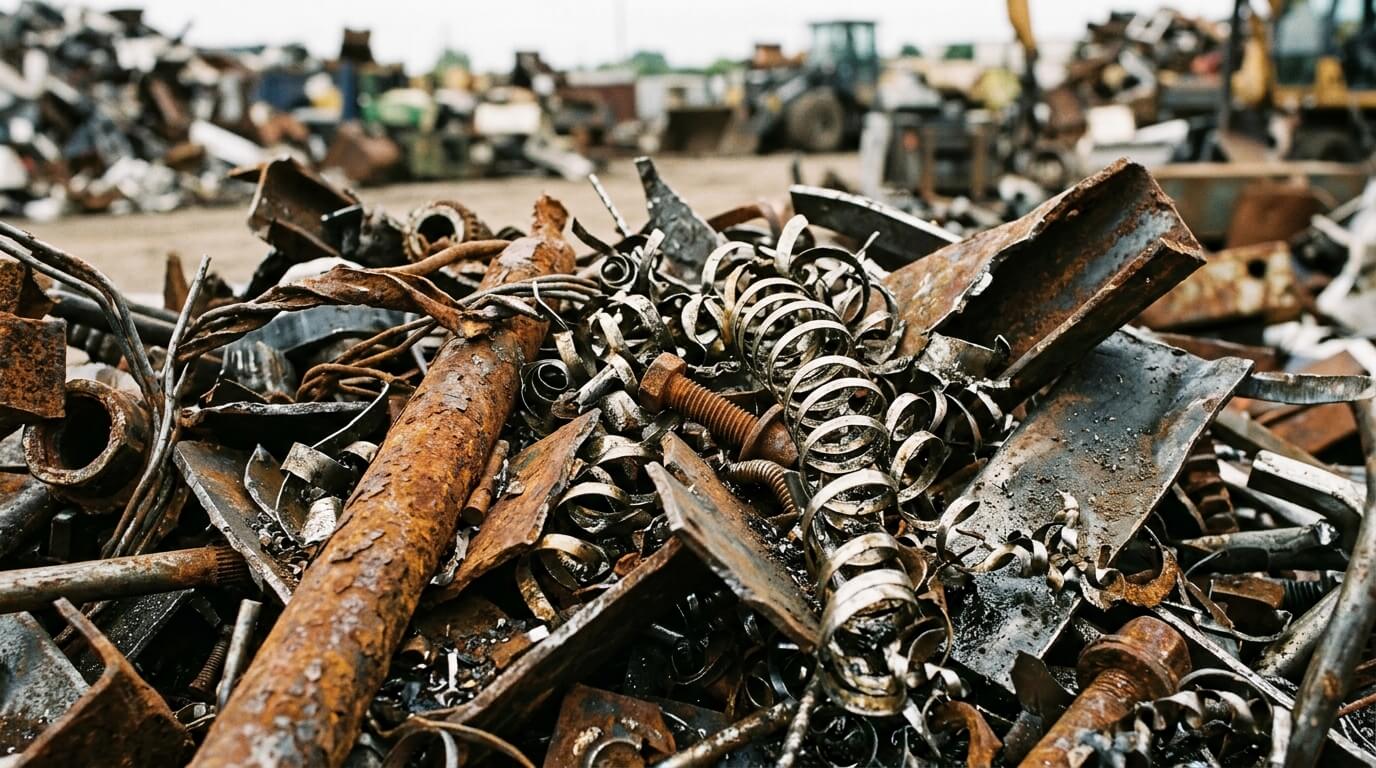
Steel is Australia's most widely recycled metal by volume, making scrap steel prices in Australia an important consideration for demolition contractors, manufacturers, farmers, construction companies, and household sellers. From structural steel and machinery to demolition debris and heavy melting steel (HMS), understanding current market values can help sellers maximise returns and make informed recycling decisions.
Unlike higher-value metals such as copper and aluminium, steel is typically traded in bulk quantities and is often priced per tonne rather than per kilogram. While the per-unit value is lower, large volumes can still generate substantial returns for commercial and industrial sellers.
Steel scrap prices are influenced by several factors, including material grade, contamination levels, transportation costs, export demand, and global steel production trends. Market conditions can shift throughout the year as steel mills, recyclers, and exporters respond to changes in construction activity, manufacturing output, and international commodity markets.
Current Scrap Steel Prices in Australia (2026)
Steel scrap prices in Australia are generally lower per kilogram than non-ferrous metals such as copper and aluminium, but large volumes can still generate significant returns. Pricing varies based on steel grade, density, contamination levels, processing requirements, and demand from domestic mills and export markets.
Scrap Steel Price Per Kg
| Steel Type | Price (AUD/kg) |
|---|---|
| Heavy Melting Steel (HMS 1) | $0.35 – $0.55 |
| HMS 2 Steel | $0.25 – $0.45 |
| Structural Steel | $0.20 – $0.40 |
| Shredded Steel Scrap | $0.30 – $0.50 |
| Mixed Steel Scrap | $0.10 – $0.30 |
| Light Gauge Steel | $0.08 – $0.25 |
Scrap Steel Price Per Tonne
Because steel is commonly traded in bulk quantities, industrial sellers, demolition contractors, and recyclers often track prices on a per-tonne basis rather than per kilogram. Tonnage pricing provides a clearer picture of potential returns for larger loads.
Average Scrap Steel Prices Per Tonne
| Steel Type | Price (AUD/Tonne) |
|---|---|
| HMS 1 Steel | $350 – $550 |
| HMS 2 Steel | $250 – $450 |
| Structural Steel | $200 – $400 |
| Shredded Steel Scrap | $300 – $500 |
| Mixed Steel Scrap | $100 – $300 |
| Light Steel Scrap | $80 – $250 |
HMS 1 (Heavy Melting Steel)
HMS 1 is one of the highest-value ferrous scrap categories and is widely traded by steel recyclers, mills, and export buyers. Its higher value comes from its density, cleanliness, and strong recovery efficiency during steel production.
This grade commonly includes thick steel plate, structural beams, heavy machinery components, and industrial steel offcuts. These materials contain substantial steel content and are typically generated by construction, demolition, manufacturing, and industrial operations.
HMS 1 is characterised by heavy-gauge steel with minimal contamination. Clean material that is free from excessive rust, non-metal attachments, and mixed waste generally attracts the strongest pricing.
Typical price: $350–$550 per tonne
HMS 2 Steel
HMS 2 is a widely traded ferrous scrap grade that contains steel with a higher level of contamination or surface deterioration than HMS 1. While still valuable, it generally attracts lower prices due to the additional processing required before recycling.
This category commonly includes mixed ferrous steel, lightly rusted steel, and steel containing minor contaminants such as coatings, attachments, or non-metal residues. The material remains suitable for recycling but does not meet the stricter quality standards required for HMS 1 classification.
Because of its broader specification, HMS 2 is frequently generated from demolition projects, construction waste, farm equipment, and mixed industrial scrap streams.
Typical price: $250–$450 per tonne
Structural Steel
Structural steel is a common source of recyclable ferrous metal and is frequently generated by construction projects, building demolitions, and engineering fabrication operations. Due to its size, weight, and consistent composition, it is widely accepted by scrap yards, steel mills, and industrial recyclers.
Typical structural steel materials include I-beams, channels, RHS (Rectangular Hollow Sections), SHS (Square Hollow Sections), and structural steel plate. These products are commonly used in commercial buildings, industrial facilities, warehouses, bridges, and infrastructure projects.
The value of structural steel depends on factors such as thickness, contamination levels, cutting requirements, and total tonnage. Clean, heavy sections generally attract stronger prices because they are easier to process and offer higher recovery yields.
Typical price: $200–$400 per tonne
Shredded Steel Scrap
Shredded steel scrap consists of ferrous metal that has been mechanically processed into smaller, uniform pieces through industrial shredding equipment. This processing improves handling efficiency and makes the material more suitable for large-scale recycling operations.
Steel mills and recyclers often prefer shredded scrap because it provides a consistent furnace feedstock and allows for more efficient melting and material recovery. The uniform size also reduces transportation and storage costs compared to bulky unprocessed steel.
The key advantages of shredded steel scrap include improved transport efficiency, easier handling, and stronger demand from steel manufacturers seeking reliable recycled feedstock.
Typical price: $300–$500 per tonne
Who Sells Scrap Steel?
Construction Companies
Construction businesses generate significant volumes of scrap steel through building projects, renovations, and site clearances. Common recyclable materials include structural steel, reinforcement steel, and demolition-related steel waste. Large projects often produce enough material to qualify for bulk pricing and collection services.
Farmers
Agricultural operations are a major source of ferrous scrap across Australia. Common materials include old machinery, fencing, sheds, tanks, and worn farm equipment. Accumulated steel from property clean-ups can often provide a valuable additional revenue stream.
Manufacturers
Manufacturing facilities regularly produce steel scrap during fabrication and production processes. Production offcuts, fabrication waste, rejected components, and industrial scrap are common sources. Consistent volumes and cleaner material streams often make manufacturers attractive suppliers for recyclers.
Demolition Contractors
Demolition contractors are among the largest suppliers of scrap steel by volume. Building removals, industrial site decommissioning, and infrastructure projects frequently generate substantial quantities of HMS steel, structural steel, and mixed ferrous scrap.
FAQs
What is the current scrap steel price per kg in Australia?
Most scrap steel in Australia currently sells for $0.10 to $0.55 per kg, depending on the grade, density, cleanliness, quantity, and prevailing market demand. Premium grades such as HMS 1 generally achieve the highest prices.
What is HMS steel scrap?
HMS stands for Heavy Melting Steel, a widely traded ferrous scrap category used by steel mills and recyclers. It typically includes heavy-gauge steel materials such as structural beams, thick plate, machinery components, and industrial steel offcuts.
How much is scrap steel worth per tonne?
Scrap steel prices generally range from $100 to $550 per tonne, depending on the type and quality of steel being sold. Clean HMS 1 and shredded steel usually command stronger prices than mixed or light-gauge steel scrap.
Does rust reduce scrap steel value?
Light surface rust typically has minimal impact on scrap steel pricing. However, excessive corrosion, heavy oxidation, contamination, and attached non-metal materials can reduce recovery value and lead to lower offers from recyclers.
Is steel priced per kg or per tonne?
Both pricing methods are used. Smaller household loads are often quoted on a per-kilogram basis, while commercial, industrial, demolition, and bulk steel transactions are generally priced per tonne due to the larger volumes involved.
Conclusion
The scrap steel price in Australia in 2026 is influenced by several key factors, including material grade, cleanliness, volume, transportation costs, and global steel market conditions. While steel does not command the same per-kilogram values as copper or aluminium, large volumes can still generate substantial returns for commercial, industrial, and demolition sellers.
Among the major steel categories, HMS 1 and shredded steel scrap typically achieve the strongest prices due to their density, quality, and strong demand from steel mills. In contrast, mixed steel scrap and light-gauge steel generally attract lower rates because of increased handling requirements and lower recovery efficiency.