

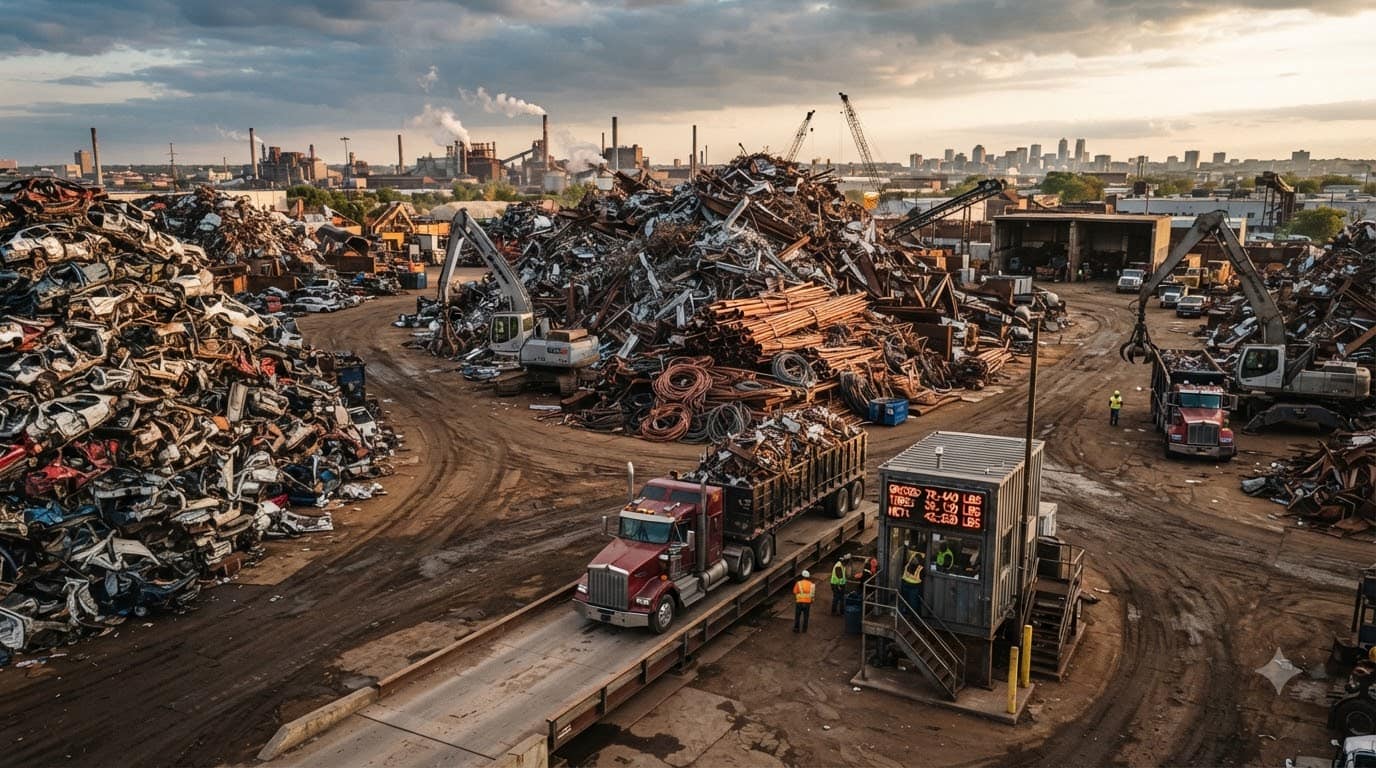
Selling a small quantity of scrap locally is very different from selling a large commercial lot to a business buyer.
When the material is available in bulk, buyers typically want clear information about the grade, total quantity, preparation, location, loading arrangements, and commercial terms before making an offer.
For sellers, larger lots can create access to a wider range of B2B opportunities, including recyclers, processors, manufacturers, mills, exporters, and other industrial buyers.
Understanding how bulk scrap metal sales work can help sellers prepare better listings, attract suitable buyers, and negotiate transactions more efficiently.
Why Sell Scrap in Bulk?
Bulk trading can be useful when a business has accumulated a significant quantity of recyclable material and wants to sell it as a commercial lot rather than dividing it into many smaller transactions.
Manufacturers, demolition companies, scrap yards, recycling facilities, processors, and industrial businesses may all generate material in quantities that are suitable for bulk trading.
Selling a larger lot can also simplify the commercial process. Instead of arranging numerous small transactions, a seller may be able to negotiate with a buyer for a defined quantity under agreed terms.
However, bulk does not automatically mean a higher price.
The value of a large scrap lot still depends on its material, grade, quality, quantity, location, logistics, market conditions, and buyer requirements.
What Counts as a Bulk or Container-Load Lot
There is no universal quantity that defines every bulk scrap transaction.
The meaning of "bulk" can depend on the material, buyer, market, transportation method, and commercial agreement.
A container-load lot generally refers to material being prepared for shipment in a shipping container, while other large transactions may use different transportation or freight arrangements.
The important point is that sellers should describe the actual quantity available rather than relying only on the word "bulk."
Minimum Order Quantities Explained
A Minimum Order Quantity (MOQ) is the smallest quantity a seller is prepared to supply under a particular offer or transaction.
MOQs are common in B2B trading because handling, processing, loading, transportation, administration, and other costs can make very small transactions less practical.
For scrap sellers, the appropriate MOQ depends on the material and business model.
A recycler selling processed material may establish a different MOQ from a manufacturer clearing production scrap.
How Bulk Pricing Is Typically Set
Bulk scrap pricing is influenced by several variables rather than one universal formula.
The material's grade and quality are usually important starting points, but buyers may also consider quantity, location, transportation costs, processing requirements, market conditions, and expected recovery or yield.
A seller should therefore avoid treating a generic market reference as the guaranteed price of a specific bulk lot.
Grade and Quality
Two lots described using the same broad material name can have different commercial values.
For example, clean and well-sorted copper may be evaluated differently from mixed copper-containing material. Similarly, prepared steel scrap can be evaluated differently from a mixed load containing significant contamination or non-metallic material.
Clear grading and accurate descriptions help buyers make more meaningful offers.
Quantity and Location
Large quantities can change the economics of transportation and processing.
A buyer may be interested in a bulk lot but adjust the offer based on where the material is located and the cost of moving it to the buyer's facility, port, or processing location.
This is why sellers should include the material's location in the listing.
Market Conditions
Scrap prices can change with broader commodity and recycling market conditions.
A market reference can help establish context, but it should not automatically be treated as the final price for a particular transaction.
For more information on the factors behind scrap valuation, see How Scrap Metal Pricing Works.
Comparing Multiple Offers
When several buyers are interested in a bulk lot, sellers may be able to compare offers rather than accepting the first proposal.
However, the highest headline price is not necessarily the best overall offer.
Sellers should also consider payment terms, pickup or shipping responsibilities, inspection conditions, timing, quantity commitments, and other commercial terms.
Preparing a Large Lot (sorting, weighing, loading)
Preparation is one of the most important stages of bulk scrap selling.
A large lot should be organized so that the buyer can understand what is being offered and the physical material can be handled efficiently.
Sorting
Separate materials and grades wherever practical.
Avoid describing a mixed load as a clean single grade if it contains significant quantities of other materials.
If the lot contains multiple grades, explain the composition clearly rather than hiding the variation inside a broad description.
Weighing
Accurate weight information is essential for bulk transactions.
Depending on the arrangement, the transaction may involve gross weight, tare weight, net weight, weighbridge records, or another agreed weighing method.
The buyer and seller should establish how final weight will be determined before the deal is closed.
Loading
Loading should follow the agreed transportation and carrier requirements.
For container-load scrap, consider the permitted weight, distribution of cargo, accessibility, and safe handling of the material.
The actual loaded material should correspond to the agreed listing and transaction specification.
Photos and Documentation
Good photographs can help buyers evaluate a large lot before arranging an inspection or making an offer.
Where relevant, sellers can also provide specifications, test results, certificates, weighing records, or other supporting information.
The objective is simple: make the listing match the material.
Finding Buyers for Large Volumes
Finding a buyer for a large quantity can be challenging if a seller relies only on local contacts.
A digital B2B marketplace can provide another channel for reaching potential buyers.
ScrapTrade allows businesses to create listings for recyclable materials and connect with potential buyers through a global online trading environment.
A seller can provide material information, quantity, location, and other relevant details so potential buyers can assess the opportunity.
This can be particularly useful for businesses that want to expand beyond their existing customer base.
Target the Right Buyer
Not every buyer is suitable for every bulk lot.
A copper processor may have no interest in a large steel shipment. A manufacturer may require a particular alloy or specification. An exporter may have different logistics requirements from a domestic processor.
The more accurately a seller describes the material, the easier it becomes to attract relevant enquiries.
Payment and Risk on Large Deals
Large scrap transactions require careful attention to payment and transaction risk.
The parties should agree on payment timing, payment method, inspection conditions, delivery or pickup requirements, and what happens if the actual material differs from the agreed specification.
Do Not Focus Only on Price
A bulk transaction can involve significant financial exposure.
A seller should consider whether the buyer is properly identified and whether the agreed payment arrangement is appropriate for the transaction.
A buyer should similarly evaluate the seller, material information, documentation, and transaction conditions before committing funds.
FAQs
What is bulk scrap metal?
Bulk scrap metal generally refers to a relatively large commercial quantity of recyclable material being sold as a lot or under a larger supply arrangement. The exact quantity depends on the material, buyer, market, and transaction.
What is a scrap metal MOQ?
A scrap metal MOQ, or Minimum Order Quantity, is the smallest quantity a seller is willing to supply in a particular transaction or offer.
Can I sell scrap in a container load?
Yes. Scrap can be prepared for containerized shipment where the material, quantity, logistics, carrier requirements, and applicable shipping arrangements support container transport.
How should I price bulk scrap?
Start with the material's grade and quality, then consider quantity, location, logistics, market conditions, preparation, and buyer requirements. A market reference can provide context, but the final transaction price depends on the specific lot and agreed terms.
Conclusion
Selling scrap in bulk requires more preparation than selling a small quantity through a local transaction.
Large buyers want to understand the material, grade, quantity, location, preparation, loading arrangements, and commercial terms before committing to a purchase.
Sellers can improve the process by sorting material accurately, recording reliable weights, preparing clear photographs, stating realistic minimum order quantities, and providing relevant specifications.
Pricing should also be evaluated as a complete commercial proposition rather than simply comparing one headline number. Grade, quality, quantity, logistics, location, market conditions, payment terms, and buyer requirements can all influence the final deal.
For businesses looking to reach more potential buyers, a digital marketplace can provide an additional channel for presenting bulk material to a broader B2B audience.