

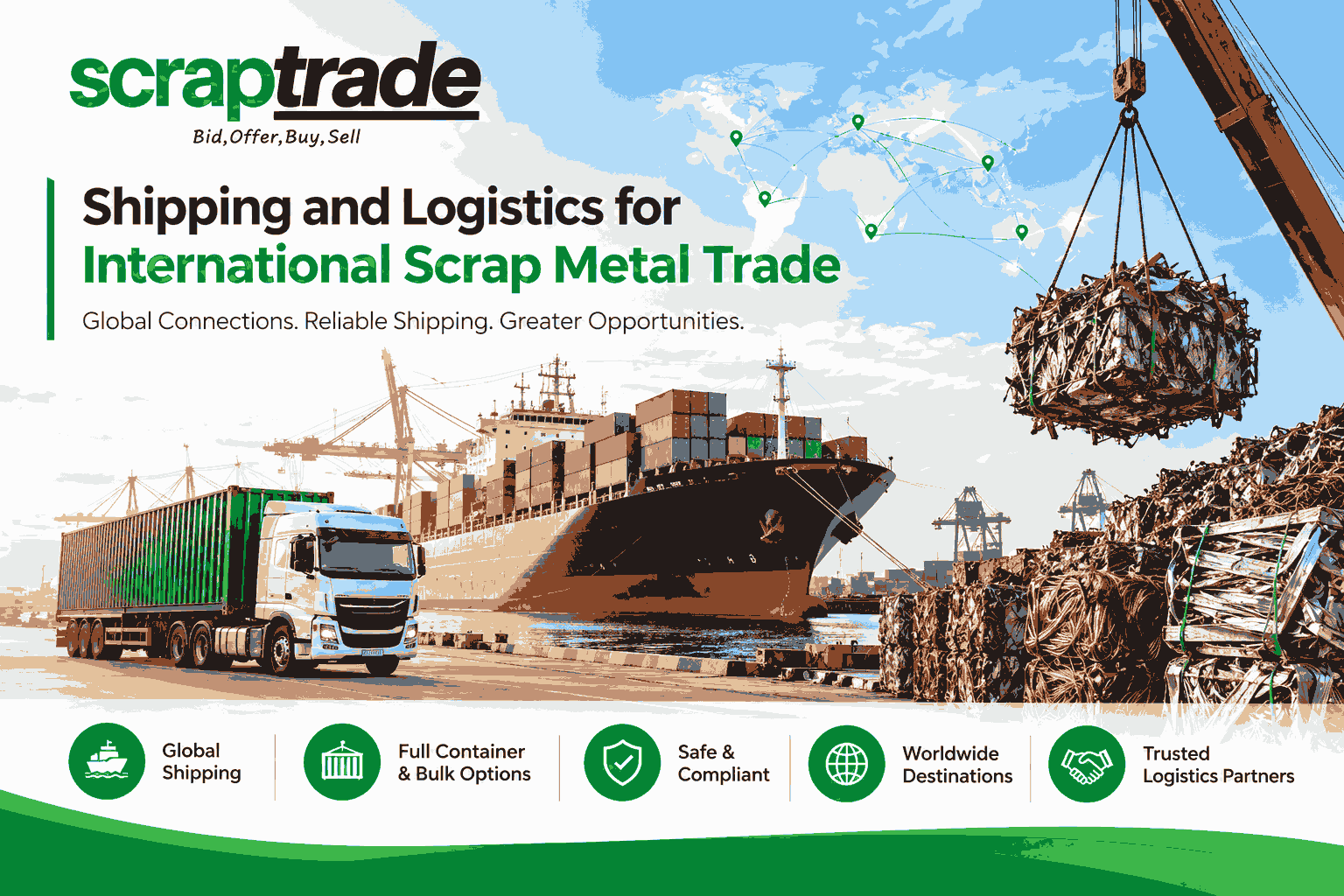
International scrap metal trading involves more than finding a buyer and agreeing on a price. Once a deal is confirmed, the material must be prepared, loaded, weighed, documented, transported, and delivered according to the agreed terms.
Choosing the right shipping method can affect the total cost, delivery schedule, material condition, and profitability of a transaction. Scrap metal may move in containers, bulk vessels, or breakbulk shipments, depending on the material, quantity, handling requirements, and destination.
For exporters, importers, recyclers, and scrap traders, understanding these logistics helps prevent avoidable delays and misunderstandings. This guide explains how scrap metal is typically shipped internationally, how Incoterms® work, which documents may be required, and what to check before dispatch.
How Scrap Metal Is Typically Shipped (Containers, Bulk, Breakbulk)
The best shipping method depends on the type of scrap, shipment volume, material preparation, port facilities, and buyer requirements. Not every material is suitable for every freight method, so sellers should confirm the transport plan with the buyer and logistics provider before committing to a shipment.
Container Shipping
Container shipping is commonly used for prepared scrap loads that can be safely packed and transported in standard freight containers. Depending on the material and carrier requirements, this may include certain grades of copper, aluminium, steel scrap, e-waste, and other recyclable materials.
Before choosing container transport, traders should check whether the material is accepted by the carrier and destination authorities. Scrap must be prepared and loaded so it does not create unacceptable safety, contamination, leakage, or handling risks.
Container loading requires attention to weight distribution, secure packing, container condition, and any applicable cargo restrictions. Heavy materials must remain within the container's rated limits, payload restrictions, and transport weight limits. Overloading or uneven distribution can create safety problems and lead to delays.
Bulk Shipping
Bulk shipping may suit large, compatible quantities of material that can be transported as cargo without individual packaging. Depending on the vessel and port facilities, bulk freight can be considered for certain large-scale ferrous scrap shipments.
The suitability of bulk transport depends on material characteristics, cargo handling equipment, loading and unloading facilities, and the commercial arrangement. Traders should confirm how the cargo will be measured, handled, protected, and discharged before agreeing to the shipment.
Bulk shipping can involve coordination between the seller, buyer, port operator, vessel operator, surveyor, and other service providers. A clear plan for cargo readiness and loading schedules is important.
Breakbulk Shipping
Breakbulk shipping involves cargo handled as individual pieces or units rather than being transported loose in a bulk hold or packed into a standard container. It may be appropriate for certain oversized equipment, large metal components, or cargo that does not fit normal container arrangements.
This method requires suitable lifting equipment, handling procedures, securing arrangements, and port capabilities. Scrap traders should confirm whether the shipment's dimensions, weight, shape, and condition are compatible with the proposed vessel and handling facilities.
The key principle is to select a method based on the actual cargo rather than assuming one shipping option is always cheaper or faster.
Incoterms Explained for Scrap Deals
Incoterms® are internationally recognised commercial terms published by the International Chamber of Commerce (ICC). They help buyers and sellers define specific responsibilities for delivery, costs, and risk transfer.
The chosen rule should be written into the sales contract alongside the named place or port and the applicable version of the rules. Incoterms® do not replace the full sales contract and do not independently determine every issue, such as payment, ownership transfer, or the consequences of a breach.
Common terms include:
EXW (Ex Works): The seller makes the goods available at the agreed location. The buyer takes on substantial responsibility for arranging collection and transport. The parties should consider whether the arrangement is practical for export formalities in the relevant jurisdiction.
FCA (Free Carrier): The seller delivers the goods to the carrier or another nominated party at the agreed place, in accordance with the rule. FCA can be useful for various transport modes, including containerised shipments.
FOB (Free On Board): Used for sea and inland waterway transport. The seller delivers the goods on board the vessel nominated by the buyer at the named port of shipment. Risk transfers according to the rule when delivery on board has occurred.
CFR (Cost and Freight): Used for sea and inland waterway transport. The seller pays the cost of carriage to the named destination port, while risk transfers when the goods are on board the vessel at the port of shipment.
CIF (Cost, Insurance and Freight): Also used for sea and inland waterway transport. The seller pays carriage and arranges the insurance required by the rule to the named destination port. Risk still transfers at the port of shipment when the goods are on board the vessel.
DAP (Delivered at Place): The seller arranges delivery to the named destination, with the goods ready for unloading. The buyer generally handles import clearance and applicable import duties and taxes.
These terms allocate different responsibilities, so traders should compare the total commercial arrangement rather than just the quoted freight cost. For example, a quote that includes ocean freight may still leave the buyer responsible for destination handling, import clearance, duties, and inland delivery.
For containerised cargo, traders should check whether FCA is more suitable than FOB based on how the carrier takes custody of the goods. Agree on the rule and named location before booking freight.
Loading, Weighing, and Documentation
A shipping plan should be agreed before the material reaches the port. Incomplete documentation, incorrect weights, unsuitable packaging, or discrepancies between the cargo and the sales contract can lead to extra costs and delays.
Loading and Cargo Preparation
Prepare the material according to the agreed grade and buyer specification. Remove or manage unwanted contamination where required, and separate different grades if the contract calls for distinct material categories.
Before loading, confirm that the container or transport equipment is suitable for the cargo. Check loading limits, weight distribution, securement, and any special handling requirements. Photograph the material and loading process where practical, and keep records that can help resolve later disputes.
Weighing and Inspection
Buyers and sellers should agree on the weighing method before dispatch. Depending on the transaction, weight may be established through a weighbridge, a certified scale, a surveyor, or another agreed process.
Clarify whether the contract uses gross weight, tare weight, or net material weight and how any deductions will be calculated. If inspection or sampling is required, establish who performs it, when it takes place, and how discrepancies will be handled.
Common Shipping Documents
Documentation varies by material, route, destination, and contract. International scrap shipments may require some or all of the following:
- Commercial invoice: Records the transaction details, including the parties, material description, quantity, price, and currency.
- Packing list: Describes the cargo packages or units and their weights and contents, where applicable.
- Bill of lading: A key sea-freight transport document with functions that depend on its form and the applicable arrangements.
- Certificate of origin: May be required to establish the origin of the goods under relevant origin rules.
- Inspection or weight certificate: May be requested to confirm material condition, grade, or quantity.
- Customs and regulatory documents: May be required for export, transit, or import clearance, depending on the shipment.
Common Shipping Delays and How to Avoid Them
- International scrap shipments can be delayed by documentation errors, cargo discrepancies, missed vessel cut-offs, customs inspections, transport disruptions, or problems with loading and unloading arrangements.
- Incorrect or incomplete documents: Differences in material descriptions, weights, company details, or shipment references can trigger requests for corrections. Prepare documents early and check them against the contract and booking details.
- Unclear material specifications: If the cargo does not match the agreed grade or contains unexpected contamination, a buyer may request an inspection or dispute acceptance. Provide accurate descriptions and agree on quality requirements before dispatch.
- Missed booking deadlines: Freight bookings have cut-off times for cargo delivery and documentation. Confirm the schedule with the forwarder and allow enough time for preparation, loading, and required checks.
- Weight and loading problems: Overweight cargo, uneven loading, or unsuitable packing may require rework. Confirm limits and loading plans before transport begins.
- Customs or regulatory issues: Missing permits, incorrect classifications, or incomplete declarations may delay clearance. Verify requirements for the material, origin, transit route, and destination before shipment.
- Unclear responsibilities: Disagreements about freight, port charges, insurance, unloading, or inland transport can slow a transaction. State the Incoterms® rule, named place, and responsibilities in the contract.
- A practical approach is to create a shipment checklist covering cargo readiness, transport booking, documents, inspection, loading, insurance where applicable, payment milestones, and delivery arrangements. Assign responsibility for each item and confirm completion before the relevant deadline.
FAQs
What is the best way to ship scrap metal internationally?
It depends on the material, quantity, preparation, route, buyer requirements, and available port facilities. Container shipping may suit prepared loads, bulk shipping may suit certain large-volume cargoes, and breakbulk can work for oversized pieces or equipment.
What is the difference between FOB and CIF for scrap metal?
Under FOB, the seller delivers the goods on board the nominated vessel at the shipment port. Under CIF, the seller also pays for carriage and specified insurance to the destination port, but risk transfers at the shipment port. Both are intended for sea and inland waterway transport.
Which documents are needed to export scrap metal?
Documents may include a commercial invoice, packing list, bill of lading, and any applicable origin, inspection, customs, or regulatory documents. The exact requirements depend on the material, countries involved, and transaction terms.
Who pays for shipping in an international scrap deal?
The agreed contract and Incoterms® rule determine which party is responsible for particular transport costs and obligations. Confirm the named place, destination charges, insurance, customs responsibilities, and inland transport arrangements before agreeing on a price.
Conclusion
Shipping and logistics are essential parts of international scrap metal trading. The choice between container, bulk, and breakbulk transport depends on the cargo and route, while Incoterms® help define delivery responsibilities, costs, and risk allocation.
Accurate material descriptions, agreed weighing and inspection methods, complete documentation, and early coordination with logistics providers can reduce avoidable delays. Before dispatch, make sure the buyer and seller understand the shipment plan, applicable requirements, and responsibilities under the contract.
ScrapTrade helps businesses connect with potential scrap buyers and sellers through a global online marketplace. Prepare your material details, clarify the commercial terms, and use the ScrapTrade marketplace to explore your next trading opportunity.