

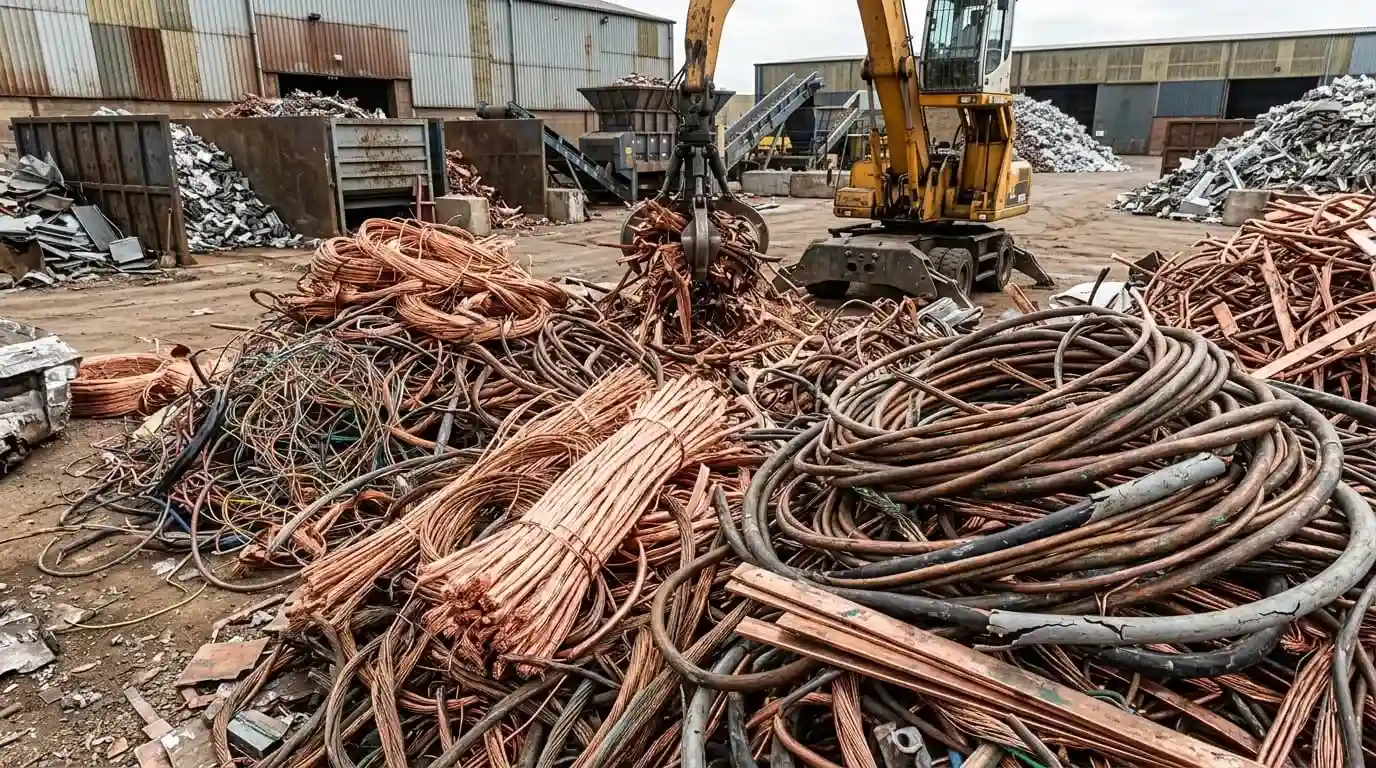
If you’re selling copper scrap in Australia, one of the biggest decisions is whether to strip insulated wire or sell it as-is. Many beginners lose money simply because they don’t understand how to strip copper wire for maximum scrap value or when stripping actually increases profit.
Copper is one of the highest-paying scrap metals, but insulated wire is often downgraded by scrap yards because of plastic content. Stripping the insulation can upgrade the material into higher-value “bright copper,” but only if the weight difference and labour effort make sense.
When Is It Worth Stripping Copper Wire?
Copper Grade Difference Matters
The value of copper scrap depends heavily on its grade and level of processing. Clean, bright copper wire achieves the highest pricing, while insulated wire is valued lower due to the extra processing required to remove non-metal materials. Even small differences in preparation can significantly impact final payout.
| Copper Type | Typical Price (AUD/kg) |
|---|---|
| Bright clean copper wire | $12 – $15 |
| Stripped mixed copper | $10 – $13 |
| Insulated copper wire | $3 – $8 |
The main profit driver is the gap between insulated and clean copper grades, which can be substantial depending on market conditions.
Simple Profit Rule
Stripping copper wire is generally worth it when the copper content is high enough to justify the labour involved. Thicker wires with a higher metal-to-insulation ratio tend to deliver better returns after stripping. It also becomes more profitable when you are handling bulk quantities, as efficiency improves with scale and time spent per kilogram decreases.
When NOT to Strip Copper Wire
Stripping is usually not worthwhile when the wire is thin, low-grade, or heavily insulated relative to copper content. It also becomes inefficient when the labour time required outweighs the price difference between insulated and clean copper. In some cases, scrap yards already offer competitive pricing for insulated wire, making additional processing unnecessary. Mixed or contaminated wire further reduces efficiency and often results in minimal financial gain after sorting.
Tools You Need to Strip Copper Wire
Manual Tools
For small-scale copper stripping, basic hand tools are often sufficient and cost-effective. A utility knife is commonly used to cut insulation, while wire cutters help trim and separate cables. Pliers assist in gripping and pulling insulation away from the copper core, especially on thicker wires. Protective gloves, preferably heat-resistant or cut-resistant, are essential to reduce the risk of injury during manual stripping work.
Mechanical Tools
For higher volumes of copper wire, mechanical tools significantly improve speed and efficiency. Hand-crank or electric wire stripping machines allow consistent insulation removal with minimal effort. Rotary wire strippers are useful for continuous processing of mid-volume cable. For industrial or bulk scrap operations, heavy-duty cable stripping machines are the most efficient option, capable of handling large-diameter wires quickly and consistently.
Best Methods to Strip Copper Wire
Manual Stripping Method
Manual stripping is best suited for small quantities of copper wire where investment in machinery is not justified. The process involves cutting wires into manageable lengths, carefully scoring the insulation with a knife, and then pulling the outer layer away using pliers to expose the clean copper core. This method requires patience and precision but allows full control over the recovery process.
Mechanical Stripping Method
Mechanical stripping is the preferred option for bulk copper processing due to its speed and consistency. Wire is fed into a stripping machine where blade settings are adjusted based on insulation thickness. The machine processes wire continuously, separating clean copper from plastic insulation efficiently, which improves recovery rates and reduces manual effort.
Burning Method (NOT Recommended)
Burning insulation off copper wire is sometimes used informally but is strongly discouraged. It releases toxic fumes, can be illegal in many regions, and significantly reduces copper quality by contaminating the metal surface. This method lowers resale value and creates environmental and health hazards.
Types of Copper Wire You’ll Encounter
Bright Copper Wire
Bright copper wire is clean, uncoated, and free from insulation or contamination. It is considered the highest-grade copper scrap and consistently achieves the top market price due to its purity and ease of recycling.
Thick Insulated Cable
Thick insulated cable contains a high copper core surrounded by heavy insulation. This type is often the most profitable candidate for stripping because the copper yield is high relative to the effort required to remove insulation.
Thin Electrical Wire
Thin electrical wire has a low copper-to-insulation ratio, making it less efficient to process manually. In many cases, the labour required to strip it outweighs the value gained from upgrading it to clean copper.
Mixed Wire Scrap
Mixed wire scrap includes a combination of different grades and types of copper wire. Without proper sorting, it is typically valued lower because buyers must separate and grade the material before processing.
Safety Tips When Stripping Copper Wire
Key Safety Practices
Safe copper wire stripping starts with proper handling techniques and protective equipment. Wearing cut-resistant gloves helps prevent injuries from sharp insulation edges and cutting tools. Using the correct tools for stripping also reduces the risk of accidental slips or uneven cuts. It is important to maintain control when scoring insulation to avoid blade injuries. Working in a well-ventilated area further improves safety, especially when dealing with older or contaminated cables that may release dust or residues.
Electrical Safety
Electrical safety is critical when handling copper wire scrap. Always ensure that wires are completely disconnected and not carrying any electrical current before starting work. Never attempt to strip cables that are still connected to a power source or live circuit. Even when wires appear inactive, they should be treated as potentially hazardous until fully verified as safe, as residual current or incorrect assumptions can lead to serious injury.
How to Maximise Copper Scrap Value
Separate Copper Grades
Proper grading is one of the most effective ways to increase copper scrap returns. Keeping bright copper wire, stripped copper, and insulated copper separate ensures each category is valued accurately based on its market rate. Mixed copper is typically downgraded because buyers must account for additional sorting and processing costs.
Remove Contamination
Clean copper consistently achieves higher pricing because it reduces processing effort for recyclers. Removing plastic plugs, steel fittings, rubber insulation residue, and other attached materials helps improve purity and increases buyer confidence in the material quality.
Sell in Bulk
Larger copper volumes generally attract stronger pricing and more competitive offers. Bulk loads are more attractive to buyers because they reduce transport frequency and improve processing efficiency. As a result, sellers often receive better per-kilogram rates and faster buyer responses when offering higher quantities.
Common Mistakes When Stripping Copper Wire
Spending Too Much Time on Low-Grade Wire
One of the most common errors is over-processing thin or low-copper-content wires. These materials often have low yield, so the labour required to strip them can exceed the value gained, making the process inefficient and unprofitable.
Using Wrong Tools
Using inappropriate tools such as standard knives on thick or industrial cables slows down the stripping process and increases safety risks. It also leads to inconsistent stripping quality, which can reduce copper recovery efficiency and overall resale value.
Not Comparing Insulated vs Stripped Prices
Failing to check current local pricing for both insulated and stripped copper is a frequent mistake. Without comparing rates, sellers may spend time stripping wire that could have been sold profitably in its insulated form, resulting in lower overall returns.
FAQs
Is it worth stripping copper wire in Australia?
Yes, but only in specific cases. Stripping is worth it when dealing with thicker copper cables where the price difference between insulated and clean copper is significant enough to justify the labour involved. Thin or low-grade wires are often better sold as-is.
What is the best tool to strip copper wire?
For small-scale work, a utility knife or basic hand tools are sufficient. For larger volumes, a wire stripping machine is the most efficient option as it improves speed, consistency, and overall copper recovery.
Can I sell copper wire without stripping it?
Yes, most scrap yards accept insulated copper wire. However, it is usually paid at a lower rate compared to clean or stripped copper because additional processing is required to remove insulation.
Why does stripped copper pay more?
Stripped copper has higher purity because it contains no insulation or contaminants. This reduces processing costs for recyclers and increases its resale value in the scrap metal market.
Is burning copper wire legal?
No, burning insulation from copper wire is generally illegal and environmentally harmful. It releases toxic fumes and damages copper quality, which also lowers its overall market value.
Conclusion
Learning how to strip copper wire for maximum scrap value in Australia can significantly improve your overall returns, particularly when working with thick, high-grade cables that contain a high copper ratio. By separating materials correctly, using the right tools, and understanding market price differences between insulated and clean copper, sellers can make more informed decisions that directly impact profitability.
However, stripping is not always the best option. The actual profit depends on wire thickness, total volume, and the time required to process it. In many cases, selling insulated copper directly can be just as effective, especially when labour costs outweigh the price difference.