

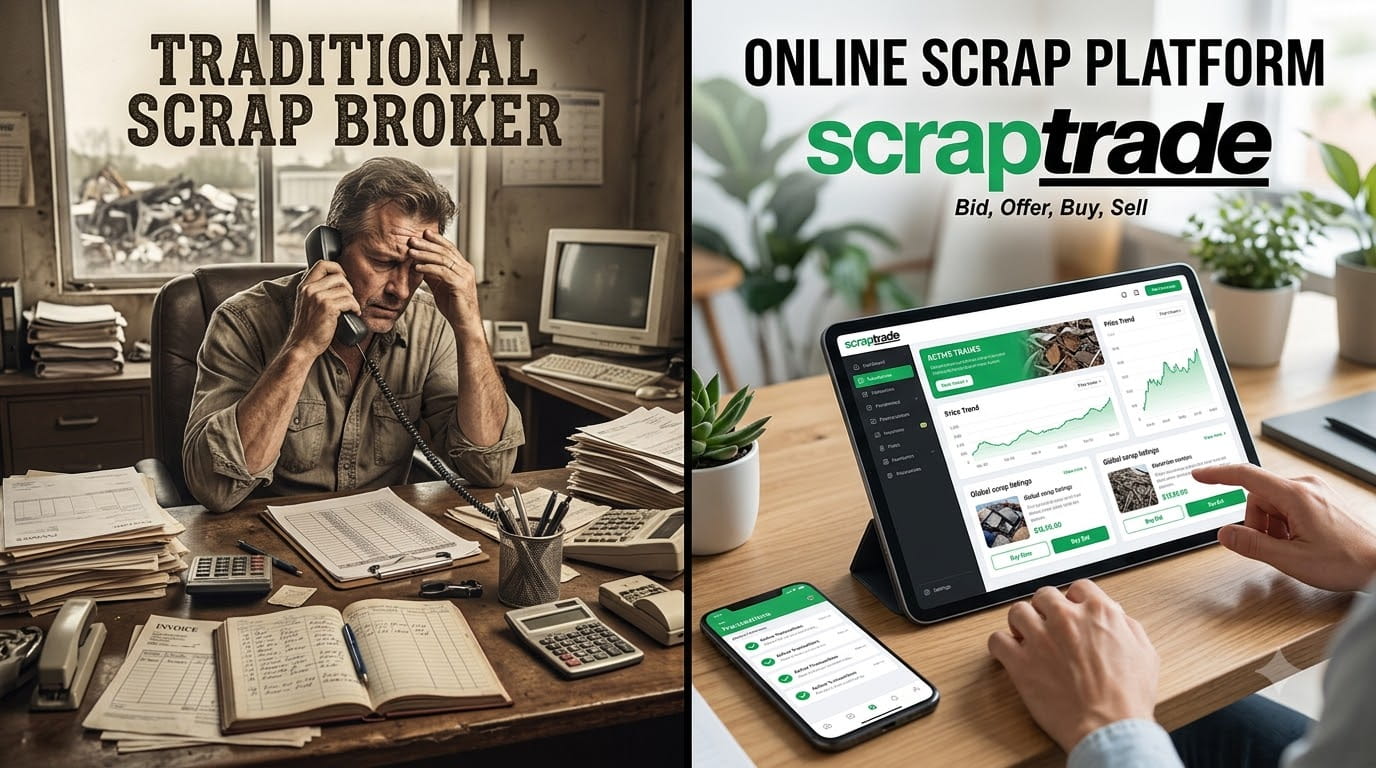
Scrap metal trading has traditionally depended on brokers, personal relationships, phone calls, and local business networks. These methods continue to play an important role in the industry, particularly when buyers and sellers need market knowledge, negotiation support, or help coordinating complex transactions.
However, digital marketplaces are creating another way for businesses to discover trading opportunities, list materials, compare offers, and connect with potential buyers and sellers across wider markets.
For scrap yards, recyclers, manufacturers, exporters, and industrial suppliers, the choice between a traditional scrap broker and an online scrap trading platform depends on business requirements, transaction complexity, transparency, and the level of control each party wants over the trading process.
How Traditional Scrap Broking Works
A traditional scrap broker acts as an intermediary between scrap suppliers and buyers. The broker may identify available material, introduce counterparties, negotiate prices, coordinate communication, and help move a transaction towards completion.
For example, a scrap yard with a large quantity of copper or steel may approach a broker to find a suitable buyer. The broker uses existing relationships and market knowledge to identify potential purchasers and negotiate commercial terms.
Depending on the arrangement, the broker may earn a commission, charge a fee, or make money through a difference between buying and selling prices. The exact business model depends on the agreement.
One advantage of traditional broking is personal involvement. Experienced brokers may understand specific material grades, regional demand, buyer preferences, and the practical challenges of completing a scrap transaction. This knowledge can be valuable when the material is specialised or the deal involves complex requirements.
However, the experience also depends on the broker's network. A business may have access only to the buyers or sellers the broker knows, and the amount of price information available can vary.
Traditional broking is not automatically inefficient or unsuitable. For some businesses, an established broker remains a useful commercial partner.
How Online Scrap Trading Platforms Work
An online scrap trading platform provides a digital environment where businesses can discover trading opportunities and communicate about available materials.
Instead of relying exclusively on personal introductions, sellers can create listings that describe their scrap, while buyers can search for materials that match their requirements.
A listing may include the material type, grade, quantity, location, photographs, condition, and other information relevant to a potential transaction.
Digital platforms can support several parts of the trading process, including listing materials, discovering buyers and sellers, receiving offers, and communicating about commercial terms. The specific features vary by platform.
ScrapTrade operates as a global online scrap marketplace for buyers and sellers. Businesses can list scrap materials and explore B2B trading opportunities through a digital platform. Buyers can review available listings and submit offers, including reverse-bidding functionality through the seller dashboard.
ScrapTrade is a marketplace rather than a traditional scrap broker: it connects trading participants without taking ownership of the scrap material.
This distinction matters to businesses that want to maintain direct involvement in negotiating and agreeing on their transactions.
Comparing Price Transparency and Speed
Price transparency is an important consideration when choosing how to trade scrap.
In a traditional broker-led transaction, pricing information depends on the broker's communication, the information shared by the parties, and the commercial arrangement. An experienced broker may provide useful market insight, but a seller may not always see the full range of potential buyer offers.
An online marketplace can make it easier to present a lot to potential buyers and review offers through a digital process. Where multiple buyers respond, the seller may have a better basis for comparing commercial terms.
However, a listing does not guarantee multiple offers, and an online platform does not automatically guarantee the highest price. Material quality, location, quantity, buyer demand, and logistics still influence the outcome.
Speed also depends on the transaction.
A broker may move quickly when an established buyer is ready to purchase. An online platform may help reduce the time spent finding counterparties and exchanging initial information, particularly when listings are detailed and buyers can review them directly.
Neither method guarantees a faster deal. Inspection, negotiation, documentation, transport, and payment can still take time.
The most useful comparison is whether the chosen method helps your business find suitable counterparties and reach clear commercial terms efficiently.
Comparing Reach and Buyer/Seller Choice
A traditional broker's network can be highly valuable, but its reach depends on the relationships and markets the broker serves.
A broker specialising in a particular metal, region, or customer group may have strong connections in that segment. For a business trading unusual grades or requiring tailored assistance, that specialised network can be an advantage.
An online scrap trading platform offers a different route to market. A digital listing can be visible to potential buyers beyond the seller's immediate local network, depending on the platform's audience and listing visibility.
This can help scrap yards, recyclers, manufacturers, and exporters discover new counterparties and explore demand for materials that may have a limited local buyer base.
Buyer choice also matters. Having access to more potential counterparties can provide additional options, but businesses still need to verify buyers, assess offers, and confirm that the material and transaction terms match their requirements.
For international trading, the parties must also consider logistics, import and export requirements, payment terms, and applicable regulations.
A wider network creates opportunities, not guaranteed sales.
Which Fits Your Business?
The right approach depends on how your business sources and sells scrap.
A traditional broker may be a good fit if you value personal assistance, specialist market knowledge, established relationships, or support with a complex transaction. Businesses that prefer a familiar intermediary may also find this model convenient.
An online marketplace may suit businesses that want to list materials directly, explore a broader pool of potential counterparties, compare offers, and manage initial trading communication digitally.
Some businesses may benefit from using both approaches. A scrap yard, for example, might continue working with established brokers while also listing selected materials online to discover additional buyers.
Before choosing a method, consider the type of material you trade, your typical lot size, the markets you serve, how often you need new counterparties, and how much control you want over pricing and negotiations.
For companies considering a digital approach, ScrapTrade's global scrap marketplace provides more information about online scrap trading. Businesses can also explore the B2B scrap trade guide to understand how business-to-business scrap transactions work.
FAQs
What is the difference between a scrap broker and an online scrap trading platform?
A scrap broker typically acts as an intermediary, helping buyers and sellers find one another and negotiate transactions. An online scrap trading platform provides a digital environment where businesses can list materials, discover counterparties, and explore offers. The exact services vary by provider.
Are online scrap trading platforms cheaper than brokers?
Not necessarily. Broker fees and platform charges depend on the provider and the commercial arrangement. Businesses should compare the total cost of each option, including fees, logistics, processing, and other transaction expenses.
Can scrap yards sell directly to buyers online?
Yes. Scrap yards can use online marketplaces to list available materials and connect with potential buyers. They should provide accurate material specifications, quantities, locations, and other relevant information to help buyers evaluate the listing.
Do online scrap platforms guarantee better prices?
No. A platform can help sellers reach potential buyers and compare available offers, but the final price depends on material grade, quality, quantity, demand, logistics, and the terms agreed by the parties.
Conclusion
Traditional scrap brokers and online scrap trading platforms serve related but different roles in the scrap industry.
Brokers can offer personal assistance, specialist knowledge, and established commercial relationships. Online marketplaces provide another way to present materials, discover potential counterparties, and compare trading opportunities through a digital process.
The best choice depends on your business model, material types, transaction requirements, and preferred level of control. Rather than assuming one method is always better, evaluate how each approach supports your sourcing, selling, and commercial goals.
For businesses looking to expand beyond existing contacts, an online marketplace can complement traditional relationships and create additional routes to potential buyers.
Explore ScrapTrade to list scrap materials, discover potential B2B trading partners, and see how online scrap trading can fit into your business.