

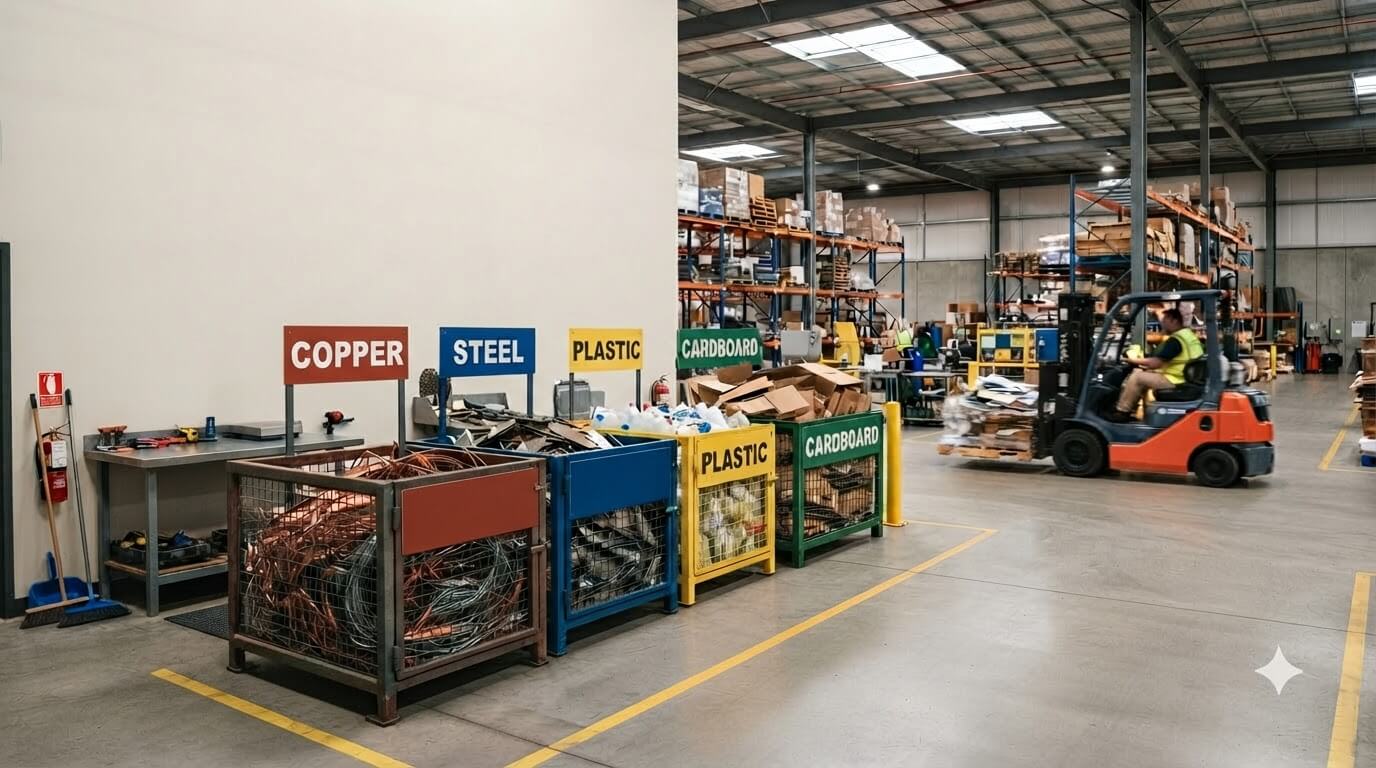
Warehouses can accumulate large amounts of scrap through daily operations, including damaged storage racks, metal strapping, broken equipment, packaging waste, pallets, cables, and obsolete inventory. When these materials are left unmanaged, they can occupy valuable storage space, create workplace safety risks, and increase waste handling and disposal costs. For businesses operating with limited warehouse capacity, inefficient scrap management can also affect productivity and inventory organization.
Warehouse scrap recycling provides a practical way to separate recyclable materials from general waste, clear unused space, and recover potential value from unwanted items. Metals such as steel, aluminium, and copper can often be recycled or sold to suitable buyers, while cardboard, plastics, and other materials may also be recovered.
What Is Warehouse Scrap Recycling?
Warehouse scrap recycling is the process of collecting, sorting, processing, and recovering materials generated from warehouse operations. Instead of sending all unwanted materials to general waste disposal, warehouses can separate valuable recyclables such as steel, aluminium, cardboard, plastic, and electronic equipment.
A dedicated recycling system can help warehouses reduce disposal costs, free up storage space, improve workplace organization, and recover value from recyclable materials.
Understanding Warehouse Scrap Recycling
Warehouse scrap recycling involves identifying recyclable materials, separating them from general waste, storing them safely, and arranging collection by suitable recycling companies or buyers.
Warehouse waste vs recyclable scrap: General warehouse waste may include contaminated or non-recyclable materials, while recyclable scrap can include materials with recovery or resale value. Separating these streams helps businesses reduce unnecessary disposal.
Why dedicated scrap management matters: Warehouses often handle large volumes of materials every day. A structured scrap management system prevents accumulation, improves safety, and ensures recyclable materials are not lost in general waste.
Why Warehouses Generate Scrap
Damaged inventory: Products, metal components, packaging, and storage materials may become damaged during handling or transportation and require disposal or recycling.
Warehouse upgrades: Facility renovations can generate old racks, shelving, metal fixtures, lighting equipment, and other recyclable materials.
Packaging operations: Cardboard, plastic wrapping, metal strapping, pallets, and packaging materials can accumulate during receiving and shipping activities.
Equipment replacement: Old forklifts, machinery, conveyors, electrical equipment, and other warehouse assets may contain recyclable metals and components.
Pallet handling: Broken or damaged pallets can accumulate during storage and material movement. Depending on their condition and material, they may be repaired, reused, or recycled.
Maintenance and repairs: Routine maintenance can generate cables, metal parts, damaged tools, equipment components, and other recyclable scrap.
Types of Scrap Found in Warehouses
Warehouses can generate a wide range of recyclable materials through storage, handling, packaging, maintenance, and inventory management. Proper identification and separation can help businesses reduce waste and recover value from usable materials.
Metal Scrap
Metal is one of the most common types of warehouse scrap. Steel racking, aluminium, copper, brass, stainless steel, and metal shelving can often be recycled or sold to scrap buyers. Keeping different metals separated can make processing easier and may improve their resale value.
Damaged Warehouse Equipment
Warehouse operations can result in damaged or obsolete equipment. Carts, conveyors, guard rails, bollards, and handling equipment may contain recyclable metals and components. Depending on their condition, these items may be repaired, reused, dismantled, or sent for recycling.
Packaging Scrap
Receiving and shipping operations generate significant packaging waste. This can include steel strapping, stretch film, cardboard, and plastic packaging. Separating packaging materials from general waste allows recyclable materials to be recovered and reduces disposal volumes.
Obsolete or Damaged Inventory
Warehouses may accumulate products and components that are damaged, outdated, discontinued, or no longer suitable for sale. Unsellable products, manufacturing components, metal parts, equipment, and fixtures may contain recyclable materials that can be recovered rather than sent directly to landfill.
Properly sorting warehouse scrap by material type, condition, and potential value makes collection and recycling more efficient and can create opportunities to recover revenue from unwanted materials.
How Warehouse Scrap Recycling Works
Warehouse scrap recycling follows a structured process that helps businesses identify recyclable materials, keep them organized, and prepare them for recycling or resale. A consistent system can reduce waste, improve safety, and help recover value from unwanted materials.
Step 1: Identify Scrap Materials
Begin by auditing warehouse waste and identifying materials that can be recycled or resold. Separate damaged inventory, obsolete equipment, packaging waste, and recyclable scrap from general waste. This helps prevent valuable materials from being unnecessarily discarded.
Step 2: Sort Scrap at the Source
Sort materials as they are generated. Keep ferrous metals, non-ferrous metals, plastics, cardboard, and other recyclable materials in separate streams. Keeping materials separated reduces contamination, improves handling efficiency, and can help preserve their scrap value.
Step 3: Create Dedicated Collection Areas
Set up clearly defined scrap collection areas within the warehouse. Place suitable containers near receiving and packaging areas, use clear signage, and keep recyclable scrap separate from normal inventory. Proper storage also helps prevent contamination and workplace hazards.
Step 4: Schedule Scrap Collection
Choose a collection schedule based on the warehouse's scrap volume and available storage space. Businesses can arrange weekly, monthly, on-demand, or bulk scrap removal. Regular pickups prevent accumulation and keep operational areas clear.
Step 5: Process and Recycle the Materials
Collected scrap is transported for further processing. Depending on the material, recycling may involve sorting, baling, shredding, cutting, melting, and material recovery. Recovered metals and other recyclable materials can then be returned to manufacturing supply chains or sold to suitable buyers.
Benefits of Warehouse Scrap Recycling
Warehouse scrap recycling helps businesses manage unwanted materials more efficiently while reducing waste and recovering potential financial value. A structured recycling program can improve both warehouse operations and environmental performance.
Recover Value From Unwanted Materials
Materials such as steel racking, copper, aluminium, brass, and other recyclable metals can have resale value. Selling suitable scrap to buyers or recyclers allows businesses to generate additional revenue from materials that are no longer needed.
Free Up Valuable Warehouse Space
Accumulated scrap can occupy space needed for inventory and daily operations. Regular recycling and collection remove unwanted racks, equipment, packaging, and damaged materials, creating more usable warehouse capacity.
Reduce Waste Disposal Costs
Separating recyclable materials from general waste reduces the volume sent to landfill or other disposal facilities. This can help lower waste collection, transportation, handling, and disposal expenses.
Improve Warehouse Safety
Loose scrap, broken equipment, and damaged materials can create trip hazards, sharp edges, blocked walkways, and unsafe storage conditions. Organized collection areas and regular removal help create a cleaner and safer workplace.
Improve Inventory and Scrap Management
A dedicated scrap management system helps businesses track damaged inventory, obsolete equipment, packaging waste, and recyclable materials. Better tracking makes it easier to identify valuable scrap and arrange timely collection.
Support Sustainable Business Operations
Recycling keeps materials such as metals, plastics, and cardboard in circulation and reduces unnecessary landfill waste. It also supports resource conservation and helps businesses strengthen their broader sustainability and circular economy practices.
Future of Warehouse Scrap Recycling
The future of warehouse scrap recycling is becoming increasingly digital, automated, and data-driven. New technologies can help warehouses identify materials faster, monitor scrap volumes, improve sorting accuracy, and find better opportunities to recover value from recyclable materials.
Digital Scrap Inventory Systems
Digital inventory systems can help warehouses track the type, quantity, location, and movement of scrap materials. Instead of relying on manual records, businesses can maintain real-time information about available scrap and schedule collections when storage capacity becomes limited.
Automated Material Sorting
Automated sorting systems can use sensors, magnets, conveyors, and other technologies to separate different materials more efficiently. This can reduce manual handling, improve sorting accuracy, and help recover more recyclable material from mixed warehouse waste.
AI-Based Scrap Classification
Artificial intelligence can assist with identifying and classifying scrap based on material type, appearance, composition, or other characteristics. AI-based classification could help warehouses distinguish metals, plastics, packaging, and different grades more consistently.
Real-Time Scrap Price Monitoring
Digital platforms can provide access to updated market information, helping businesses monitor changes in scrap values. Tracking prices for materials such as copper, aluminium, steel, and brass can help warehouses decide when and where to sell their accumulated scrap.
Online B2B Scrap Marketplaces
Online marketplaces are making it easier for warehouses to connect with potential scrap buyers without depending entirely on local dealers. Businesses can list available materials, specify quantities and grades, receive buyer inquiries, and explore domestic or international B2B trading opportunities through platforms such as ScrapTrade.
Data-Driven Warehouse Waste Management
Future warehouse recycling programs will increasingly use data to identify which materials are generated, how much scrap is produced, collection frequency, recycling rates, and potential revenue. This information can help businesses optimize collection schedules, reduce waste, improve storage utilization, and make better scrap-selling decisions.
FAQs
What is warehouse scrap recycling?
Warehouse scrap recycling is the process of collecting, sorting, processing, and recovering recyclable materials generated by warehouse operations. It can include metal racking, equipment, cables, packaging materials, plastics, cardboard, and damaged inventory. Recycling helps reduce disposal costs, free up storage space, and recover potential value.
What types of scrap can warehouses recycle?
Warehouses can recycle steel racking, aluminium, copper, brass, stainless steel, metal shelving, damaged equipment, steel strapping, cardboard, plastic packaging, pallets, cables, and obsolete metal components. The materials accepted depend on the recycling facility and the condition and quantity of the scrap.
How can warehouses make money from scrap?
Warehouses can generate revenue by separating valuable materials and selling them to suitable scrap buyers or recycling companies. Keeping metals clean and separated, accurately tracking quantities, monitoring market prices, and comparing buyer offers can help maximize the potential value of warehouse scrap.
How often should warehouses arrange scrap collection?
Collection frequency depends on the warehouse's scrap volume, storage capacity, operational activity, and material type. High-volume facilities may require weekly pickups, while smaller warehouses may use monthly or on-demand collection. Regular collection prevents accumulation and keeps storage and working areas organized.
Conclusion
Warehouse scrap can represent both a waste-management challenge and a potential source of recovered revenue. Materials such as steel racking, aluminium, copper, damaged equipment, metal strapping, cardboard, and obsolete inventory should not automatically be treated as ordinary waste. When properly identified and separated, many of these materials can be recycled or sold to suitable buyers.
Effective warehouse scrap recycling starts with proper sorting and safe storage. Dedicated collection areas, regular pickups, accurate inventory tracking, and contamination control can help businesses improve operational efficiency while keeping valuable warehouse space available for core activities.