

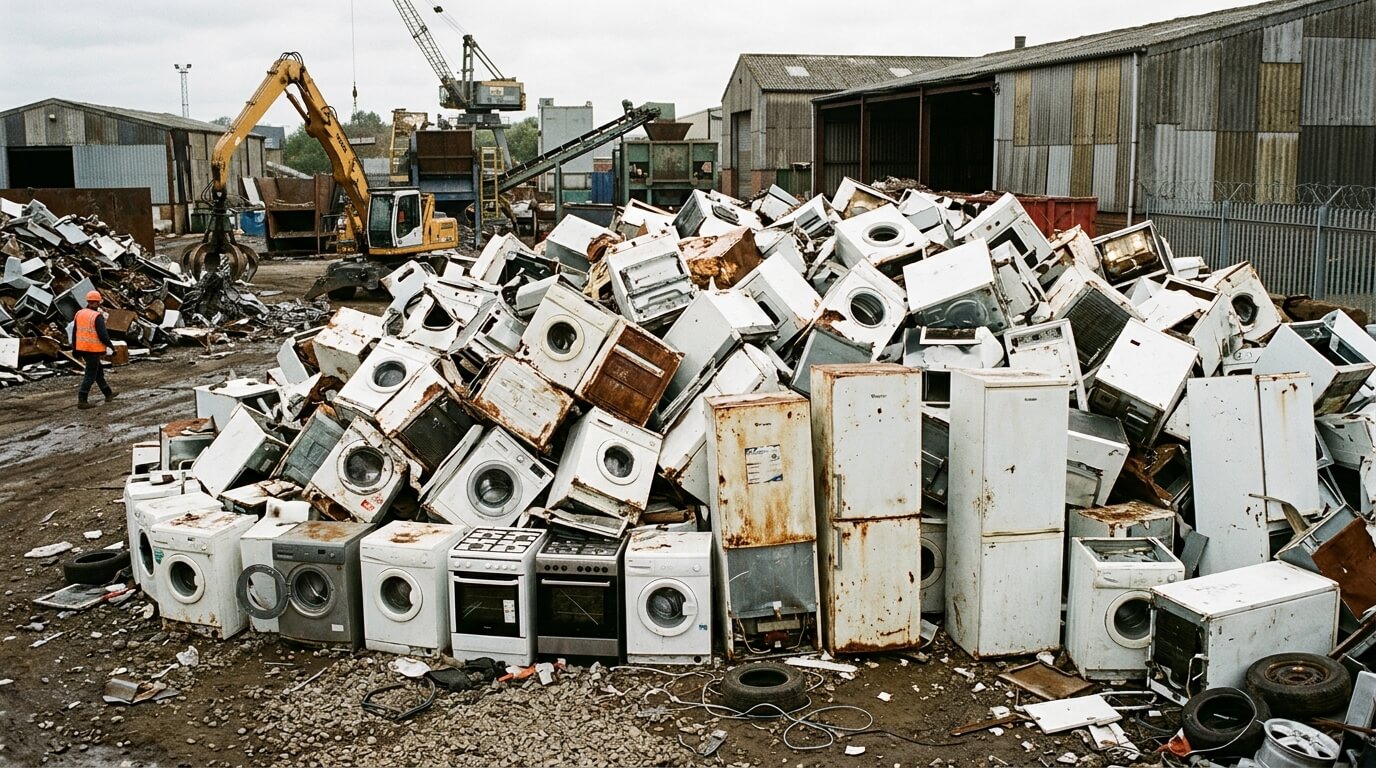
Many Australians are unsure what happens when they dispose of old appliances like fridges, washing machines, and dryers and more importantly, what white goods scrap prices actually are in Australia. In most cases, these appliances are not worthless; they contain recoverable metals such as steel, copper, aluminium, and motors that still hold resale and recycling value.
Depending on condition, weight, and metal content, white goods can be worth more than expected, especially when sold as scrap metal rather than general waste. However, pricing is not fixed and varies based on material recovery value, appliance type, and local scrap buyer demand.
White Goods Scrap Prices in Australia (2026 Overview)
White goods such as household appliances are commonly recycled in Australia due to their mix of steel, copper, aluminium, and small electrical components. While individual appliance values are relatively low, bulk collection can generate meaningful returns for recyclers and contractors.
Typical Scrap Value Per Appliance
| Appliance Type | Typical Scrap Value (AUD) |
|---|---|
| Fridge / Freezer | $15 – $60 |
| Washing Machine | $10 – $45 |
| Dryer | $10 – $40 |
| Dishwasher | $8 – $35 |
| Microwave / Small Appliances | $2 – $15 |
What Metals Are Inside White Goods?
White goods contain a mix of recyclable materials, which is why they hold scrap value despite being finished household products. The overall value comes from the combination of heavy steel structures and smaller high-value metals like copper and aluminium.
Steel (Main Component)
Steel makes up the majority of most white goods and forms the outer casing, internal frames, and structural supports.
Although steel has a relatively low per-kilogram value compared to non-ferrous metals, it contributes the most weight in appliances, which is why white goods are often processed in bulk steel recycling streams.
Copper (High Value Component)
Copper is the most valuable material inside white goods and significantly increases overall scrap value.
It is commonly found in motors, electrical wiring harnesses, and fridge compressors. Even small amounts of copper can noticeably improve the total payout when appliances are stripped and processed properly.
Aluminium
Aluminium is also present in several appliance components, particularly those related to heat exchange and lightweight structural parts.
Typical sources include heat exchangers, compressor components, and internal fittings. While not as valuable as copper, aluminium still contributes to overall recycling returns.
Plastics and Insulation
Plastics, foam insulation, and non-metal components are generally considered low-value or non-recyclable in scrap pricing terms.
These materials are often removed during processing to allow recyclers to recover the higher-value metals more efficiently and maintain material quality standards.
Scrap Value of Common White Goods
Fridge / Freezer Scrap Value
Fridges and freezers are among the most valuable white goods due to their combination of heavy steel construction and copper-rich compressor components. The compressor windings contain copper, which significantly boosts overall scrap value.
In addition to metal content, refrigerant gases must be safely removed and processed separately before recycling.
Typical value: $15 – $60 per unit
Higher-end commercial fridges may exceed this range due to increased size and copper content.
Washing Machine Scrap Value
Washing machines contain a balanced mix of steel and copper-bearing components, particularly in the electric motor and wiring systems. The steel drum and frame contribute most of the weight, while copper adds higher-value material content.
Front-loading machines often contain more metal than top-load models, which can slightly improve their scrap value.
Typical value: $10 – $45 per unit
Dryers and Dishwashers
Dryers and dishwashers generally contain less copper compared to washing machines, with a higher proportion of steel and lower-value electrical components.
As a result, they tend to sit in the lower to mid-range of white goods pricing, depending on size and condition.
Typical value: $8 – $40 per unit
Why White Goods Scrap Prices Vary
Metal Recovery Content
The value of white goods largely depends on how much recoverable metal they contain. Appliances with larger electric motors, copper-heavy wiring systems, and heavier steel frames generally generate higher scrap returns due to increased material recovery potential.
Even small differences in copper content can significantly impact overall pricing because copper is one of the highest-value metals found in household appliances.
Appliance Condition
Although white goods do not need to be functional to be recycled, their physical condition can still influence pricing.
Complete units are typically more valuable because they contain all original components, including motors, wiring, and internal metal structures. In contrast, stripped or partially dismantled appliances may receive lower offers due to reduced recoverable material.
Collection vs Drop-Off
The method of delivery can also affect the final payout. Drop-off at a scrap yard generally results in higher returns because it eliminates transport and handling costs for the buyer.
Pickup services, while more convenient, often reduce the net payout since transportation and labour expenses are factored into the offer.
Market Steel Prices
Because white goods are primarily steel-based, their value is closely tied to global steel pricing trends.
Key influences include international steel demand, local scrap yard competition, and export pricing conditions. When steel markets are strong, white goods scrap values tend to improve, while weaker market conditions can reduce payouts across all appliance types.
How to Get the Best Price for Old Appliances
Keep Appliances Complete
One of the easiest ways to maximise value is to keep appliances intact before selling. Scrap buyers generally prefer complete units because they contain all recoverable metals, including steel casings, copper wiring, and internal components.
Complete appliances are also easier to process, which can lead to more competitive pricing compared to partially dismantled units.
Separate High-Value Components
For those with experience in scrap handling, removing high-value components can increase returns. Key items include copper wiring, electric motors, and compressors, which contain valuable non-ferrous metals.
However, this should only be done if you can properly identify and safely extract these materials, as improper dismantling can reduce overall value.
Sell in Bulk
Selling multiple appliances together can improve overall pricing efficiency. Bulk loads often attract better per-unit offers because they reduce transport costs and improve processing efficiency for scrap yards.
Large quantities may also strengthen your negotiating position, especially when dealing with commercial buyers or collection services.
FAQs
How much is a fridge worth as scrap in Australia?
Most fridges in Australia are worth between $15 and $60, depending on size, condition, and internal copper content. Larger commercial fridges generally achieve higher values due to increased metal weight and more valuable components such as compressors and wiring.
Can I sell a broken washing machine for cash?
Yes. Broken washing machines still contain valuable recyclable materials such as steel frames, copper motors, and internal wiring. Even if they are non-functional, they can be sold to scrap yards for cash based on their metal content.
What is the most valuable part of white goods?
The most valuable components inside white goods are copper motors and compressor units. These parts contain high-grade copper, which significantly increases the overall scrap value of the appliance.
Do scrap yards pick up white goods?
Yes, many scrap metal recyclers and buyers offer pickup services for white goods, especially for bulk or commercial quantities. However, transport and handling costs are often factored into the offer, which may reduce the final payout compared to drop-off pricing.
Is it better to dismantle appliances before selling?
Dismantling is only beneficial if you have the skills to safely and correctly extract high-value metals like copper and motors. Otherwise, complete appliances often achieve better overall pricing because recyclers prefer intact units for faster processing and lower labour costs.
Conclusion
White goods scrap prices in Australia (2026) are primarily driven by appliance type, total weight, and the mix of recoverable metals inside each unit. Larger appliances such as fridges and washing machines tend to deliver higher returns because they contain more steel and valuable copper components, particularly in motors and compressors.
While all white goods have recycling value, the final payout depends heavily on how much recoverable metal they contain and whether they are sold as complete units or dismantled for high-value parts. Understanding these differences allows sellers to make more informed decisions and improve returns when recycling household appliances in Australia.