

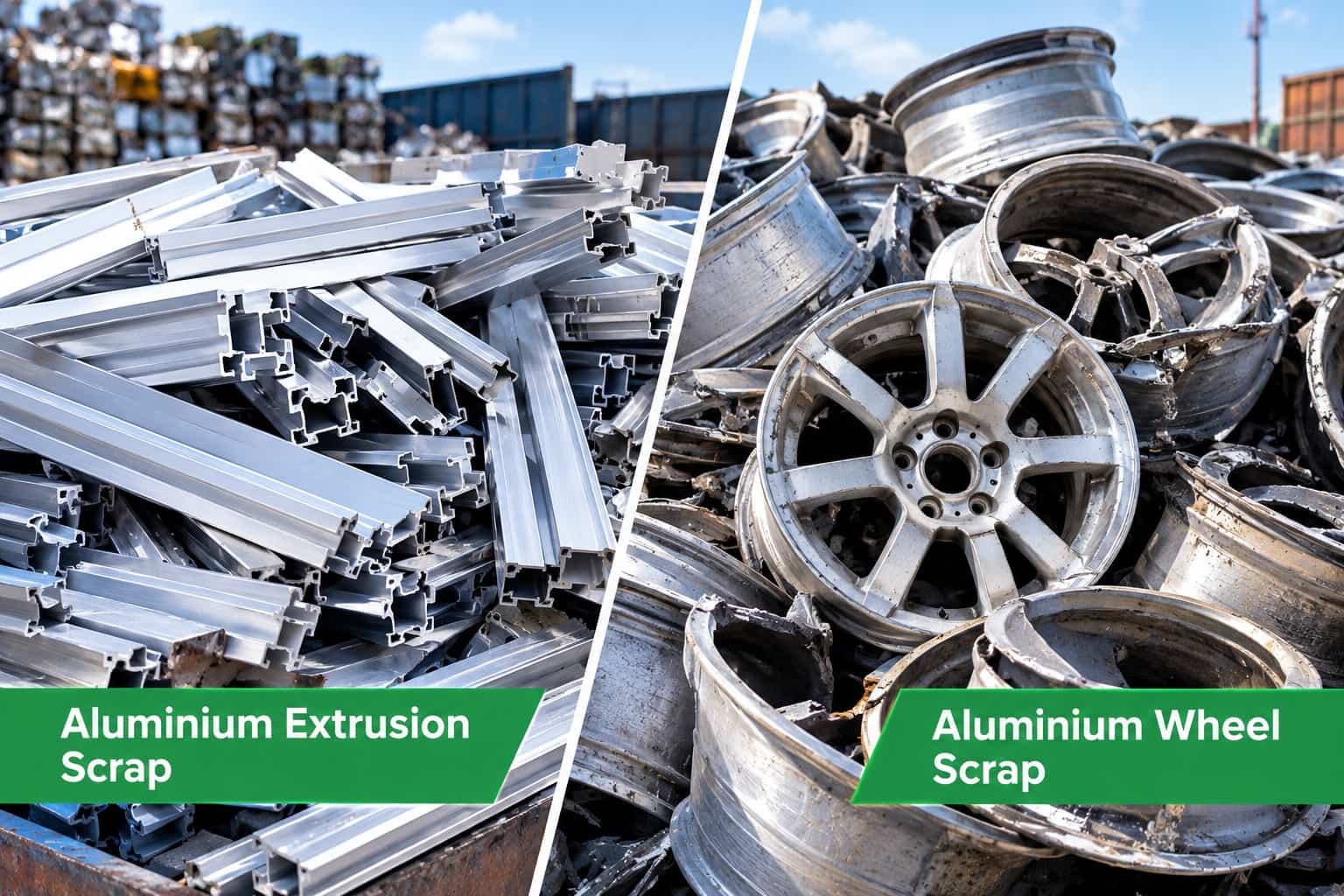
Aluminium extrusion scrap and alloy wheel scrap are two distinct material streams traded in the global aluminium recycling market. Both can be recovered from industrial operations, construction projects, vehicle dismantling, repairs, and other commercial activities. However, their physical characteristics, alloy types, surface finishes, and contamination levels can differ significantly.
For scrap sellers, identifying these materials correctly is an important first step toward finding suitable buyers. Clean aluminium profiles may be assessed differently from painted extrusions, while alloy wheels may require additional preparation to remove tyres, steel components, and other attachments. Mixing different aluminium grades can also make a load harder for buyers to evaluate.
This guide explains the differences between aluminium extrusion and wheel scrap, the factors that influence their commercial value, and how businesses can prepare and list these materials for potential buyers online.
Why Extrusion and Wheel Scrap Are Traded Separately
Aluminium extrusion scrap and alloy wheel scrap are both recyclable, but they do not necessarily have the same composition or processing requirements.
Extrusions are shaped aluminium products commonly used in building systems, industrial structures, frames, and equipment. Alloy wheels are manufactured components designed for vehicle applications and may contain alloying elements or surface treatments that differ from those found in extrusion products.
These differences matter because recycling facilities select and process scrap according to their equipment, production requirements, and material specifications. A buyer seeking clean aluminium profiles may not want a mixed load of vehicle wheels, while a buyer purchasing wheel scrap may have specific requirements regarding attachments and surface condition.
Keeping these streams separate helps sellers describe their stock accurately and enables buyers to assess the material more efficiently. It can also reduce uncertainty during inspection and negotiation.
The appropriate classification depends on the actual material, not simply its appearance. If the source or alloy type is uncertain, sellers should describe what they can verify and avoid assigning a specific grade without supporting information.
What Is Aluminium Extrusion Scrap?
Aluminium extrusion scrap consists of discarded or surplus aluminium profiles produced through extrusion manufacturing or recovered after their original use. Extrusion is a process in which aluminium is shaped through a die to create a profile with a particular cross-section.
Common examples include window and door frames, structural profiles, railings, industrial framing, and offcuts from manufacturing or construction work.
Extrusion scrap can come from several sources:
- Manufacturing offcuts and production rejects.
- Construction and renovation projects.
- Demolition and refurbishment activities.
- Discarded frames, rails, and structural components.
- Industrial equipment and assembly operations.
Not all extrusion scrap has the same condition or commercial classification. Clean, unpainted profiles may be easier to identify than mixed profiles containing coatings, sealants, screws, plastic inserts, or other attached materials.
Used window and door frames, for example, may contain glass, rubber seals, steel fasteners, and other components. These materials should be identified and handled according to the buyer's requirements before the aluminium is offered for sale.
Painted, anodised, coated, or otherwise finished profiles may still be recyclable, but the finish and any attached materials can affect how a buyer classifies and processes them. Sellers should not automatically describe all profiles as clean extrusion scrap without checking their condition.
For businesses handling several types of aluminium, keeping extrusion offcuts separate from other scrap streams makes inventory management and buyer communication more straightforward.
What Are Alloy Wheels as Scrap?
Alloy wheel scrap generally refers to discarded vehicle wheels made from aluminium-based alloys. These wheels are commonly recovered from end-of-life vehicles, vehicle repair businesses, tyre shops, automotive recyclers, and wheel replacement operations.
Although they are often called alloy wheels, the term alone does not establish the precise alloy composition. Wheels can differ by manufacturer, design, production method, and intended application. Buyers may therefore require a particular material description or further verification before accepting a load.
Wheel scrap can include damaged wheels, cracked or bent wheels, worn-out components, and wheels removed during vehicle servicing or dismantling.
Before trading, sellers should distinguish complete wheels from prepared aluminium wheel scrap. A complete wheel may still have a tyre, valve, wheel weights, steel attachments, or other components. Depending on the buyer's requirements, these items may need to be removed before the material is accepted as a prepared aluminium scrap grade.
Wheel condition also matters. Painted, polished, coated, or chromed surfaces may require different handling or classification. Sellers should disclose visible finishes and avoid assuming that all alloy wheels will be accepted under one specification.
scrap trading guide for broader considerations around vehicle dismantling and recovered materials.
Clean vs Painted or Chromed Wheels
The surface condition of an alloy wheel can affect how a buyer evaluates it. Clean wheels with clearly identifiable aluminium-based material may be easier to assess than wheels with heavy coatings, mixed attachments, or uncertain composition.
Painted wheels may have a coating that needs to be considered during processing. Chrome-finished wheels can involve additional surface layers or finishing processes, so sellers should not assume that their treatment is identical to ordinary paint.
The finish alone does not necessarily determine whether a wheel is recyclable. Acceptance depends on the buyer's specifications, the processing route, and the condition of the material.
When listing wheel scrap, describe the surface finish accurately. If the wheels are painted, polished, chromed, or of mixed condition, include that information rather than describing the entire load as clean aluminium.
Where a buyer requires a particular grade, confirm whether coated wheels are accepted and whether any preparation or deductions apply. Do not strip finishes using unsuitable chemicals or unsafe methods simply to make the material appear cleaner.
Removing Tyres, Weights and Steel Parts
Before preparing alloy wheels for sale, identify non-aluminium components that may affect the accepted material weight or grade.
Depending on the buyer's specification, preparation may include removing:
- Tyres and inner components, where present.
- Valve stems and associated fittings.
- Wheel balancing weights, which may be made from different materials.
- Steel inserts, fasteners, or other attached components.
The exact preparation requirements vary. Some buyers may accept complete wheels, while others require tyres and attachments to be removed before delivery.
Tyre removal should be performed with suitable equipment and trained handling procedures. Wheels and tyres can present mechanical and pressure-related hazards, so sellers should not attempt unsafe disassembly methods.
Separating the aluminium from unwanted components can make the material easier to inspect and weigh. However, preparation costs should be considered before processing a large quantity. Confirming the buyer's requirements first helps avoid unnecessary labour and prevents material from being prepared in a way that does not match the intended market.
How Sorting and Cleanliness Affect Value
Sorting is one of the most important steps in preparing aluminium extrusion and wheel scrap for sale. The goal is to present a load whose composition and condition are consistent with the description given to the buyer.
Mixing extrusion offcuts, alloy wheels, steel attachments, plastics, and other scrap can make classification more difficult. A buyer may need additional inspection or processing to establish what the load contains, which can affect the offer or acceptance terms.
Several factors influence how the material is evaluated.
Material separation: Keeping extrusion scrap separate from wheel scrap gives buyers a clearer view of the material stream. Different profiles, wheel types, and mixed aluminium items should also be separated when practical and commercially relevant.
Contamination: Steel parts, rubber, plastic, glass, dirt, and other unwanted materials can affect the accepted grade. Remove components where appropriate and disclose anything that remains.
Surface condition: Paint, coatings, and other finishes may influence buyer classification and processing requirements. Accurate descriptions are preferable to unsupported claims that the material is completely clean.
Consistency: Loads with similar material types and conditions are generally easier to assess than mixed loads. Consistent preparation also helps sellers maintain clearer inventory records.
Storage and handling: Keep prepared scrap in suitable storage areas to minimise dirt, moisture, and mixing with other materials. Clearly identify different stockpiles and batches.
How Buyers Assess Aluminium Alloy Scrap
Buyers evaluate aluminium extrusion and wheel scrap according to the specifications of their recycling or manufacturing operations. The exact inspection process varies by buyer, shipment size, material source, and intended use.
The first step is usually a review of the material description. Buyers may want to know whether the load consists of extrusion profiles, alloy wheels, or a mixture of aluminium items. They may also ask about the source, estimated quantity, surface finish, and preparation method.
Visual inspection can help identify obvious contamination, attached components, and inconsistencies between the listing and the actual material. However, appearance alone may not establish the precise alloy composition. Where composition is important, buyers may request additional testing or verification.
Quantity and logistics also influence the assessment. Buyers may consider how the scrap is packed, whether loading equipment is available, the distance to the receiving facility, and whether the shipment meets their minimum requirements.
The weighing and settlement method should be clarified before dispatch. For example, the parties should agree on how the accepted weight will be determined and how non-aluminium attachments or other contaminants will be treated.
Sellers can make evaluation easier by providing clear photographs, an accurate description, an estimated quantity, the material's location, and details about preparation. If the load contains several conditions or types, explain that clearly rather than implying that everything belongs to one uniform grade.
A transparent description gives buyers a more reliable basis for making offers and helps both sides establish realistic expectations before completing a deal.
How Buyers Assess Aluminium Alloy Scrap
Buyers evaluate aluminium extrusion and wheel scrap according to the specifications of their recycling or manufacturing operations. The exact inspection process varies by buyer, shipment size, material source, and intended use.
The first step is usually a review of the material description. Buyers may want to know whether the load consists of extrusion profiles, alloy wheels, or a mixture of aluminium items. They may also ask about the source, estimated quantity, surface finish, and preparation method.
Visual inspection can help identify obvious contamination, attached components, and inconsistencies between the listing and the actual material. However, appearance alone may not establish the precise alloy composition. Where composition is important, buyers may request additional testing or verification.
Quantity and logistics also influence the assessment. Buyers may consider how the scrap is packed, whether loading equipment is available, the distance to the receiving facility, and whether the shipment meets their minimum requirements.
The weighing and settlement method should be clarified before dispatch. For example, the parties should agree on how the accepted weight will be determined and how non-aluminium attachments or other contaminants will be treated.
Sellers can make evaluation easier by providing clear photographs, an accurate description, an estimated quantity, the material's location, and details about preparation. If the load contains several conditions or types, explain that clearly rather than implying that everything belongs to one uniform grade.
A transparent description gives buyers a more reliable basis for making offers and helps both sides establish realistic expectations before completing a deal.
How to List Extrusion and Wheel Scrap on ScrapTrade
ScrapTrade is a global online marketplace connecting scrap buyers and sellers. Businesses with aluminium extrusion or wheel scrap can use the platform to present available material and discuss potential transactions with interested counterparties.
Start by identifying the material you have available. Create separate listings for extrusion scrap and alloy wheel scrap when they represent distinct material streams. This allows buyers to evaluate each category on its own merits.
Include the information that helps a buyer understand the load:
- Material type: Identify extrusion profiles, alloy wheels, or another clearly described aluminium stream.
- Quantity and location: Provide a realistic estimate of the available weight and where the material is stored.
- Condition: Describe coatings, contamination, attachments, and any preparation already completed.
- Photographs: Use clear images showing the actual material, including any relevant differences in condition.
- Preparation and logistics: State whether the material is loose, sorted, or otherwise prepared, and explain any known loading or collection considerations.
Before accepting an offer, discuss the buyer's grade requirements, inspection procedure, accepted weight, transport responsibilities, and payment terms. If a buyer requires clean, prepared material, confirm what that means for the specific load rather than relying on a general description.
ScrapTrade does not take ownership of the material or act as a broker. Buyers and sellers remain responsible for agreeing on specifications and completing their transaction arrangements.
How Buyers Assess Aluminium Alloy Scrap
Buyers evaluate aluminium extrusion and wheel scrap according to the specifications of their recycling or manufacturing operations. The exact inspection process varies by buyer, shipment size, material source, and intended use.
The first step is usually a review of the material description. Buyers may want to know whether the load consists of extrusion profiles, alloy wheels, or a mixture of aluminium items. They may also ask about the source, estimated quantity, surface finish, and preparation method.
Visual inspection can help identify obvious contamination, attached components, and inconsistencies between the listing and the actual material. However, appearance alone may not establish the precise alloy composition. Where composition is important, buyers may request additional testing or verification.
Quantity and logistics also influence the assessment. Buyers may consider how the scrap is packed, whether loading equipment is available, the distance to the receiving facility, and whether the shipment meets their minimum requirements.
The weighing and settlement method should be clarified before dispatch. For example, the parties should agree on how the accepted weight will be determined and how non-aluminium attachments or other contaminants will be treated.
Sellers can make evaluation easier by providing clear photographs, an accurate description, an estimated quantity, the material's location, and details about preparation. If the load contains several conditions or types, explain that clearly rather than implying that everything belongs to one uniform grade.
A transparent description gives buyers a more reliable basis for making offers and helps both sides establish realistic expectations before completing a deal.
How to List Extrusion and Wheel Scrap on ScrapTrade
ScrapTrade is a global online marketplace connecting scrap buyers and sellers. Businesses with aluminium extrusion or wheel scrap can use the platform to present available material and discuss potential transactions with interested counterparties.
Start by identifying the material you have available. Create separate listings for extrusion scrap and alloy wheel scrap when they represent distinct material streams. This allows buyers to evaluate each category on its own merits.
Include the information that helps a buyer understand the load:
- Material type: Identify extrusion profiles, alloy wheels, or another clearly described aluminium stream.
- Quantity and location: Provide a realistic estimate of the available weight and where the material is stored.
- Condition: Describe coatings, contamination, attachments, and any preparation already completed.
- Photographs: Use clear images showing the actual material, including any relevant differences in condition.
- Preparation and logistics: State whether the material is loose, sorted, or otherwise prepared, and explain any known loading or collection considerations.
Before accepting an offer, discuss the buyer's grade requirements, inspection procedure, accepted weight, transport responsibilities, and payment terms. If a buyer requires clean, prepared material, confirm what that means for the specific load rather than relying on a general description.
ScrapTrade does not take ownership of the material or act as a broker. Buyers and sellers remain responsible for agreeing on specifications and completing their transaction arrangements.
Ready to trade? List your aluminium scrap on ScrapTrade and connect with potential buyers for your available material.
FAQs
What is aluminium extrusion scrap?
Aluminium extrusion scrap consists of discarded or surplus aluminium profiles, including manufacturing offcuts, frames, rails, and structural components. Its classification depends on the material's condition, composition, and the buyer's requirements.
Is alloy wheel scrap different from extrusion scrap?
Yes. Alloy wheel scrap comes from aluminium-based vehicle wheels, while extrusion scrap consists of shaped aluminium profiles. Their composition, surface finishes, attachments, and processing requirements may differ, so buyers often assess them separately.
Should tyres be removed before selling alloy wheel scrap?
That depends on the buyer's specification. Some buyers may accept complete wheels, while others require tyres and associated components to be removed. Confirm the preparation requirements before processing the material.
Do painted or chromed aluminium wheels have scrap value?
They may be recyclable, but acceptance and valuation depend on the material composition, surface finish, preparation, and buyer requirements. Describe the condition accurately and confirm the applicable specification before agreeing on a transaction.
Conclusion
Aluminium extrusion and alloy wheel scrap are distinct material streams with different sources, characteristics, and preparation needs. Extrusion scrap may come from manufacturing, construction, or discarded profiles, while wheel scrap is commonly recovered from vehicle servicing and dismantling.
For both materials, accurate identification, effective sorting, and honest descriptions help buyers evaluate loads more confidently. Removing tyres and unwanted attachments where required, separating mixed materials, and disclosing surface finishes can also reduce uncertainty during inspection.
Before selling, confirm the buyer's material specification, accepted condition, weighing method, logistics, and payment terms. Businesses looking to reach potential buyers can use ScrapTrade to present their aluminium scrap online and begin discussions with trading partners across markets.