

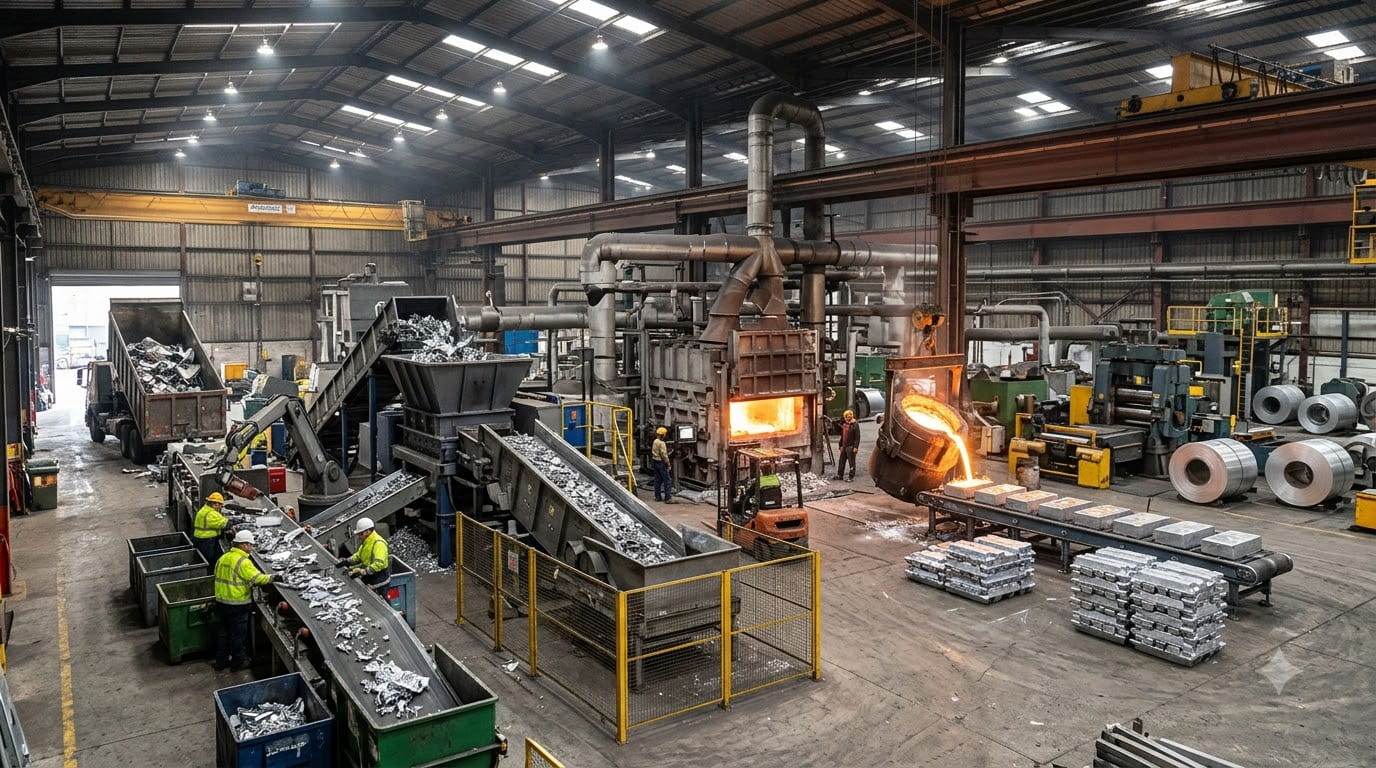
The aluminium recycling process transforms used aluminium products and manufacturing scrap into material that can be used to produce new products. Scrap aluminium may come from beverage cans, construction profiles, vehicle components, machinery, electrical applications, and industrial manufacturing. After collection, the material is sorted, prepared, melted, and cast into secondary aluminium products or feedstock.
For scrap dealers, recyclers, manufacturers, and industrial buyers, understanding this process helps explain why alloy identification, contamination control, and material preparation matter when buying and selling aluminium scrap.
Not all aluminium scrap is suitable for every recycling process. Different alloys have different compositions, and unwanted materials can affect the quality of the final product. Businesses that identify their scrap accurately and keep compatible grades separate can make it easier for recyclers to assess and process their material.
This guide explains how aluminium scrap becomes secondary aluminium, the main stages of recycling, and how businesses can find potential buyers for aluminium scrap.
Why Aluminium Is Widely Recycled
Aluminium is used across construction, transport, packaging, electrical equipment, machinery, and consumer products. Its combination of low density, corrosion resistance, and useful mechanical properties makes it suitable for many applications.
Aluminium can also be recycled into usable material rather than always relying on newly produced primary aluminium. The recycling route depends on the scrap's composition, condition, and the requirements of the intended product.
For manufacturers, recycling aluminium scrap can provide a source of secondary metal feedstock. For scrap collectors and dealers, it creates opportunities to supply recyclers with identifiable materials from commercial, industrial, and post-consumer sources.
However, recycling is not simply a matter of melting all aluminium together. Alloy composition, coatings, attached materials, and contamination must be considered before the scrap enters the appropriate processing route.
Step-by-Step: How Aluminium Scrap Is Recycled
The aluminium recycling process typically involves collection, inspection, sorting, preparation, melting, metal treatment, and casting. The precise steps vary according to the type of scrap and the equipment used by the recycling facility.
Sorting by Alloy
Sorting is one of the most important stages because aluminium products are manufactured from different alloys for different applications.
For example, aluminium beverage cans, extrusion profiles, cast engine components, and alloy wheels may have different compositions. Even though they all contain aluminium, they are not necessarily interchangeable as furnace feedstock.
Recyclers may use supplier documentation, product identification, visual inspection, and suitable metal-analysis equipment to distinguish material categories. Where the alloy is uncertain, additional testing may be necessary.
Separating compatible grades helps recyclers manage the composition of their metal charge. Mixing incompatible alloys can make it more difficult to achieve the chemical specifications required for a particular casting or manufactured product.
For scrap sellers, the practical lesson is straightforward: identify the material as accurately as possible and avoid combining different aluminium grades unless the buyer has agreed to accept the mixed load.
Shredding and Cleaning
After sorting, some aluminium scrap is processed to prepare it for handling and melting. The method depends on the material's size, shape, condition, and the recycler's equipment.
Large components may be cut or reduced in size using suitable industrial machinery. Selected scrap streams may be shredded to make handling and separation easier.
Cleaning and separation can remove unwanted materials such as steel attachments, rubber, plastics, dirt, and other non-aluminium components. Magnetic separation may help remove ferrous metals, while other sorting technologies may be used for particular feedstocks.
Painted, coated, oily, or contaminated scrap may require additional treatment before melting. The appropriate process depends on the type of contamination and the facility's environmental and safety controls.
Beverage cans, extrusion offcuts, cast aluminium, and vehicle components may therefore follow different preparation routes. Some clean industrial scrap needs relatively limited preparation, while mixed or heavily contaminated material can require more extensive processing.
Scrap businesses should not assume that every load needs shredding or intensive cleaning. Preparation should follow the buyer's specifications and the requirements of the receiving facility.
Melting and Casting
Once prepared, the scrap is sent to a suitable furnace for melting. Furnace selection and operating conditions depend on the material, the desired output, and the recycling facility's process.
During melting, the aluminium becomes liquid. Recyclers manage the melt to control its composition and remove or separate unwanted material. Appropriate fluxing, filtration, metal treatment, and alloy adjustments may be used depending on the process and product requirements.
The molten metal is then transferred to a casting operation. It may be cast into ingots, billets, or other forms suited to subsequent manufacturing. Some recycling operations produce metal for foundries, while others supply feedstock for further processing.
Quality control is important throughout these stages. The resulting secondary aluminium must meet the chemical composition and quality requirements of its intended application.
The final product is not necessarily identical to the original scrap. It becomes feedstock for a new manufacturing process, where it may be alloyed, shaped, machined, rolled, or extruded into new products.
Primary vs Secondary Aluminium
Primary aluminium is produced from aluminium-bearing raw material through industrial refining and smelting processes. Secondary aluminium is produced by recycling aluminium scrap and other suitable aluminium-bearing feedstock.
Both can be used in manufacturing, but their suitability depends on the required alloy composition, product specifications, and production method.
| Feature | Primary aluminium | Secondary aluminium |
|---|---|---|
| Main feedstock | Aluminium produced from refined raw material | Recovered aluminium scrap and other suitable feedstock |
| Production route | Refining and primary smelting | Scrap preparation, remelting, metal treatment, and casting |
| Composition control | Managed through primary production and alloying | Depends on feedstock selection, separation, and melt treatment |
| Typical output | Metal for casting and further manufacturing | Metal for casting and further manufacturing |
| Key quality consideration | Required purity and alloy specifications | Scrap quality, contamination, and alloy control |
Secondary aluminium can be suitable for many manufacturing applications, but recycled metal is not automatically appropriate for every product. The final composition and quality must match the intended use.
The environmental and economic performance of recycling also depends on factors such as collection, transport, scrap preparation, furnace technology, and the energy source used. Specific energy-saving or recycling-rate claims should be based on reliable data for the relevant process rather than assumed to apply to every facility.
Why Alloy Separation and Contamination Matter
Alloy separation and contamination control affect both the processing requirements and the commercial value of aluminium scrap.
Alloy composition
Aluminium alloys contain different proportions of aluminium and other elements. These elements influence the material's strength, formability, corrosion resistance, and suitability for specific applications.
A recycler purchasing extrusion scrap may have different requirements from a facility processing cast automotive components. Correct identification helps buyers decide whether the material can be used in their production process.
Contamination
Steel screws, rubber, plastics, dirt, oils, and other unwanted materials may increase preparation costs or affect the quality of the recovered metal.
Contamination can also complicate weighing and pricing. A load containing substantial non-metal material may not receive the same assessment as clean aluminium of a comparable gross weight.
Moisture and coatings
Moisture and certain contaminants can create serious safety concerns during metal melting. Coatings and residues may also require controlled treatment to manage emissions and protect product quality.
Scrap sellers should follow buyer instructions for storage and preparation. Do not place wet or inadequately prepared material into melting operations; this work should be handled by appropriately equipped facilities.
Commercial impact
A buyer may offer different terms for clean, separated aluminium and mixed or contaminated material. The difference depends on the grade, available processing equipment, quantity, and market conditions.
Before investing in sorting or processing, ask the buyer which grades are accepted and whether the additional preparation is likely to improve the net return.
Where to Sell Aluminium Scrap
Scrap collectors, demolition contractors, manufacturers, vehicle dismantlers, and recycling businesses can sell aluminium scrap through established buyer relationships or online trading marketplaces.
Before approaching buyers, identify the material category, estimate the available quantity, take clear photographs, and describe any coatings, attachments, or contamination. Include your location and whether the material is available for collection or requires delivery.
Request offers from buyers that handle your particular aluminium grade. Compare the accepted specification, price basis, minimum quantity, transport costs, inspection conditions, and payment terms. A higher quoted price does not always produce the best net return once logistics and processing expenses are included.
Businesses looking for additional trading opportunities can explore ScrapTrade's global marketplace. ScrapTrade connects buyers and sellers through an online scrap trading platform where businesses can explore listings and present suitable materials to potential trading partners.
When creating a listing, include accurate grade information and photographs. Do not label unidentified or mixed material as a specific alloy without adequate evidence. Confirm the buyer's requirements and transaction terms before dispatching the scrap.
FAQs
What is secondary aluminium?
Secondary aluminium is aluminium produced by recycling scrap and other suitable aluminium-bearing feedstock. It is processed and treated to meet the composition and quality requirements of its intended use.
What are the main stages of aluminium recycling?
The main stages generally include collection, inspection, sorting, preparation, melting, metal treatment, and casting. The exact process varies depending on the scrap type and the recycling facility.
Why should aluminium scrap be sorted by alloy?
Different aluminium alloys contain different proportions of alloying elements. Sorting compatible materials helps recyclers control the composition of the molten metal and produce material that meets the required specifications.
Can mixed aluminium scrap be recycled?
Yes, some mixed aluminium scrap can be recycled, but it may require additional sorting and processing. Whether a buyer accepts it depends on the composition, contamination, quantity, and available processing technology.+
Conclusion
The aluminium recycling process turns used aluminium products and manufacturing scrap into feedstock for new production. Sorting by alloy, removing unwanted materials, preparing the scrap correctly, and controlling the melting and casting stages all help determine the quality of the secondary aluminium produced.
For scrap sellers, the most useful steps are to identify the material accurately, separate compatible grades, disclose contamination, and confirm buyer specifications before processing or selling. These practices help recyclers assess material more efficiently and allow sellers to compare offers on a clearer basis.
If your business collects or generates aluminium scrap, list your aluminium scrap on ScrapTrade and connect with potential buyers through a global online marketplace.