

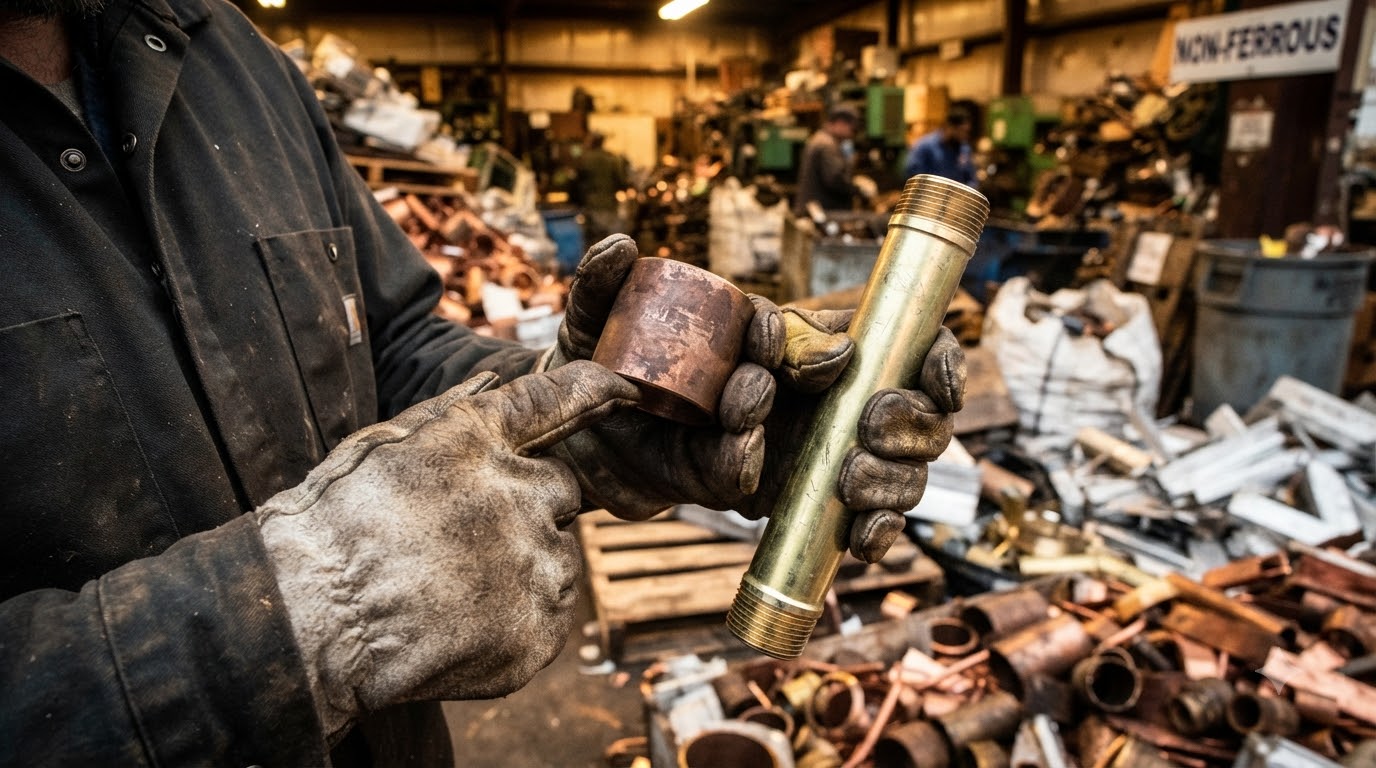
Bronze and brass can look almost identical, particularly in mixed plumbing, engineering, and industrial scrap. Both are copper-based alloys, and visual inspection alone may not always be enough to tell them apart. Misidentifying the material can result in incorrect sorting and potentially different buyer classifications or pricing.
In this guide, you’ll learn practical ways to identify brass vs. bronze scrap, including markings, appearance, weight, composition, and other useful checks. The article will also explain what ScrapTrade currently means by its brass category, so you can better understand how the material should be described when preparing a listing.
Why Do Bronze and Brass Scrap Get Confused?
Both Are Copper-Based Alloys
Both brass and bronze are copper-based alloys, which is one reason they can be difficult to distinguish in scrap loads. Their colour can overlap depending on the specific alloy, surface condition, oxidation, and age of the material.
Brass often has a yellow or golden appearance, while bronze can appear more reddish or brown, but these visual differences are not always consistent. Visual inspection alone is therefore not a reliable way to identify every piece of scrap.
Why Correct Identification Matters
Correct identification is important because different copper alloys can have different commercial values and buyer classifications. Buyers may use specific grading requirements based on the alloy composition and cleanliness of the material.
When brass, bronze, and other copper alloys are mixed together without reliable identification, the load may be classified differently or potentially receive a lower offer because the buyer cannot confidently determine its composition.
Brass vs. Bronze: What’s the Difference?
| Feature | Brass | Bronze |
|---|---|---|
| Base metal | Copper + zinc | Copper + tin/other elements |
| Appearance | Yellow/golden | Reddish-brown/dark |
| Common uses | Taps, fittings, valves, rods | Bushings, bearings, marine parts |
| Scrap value | Varies by grade | Varies by alloy |
Brass
Brass is mainly made from copper and zinc. Common scrap includes plumbing fittings, taps, valves, rods, and connectors.
Bronze
Bronze includes several copper-based alloys, commonly containing tin or other elements. Common scrap includes bushings, bearings, marine components, industrial castings, and decorative items.
How to Tell Brass and Bronze Apart
Identifying brass and bronze correctly can help you sort scrap more accurately. Visual checks and simple tests can provide useful clues, but no single test should be treated as definitive.
Check the Colour
Colour is a useful first clue:
- Yellow or golden: Often indicates brass.
- Reddish-brown or darker brown: May indicate bronze.
- Dull or greenish surface: Could be caused by oxidation or tarnishing.
However, surface condition and different alloy compositions can change the appearance. Colour alone cannot confirm whether a piece is brass or bronze.
Use a Magnet Test
Both brass and bronze are generally non-magnetic.
A magnet can help identify steel or iron parts attached to the item. If the magnet does not stick, however, that does not prove the material is brass or bronze because many other metals are also non-magnetic.
Consider a Spark Test
A spark test can provide additional clues when identifying certain metals. It involves using appropriate equipment to observe the sparks produced when the metal contacts a grinding wheel.
Because spark patterns can vary between alloys, this test requires proper equipment and experience. It should be treated as an identification clue rather than definitive proof of a specific brass or bronze alloy.
What Is Scrap Brass Worth?
The value of scrap brass depends on the type, cleanliness, sorting, and buyer specifications. For ScrapTrade, the brass category is specifically focused on yellow brass, so sellers should make sure their material matches the applicable requirements before listing or pricing it.
What ScrapTrade Means by Its Brass Category
ScrapTrade's brass category focuses on clean yellow brass. The material should meet the applicable cleanliness and specification requirements for this category.
A key requirement is no iron attachments. Brass items with attached steel or iron should be separated where possible before selling. Other attachments, such as rubber or plastic, can also affect classification and processing.
What Counts as Yellow Brass?
Common examples of yellow brass scrap include:
- Brass rods
- Brass fittings
- Taps and faucets
- Brass valves
- Clean brass components
- Other clean yellow brass items
The exact classification can depend on the material's condition and the buyer's specifications.
Why Clean Brass Gets Better Pricing
Clean, sorted yellow brass is generally more valuable because it requires less separation and additional processing. Removing steel, rubber, plastic, dirt, and other unwanted attachments can make the scrap easier for buyers to handle.
Before selling, sort your brass carefully and remove iron or steel attachments where practical. Clean and correctly classified material can make pricing and transactions more straightforward.
Where Does Bronze Fit Into ScrapTrade?
Bronze Is Not the Same as ScrapTrade's Yellow Brass Category
Bronze is a copper-based alloy, but it should not automatically be classified as yellow brass. ScrapTrade's brass category is focused specifically on yellow brass, so its brass pricing should not be assumed to apply to every bronze alloy.
Bronze can still have commercial scrap value, but its classification, acceptance, and pricing depend on the buyer and the material specification. Different bronze alloys can also have different compositions and values.
What Sellers Should Do With Bronze
If you have bronze scrap, provide as much accurate information as possible before listing it:
- Identify the material: Determine whether the item is likely bronze and, where possible, identify the alloy.
- Separate bronze from yellow brass: Keep different materials sorted to avoid incorrect classification.
- Provide clear photos: Show the overall material and any relevant details or attachments.
- Include markings: Share manufacturer markings, alloy codes, or available product information.
- State quantity and weight: Provide the approximate quantity and total weight of the bronze scrap.
- Confirm with the buyer: Ask the buyer to confirm whether the material is accepted and how it should be classified before agreeing on pricing.
What Affects Brass and Bronze Scrap Prices?
The price of brass and bronze scrap depends on material quality, composition, quantity, and current market conditions. Buyers generally consider these factors before determining the final scrap price.
Metal Composition
The composition of the alloy can significantly affect its value. Copper content is important because both brass and bronze contain copper. In brass, the amount of zinc can vary between alloys and influence classification and pricing. Bronze can contain tin, aluminium, silicon, nickel, or other alloying elements, so different bronze alloys may have different commercial values.
Material Cleanliness
Clean and properly sorted material is generally easier to process and classify. Iron attachments, rubber, plastic, coatings, and other contaminants can increase separation and processing requirements. Mixed brass, bronze, or other metal alloys can also make classification more difficult and may affect the price offered by a buyer.
Weight and Quantity
The quantity of scrap can influence how buyers evaluate a load. Small household lots may have different buying conditions from workshop quantities, while industrial loads and bulk shipments can be handled according to commercial buyer specifications. Larger, consistent, and properly sorted quantities may be more attractive to certain buyers.
Market Conditions
Brass and bronze scrap prices also respond to changes in the wider metal market. Copper price movements can influence both alloys, while zinc prices can affect brass values. Industrial demand, regional buyer demand, transportation expenses, and processing costs can also influence the final price offered for scrap.
How to Prepare Brass and Bronze Scrap Before Selling
Preparing your scrap before listing or selling can help buyers identify the material more accurately and reduce confusion over classification and pricing.
Separate Brass From Bronze
Keep brass and bronze separate, even when they have similar colours. Different alloys can have different specifications and values, so combining them may make accurate classification more difficult.
Remove Non-Metal Attachments
Where practical, remove unwanted attachments such as steel, iron, rubber, plastic, and other attached materials. In particular, separating iron or steel attachments can help keep yellow brass cleaner and easier to classify.
Weigh Each Material Separately
Record the weight of your brass and bronze separately. If you have material that cannot be identified or sorted, record it as mixed material rather than combining it with a known alloy.
Take Clear Photos
Clear photos can help buyers evaluate the material before making an offer. Include an overall photo of the scrap, close-ups showing its colour and condition, any manufacturer or alloy markings, attached materials, and enough of the load to show the approximate quantity.
Brass vs. Bronze: Common Items and Their Scrap Classification
Different items can contain brass, bronze, or another copper-based alloy. Use the item type as a starting point, but confirm the material through markings, specifications, or buyer requirements.
| Item | Likely Material | What to Check |
|---|---|---|
| Brass tap | Brass | Markings and attachments |
| Brass rod | Brass | Grade/specification |
| Plumbing fitting | Brass | Steel/rubber attachments |
| Bronze bushing | Bronze | Alloy identification |
| Industrial bearing | Could be bronze/brass | Manufacturer specification |
| Marine component | Often bronze | Exact alloy |
| Decorative item | Brass or bronze | Hallmark/composition |
Common Mistakes When Selling Brass or Bronze Scrap
Assuming Gold-Coloured Metal Is Brass
A yellow or gold-coloured appearance can suggest brass, but colour alone is not enough to identify the alloy. Surface oxidation, coatings, and different alloy compositions can change how the material looks.
Calling Every Copper Alloy Brass
Not every copper-based alloy is brass. Bronze and other copper alloys have different compositions and should not automatically be classified or priced as yellow brass.
Leaving Iron Attachments Attached
Leaving iron or steel attachments on brass or bronze scrap can affect its cleanliness and classification. Where practical, remove these attachments before selling the material.
Mixing Bronze With Clean Yellow Brass
Bronze should be kept separate from clean yellow brass. Mixing different alloys can make it more difficult for buyers to accurately assess the material and determine the appropriate classification.
Relying Only on a Magnet
A magnet can help identify magnetic iron or steel contamination, but it cannot distinguish brass from bronze. Both are generally non-magnetic, so additional information or testing may be needed for accurate identification.
FAQs About Bronze vs. Brass Scrap
What is the difference between brass and bronze scrap?
Brass is mainly a copper-zinc alloy, while bronze refers to copper-based alloys containing tin and/or other alloying elements. Their colours can sometimes overlap, so markings, composition information, specifications, or appropriate testing can help identify the material.
How much is scrap bronze worth?
Scrap bronze value depends on the specific alloy, composition, cleanliness, weight, market conditions, and buyer classification. There is no single bronze scrap price that applies to every bronze component or alloy.
Is brass worth more than bronze as scrap?
Not necessarily. The value depends on the exact alloy, composition, cleanliness, market demand, and buyer specifications. Certain bronze alloys may have different values from clean yellow brass, so the material should be correctly identified before comparing prices.
How can I tell brass from bronze?
Colour can provide an initial clue. Brass is often yellow or golden, while bronze may appear reddish-brown or darker. However, colour and magnet tests alone cannot reliably identify every alloy. Markings, product specifications, or professional testing can provide stronger evidence.
Conclusion
Brass and bronze are both valuable copper-based scrap materials, but they should not be treated as interchangeable categories. Colour, magnet tests, and spark tests can provide useful identification clues, but each method has limitations.
For ScrapTrade, the key distinction is that the brass category focuses on yellow brass and its applicable cleanliness requirements, including the no iron attachments framing. Bronze should not automatically be classified or priced as yellow brass.
Before selling, separate brass from bronze, remove unwanted attachments where practical, record the weight of each material, and provide clear photos and available markings. This helps buyers assess the material more accurately and determine the appropriate classification.