

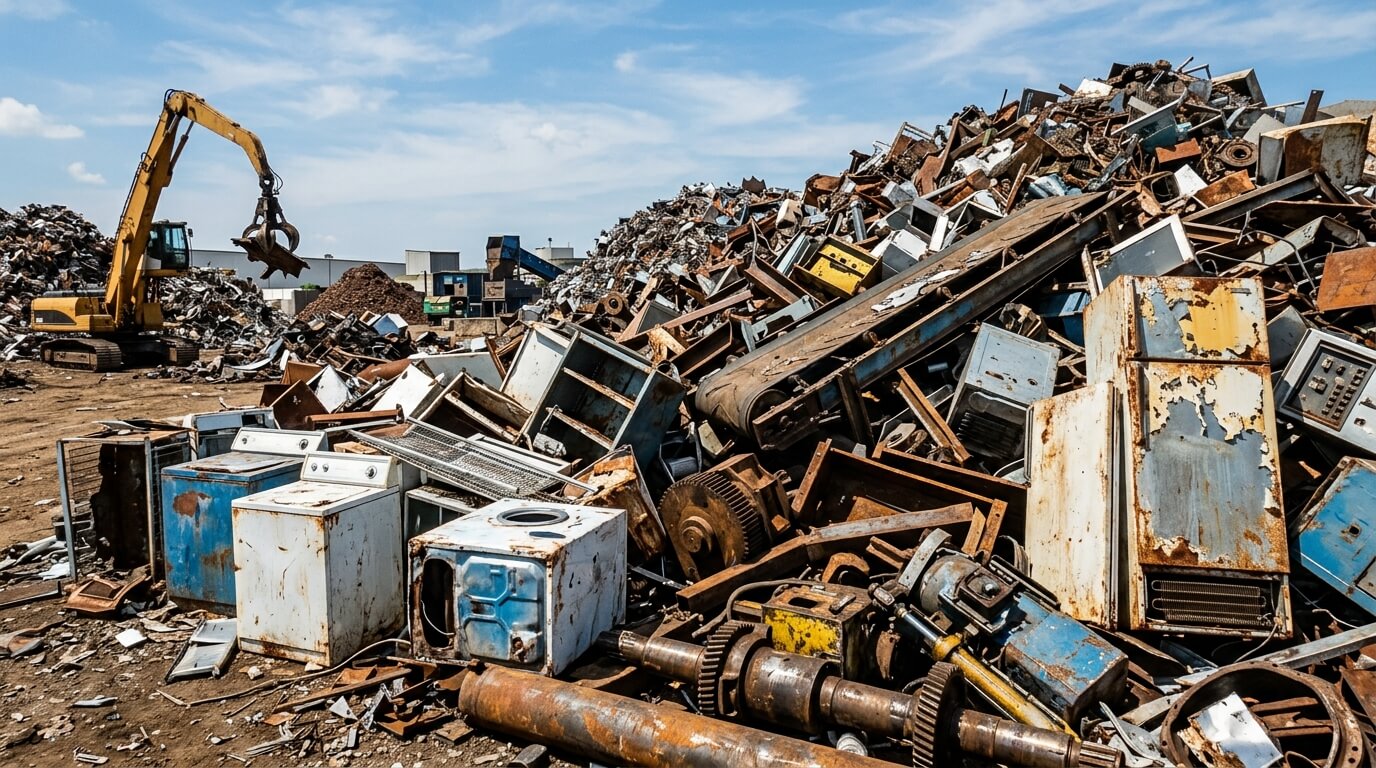
Buying scrap metal in bulk is a structured commercial activity that sits at the core of the recycling supply chain in Australia. Unlike small-scale purchasing from walk-in sellers, bulk scrap acquisition involves consistent supply contracts, strict grading standards, logistics planning, and risk management around contamination and material quality.
Understanding buying scrap metal in bulk in Australia is essential for traders, processors, and industrial buyers who want to secure stable feedstock for export or domestic smelting. Profitability depends not just on price per tonne, but on consistency, volume reliability, and processing efficiency.
How Bulk Scrap Metal Purchasing Works in Australia
Bulk scrap metal purchasing in Australia operates as a structured supply-chain model where recyclers, exporters, and processors acquire large volumes of material for processing, resale, or international shipment. Unlike small one-off sales, bulk transactions focus on efficiency, grading consistency, and logistics optimisation.
Core Bulk Buying Channels
Bulk scrap metal is sourced through several key supply channels across the Australian recycling ecosystem:
- Scrap yards aggregating mixed or sorted commercial material
- Direct industrial suppliers such as factories and manufacturing plants
- Construction and infrastructure projects producing structural steel and offcuts
- Automotive dismantlers supplying end-of-life vehicles and components
- Online scrap marketplaces connecting multiple sellers with competing buyers
Bulk Purchasing Flow
The bulk purchasing process typically follows a standard operational sequence designed to maximise efficiency and reduce handling costs:
- Collection of large-volume scrap from industrial or commercial sources
- Weighing and classification by metal type and grade
- Sorting, shredding, or compaction depending on material category
- Consolidation into export-ready or refinery-ready loads
- Transport to domestic processing plants or international shipping ports
Types of Bulk Scrap Metal Buyers
Bulk scrap metal buyers in Australia operate across different stages of the recycling and supply chain, each specialising in how material is sourced, processed, or exported. Understanding these buyer categories helps explain how large-volume scrap is priced and distributed.
Scrap Traders
Scrap traders function as intermediaries in the market, focusing on aggregating material from multiple suppliers and aligning it with global commodity pricing conditions. They typically move material between sellers, processors, and export channels depending on demand and pricing opportunities.
Processors
Processors are responsible for physically transforming scrap into usable feedstock for smelters or export markets. This includes operations such as shredding, baling, grading, and removing contaminants to meet strict quality requirements.
Export Buyers
Export buyers focus on purchasing large, consistent volumes of scrap metal intended for international markets. They prioritise uniform grading, predictable supply quality, and logistical efficiency to support overseas steel mills and refining facilities.
Industrial Offtake Buyers
Industrial offtake buyers secure direct supply agreements with large-scale scrap generators such as manufacturing plants, construction companies, and demolition contractors. These arrangements ensure continuous material flow and reduce sourcing uncertainty.
Key Factors in Bulk Scrap Metal Buying
Grade Consistency
Bulk scrap buyers place strong emphasis on consistent material grading because it directly affects processing efficiency and resale value. Uniform copper grades, consistent aluminium alloys, and predictable steel composition allow smoother downstream processing and more accurate pricing models.
Contamination Risk
Contamination is one of the most important pricing factors in bulk scrap transactions. Buyers assess how much non-metal material is present and how difficult it will be to clean or separate.
Common contamination issues include plastic or rubber attachments, non-metallic coatings such as paint or insulation, alloy mixing, and the presence of moisture or dirt.
Supply Reliability
Consistency of supply plays a major role in bulk purchasing decisions. Buyers prefer working with suppliers who can deliver repeat volumes over time rather than one-off loads.
Regular suppliers, scheduled deliveries, and predictable monthly output are all highly valued because they improve operational planning and logistics efficiency.
Market Price Exposure
Bulk scrap pricing is closely linked to global and domestic commodity markets. Key influences include London Metal Exchange (LME) indices for copper, aluminium, and nickel, exchange rate fluctuations between AUD and USD, and domestic steel demand cycles tied to construction and infrastructure activity.
How Traders Secure Consistent Scrap Supply
Long-Term Supplier Contracts
Traders often stabilise supply by establishing ongoing agreements with high-volume scrap generators. These arrangements typically involve industrial operators, construction firms, and demolition contractors that produce continuous or project-based metal waste.
Aggregation Networks
A significant portion of scrap supply is sourced through aggregated networks where smaller suppliers are consolidated into larger, transport-efficient volumes. Regional scrap yards, collection hubs, and coordinated buying channels play a central role in this system.
Digital Platforms
Modern scrap procurement increasingly relies on digital marketplaces that connect multiple buyers and sellers in real time.
FAQs
How does buying scrap metal in bulk work in Australia?
Bulk scrap metal buying in Australia involves sourcing large volumes of metal from industrial suppliers, construction projects, scrap yards, and trading networks. The material is then sorted, processed, and either resold domestically or exported based on global commodity pricing and demand conditions.
What is the most important factor when buying bulk scrap?
Grade consistency and reliable supply are the most important factors in bulk scrap purchasing. Consistent material quality reduces processing costs, improves efficiency, and allows buyers to maintain stable resale margins across domestic and export markets.
Why is contamination a major issue in scrap buying?
Contamination increases operational costs because additional sorting, cleaning, and separation are required before processing. This reduces overall efficiency and lowers the profit margin for traders, processors, and exporters.
Do bulk scrap buyers make more profit than small buyers?
Yes, bulk scrap buyers generally achieve higher profitability due to economies of scale, reduced transport costs per unit, and stronger negotiation power when dealing with large-volume suppliers and export contracts.
Where do bulk scrap traders sell their material?
Bulk scrap traders typically sell material to domestic steel mills, smelters, and manufacturing facilities, or export it to international markets, particularly in Asia, depending on grade quality and prevailing global commodity prices.
Conclusion
Bulk scrap metal buying in Australia operates as a logistics-driven and margin-focused industry where efficiency determines profitability. Success depends on maintaining consistent supply channels, ensuring accurate grading, and responding effectively to market price movements.
Traders and processors that secure reliable supply, minimise contamination, and optimise transport and processing workflows are better positioned to improve margins and maintain competitiveness across both domestic and export markets.