

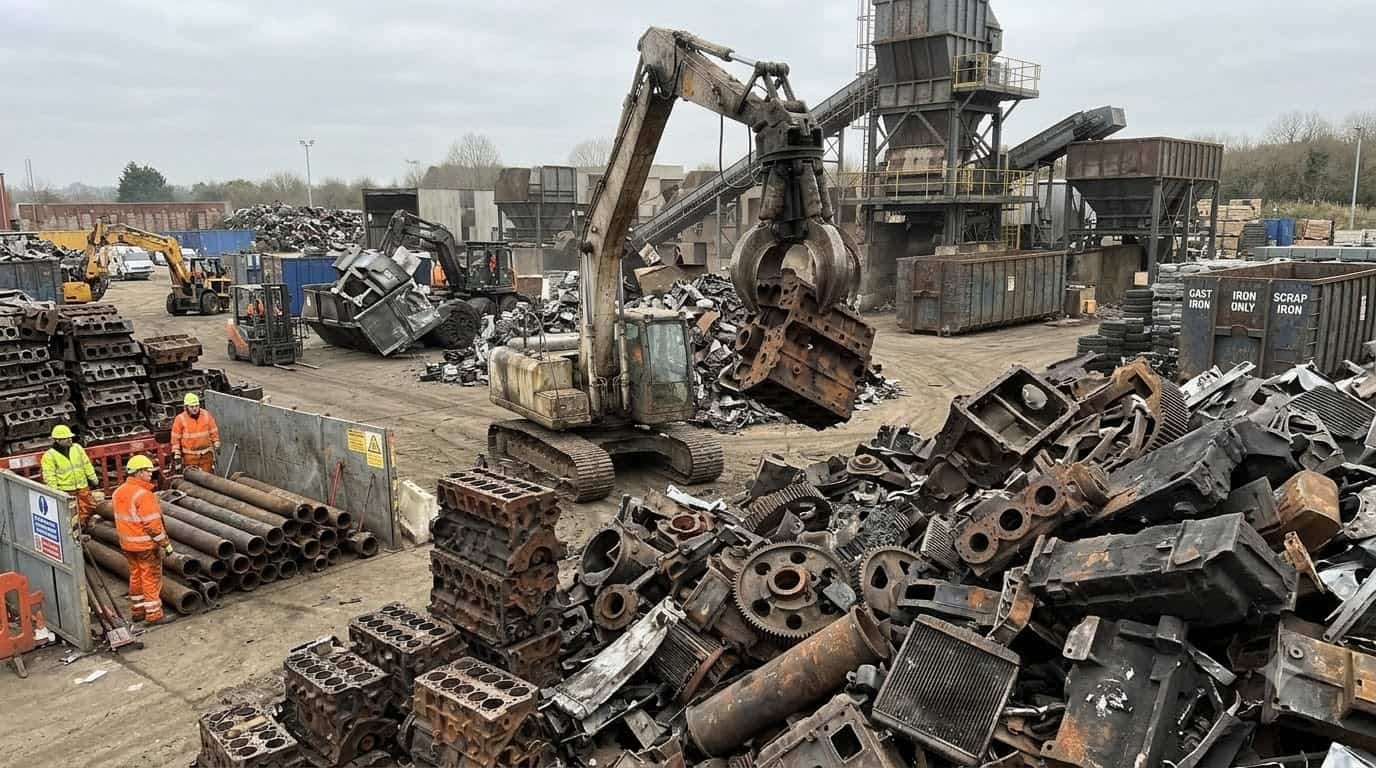
Cast iron is widely used in machinery, engine blocks, pipes, industrial equipment, cookware, and other manufactured products. When these products reach the end of their useful life, the metal can often be recovered and recycled into new castings.
For foundries, cast iron scrap is an important raw material. Instead of relying entirely on newly produced iron, foundries can use suitable recycled scrap as part of their furnace charge. However, not every piece of cast iron is suitable for every casting operation. Scrap must be identified, sorted, and prepared according to the foundry's requirements.
Understanding the cast iron recycling process helps scrap dealers, industrial suppliers, and recyclers prepare material that foundries can evaluate more easily. This guide explains how cast iron scrap is sorted, melted, and reused, what buyers look for, and how businesses can sell cast iron scrap.
Why Cast Iron Scrap Is in Demand with Foundries
Cast iron is an iron-carbon alloy commonly used to manufacture components that require particular casting characteristics, strength, wear resistance, or machinability. Its properties depend on its composition, structure, and production method.
Foundries recycle cast iron because suitable scrap can be remelted and incorporated into new castings. This creates a market for material from machinery, automotive components, industrial equipment, pipes, and manufacturing operations.
There are several reasons foundries purchase cast iron scrap:
Raw material supply: Recovered cast iron can form part of the metal charge used in foundry production.
Material reuse: Scrap from discarded or replaced castings can be returned to manufacturing rather than treated as waste.
Production flexibility: Foundries may use different grades and forms of scrap depending on the required casting composition and production process.
Industrial demand: Cast iron remains relevant in applications such as machine bases, housings, pump components, engine parts, and industrial fittings.
However, foundries do not simply buy any iron-bearing material. They need scrap that matches their technical requirements. Cast iron should not automatically be mixed with ordinary steel scrap because their compositions and melting behaviour differ.
From Scrap to New Castings
The recycling route generally involves identifying the material, removing unsuitable attachments, preparing the scrap, melting it, adjusting the molten metal, and pouring it into moulds.
The precise procedure depends on the foundry, the type of casting being manufactured, the furnace used, and the required metal specifications.
Sorting and Preparing Cast Iron
The first stage is identifying cast iron and separating it from other scrap categories.
Common cast iron types include:
- Grey cast iron: Commonly found in engine blocks, machine bases, housings, and industrial components.
- Ductile cast iron: Used in products such as pipes, automotive components, and machinery parts.
- White cast iron: Known for its hard, wear-resistant structure and used in selected industrial applications.
- Malleable cast iron: Found in certain fittings, brackets, and mechanical components.
These types should not be treated as interchangeable. Their properties and chemical composition can differ, so foundries may have specific acceptance requirements.
Sorting and preparation can include:
Material identification: Workers inspect the scrap's origin, shape, markings, and known material specifications. Testing may be required when the grade is uncertain.
Separation from steel: Cast iron is kept separate from ordinary carbon steel and other unwanted metal categories where required.
Removal of attachments: Rubber, plastic, wood, insulation, and unrelated components are removed where practical.
Removal of oils and residues: Scrap from engines, machinery, and industrial equipment may need cleaning or other preparation before acceptance.
Size preparation: Oversized components may be cut or broken into manageable pieces, subject to safe handling procedures and buyer specifications.
A foundry may also require documentation or material testing for higher-specification applications.
Charging and Melting
After sorting and preparation, accepted cast iron scrap is delivered to the foundry for melting.
Foundries use different furnace technologies depending on production requirements. Common examples include:
Induction furnaces: These use electromagnetic induction to heat and melt metal. They are used in many foundries for controlled melting operations.
Cupola furnaces: These are traditional foundry furnaces used for melting cast iron, with a continuous charging arrangement in suitable operations.
Electric arc furnaces: These use electrical arcs to generate heat and can process various ferrous metal charges, depending on the facility and production route.
The selected furnace receives a prepared charge containing suitable raw materials and scrap. During melting, foundry operators manage the metal composition and temperature according to the casting specification.
The molten iron may undergo chemical analysis and adjustment before pouring. This is important because different castings require different material properties.
Once the molten metal meets the required conditions, it is transferred into moulds. After cooling and solidification, the castings are removed for cleaning, finishing, machining, and inspection.
The finished products may include machine components, pump housings, automotive parts, industrial fittings, and other cast iron products.
What Foundries Look for in Cast Iron Scrap
Foundries assess scrap based on whether it is suitable for their melting and production requirements. The exact acceptance criteria vary, but several factors commonly influence purchasing decisions.
| Factor | What the foundry evaluates | Why it matters |
|---|---|---|
| Material grade | Grey, ductile, or other cast iron types | Supports charge planning and composition control |
| Material identity | Whether the scrap is genuinely cast iron | Prevents unsuitable material entering the charge |
| Cleanliness | Oil, dirt, paint, and other residues | Affects preparation and handling |
| Contamination | Attached steel, non-ferrous metals, and non-metal materials | Can affect melt quality and processing |
| Size | Dimensions and shape of scrap pieces | Determines handling and furnace suitability |
| Quantity | Available weight and consistency of supply | Helps plan purchasing and production |
| Documentation | Source details, specifications, or test information | Supports material verification |
Some foundries may accept mixed cast iron grades for particular applications, while others require clearly separated material. Sellers should confirm specifications before preparing a large shipment.
Size, Cleanliness and Contamination Concerns
Scrap size and condition can influence whether a foundry accepts a load and how much preparation it requires.
Scrap size
Large engine blocks, machine bases, and industrial castings may need cutting or size reduction before delivery. Small broken castings may be easier to handle, but the foundry still needs to confirm that their dimensions suit its charging equipment.
Do not assume that smaller pieces are always preferred. Follow the buyer's stated size range and loading requirements.
Cleanliness
Cast iron scrap may arrive with oil, grease, paint, rust, dirt, or other residues. Some surface conditions may be acceptable, while excessive contamination can lead to additional processing or rejection.
Material from engines, pumps, and industrial machinery deserves particular attention because it may contain trapped fluids or attached components.
Mixed metal contamination
Cast iron mixed with steel, aluminium, copper, brass, or other materials can create sorting difficulties. Some foundries may accept certain mixed ferrous loads, but others require cast iron to be supplied separately.
Sellers should not describe a mixed load as clean cast iron scrap unless its contents have been checked.
Safety considerations
Heavy castings can create lifting, cutting, and transport hazards. Scrap should be handled with appropriate equipment, and any cutting, cleaning, or preparation should follow suitable workplace safety procedures.
Common Sources of Cast Iron Scrap
Cast iron scrap comes from both industrial operations and end-of-life products.
Automotive industry: Engine blocks, brake components, and selected vehicle parts can provide cast iron scrap.
Manufacturing facilities: Rejected castings, machining-related scrap, and production offcuts may be generated during manufacturing.
Machine shops: Old machinery components, machine bases, and housings can enter the recycling market.
Construction and infrastructure: Removed pipes, fittings, covers, and other cast iron products can become scrap when replaced.
Industrial maintenance: Pumps, compressors, housings, and equipment components may be discarded during repairs or upgrades.
Household and commercial products: Certain cookware, heating equipment, and other cast iron products can also enter scrap collection channels.
The source of the material can help buyers understand its likely composition and condition. However, origin alone does not confirm the exact grade.
Where to Sell Cast Iron Scrap
Cast iron scrap can be sold to foundries, ferrous scrap dealers, metal recyclers, and industrial raw material buyers. The best buyer depends on the material grade, quantity, location, and preparation.
Before offering cast iron scrap for sale, prepare the following information:
- Material description and known grade.
- Estimated or verified quantity.
- Clear photographs of the scrap.
- Piece size and general condition.
- Details of attached materials or contamination.
- Collection or delivery location.
- Any available specifications or test reports.
Compare offers based on more than the quoted price. Check accepted grades, inspection conditions, transport costs, payment terms, and whether the buyer requires additional preparation.
You can also list your cast iron scrap on ScrapTrade to present your material to potential buyers through a global scrap trading marketplace.
ScrapTrade supports connections between scrap suppliers and buyers. Sellers can provide material details and pricing terms, while interested buyers can review listings and submit offers. The platform does not take ownership of the scrap.
FAQs
Can cast iron be recycled?
Yes. Cast iron can be recycled by sorting and preparing suitable scrap, melting it in a foundry furnace, adjusting the molten metal composition, and casting it into new products. Acceptance depends on the material grade, condition, and foundry specifications.
What furnace is used to recycle cast iron?
Foundries may use induction furnaces, cupola furnaces, or other suitable melting systems. The choice depends on production requirements, the type of charge, operating conditions, and the specifications of the finished casting.
Is cast iron scrap the same as steel scrap?
No. Both are ferrous metals, but cast iron and steel have different compositions and material characteristics. Foundries may require them to be sorted separately to maintain control over the final molten metal composition.
What types of cast iron scrap do foundries buy?
Foundries may purchase grey cast iron, ductile cast iron, and other suitable cast iron grades. Their requirements vary according to the products they manufacture, so sellers should confirm the accepted grade and condition before delivery.
Conclusion
Cast iron recycling allows foundries to recover iron-bearing material from old machinery, automotive components, industrial castings, pipes, and manufacturing scrap. The process begins with sorting and preparation, followed by furnace melting, composition control, and casting into new products.
For scrap suppliers, the most important considerations are accurate grade identification, separation from ordinary steel, manageable size, and freedom from unwanted contamination. Understanding what foundries require can make it easier to prepare material and compare buyer offers.
If your business supplies grey cast iron, ductile iron, engine blocks, machine castings, or other cast iron scrap, list your cast iron scrap on ScrapTrade and connect with potential buyers in the global scrap market.