

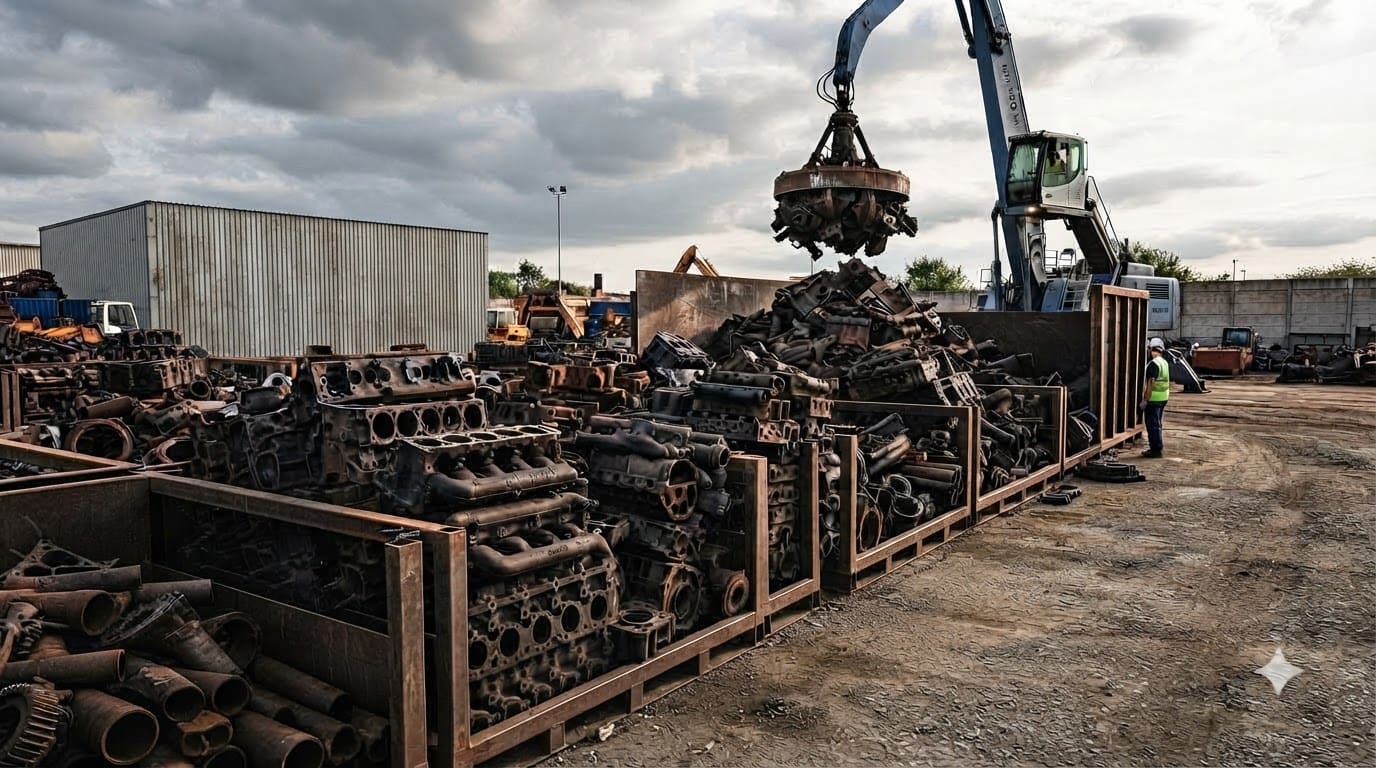
Cast iron scrap is a widely traded ferrous material generated from manufacturing, construction, machinery, automotive, plumbing, and industrial operations. It can include engine blocks, pipes, machinery components, castings, and other products made primarily from cast iron.
For buyers and sellers, understanding the material is important because cast iron is not necessarily traded under the same commercial conditions as other ferrous scrap. Its composition, form, size, cleanliness, quantity, and preparation can affect how buyers evaluate a lot.
What Counts as Cast Iron Scrap
Cast iron is an iron-based material containing a relatively high amount of carbon compared with many forms of steel. It is commonly produced by casting molten metal into molds to create components with specific shapes.
When these products reach the end of their useful life, they can become cast iron scrap.
Common examples include engine blocks, machinery housings, cast pipes, pump bodies, industrial castings, brake components, and other cast iron parts.
Cast iron scrap can appear in different forms and conditions. Some lots may consist of relatively clean castings, while others may contain attached steel, aluminium, rubber, plastic, paint, or other materials.
This distinction matters when preparing a commercial listing.
A seller should describe the material based on what is actually available rather than assuming that every heavy ferrous casting is the same grade. Where the exact composition or specification is unknown, provide an accurate description and relevant photographs instead of making an unsupported grade claim.
Common Sources: Engine Blocks, Pipe, Machinery
Cast iron scrap can come from many industrial and commercial sources.
Engine Blocks
Old engine blocks are a recognizable source of cast iron scrap. Automotive and industrial engines can contain cast iron components, although the exact material composition can vary depending on the engine and component.
Before trading engine-related scrap, sellers should identify what is included in the lot and whether non-ferrous components or attachments remain attached.
Cast Iron Pipe
Cast iron pipe can come from building demolition, infrastructure replacement, plumbing systems, and industrial applications.
Pipe scrap may contain coatings, fittings, joints, soil, or other attachments depending on where it originated. These factors should be disclosed when creating a listing.
Machinery and Industrial Castings
Industrial machinery can generate substantial cast iron scrap when equipment is dismantled, replaced, or decommissioned.
Examples can include machine bases, housings, pump components, gear housings, industrial castings, and other heavy components.
Because machinery scrap can contain multiple materials, sorting and preparation can be important when determining its commercial value.
How Cast Iron Pricing Compares to Steel and HMS
Cast iron and steel are both ferrous materials, but they are not automatically interchangeable in scrap trading.
HMS, or heavy melting steel, is a category used in the ferrous scrap trade to describe certain heavy steel scrap specifications. Cast iron has different material characteristics and may be evaluated separately by buyers depending on their processing requirements.
The price of cast iron scrap can therefore differ from the price of a particular steel or HMS category.
Several factors can influence this comparison, including material composition, size, cleanliness, preparation, quantity, location, transportation, and current market conditions.
A seller should not assume that a published HMS reference price is automatically the appropriate value for cast iron scrap.
For current reference information, buyers and sellers can review relevant ScrapTrade market prices and then evaluate how the actual material differs from the referenced category.
The final transaction price may vary because a market reference is not necessarily the same as an individual buyer's offer.
How to Sell Cast Iron Scrap Online
Selling cast iron scrap online starts with creating a clear and accurate listing.
Begin by identifying the material and describing its source. If it consists of engine blocks, machinery castings, pipe, or another recognizable category, state this clearly.
Next, provide the approximate quantity and unit of measurement. If the material is mixed with other metals or attachments, explain this rather than presenting the entire lot as clean cast iron.
Photographs are also useful. Include images that show the overall lot as well as representative pieces. This allows potential buyers to understand the form and condition of the material before making an offer.
Location is another important consideration. Cast iron is often heavy, so transportation can have a significant effect on the economics of a transaction.
Once the listing is prepared, a digital marketplace can provide an additional channel for connecting with potential buyers.
ScrapTrade allows businesses to list scrap materials and connect with potential buyers through a global B2B scrap trading environment.
FAQs
What is cast iron scrap?
Cast iron scrap is discarded or recovered material made primarily from cast iron. Common examples include engine blocks, machinery castings, pipes, pump bodies, and other cast components.
Is cast iron the same as steel scrap?
No. Both are ferrous materials, but cast iron and steel have different compositions and material characteristics. Buyers may evaluate them under different scrap specifications.
Is cast iron scrap the same as HMS?
No. HMS is a category of heavy melting steel scrap. Cast iron may be traded separately depending on its characteristics and the buyer's requirements.
What affects cast iron scrap price?
Material characteristics, grade or specification, quantity, cleanliness, contamination, preparation, location, transportation, and current market conditions can all influence the commercial value.
Conclusion
Cast iron scrap is an important category of ferrous recyclable material, with sources ranging from engine blocks and cast pipe to industrial machinery and manufacturing components.
Although it is a ferrous material like steel, cast iron should not automatically be valued using a steel or HMS reference. Its composition, form, cleanliness, preparation, quantity, and buyer requirements can all influence its commercial value.
For sellers, accurate descriptions are essential. Clearly identify the source, approximate quantity, condition, attachments, location, and available photographs so potential buyers can evaluate the material.