

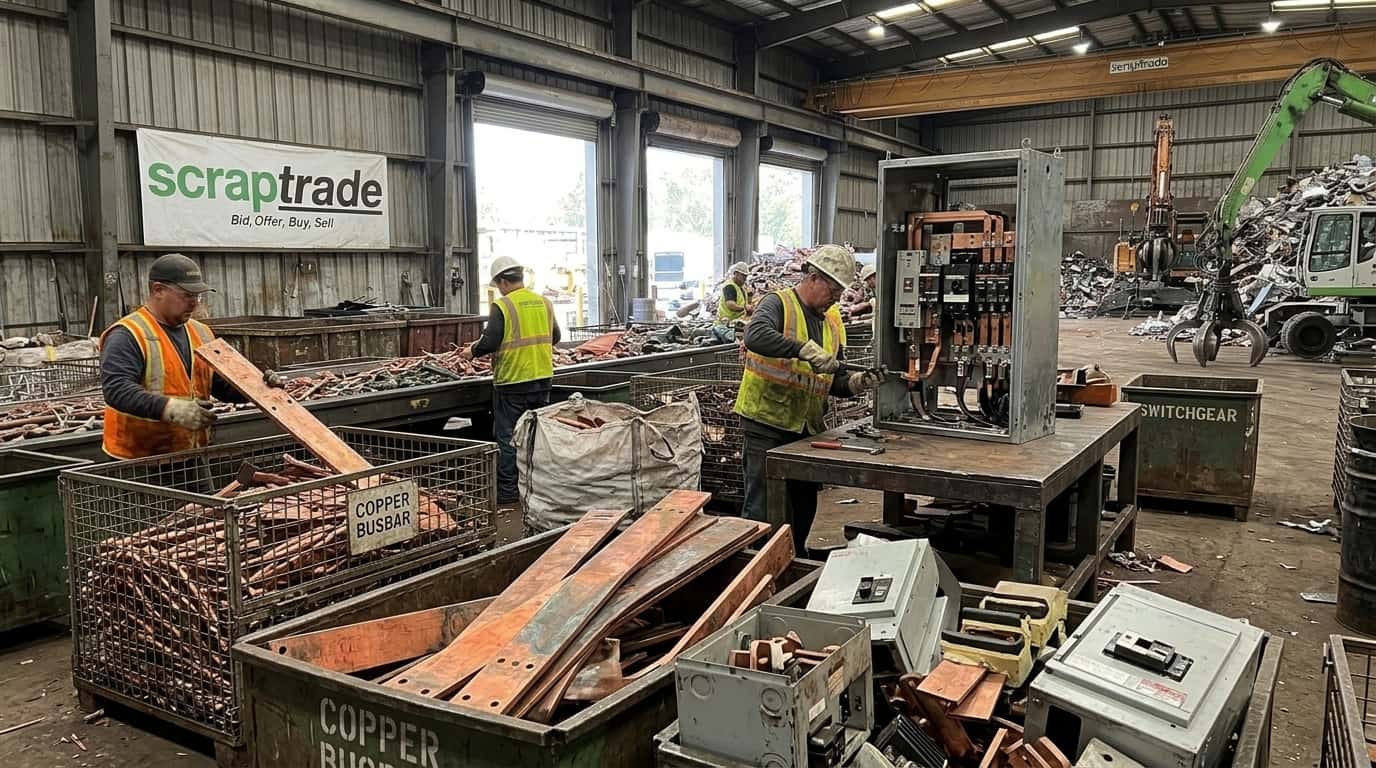
Electrical equipment can contain several valuable scrap streams in one unit, but separating them correctly is essential. Copper busbars, aluminium conductors, steel enclosures, switches, contacts and other components can all enter the recycling chain with very different material values and buyer specifications. The challenge is knowing what can be separated, what should be handled cautiously, and how to describe the resulting scrap accurately.
Copper busbar recycling is especially important because busbars can provide a concentrated source of copper from electrical panels, switchboards and industrial equipment. This guide explains why busbars and switchgear are valuable scrap, which materials are commonly found inside electrical equipment, how qualified personnel should approach dismantling, how sorting affects saleability, and how to prepare electrical scrap for B2B buyers.
Why Busbars and Switchgear Are Valuable Scrap
Busbars and switchgear are used throughout electrical distribution systems. Industrial facilities, commercial buildings, substations, manufacturing plants and electrical installations can contain significant amounts of recoverable metal.
A single piece of electrical equipment may contain several recyclable materials, including copper, aluminium and steel. This makes switchgear scrap different from a simple single-metal load.
The main opportunity comes from separating these materials instead of sending the entire assembly into one mixed scrap stream.
For example, a dismantled electrical panel may produce:
- Copper busbars and conductors
- Aluminium components
- Steel cabinets and mounting structures
- Copper or copper-alloy terminals
- Contact materials
- Cables and connectors
- Other components requiring specialist handling
The commercial outcome depends on the material type, condition, cleanliness, quantity, buyer specification and applicable market conditions. Therefore, the objective should not simply be to recover as much metal as possible, but to create clearly identified and properly separated scrap streams.
For recyclers and businesses selling electrical equipment, this can make the material easier to evaluate and match with suitable buyers.
Materials in Electrical Equipment
Electrical panels and switchgear are not made from copper alone. Understanding the material mix is the first step toward effective electrical panel recycling.
Copper and Aluminium Busbar
Busbars are rigid conductors used to distribute electrical current inside equipment such as switchboards and panels.
Copper is widely used for busbars because of its electrical conductivity and mechanical properties. Aluminium busbars are also used in some applications.
During recycling, copper and aluminium should be kept separate where practical.
A copper busbar should not automatically be classified as a generic copper scrap grade. Its surface condition, plating, attached components and buyer specification may affect how it is classified.
Similarly, aluminium busbars should be separated from copper rather than mixed into a non-ferrous pile.
Before selling, identify:
- Base metal
- Surface plating or coating
- Attached fittings
- Approximate quantity
- Cleanliness
- Whether the material is solid busbar or part of a larger assembly
Clear identification gives buyers better information when evaluating a load.
Steel Enclosures
Many switchgear assemblies are housed inside steel cabinets or enclosures.
These sections can usually become a separate ferrous scrap stream after the electrical equipment has been safely de-energised and dismantled by qualified personnel.
Steel may include:
- Panel cabinets
- Doors and covers
- Mounting frames
- Brackets
- Structural supports
- Fasteners and hardware
Separating steel from non-ferrous metals helps prevent copper and aluminium from being unnecessarily mixed with ferrous scrap.
Paint, coatings, insulation and attached electrical components should also be considered when preparing the material according to the buyer's specification.
Silver-Plated Contacts
Some electrical switching components can contain contact materials or plated surfaces designed for electrical performance.
These components should not be assumed to be ordinary silver scrap simply because a contact appears silver-coloured.
Visual appearance alone cannot reliably determine composition.
Contacts may contain or be plated with different metals depending on the equipment and application. If a component appears potentially valuable or unusual, it should be kept separate and identified rather than mixed into general copper or steel scrap.
Safe Dismantling Basics
Electrical equipment should never be treated like ordinary scrap until it has been made safe.
The first priority is electrical safety, not metal recovery.
Electrical equipment should be de-energised and made safe by qualified personnel before dismantling. Workers should not assume that equipment is safe simply because it appears disconnected, old or unused.
General safety considerations include:
- Confirm that the equipment has been safely de-energised.
- Use qualified electrical personnel for electrical isolation and verification.
- Follow the applicable workplace electrical-safety requirements.
- Treat stored electrical energy and other energy sources as potential hazards.
- Use appropriate PPE and site controls.
- Keep unidentified or potentially hazardous components separate.
- Do not dismantle equipment solely to recover a valuable metal without considering the remaining hazards.
The exact procedures depend on the equipment, installation and jurisdiction, so this article does not provide step-by-step electrical isolation or dismantling instructions.
For commercial recyclers, a good workflow is to establish a clear handover point: electrical professionals make the equipment safe; trained dismantling personnel then separate the materials according to the site's safety procedures.
Sorting for Better Grades
After safe dismantling, sorting becomes the key commercial step.
The goal is to create consistent material categories rather than one mixed pile.
Separate Copper From Aluminium
Copper and aluminium should be stored separately when the equipment contains both.
This is particularly important for busbars because their appearance can sometimes be misleading after years of service or exposure.
When identification is uncertain, use appropriate material-testing methods rather than relying only on colour.
Separate Copper Busbars From Attached Materials
Copper busbars may have bolts, brackets, insulation, coatings, terminals or other attachments.
Where safely and practically removable, non-copper components should be separated according to the buyer's requirements.
However, do not assume that every attachment should be removed manually. Some components require specialist handling, and the labour cost of further dismantling should be considered.
Keep Steel Separate
Steel enclosures, brackets and mounting components should generally be kept in the appropriate ferrous stream.
This improves the consistency of both the copper and steel loads.
Create Clear Material Lots
A recycler may ultimately have several separate streams:
Copper busbars → aluminium busbars → clean copper components → insulated cable → steel enclosures → specialist electrical components
The exact categories should follow the buyer's specification.
A clear material description is also important when creating an online listing. Instead of writing "electrical scrap," specify what is actually available, such as copper busbars from dismantled switchgear, steel electrical enclosures or mixed electrical panel scrap.
Hazardous Components to Check First
Electrical equipment can contain more than recyclable metals.
Some assemblies may include components that require special handling, regulatory controls or specialist disposal. These can include batteries, capacitors, oils, electronic components, lamps or other substances depending on the equipment.
Older electrical equipment may also require additional attention because its components and construction can differ significantly from modern equipment.
Before dismantling or selling a load, identify potentially hazardous or restricted components and check the applicable local requirements.
This is particularly important when dealing with:
- Large capacitors or energy-storage components
- Batteries
- Equipment containing oils or other fluids
- Electronic control components
- Potentially hazardous insulating materials
- Components subject to local hazardous-waste rules
Do not mix unidentified hazardous components into ordinary metal scrap.
If a load contains material that may fall under hazardous or prohibited scrap categories, use the appropriate specialist handling or disposal route.
FAQs
What is copper busbar scrap?
Copper busbar scrap consists of copper conductors recovered from electrical distribution equipment, panels, switchboards and related installations. Busbars may be bare, plated, coated or attached to other components. Their final scrap classification depends on condition and the specification agreed with the buyer.
Is switchgear scrap recyclable?
Yes, many switchgear assemblies contain recyclable metals such as copper, aluminium and steel. However, electrical equipment should be safely de-energised and assessed by qualified personnel before dismantling. Potentially hazardous components should be identified and handled through the appropriate route.
How should copper busbars be sorted?
Copper busbars should generally be separated from aluminium, steel and other materials. Attachments, coatings and plating should also be identified because they can affect buyer specifications. When material identity is uncertain, appropriate testing can provide better identification than visual inspection alone.
Can silver-coloured electrical contacts be sold as silver scrap?
Not necessarily. Electrical contacts may contain different metals or coatings, and appearance alone cannot establish their composition. Potentially valuable contact materials should be kept separate and identified before being sold or mixed with ordinary copper or steel scrap.
Conclusion
Copper busbar and switchgear recycling can turn complex electrical equipment into several useful material streams, including copper, aluminium and steel. The biggest improvement usually comes from proper separation rather than treating the entire assembly as mixed electrical scrap.
Safety must come first. Electrical equipment should be de-energised and handled by qualified personnel before dismantling. Once the equipment is safe, recyclers can separate copper busbars, aluminium components, steel enclosures and other materials according to buyer specifications.
Potentially hazardous or specialist components also need to be identified before they enter ordinary scrap loads.
For sellers, accurate descriptions and clean material separation make the difference between a vague "electrical scrap" listing and a commercially useful B2B material listing. If you have properly prepared electrical scrap, list your material on ScrapTrade and connect it with potential buyers looking for specific recyclable materials.