

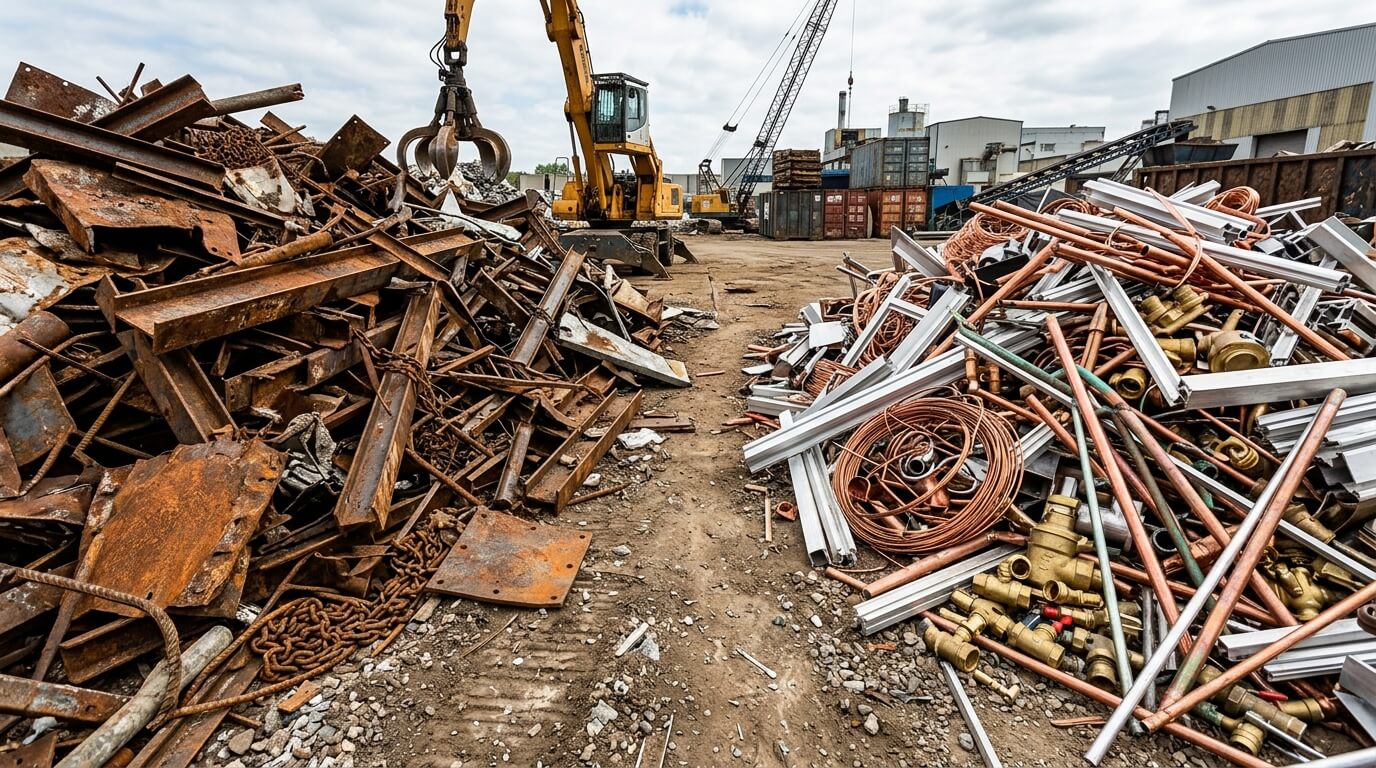
Many people selling scrap metal in Australia get confused about ferrous vs non-ferrous scrap metal and why prices vary so dramatically between the two. One load might be worth only a few dollars per tonne, while another earns high returns per kilogram.
The difference comes down to iron content. Ferrous metals contain iron, while non-ferrous metals do not and this single factor has a major impact on value, demand, and recyclability.
What Are Ferrous Metals?
Ferrous metals are metals that contain iron as their main element. This iron content makes them strong, durable, and magnetic. They are widely used in construction, manufacturing, and heavy industry due to their strength and low cost. In recycling, they are easily identified because they stick to a magnet, but they are also more prone to rust when exposed to moisture and air.
Common Ferrous Metals in Australia
Steel
Steel is the most widely used ferrous metal, found in buildings, bridges, vehicles, and machinery.
Cast Iron
Cast iron is strong under compression and used in pipes, engine blocks, and industrial equipment.
Wrought Iron
Wrought iron is malleable and used in fences, gates, and decorative structures.
Mixed Iron Scrap
Includes old machinery, construction debris, and industrial waste containing high iron content.
Key Characteristics
Magnetic
Ferrous metals respond strongly to magnets due to their iron content.
Strong and Heavy
They offer high structural strength and are used in load-bearing applications.
Rust-Prone
They corrode easily when exposed to water and oxygen.
Lower Scrap Value
They generally have lower per-kg value compared to non-ferrous metals but are traded in large volumes.
What Are Non-Ferrous Metals?
Non-ferrous metals are metals that do not contain iron, which makes them non-magnetic and generally more resistant to rust and corrosion. They are widely used in electrical, plumbing, automotive, and manufacturing industries because of their durability, conductivity, and lightweight properties. In recycling markets, non-ferrous metals are typically more valuable than ferrous metals due to higher demand and better material performance.
Common Non-Ferrous Metals
Copper (Wires, Pipes, Cables)
Copper is one of the most valuable scrap metals due to its excellent electrical and thermal conductivity. It is commonly found in electrical wiring, plumbing systems, and industrial machinery.
Aluminium (Cans, Extrusions, Sheets)
Aluminium is lightweight, corrosion-resistant, and widely used in packaging, transportation, and construction. It is commonly recycled from cans, window frames, and automotive parts.
Brass (Fittings, Taps, Valves)
Brass is an alloy of copper and zinc. It is commonly used in plumbing fittings, valves, locks, and decorative hardware due to its strength and resistance to corrosion.
Stainless Steel (Various Grades)
Stainless steel contains iron but is classified separately due to its high chromium content, which makes it highly resistant to rust. It is used in kitchen equipment, medical tools, and industrial machinery.
Lead (Batteries, Sheets)
Lead is a dense, soft metal commonly found in batteries, radiation shielding, and construction materials. It is recyclable but handled under strict environmental controls due to toxicity.
Key Characteristics
Non-Magnetic
Non-ferrous metals do not respond to magnets because they contain little or no iron.
High Corrosion Resistance
They resist rust and degradation, making them suitable for outdoor and high-moisture environments.
Higher Recycling Value
These metals generally fetch higher prices in scrap markets due to demand and material properties.
Strong Industrial Demand
Non-ferrous metals are essential in electrical systems, manufacturing, aerospace, and renewable energy industries.
Ferrous vs Non-Ferrous Scrap Price Comparison (Australia 2026)
Typical Market Prices
| Metal Category | Examples | Price Range (AUD/kg) |
|---|---|---|
| Ferrous Metals | Steel, Iron, Cast Iron | $0.10 – $0.35 |
| Non-Ferrous Metals | Copper, Brass, Aluminium | $0.80 – $15.00 |
Ferrous metals sit at the lower end of the scrap market due to high abundance and lower processing value, while non-ferrous metals command significantly higher prices because of demand, conductivity, and corrosion resistance.
Price Breakdown
Ferrous Metals (Low Value, High Volume)
- Steel: $0.10 – $0.55/kg
- Cast iron: $0.10 – $0.30/kg
- Mixed iron: $0.05 – $0.20/kg
Non-Ferrous Metals (High Value, Low Volume)
- Copper: $10 – $15/kg
- Brass: $4.50 – $9.50/kg
- Aluminium: $0.80 – $3.50/kg
Ferrous scrap generally earns lower per-kilogram returns due to high availability and bulk supply, while non-ferrous metals command premium pricing because of higher industrial demand, purity, and recyclability value.
Ferrous Scrap Examples in Australia
Common Sources
Ferrous scrap in Australia is mainly generated from everyday industrial and construction activity. It commonly comes from old vehicle bodies and dismantled automotive parts, including engines and chassis components. Large volumes are also recovered from construction sites where steel beams, reinforcing bars, and structural frameworks are removed during demolition or renovation work. Additional sources include steel fencing, gates, railings, and a wide range of machinery frames and heavy industrial equipment that reach end-of-life in factories and workshops.
Why It’s Low Value
Ferrous scrap typically has lower market pricing because it is highly abundant and widely circulated across multiple industries. It is relatively easy to collect in large quantities, especially from construction and manufacturing waste streams, which increases overall supply. At the same time, the refinement process adds limited value compared to more specialized metals, since the base material—iron and steel—is already mass-produced and widely available in the global market.
Non-Ferrous Scrap Examples in Australia
Common Sources
Non-ferrous scrap is mainly recovered from electrical wiring and copper cables, plumbing components such as brass taps and fittings, aluminium materials like window frames and doors, and electronic waste including circuit boards and devices. These sources are common in residential renovations, construction upgrades, and industrial dismantling.
Why It’s High Value
Non-ferrous metals are more valuable because they are easier to recycle with minimal quality loss, have strong demand across global industries, and are essential for electrical, construction, and manufacturing applications. Their corrosion resistance and performance efficiency also increase long-term market value compared to ferrous metals.
Which Scrap Pays More?
Clear Winner Non-Ferrous Metals
Non-ferrous metals consistently deliver higher returns compared to ferrous scrap due to stronger demand, better material properties, and higher global commodity pricing. These metals are more valuable per kilogram and are preferred in industries where performance and durability are critical.
Value Comparison
| Category | Value Level |
|---|---|
| Ferrous Scrap | Low |
| Non-Ferrous Scrap | High |
FAQs
What is the difference between ferrous and non-ferrous scrap?
Ferrous scrap contains iron, which makes it magnetic and generally more prone to rust and corrosion. Non-ferrous scrap does not contain iron, so it is non-magnetic and typically offers higher market value due to better durability, conductivity, and industrial demand.
Which scrap metal pays the most in Australia?
Copper consistently pays the highest among common scrap metals in Australia. Its strong electrical conductivity, wide industrial use, and global demand keep its value significantly higher than other metals like aluminium, brass, or steel.
How do I identify ferrous metal quickly?
The fastest method is using a magnet. If the metal sticks strongly, it is ferrous, such as steel or iron. If it does not respond to the magnet, it is usually a non-ferrous metal like copper, aluminium, or brass.
Why is steel scrap so cheap?
Steel scrap has a lower value because it is widely available, heavily produced, and easy to recycle at scale. The global supply is high, which reduces its per-kilogram market price compared to more scarce non-ferrous metals.
Can mixed scrap reduce my payout?
Yes, mixed scrap can reduce overall payout because it requires additional sorting and processing. When ferrous and non-ferrous metals are not separated properly, recyclers often apply lower pricing to account for handling and contamination costs.
Conclusion
Understanding the difference between ferrous vs non-ferrous scrap in Australia (2026) is essential for maximising recycling value. Ferrous metals like steel and iron are low-value, high-volume materials used widely in construction and manufacturing, which keeps their pricing lower in the scrap market. In contrast, non-ferrous metals such as copper, brass, and aluminium are more valuable due to strong industrial demand, better recyclability, and higher global commodity pricing.