

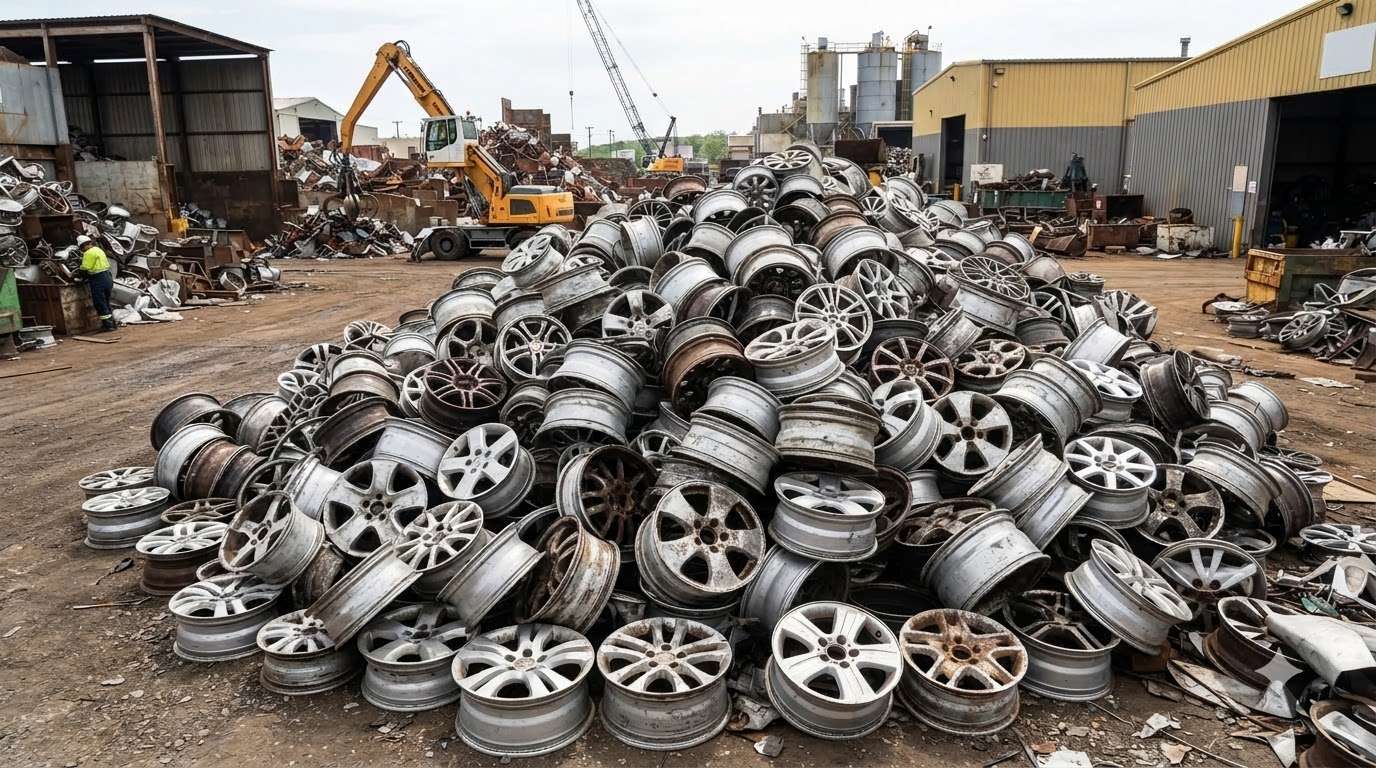
When selling an old alloy wheel, it is easy to assume its value comes from being an automotive part. In reality, scrap alloy wheel value is primarily determined by the wheel's metal composition and recoverable aluminium content. Most alloy wheels are aluminium-based, while many traditional steel wheels are made primarily from steel, so they are valued differently in the scrap market.
Several factors can affect what you receive, including the wheel type, weight, alloy composition, condition, preparation, and local buyer demand. A complete wheel with its tyre, valve stem, and balancing weights is also different from clean, prepared aluminium wheel scrap because non-aluminium components add weight without adding equivalent scrap value.
Are Alloy Wheels Actually Scrap Aluminium?
Yes. Most automotive alloy wheels are primarily made from aluminium alloys, which means they can generally be classified as aluminium scrap when they reach the end of their usable life. However, the exact scrap category and value can depend on the wheel's composition and how it has been prepared.
What Are Alloy Wheels Made From?
Most alloy wheels use aluminium as the main metal, combined with smaller amounts of other alloying elements to improve strength, durability, casting performance, and resistance to corrosion.
For recyclers, the composition matters because the aluminium content and alloy type can influence scrap classification, processing requirements, and the price offered by a buyer.
Alloy Wheels vs. Steel Wheels
| Feature | Alloy Wheel | Steel Wheel |
|---|---|---|
| Common material | Aluminium alloy | Steel |
| Typical appearance | Silver/light metal | Darker/heavier |
| Scrap category | Aluminium | Ferrous/steel |
| Weight | Generally lighter | Generally heavier |
Correctly identifying the wheel material is the first step in getting the right scrap classification. An aluminium alloy wheel should not be valued in the same way as a steel wheel, even though both serve the same automotive purpose.
How Much Are Alloy Wheels Worth as Scrap?
There is no single fixed scrap alloy wheel price because the amount you can receive depends on the wheel’s material, weight, condition, and current aluminium market rates. Scrap buyers may also apply different pricing based on their processing costs and material requirements.
A simple way to estimate the gross value is:
Estimated scrap value = Clean wheel weight × applicable aluminium scrap rate
For example, a clean aluminium alloy wheel weighing 10 kg would be valued according to the current rate paid for that particular aluminium scrap grade. However, the rate offered by a scrap buyer may differ from a published aluminium market price.
Several factors can influence the final offer, including:
- Aluminium market conditions: Changes in aluminium prices can directly affect scrap values.
- Wheel grade: Different aluminium alloys or wheel specifications may be priced differently.
- Weight: Heavier wheels contain more recoverable aluminium and can have a higher total scrap value.
- Cleanliness: Wheels that are free from tyres, steel components, and other attachments are generally easier to process.
- Quantity: Larger commercial quantities may receive different pricing from individual wheels.
- Local demand: Regional supply, demand, and competition between buyers can affect the rate offered.
- Buyer specifications: Buyers may have specific requirements for aluminium wheel scrap.
- Processing requirements: Removing tyres, wheel weights, valves, and other materials can add labour and processing costs.
Because of these variables, it is better to treat any scrap calculation as an estimated gross value rather than a guaranteed payout.
Example Scrap Value Calculation
Suppose you have four alloy wheels, with each wheel weighing 10 kg:
4 wheels × 10 kg = 40 kg
If a hypothetical buyer rate were $X/kg, the estimated gross scrap value would be:
40 kg × $X = $40X
For example, if the hypothetical rate were $2/kg:
40 kg × $2 = $80 estimated gross scrap value
This calculation assumes that the full 40 kg is clean, payable aluminium alloy wheel material. In practice, the final offer may be lower if the wheels still have tyres, steel wheel weights, valve stems, balancing components, or other attached materials. These non-aluminium components can increase processing requirements and may be excluded from the payable scrap weight.
Cast vs. Forged Alloy Wheels: Why It Matters
Not all alloy wheels are manufactured in the same way. The two common manufacturing methods are casting and forging, and understanding the difference can help when identifying and classifying alloy wheel scrap. However, the manufacturing method alone does not determine the final scrap price. Buyers typically base their offers on the wheel's material grade, cleanliness, weight, market conditions, and their own processing specifications.
Cast Alloy Wheels
Cast alloy wheels are produced by pouring molten aluminium alloy into a mould, where it cools and solidifies into the required wheel shape. This manufacturing method allows manufacturers to produce complex wheel designs efficiently and is widely used for passenger vehicles.
From a scrap perspective, cast wheels are generally handled as aluminium alloy scrap once tyres and other non-aluminium components have been removed. Their exact composition can vary because manufacturers use different aluminium alloy formulations to achieve the required strength, durability, corrosion resistance, and casting performance.
For recyclers, the important factors are usually the aluminium alloy classification, clean weight, contamination, and buyer specifications. A buyer may classify cast wheels differently depending on the grades they accept and how the material will be processed.
Forged Alloy Wheels
Forged alloy wheels are manufactured differently. Instead of pouring molten aluminium into a mould, manufacturers typically start with an aluminium billet or forging stock and use high pressure and controlled forming processes to shape the material. Heat treatment and machining may then be used to achieve the required dimensions and properties.
The forging process can produce wheels with different physical and material characteristics compared with cast wheels, including differences in grain structure and mechanical performance. Forged wheels are often associated with performance-oriented or premium applications, but this does not automatically make them more valuable as scrap.
Scrap value is determined primarily by the material's accepted classification, recoverable weight, cleanliness, current aluminium market conditions, and the buyer's specifications. A forged wheel may therefore command the same scrap rate as another aluminium wheel if both fall within the same buyer classification.
How to Identify Cast vs. Forged Wheels
Identifying whether a wheel is cast or forged can sometimes be difficult from appearance alone. A higher purchase price, unusual design, or lighter weight is not enough to establish the manufacturing method.
For a more reliable identification:
- Check manufacturer markings: Look for markings, logos, part numbers, or manufacturing codes on the wheel.
- Review wheel specifications: Product specifications may identify whether the wheel is cast, forged, or manufactured using another process.
- Check product documentation: Original manufacturer documentation, catalogues, or technical information can provide useful confirmation.
- Avoid judging by price or weight alone: An expensive or lightweight wheel is not automatically forged or worth more as scrap.
For scrap sellers, the most important distinction is not simply whether a wheel is cast or forged. The key is determining what aluminium grade the buyer accepts, how much clean material is actually payable, and what rate applies to that classification. When in doubt, provide the buyer with the wheel's markings and specifications before agreeing on a price.
What Should You Remove Before Selling Alloy Wheels?
Preparing alloy wheels before selling them as scrap can make the material easier to classify, weigh, and process. The main goal is to separate the aluminium wheel from materials that are not part of the aluminium scrap.
Before removing anything, check the requirements of your local scrap buyer. Some buyers accept complete wheels with tyres or attachments and handle the separation themselves, while others pay a better rate for clean aluminium wheels.
Remove the Tyres
Tyres should generally be removed before selling alloy wheels as aluminium scrap. A tyre can add significant weight to the overall wheel assembly, but that weight is not aluminium and should not be counted as clean aluminium scrap.
Leaving tyres attached can also increase handling, storage, transportation, and processing requirements for the buyer. The recycler may need to remove the tyres before the aluminium can enter the appropriate processing stream.
A clean wheel is easier to inspect and weigh, allowing the buyer to determine the payable aluminium weight more accurately. If you have several wheels to sell, removing the tyres can also make the load easier to stack, transport, and handle.
Remove Valve Stems
Valve stems are another component worth checking before selling alloy wheels. Depending on their design, they may contain rubber, steel, aluminium, plastic, or combinations of different materials.
Although a valve stem is relatively small, attached non-aluminium material can contribute to contamination and may affect how the buyer classifies the wheel. Removing easily detachable valve stems and related components can help present a cleaner aluminium scrap load.
However, removal may not always be necessary if the buyer accepts complete wheels. Confirm the buyer's specifications before spending time or money on preparation.
Remove Wheel Weights
Wheel weights are used to balance tyres and wheels, but they should not automatically be assumed to be aluminium. Depending on their age, design, and application, balancing weights may be manufactured from different materials.
Some may contain lead, zinc, steel, or other metals. These materials can have different scrap classifications and should ideally be separated from the aluminium wheel when practical.
Removing wheel weights helps reduce contamination and gives the buyer a cleaner aluminium feedstock. If you are dealing with a large quantity of wheels, separating the weights can also prevent different scrap materials from being mixed together.
Separate Other Attached Materials
Before selling alloy wheels, inspect each wheel for additional materials that are not part of the aluminium body. Common examples include:
- Rubber: Rubber seals, valve components, and other rubber attachments add non-metallic material.
- Plastic: Plastic clips, covers, caps, and fittings should be separated where practical.
- Steel components: Steel inserts, fasteners, or other ferrous parts can affect the cleanliness and classification of the load.
- Brake dust contamination: Heavy dirt and brake dust can make the material less clean and may require additional handling or cleaning.
- Centre caps: Centre caps are often made from plastic or other non-aluminium materials and can usually be removed easily.
- Decorative inserts: Trim pieces, badges, and decorative components may contain plastic, steel, or other materials that are not part of the aluminium wheel.
The objective is not necessarily to make every wheel perfectly clean. Instead, focus on removing easily detachable non-aluminium materials that could affect the buyer's classification or payable weight.
Check the Buyer's Requirements First
Preparation requirements vary between scrap buyers. One buyer may purchase complete alloy wheels and deduct the estimated weight of non-aluminium components, while another may require clean aluminium wheels.
Why Clean Alloy Wheels Can Be Worth More as Scrap
Cleanliness can have a direct impact on how alloy wheels are classified, processed, and priced. Scrap buyers are generally interested in the amount and quality of recoverable aluminium, not simply the total weight of the wheel assembly.
When non-aluminium materials are attached, the buyer may need to spend additional time and resources on sorting, dismantling, handling, and processing. As a result, a clean load can be easier to value and process than a mixed-material load.
Clean vs. Mixed Material
Consider the difference between these two loads:
| Clean Aluminium Wheels | Wheel + Tyre + Valve + Weights |
|---|---|
| Primarily aluminium alloy | Contains multiple materials |
| Easier to inspect and classify | Requires additional separation |
| More of the weight is payable aluminium | Some weight may not be payable |
| Lower processing requirements | Higher handling and processing requirements |
| Easier to prepare for recycling | More preparation may be required |
A clean aluminium wheel contains predominantly the material the recycler wants to recover. Once unnecessary attachments have been removed, the buyer can more easily determine the wheel's weight and applicable scrap classification.
A wheel still carrying a tyre, valve stem, balancing weights, centre cap, or other components is a mixed-material assembly. The buyer may have to separate these materials before processing the aluminium. Depending on the buyer's pricing policy, this can result in deductions, a different scrap grade, or a lower effective rate.
This does not mean every buyer will automatically pay more for stripped wheels. Some buyers purchase complete wheel assemblies and perform the separation themselves. The important point is that cleaner material generally reduces uncertainty and processing requirements.
Weight Isn't the Only Factor
When selling alloy wheels, total weight should not be confused with payable aluminium weight.
For example, imagine two loads that each weigh 100 kg:
- Load A: 95 kg aluminium wheels + 5 kg non-aluminium attachments
- Load B: 70 kg aluminium wheels + 30 kg tyres and other materials
Although both loads weigh 100 kg on the scale, Load A contains substantially more recoverable aluminium.
This is why a heavier mixed load does not necessarily produce a better effective scrap price. If a significant portion of the weight consists of tyres, rubber, plastic, steel, or other non-payable materials, the buyer may apply deductions or additional processing costs.
The best approach is to focus on clean, correctly classified aluminium weight rather than simply maximizing the total weight of the load. Before selling, ask the buyer how they calculate payable weight and whether they require tyres and other attachments to be removed.
What Changes the Scrap Value of Aluminium Rims?
Several factors can affect how much aluminium rims are worth as scrap.
Current Aluminium Market Conditions
Scrap values can change with:
- Aluminium benchmark prices
- Regional demand
- Import and export conditions
- Demand for recycled aluminium
Wheel Condition
Clean rims are generally easier to process and classify. Damaged or corroded wheels may still have scrap value, while heavy contamination or mixed materials can affect the price.
Quantity
A single wheel may receive a different commercial offer than workshop, fleet, auto-wrecker, or bulk quantities. Larger, consistent loads may provide better negotiating opportunities.
Buyer Specifications
Buyers may have different requirements for:
- Accepted aluminium grades
- Tyre and attachment removal
- Pickup arrangements
- Material testing and classification
- Payment terms
Always confirm the buyer's grading, payable weight, deductions, and final price before selling.
How to Prepare Alloy Wheels for Scrap
Proper preparation can make alloy wheels easier to classify, weigh, and sell. The goal is to separate the aluminium from unnecessary materials and provide buyers with accurate information.
Step 1 — Identify the Wheel Material
First, confirm that the wheels are aluminium alloy rather than steel. Check manufacturer markings, specifications, or other identification details. Correct material identification helps ensure the wheels are offered under the appropriate scrap category.
Step 2 — Remove Tyres
Have tyres removed safely using suitable equipment or by a qualified tyre professional. Tyres add weight but are not aluminium scrap, so removing them gives you a more accurate clean-wheel weight.
Step 3 — Remove Non-Aluminium Attachments
Where practical, remove accessible components such as:
- Valve stems
- Wheel weights
- Plastic components
- Centre caps
Removing these materials can reduce contamination and make the wheels easier for buyers to inspect and process.
Step 4 — Weigh the Clean Wheels
After preparation, weigh the wheels and record:
- Number of wheels
- Total clean weight
- Approximate weight per wheel
Accurate weight information helps buyers provide a more comparable quotation.
Step 5 — Request Comparable Offers
When contacting scrap buyers, provide consistent information, including:
- Clear photos
- Number of wheels
- Total weight
- Wheel type
- Preparation status
- Pickup or delivery location
- Manufacturer markings, if known
Selling Scrap Alloy Wheels on ScrapTrade
- Selling alloy wheels through a marketplace can help sellers present their material clearly and connect with potential buyers. A detailed listing gives buyers the information they need to assess the scrap before making an offer.
Create a Clear Listing
- When listing alloy wheels, include important details such as:
- Material: Aluminium alloy wheels
- Quantity: Number of wheels available
- Weight: Total weight in kg
- Condition: Clean, damaged, or mixed
- Preparation: Tyres removed or still attached
- Location: Pickup or collection location
- Photos: Multiple clear photos showing the wheels and markings
- The more accurate the listing, the easier it is for buyers to understand what is being offered.
Why Accurate Listings Matter
- A complete listing can:
- Help buyers assess the material more efficiently
- Reduce unnecessary questions and negotiation
- Make different offers easier to compare
- Reduce misunderstandings about weight, condition, and material type
- Help prevent disputes before the transaction is completed
- Clear information is especially important when selling larger quantities or commercial scrap loads.
Compare Buyer Offers
- Instead of relying on a single local scrap yard quotation, a marketplace can give sellers an opportunity to reach multiple potential buyers. Sellers can compare offers based on price, material requirements, quantity, pickup arrangements, payment terms, and other transaction conditions.
- For alloy wheel scrap, comparing the complete offer not just the quoted price per kilogram can help sellers identify the most suitable deal for their material.
FAQs About Scrap Alloy Wheels
How much are old alloy wheels worth as scrap?
Explain that value depends on clean aluminium weight, current aluminium market conditions, wheel classification, quantity and buyer terms. A clean wheel generally provides a more straightforward scrap valuation than a complete wheel with tyres and other attachments.
Are alloy wheels made from aluminium?
Most automotive alloy wheels are made primarily from aluminium alloys, although their exact composition can vary. They should not be automatically classified as pure aluminium because alloying elements and other attached materials may be present.
Should I remove tyres before selling alloy wheels as scrap?
Yes, if the goal is to sell clean wheel scrap. Tyres are not aluminium and add non-metal weight and handling requirements. Tyre removal should be performed safely using appropriate equipment or by a qualified tyre service.
Are forged alloy wheels worth more than cast wheels as scrap?
Not necessarily. Forged and cast wheels have different manufacturing characteristics, but scrap value depends on the buyer's material classification, aluminium market conditions, cleanliness, weight and other commercial factors.
Conclusion
Alloy wheels are generally an aluminium-based scrap material, rather than steel scrap. Their value depends on clean recoverable weight, material classification, current market conditions, and the buyer’s terms.
Removing tyres, valve stems, wheel weights, and other non-aluminium components can make wheels easier to classify, weigh, and process. Cast and forged wheels should not automatically receive different scrap prices without confirming the buyer’s material specifications.
Before selling, also compare the potential used-part value against scrap value. A reusable wheel may be worth more as a vehicle component than as scrap metal.
If scrap is the better option, create a detailed ScrapTrade listing with accurate weight, quantity, preparation status, location, and clear photos. Providing complete information helps potential buyers assess your alloy wheel scrap and compare offers more efficiently.