

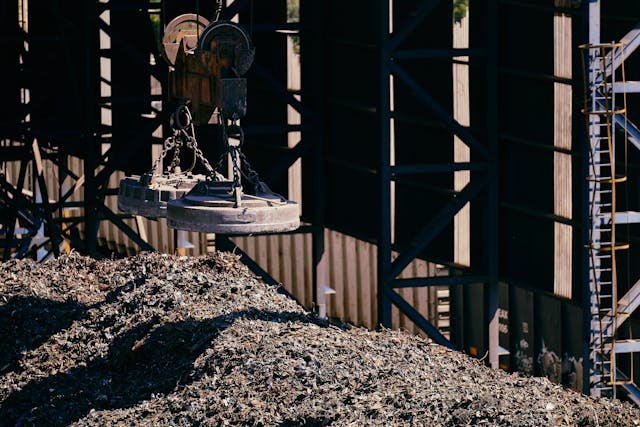
Industrial companies generate large amounts of recyclable materials, but sourcing reliable buyers, recyclers, and supply chain partners can be difficult. Many businesses struggle with fragmented networks, inconsistent material demand, and limited access to global recycling markets.
An industrial recycling sourcing network solves these challenges by connecting manufacturers, recyclers, waste processors, and industrial buyers through a structured sourcing ecosystem. Instead of relying on isolated contacts, businesses can build scalable recycling partnerships that improve material recovery and profitability.
In this guide, you’ll learn how an industrial recycling sourcing network works, key participants, benefits, pricing structures, sourcing strategies, and how businesses can create stronger recycling supply chains.
What Is an Industrial Recycling Sourcing Network?
An industrial recycling sourcing network is a connected system that links businesses involved in recycling, waste recovery, and secondary material sourcing.
The network helps companies source recyclable materials, locate buyers, and build recurring trade relationships.
It connects:
- Manufacturers
- Recycling facilities
- Scrap suppliers
- Waste processors
- Commodity traders
- Exporters and importers
- Industrial buyers
Unlike isolated recycling channels, sourcing networks create ongoing supply chain relationships.
Businesses often use platforms such as Scrap Trade, Scrap Trade Australia, and Scrap Trade Now to build industrial recycling sourcing partnerships.
Why Industrial Recycling Sourcing Networks Matter
Industrial recycling requires stable supply chains.
Sourcing networks help businesses:
- Improve material recovery
- Build recurring supplier relationships
- Reduce waste disposal costs
- Access international buyers
- Improve supply chain resilience
- Increase recycling profitability
Strong sourcing networks improve operational efficiency.
Key Participants in a Recycling Sourcing Network
Manufacturers
Generate recyclable industrial waste.
Examples include:
- Fabrication facilities
- Automotive plants
- Packaging manufacturers
- Industrial production facilities
Recycling Companies
Process recyclable materials into reusable commodities.
Scrap Collectors
Gather materials from multiple sources.
Commodity Traders
Connect buyers and sellers.
Industrial Buyers
Use recycled materials for production.
Exporters and Importers
Support international sourcing.
Types of Materials in Industrial Recycling Networks
Metal Scrap
Most common industrial recycling category.
Examples include:
- Copper scrap
- Aluminum scrap
- Steel offcuts
- Stainless steel
- Brass materials
Plastic Waste
Industrial packaging and production waste.
Examples include:
- PET materials
- HDPE scrap
- LDPE films
- Plastic production waste
Paper and Packaging Waste
Generated from warehouses and manufacturing.
Examples include:
- Cardboard
- Corrugated packaging
- Mixed paper
Electronic Waste
Industrial electronics create reusable materials.
Examples include:
- Circuit boards
- Wiring
- Electronic assemblies
Industrial By-Products
Reusable manufacturing residues.
Examples include:
- Production scrap
- Metal shavings
- Offcuts
- Factory leftovers
How an Industrial Recycling Sourcing Network Works
Step 1: Material Generation
Businesses create recyclable waste streams.
Step 2: Collection and Sorting
Materials are categorized by type and grade.
Step 3: Supplier Matching
Networks identify relevant buyers or processors.
Step 4: Trade Coordination
Businesses negotiate terms.
Step 5: Logistics Management
Materials move through transport networks.
Step 6: Processing and Reuse
Materials return to industrial supply chains.
Benefits of an Industrial Recycling Sourcing Network
Stronger Supplier Relationships
Recurring partnerships improve reliability.
Reduced Waste Costs
Lower landfill and disposal expenses.
Better Material Flow
Supply chains become more efficient.
Increased Revenue Potential
Monetize recyclable materials.
Improved Sustainability Compliance
Supports environmental goals.
Industrial Recycling Pricing Factors
Pricing depends on market demand and quality.
| Pricing Factor | Impact |
|---|---|
| Material purity | Higher purity increases value |
| Quantity | Larger loads attract buyers |
| Market demand | Commodity pricing affects revenue |
| Logistics cost | Freight reduces margin |
| Processing requirements | Contamination lowers pricing |
Example Recycling Material Pricing
| Material Type | Estimated Price Range |
| Copper scrap | $6–$10 per kg |
| Aluminum scrap | $1–$3 per kg |
| Steel scrap | $150–$500 per tonne |
| Plastic waste | $200–$700 per tonne |
| Cardboard waste | $100–$300 per tonne |
Industries That Use Recycling Sourcing Networks
Manufacturing
Creates recurring waste streams.
Construction
Produces recyclable demolition materials.
Packaging Industry
Generates recyclable paper and plastic.
Automotive Industry
Uses recycled metals.
Warehousing and Logistics
Produces packaging waste.
Challenges in Industrial Recycling Sourcing
Material Quality Issues
Contaminated materials lower value.
Logistics Costs
Transporting bulk materials is expensive.
Supply Chain Fragmentation
Disconnected networks reduce efficiency.
Commodity Price Changes
Markets fluctuate frequently.
How to Build a Strong Recycling Sourcing Network
Create Long-Term Supplier Relationships
Consistency improves supply stability.
Maintain Accurate Material Data
Transparency improves sourcing decisions.
Use Digital Marketplaces
Platforms such as Scrap Trade improve visibility.
Optimize Collection Processes
Better sorting increases pricing.
Track Market Demand
Time sales strategically.
Recycling Sourcing Network vs Traditional Waste Disposal
| Feature | Recycling Sourcing Network | Traditional Disposal |
| Revenue generation | High | None |
| Buyer access | Global | Limited |
| Sustainability | Strong | Weak |
| Material recovery | High | Low |
| Supply chain integration | Strong | Minimal |
Future of Industrial Recycling Sourcing Networks
Recycling supply chains are becoming more digital.
Emerging innovations include:
- AI-powered sourcing systems
- Blockchain supply chain tracking
- Smart recycling analytics
- Automated logistics coordination
- Real-time material matching
Industrial recycling sourcing networks will continue growing as circular economy demand increases.
FAQs
What is an industrial recycling sourcing network?
It is a connected system that links manufacturers, recyclers, buyers, and processors through recycling supply chains.
Who uses recycling sourcing networks?
Manufacturers, recyclers, waste processors, exporters, and industrial buyers use these networks.
What materials are commonly sourced?
Metals, plastics, paper, industrial waste, and electronics are commonly sourced.
Are recycling sourcing networks profitable?
Yes. They help businesses monetize waste streams and improve efficiency.
Can sourcing networks support international trade?
Yes. Many networks connect businesses to global recycling markets.
Conclusion
An industrial recycling sourcing network helps businesses build stronger supply chains for recyclable materials.
It improves material recovery, reduces waste costs, and expands global trade opportunities.
Companies that invest in sourcing networks gain long-term operational advantages.