

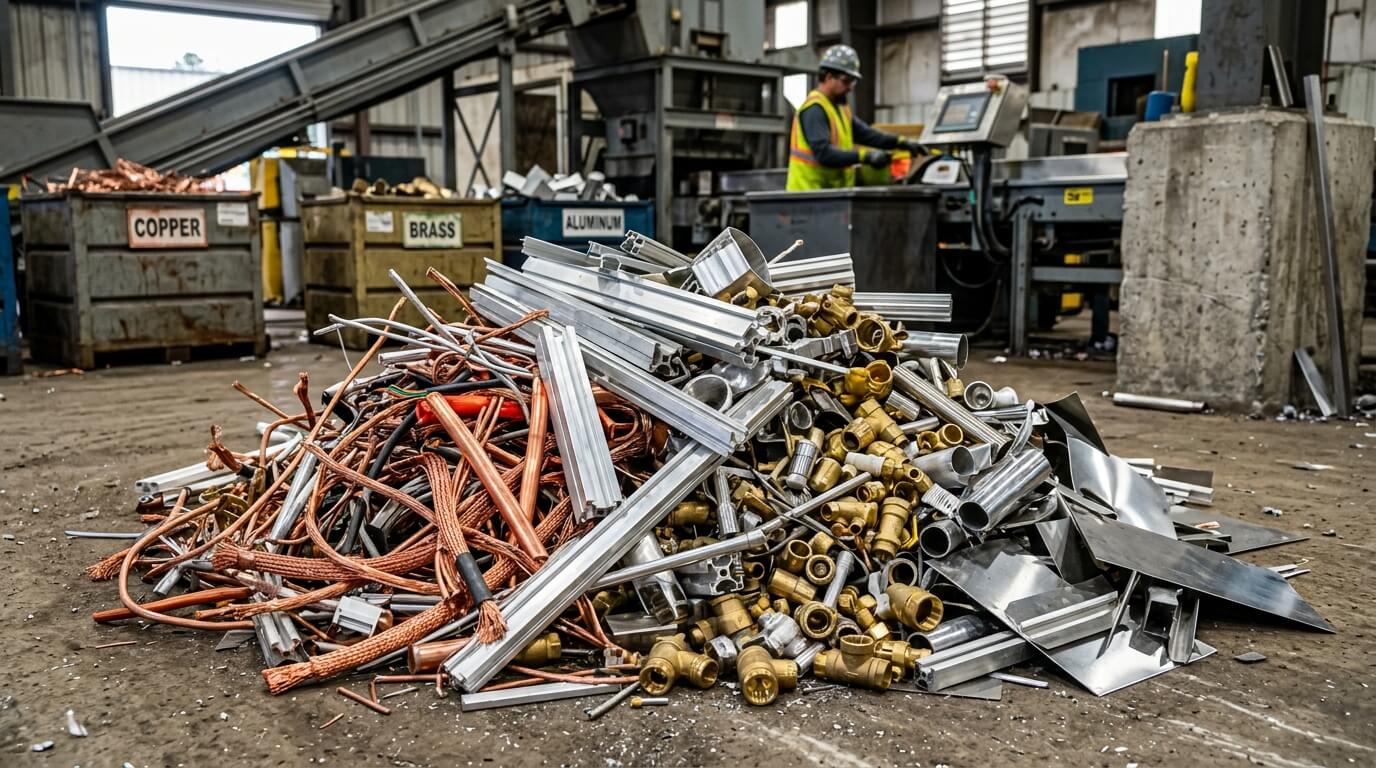
Non-ferrous metals are the highest-value category in the scrap industry, making non ferrous scrap metal prices in Australia a key focus for anyone selling copper, aluminium, brass, stainless steel, or electronic scrap. Unlike ferrous metals such as steel and iron, non-ferrous materials contain no iron, which makes them non-magnetic, corrosion-resistant, and significantly more valuable in recycling markets.
In 2026, demand for non-ferrous metals continues to remain strong due to global manufacturing growth, electrification, and infrastructure development. Prices are heavily influenced by international commodity markets like the London Metal Exchange (LME), as well as local demand from Australian recyclers and exporters.
What Are Non-Ferrous Metals?
Non-ferrous metals are metals that do not contain iron, which means they do not rust and are generally more resistant to corrosion. Because of these properties, they are widely used in industries that require durability, conductivity, and long-term performance.
These metals typically hold higher scrap value compared to ferrous metals due to stronger demand and more complex refining processes.
Common Non-Ferrous Metals in Australia
Non-ferrous scrap in Australia includes a wide range of high-demand recyclable materials used across construction, manufacturing, and electrical industries.
Common examples include copper (such as bright wire, pipes, and cables), aluminium (including extrusions, cans, and sheets), brass (fittings, taps, and valves), stainless steel (various grades depending on alloy composition), and lead (commonly found in batteries and sheets). Other valuable non-ferrous materials include zinc, nickel, and specialised industrial alloys.
Where Non-Ferrous Metals Are Used
Non-ferrous metals play a critical role in modern infrastructure and manufacturing due to their strength, conductivity, and resistance to corrosion.
They are widely used in electrical wiring and power infrastructure, plumbing systems, construction materials, automotive manufacturing, and a broad range of electronic devices and household appliances.
Non-Ferrous Scrap Metal Prices in Australia (2026)
Typical Price Per Kg
| Metal Type | Price Range (AUD/kg) |
|---|---|
| Copper (Bright / Clean) | $10 – $15 |
| Brass | $4.50 – $9.50 |
| Aluminium | $0.80 – $3.50 |
| Stainless Steel | $0.50 – $4.50 |
| Lead | $0.80 – $3.50 |
| Zinc / Mixed Alloys | $1 – $4 |
Key Insight
Non-ferrous metals consistently achieve higher scrap values compared to ferrous metals because they are more corrosion-resistant, easier to recycle, and in stronger industrial demand across global manufacturing sectors.
Copper remains the highest-value non-ferrous metal, while aluminium and stainless steel sit in the mid-range depending on grade and cleanliness. Lead, zinc, and mixed alloys provide additional recycling streams with moderate but stable pricing.
Ranking Non-Ferrous Metals by Value
1. Copper (Highest Value)
Copper consistently ranks as the most valuable non-ferrous scrap metal in Australia due to its high conductivity, widespread industrial use, and strong global demand.
Common forms include bright bare copper wire, copper tubing, and electrical cables.
Why it pays the most:
- High industrial demand across electrical and construction sectors
- Strong global pricing linked to LME markets
- Highly efficient and well-established recycling processes
2. Brass
Brass is a copper-zinc alloy widely used in plumbing, fittings, and engineering components. Its value is strongly influenced by its copper content, meaning higher-grade brass achieves better returns.
Common sources include taps, valves, plumbing fixtures, and machined components.
3. Aluminium
Aluminium is widely recycled due to its lightweight properties and versatility. However, its value varies significantly depending on grade.
- Extrusions: highest value
- Sheets: medium value
- Cans and foil: lowest value
Despite lower pricing compared to copper and brass, aluminium remains important due to high recycling efficiency and demand.
4. Stainless Steel
Stainless steel falls into a semi-premium category, with pricing determined largely by alloy composition and nickel content.
- 316 stainless → high value
- 304 stainless → moderate value
- 430 stainless → low value
Higher nickel content generally results in stronger scrap pricing.
5. Lead and Zinc
Lead and zinc are consistently recycled but sit lower in the value ranking compared to other non-ferrous metals.
Lead is most commonly sourced from batteries, while zinc is often found in coatings and alloy applications. Although lower in price, both metals maintain stable recycling demand.
Ferrous vs Non-Ferrous Scrap Comparison
Understanding the difference between ferrous and non-ferrous metals is essential for correctly identifying scrap value and maximising returns in Australia’s recycling market.
Comparison Table
| Feature | Non-Ferrous Metals | Ferrous Metals |
|---|---|---|
| Iron content | None | High |
| Value per kg | High | Low |
| Corrosion resistance | High | Low |
| Market demand | High | Moderate |
| Examples | Copper, brass, aluminium | Steel, iron |
How to Get the Best Non-Ferrous Scrap Price
Sort Metals Properly
One of the most important steps in maximising non-ferrous scrap value is proper sorting. Mixed loads are typically downgraded because recyclers must spend additional time separating materials.
To achieve better pricing, separate metals such as:
- Copper
- Brass
- Aluminium
- Stainless steel
Accurate separation ensures each material is graded correctly and paid at its true market rate.
Remove Contaminants
Clean scrap consistently achieves higher payouts. Contaminants reduce processing efficiency and can lower the overall grade of the load.
Common materials to remove include:
- Plastic fittings and insulation
- Rubber components
- Steel attachments or fasteners
- Excess dirt, paint, or corrosion where possible
The cleaner the material, the stronger the price per kilogram.
Sell in Bulk
Larger volumes generally result in better pricing outcomes. Bulk loads improve transport efficiency for buyers and increase your negotiating power.
Benefits include:
- Higher per-kg offers
- Reduced processing costs per unit
- Stronger leverage with buyers
FAQs
What are non-ferrous scrap metals?
Non-ferrous metals are metals that do not contain iron. Common examples include copper, aluminium, brass, stainless steel, and lead. These metals are widely recycled due to their durability, corrosion resistance, and strong industrial demand.
What is the most valuable non-ferrous metal?
Copper is the most valuable common non-ferrous metal in Australia. Its high electrical conductivity, widespread use in construction and electronics, and strong global demand contribute to consistently high scrap pricing.
Why are non-ferrous metals worth more than steel?
Non-ferrous metals generally have higher scrap value because they are more expensive to produce, more efficient to recycle, and in stronger demand across electrical, construction, and manufacturing industries. Steel, while widely used, is abundant and lower in per-unit value.
What affects non-ferrous scrap prices the most?
Key factors include global commodity market movements, metal purity and grade, AUD/USD exchange rates, and local supply and demand conditions. International benchmarks such as the LME also heavily influence pricing.
Can I sell mixed non-ferrous scrap?
Yes, mixed non-ferrous scrap can be sold, but it typically receives lower pricing than properly sorted and clean metals. Separating copper, brass, aluminium, and stainless steel helps maximise overall returns.
Conclusion
The non-ferrous scrap metal price in Australia (2026) remains significantly higher than ferrous metals due to strong global demand, high material value, and efficient recyclability across industrial supply chains.
Copper continues to lead the market as the highest-value scrap metal, followed by brass, aluminium, and stainless steel. Each of these metals is heavily influenced by grade quality, cleanliness, and global commodity benchmarks, particularly movements in international markets and currency exchange rates.