

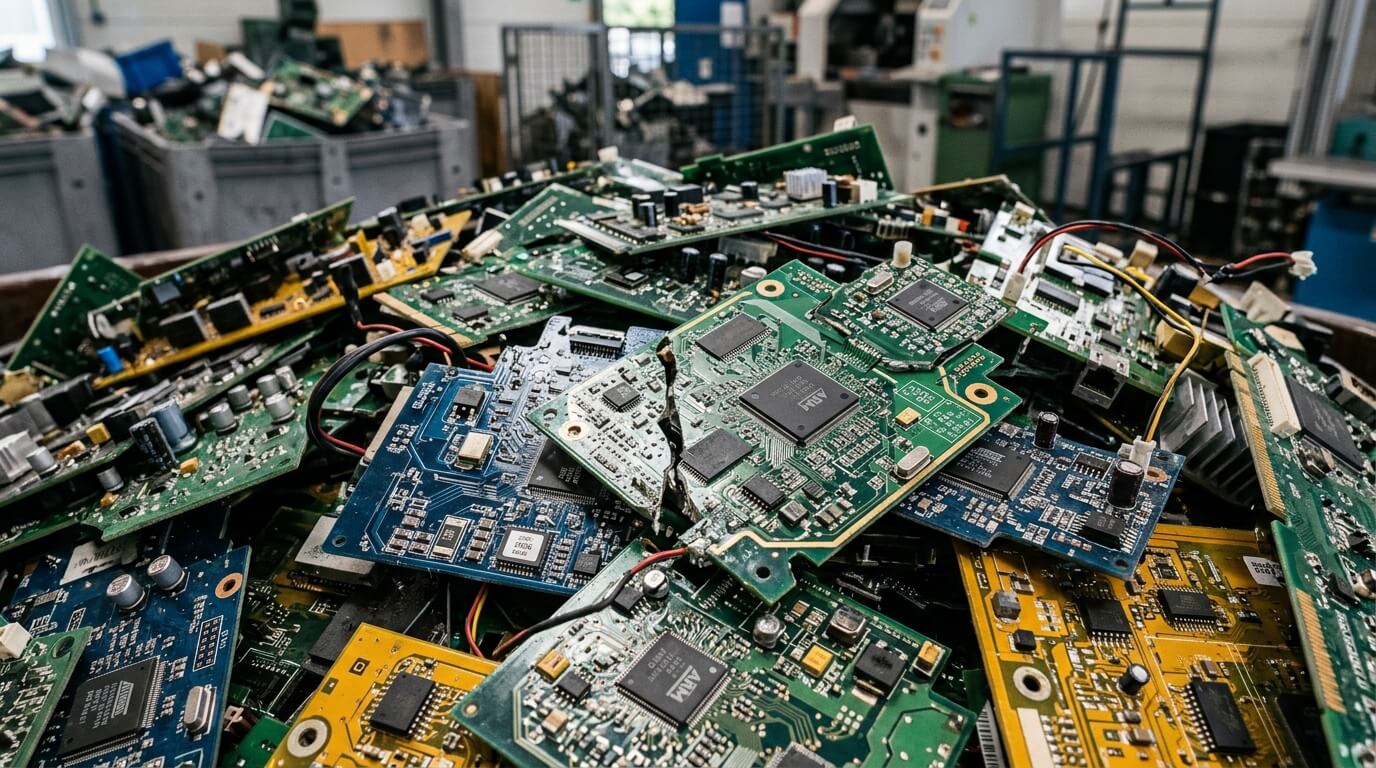
With the rapid growth of electronic waste, PCB scrap prices in Australia have become an increasingly searched topic among recyclers, repair technicians, IT departments, and individuals selling broken laptops or old electronics. Circuit boards (PCBs) contain valuable metals such as copper, gold, silver, and palladium, which makes them significantly more valuable than standard household scrap.
However, not all PCBs are worth the same. High-grade motherboards and server boards can fetch much higher returns than low-grade power boards or stripped electronics. Pricing depends on metal density, component complexity, and recycling recovery potential.
Key Insight
PCB scrap pricing in Australia varies significantly based on gold content, component density, and board quality. High-grade boards such as server and CPU boards contain more precious metals, which is why they attract premium prices compared to standard appliance or TV circuit boards.
Why PCB Scrap Has Value
Precious Metal Content
Printed circuit boards (PCBs) contain small but highly valuable quantities of precious metals that make them economically viable for recycling at scale. Although the amounts per board are minimal, bulk processing enables efficient recovery.
Key metals include:
- Gold – found in edge connectors, socket pins, and high-contact areas
- Silver – used in conductive pathways and solder applications
- Copper – present in internal traces and layered circuitry
- Palladium – found in select electronic components and specialized coatings
Even in trace amounts, these metals contribute significantly to overall scrap value when processed in large volumes.
Copper Density
Copper is the most abundant recoverable metal in most circuit boards and is a major driver of PCB scrap pricing.
High-layer or multi-layer boards such as server boards and advanced computing hardware contain greater copper density. This increased material volume directly translates to higher recycling value compared to simpler consumer electronics boards.
Gold Plating
Gold is used selectively in PCBs where reliability and conductivity are critical. Although present in very thin layers, it significantly increases scrap value due to its high market price.
Common applications include:
- Edge connectors
- CPU and memory sockets
- High-performance electrical contacts
Even minimal gold plating improves the overall worth of circuit boards, especially in high-grade electronic scrap categories.
PCB Grading System Explained
High-Grade PCBs
High-grade printed circuit boards (PCBs) come from advanced electronic systems that contain dense circuitry and higher concentrations of precious metals. These boards are typically the most valuable category in PCB recycling due to their strong gold, copper, and multi-layer composition.
Common sources include servers, data centre hardware, high-end CPUs, and telecommunications equipment. These systems are designed for performance and reliability, which results in more complex board structures and increased recoverable metal content.
High-grade PCBs generally feature a high density of components, multi-layer construction, and increased gold usage in connectors and contact points. This combination makes them significantly more valuable compared to consumer electronics boards.
Typical value: $8 – $25/kg
Mid-Grade PCBs
Mid-grade printed circuit boards (PCBs) are one of the most commonly recycled electronic waste streams in Australia. They come from everyday computing and networking devices and offer moderate levels of recoverable precious and base metals.
Common sources include desktop motherboards, laptops, routers, switches, and general networking equipment. These boards are widely available due to frequent upgrades and electronic replacement cycles in both residential and commercial environments.
Mid-grade PCBs typically contain moderate amounts of copper and small quantities of gold, along with standard electronic components that contribute to their overall recycling value. While not as metal-dense as high-grade server boards, they still provide consistent returns when processed in bulk.
Typical value: $5 – $12/kg
Low-Grade PCBs
Low-grade printed circuit boards (PCBs) are typically found in household electronics and appliances where circuit complexity and precious metal content are minimal compared to industrial or computing equipment.
Common sources include televisions, household appliances, power boards, and basic electronic devices. These items are widely available due to frequent household disposal and replacement cycles.
Low-grade PCBs generally contain limited amounts of gold or other precious metals. Their value mainly comes from copper traces and basic electronic components rather than high-density circuitry. Because of this, they sit at the lower end of the PCB scrap pricing scale.
Typical value: $1 – $5/kg
What Affects PCB Scrap Prices?
Gold Market Prices
PCB scrap values are closely tied to global gold prices because even small amounts of gold recovered from circuit boards can significantly impact overall recycling profitability.
When gold prices rise, PCB scrap prices generally increase as well. High-grade circuit boards especially those containing gold-plated connectors, CPU sockets, and edge fingers become more valuable due to improved recovery economics for refiners.
Board Complexity
The complexity of a circuit board is another major factor influencing scrap value.
Multi-layer boards typically contain higher amounts of copper and more opportunities for precious metal recovery, making them more valuable than simple single-layer boards. These complex boards are commonly found in servers, telecommunications equipment, and advanced computing hardware.
In contrast, simpler boards with fewer layers and components contain lower copper density and reduced precious metal content, resulting in lower scrap value.
Sorting and Grade Separation
Proper sorting is one of the most important factors in maximising PCB scrap value. Mixed electronic waste is often purchased at a lower blended rate because buyers must spend additional time and resources separating materials before processing.
Separating different board categories allows recyclers to accurately assess metal content and apply the appropriate pricing tier.
Common categories to separate include:
- Motherboards
- Power boards
- High-grade server boards
- Telecommunications boards
- Connector-rich circuit boards
Well-sorted loads typically achieve higher overall returns because premium boards are not downgraded by lower-value material.
Condition of Electronics
The physical condition of circuit boards also affects recycling value.
Intact boards generally receive better pricing because precious metal-bearing components remain attached and recovery rates are higher. Complete boards are easier to grade and process accurately.
Burnt, heavily damaged, or partially dismantled boards often receive lower offers because valuable components may be missing and metal recovery efficiency is reduced.
What to Do With Old Laptops and Electronics
Laptops
Old laptops contain several valuable recyclable materials and electronic components, making them worth recycling even when they no longer function.
A typical laptop contains a motherboard that falls into the mid-grade PCB category, along with RAM modules that often contain higher-value electronic components. Batteries are usually processed through a separate recycling stream, while internal wiring contributes additional copper value.
Because of these recoverable materials, even broken or obsolete laptops retain scrap value and should not be discarded as general waste.
Desktop Computers
Desktop computers generally contain a larger quantity of recyclable electronic components than laptops and often achieve higher e-waste value per unit.
Common recoverable items include higher-grade motherboards, power supply units, processor components, memory modules, and expansion cards. These parts contain copper, precious metals, and other recoverable materials that improve overall recycling returns.
Mixed E-Waste
Mixed electronic waste includes a wide range of consumer electronics and household devices.
Common examples include televisions, routers, modems, set-top boxes, and small appliances. While these items typically contain lower-value circuit boards compared to computers and servers, they remain recyclable and can generate worthwhile returns when accumulated in bulk quantities.
How PCB Scrap Is Processed
Mechanical Separation
The first stage of PCB recycling focuses on separating valuable materials from the circuit boards through mechanical processing.
After collection, boards are sorted by grade to ensure high-value PCBs are processed separately from lower-grade material. The boards are then shredded into smaller pieces, making it easier to recover embedded metals and components.
Advanced separation equipment is used to isolate different material streams, including ferrous metals, non-ferrous metals, and non-metallic fractions. This stage helps maximise recovery efficiency before refining begins.
Chemical Refining
Once valuable metal concentrates have been separated, specialised refining processes are used to recover precious and base metals.
Gold and silver are extracted through industrial refining methods designed to recover trace amounts of precious metals from electronic components and connectors. Copper, which makes up a significant portion of most circuit boards, is typically recovered through large-scale smelting and refining operations.
Where to Sell PCB Scrap in Australia
E-Waste Recyclers
E-waste recyclers are often the preferred option for PCB scrap because they specialise in electronic waste processing and precious metal recovery.
They are particularly suitable for:
- Bulk electronics recycling
- Business IT asset disposal
- Server and data centre equipment
- Large volumes of circuit boards and electronic components
Specialist e-waste facilities are generally better equipped to assess and process higher-grade PCBs accurately.
Scrap Metal Buyers
Many scrap metal recyclers also purchase electronic scrap and printed circuit boards, particularly when they have established e-waste processing partnerships.
Commonly accepted materials include:
- Mixed PCB loads
- Computer motherboards
- Gold-plated connectors
- Networking equipment boards
- Electronic components and assemblies
Pricing can vary depending on grading standards and the buyer's processing capabilities.
Online Scrap Platforms
Online scrap marketplaces allow sellers to compare multiple buyers, improve pricing transparency, and access a broader network of recyclers.
Popular platforms include:
These platforms can be particularly useful for businesses, IT asset disposal companies, and sellers with larger PCB or e-waste volumes seeking competitive offers.
FAQs
What is the current PCB scrap price in Australia?
PCB scrap in Australia typically sells for $1 to $25 per kg, depending on the board type, grade, precious metal content, and overall market conditions. High-grade server and telecommunications boards generally achieve the highest prices.
Are old laptops worth anything as scrap?
Yes. Even non-working laptops contain valuable recyclable materials, including printed circuit boards, copper wiring, RAM modules, and other electronic components. These materials give old laptops measurable scrap value despite their condition.
Which PCBs are most valuable?
High-grade server boards, telecommunications equipment boards, and dense computer motherboards are typically the most valuable PCB categories. These boards contain higher concentrations of gold, copper, and other recoverable metals than standard consumer electronics.
Can I sell damaged circuit boards?
Yes. Damaged circuit boards still contain recyclable metals such as copper, gold, and silver. However, heavily burnt, corroded, or partially stripped boards may receive lower pricing because metal recovery can be less efficient.
Why do PCB prices vary so much?
PCB values vary significantly because different boards contain different amounts of gold, copper, silver, and other recoverable materials. Pricing is also influenced by board complexity, component density, global precious metal markets, and overall demand within the e-waste recycling industry.
Conclusion
The PCB scrap price in Australia (2026) varies significantly depending on board quality, metal content, and proper grading. High-grade server and telecommunications boards consistently deliver the strongest returns due to their higher concentrations of gold, copper, and other recoverable metals.
Mid-grade computer boards provide steady value for bulk e-waste streams, while low-grade appliance and consumer electronics boards still generate returns when collected in larger volumes.
Overall, PCB scrap remains one of the most valuable segments of e-waste recycling when properly sorted and graded, with pricing strongly influenced by precious metal content, board complexity, and global commodity market conditions.