

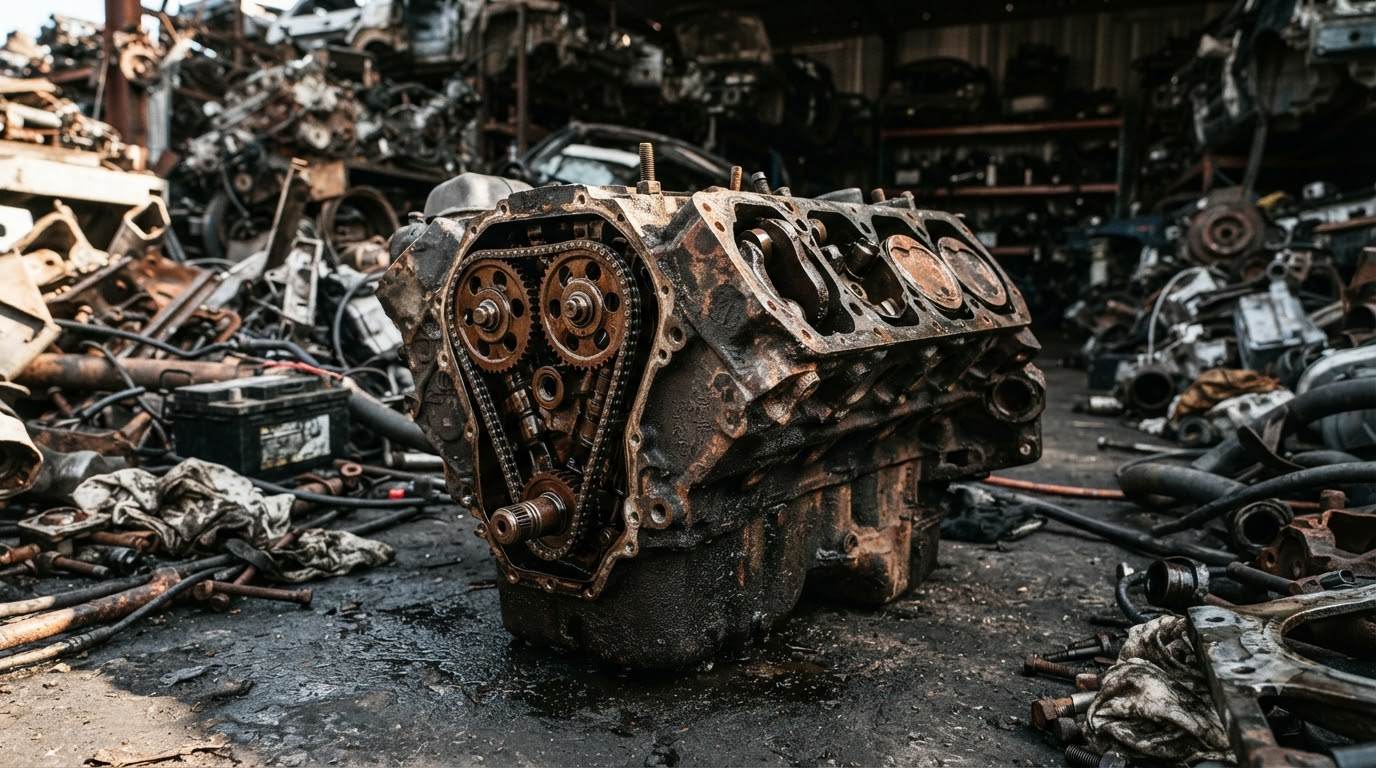
A common assumption is that every old or used engine has roughly the same scrap engine value. In reality, engine prices can vary significantly depending on the engine block material, completeness, condition, weight, and usable components that remain.
One of the most important factors is whether the engine is primarily cast iron or aluminium. Cast iron is a ferrous material, while aluminium is non-ferrous, so buyers may classify and price these engines differently. The amount of attached steel, aluminium, copper, and other components can also affect the overall assessment.
This guide explains how scrap engines are commonly evaluated, what factors can influence the final offer, and why a complete engine may have value beyond its raw metal content. You’ll also learn the difference between selling an engine directly to a wrecker or scrap buyer and listing it through a marketplace, where buyers may assess its potential for reuse as well as its scrap value.
What Determines Scrap Engine Value?
There is no single price for every scrap engine. The final value can vary depending on the engine block material, weight, completeness, condition, and the amount of recoverable metal or reusable components.
Engine Block Material
The engine block is one of the most important factors when assessing scrap engine value. Cast iron engines are primarily treated as ferrous scrap, while engines with aluminium blocks are generally classified within the non-ferrous category.
Aluminium and cast iron have different market values and processing requirements, so an aluminium engine may receive a different scrap rate from a cast iron engine. However, an engine is rarely made from only one metal. It can contain steel, aluminium, copper, and other materials, so buyers may consider the overall metal composition when determining its classification and offer.
Engine Weight
Weight is another important factor because heavier engines generally contain more recoverable material. A basic way to estimate the theoretical metal value is:
Estimated metal value = Weight × Applicable scrap price per kg
For example, if an engine weighs 200 kg and the applicable scrap rate is $X per kg:
200 kg × $X = $X estimated metal value
This calculation provides an estimate of the material value only. It does not necessarily represent the amount a seller will receive, because buyers may account for processing, transportation, labour, contamination, dismantling, and other costs.
Completeness
A complete engine may have additional value because it contains components that can potentially be reused or separately recovered. Missing parts can change how a buyer grades the engine and may reduce its overall value.
Components that may influence the assessment include cylinder heads, intake and exhaust components, alternators, starter motors, turbochargers, wiring, accessories, and brackets. Their value depends on their condition, compatibility, demand, and whether the buyer intends to resell them as usable parts.
Condition
The condition of an engine can create a significant difference between scrap value and used-parts value. A running engine with desirable specifications may be worth considerably more as a reusable component than its raw metal value.
A non-running engine may instead be assessed mainly for its recyclable materials, particularly when major components are damaged or missing. Rust, oil or other contamination, physical damage, missing components, and overall completeness can all affect the buyer's assessment and final offer.
Cast Iron vs. Aluminium Engine Blocks: Why It Changes the Price
The material used for an engine block can have a major effect on its scrap engine value. Cast iron and aluminium are classified differently, have different weights, and can be processed through different scrap streams.
Cast Iron Engines
Cast iron is a strong, dense metal commonly used in engine blocks, particularly in older vehicles, heavy-duty engines, and some diesel applications. It is a ferrous material, meaning it contains iron and is generally handled within the ferrous scrap category.
Because cast iron is relatively heavy, a cast-iron engine can contribute a significant amount of weight to a scrap load. However, the total engine weight also includes aluminium, steel, copper-containing components, and other materials.
Aluminium Engines
Aluminium is widely used in modern engine construction because it is lighter than cast iron while providing useful strength and heat-management properties. Aluminium is a non-ferrous metal, so aluminium engine blocks are generally handled differently from ferrous cast-iron scrap.
The difference in classification can affect the applicable scrap rate. An aluminium engine may therefore have a different material value from a similar-sized cast-iron engine, depending on its composition, cleanliness, and current market conditions.
Mixed-Metal Engines
An engine is rarely made from only one material. Along with the block, it may contain aluminium cylinder heads, steel components, copper-containing parts, brackets, wiring, and other attachments.
For this reason, simply weighing the complete engine and multiplying the total weight by one metal price can produce an unrealistic estimate. Buyers may assess the engine's overall composition and determine which materials are actually recoverable.
How to Identify the Block Material
Visual inspection can provide an initial indication. Aluminium blocks are generally lighter in appearance and construction, while cast iron is typically darker and substantially heavier. Construction details and the engine's known specifications can also help.
A basic magnet test can provide another clue because iron-based cast iron is generally magnetic, while aluminium is not. However, this test is not definitive because an engine contains multiple metals, and steel components can attract a magnet even when the main block is aluminium.
Running vs. Non-Running Engines: Which Is Worth More?
The value of an engine depends heavily on whether it can be reused as a working component or is primarily suitable for metal recovery. A running engine may have a parts-market value that exceeds its basic scrap value, while a damaged or incomplete engine may be assessed mainly for its recyclable materials.
Running Engine
A functioning engine can have resale or used-parts value in addition to its scrap-metal value. Buyers may consider factors such as mileage, vehicle compatibility, service history, engine condition, and current demand for that particular model or engine type.
If the engine is tested, complete, and in good working condition, selling it as a reusable component can sometimes make more financial sense than sending it directly to a scrap processor.
Non-Running Engine
A seized, severely damaged, or incomplete engine may have limited resale potential. In these cases, the buyer is more likely to focus on the recoverable metal content, engine weight, material composition, and processing costs.
The value may therefore be determined primarily by whether the engine contains recoverable cast iron, aluminium, steel, copper-containing components, and other recyclable materials.
Complete vs. Stripped Engine
A complete engine may offer both scrap value and potential parts value because more components remain attached.
A partially dismantled engine may have some reusable or recyclable components removed, which can change its overall value and classification.
A bare engine block generally has a much narrower valuation because many components have already been removed. The buyer will primarily consider the block's material, weight, cleanliness, and applicable scrap rate.
How Much Is a Used Engine Worth?
The value of a used engine depends on whether it can be reused, sold for parts, or recycled as scrap. There is no single used engine price because buyers consider the engine's condition, specifications, demand, and material composition.
Used Engine Value vs. Scrap Engine Value
Used engine value is based mainly on whether the engine can be reused in another vehicle. A running engine with good service history and strong demand can have significantly more value than its metal content.
Scrap engine value is based primarily on the recoverable materials, such as cast iron, aluminium, steel, and copper-containing components.
Parts value comes from individual components that can be removed and sold separately, such as a turbocharger, alternator, starter motor, cylinder heads, or other usable parts.
Why There Is No Single “Used Engine” Price
The value can vary considerably depending on the make and model, compatibility, mileage, running condition, market demand, completeness, block material, and local scrap-market conditions.
For example, a low-mileage engine from a popular vehicle may attract stronger demand as a replacement part. A seized, incomplete, or heavily damaged engine may instead be valued mainly for its recyclable materials.
Example Calculation
Suppose an engine weighs 200 kg and the applicable scrap category has an illustrative rate of $X per kg.
Estimated material value = 200 kg × $X = $X
This is only a hypothetical calculation of material value. It is not a guaranteed market offer. A buyer may adjust the final amount based on the engine's composition, cleanliness, processing costs, transport, reusable components, and current market conditions.
Scrap Engine Value vs. Selling to a Wrecker
The best option depends on the engine's condition, completeness, material composition, and potential demand. A damaged engine may be more suitable for scrap, while a working engine can sometimes generate greater value through resale.
| Option | Potential Advantage | Main Consideration |
|---|---|---|
| Scrap yard | Simple material-based sale | May focus mainly on scrap value |
| Auto wrecker | Potential parts/resale value | Offer depends on demand and condition |
| Private buyer | Potentially higher used-part value | Takes more time and negotiation |
| ScrapTrade marketplace | Ability to present material and condition to buyers | Seller needs to provide accurate details |
When Scrapping Makes Sense
Scrapping may make more sense when the engine is damaged, seized, incomplete, or has limited resale demand. It can also be a practical option when major components are missing or the cost of repairing the engine is greater than its realistic resale value.
In these situations, buyers are more likely to focus on the engine's recoverable metal content, weight, cleanliness, and processing costs.
When Selling as a Used Engine Makes More Sense
Selling an engine as a used component may be more suitable when it runs properly, has relatively low mileage, is complete, and comes from a popular vehicle or engine model.
How to Get a Better Scrap Engine Offer
Getting a better scrap engine offer starts with accurate identification and good preparation. Buyers can assess an engine more confidently when its material, condition, weight, and components are clearly documented.
Identify the Material Correctly
Determine whether the primary engine block is cast iron or aluminium. Cast iron is generally classified as ferrous scrap, while aluminium is non-ferrous. Avoid automatically applying one scrap rate to a mixed-metal engine because the complete assembly can contain several different metals.
Remove Unnecessary Contamination
Where appropriate, drain fluids and remove excessive dirt or contamination before selling. Engine fluids should be handled and disposed of according to applicable b. A cleaner engine can also make material assessment easier.
Keep Valuable Components Together
Do not automatically strip an engine before considering its resale potential. A complete assembly may have greater value as a used engine or parts unit than its individual scrap materials. Compare the potential resale value before removing major components.
Provide Clear Photos
Good photos help buyers understand exactly what they are evaluating. Show the engine block, identification numbers where appropriate, major components, overall condition, and any missing or damaged parts. Clear documentation can reduce uncertainty when buyers assess an offer.
Compare Scrap and Used-Part Value
Before accepting a scrap offer, consider whether the engine could realistically generate more value as a reusable component. Compare the expected scrap-metal value, used-engine value, and individual parts value, while also considering selling time, handling, transport, and buyer demand.
FAQs About Scrap Engine Value
How much is a used engine worth?
A used engine can be worth more than its scrap-metal value if it runs, is complete, has reasonable mileage, and is in demand as a replacement part. A damaged, seized, or non-running engine is more likely to be valued based on its recoverable metals and overall condition.
Is an aluminium engine worth more than a cast-iron engine?
Not necessarily. Aluminium and cast iron are classified and processed differently, but the final value depends on weight, metal composition, completeness, contamination, processing costs, and current buyer demand. The block material alone does not determine the final offer.
Are car engines good for scrap?
Yes. Car engines contain recyclable materials such as aluminium, cast iron, and steel, while some components also contain copper and other recoverable metals. However, a complete, functioning engine may have greater value as a reusable component than as scrap.
Should I sell an engine as scrap or as a used part?
If the engine runs, is complete, and has demand, check its potential used-parts value before scrapping it. If it is severely damaged, seized, incomplete, or has limited resale demand, selling it for scrap may be the more practical option.
Conclusion
Scrap engine value is not determined by weight alone. The engine block material, particularly whether it is cast iron or aluminium, can affect its scrap classification and potential value. Condition, completeness, contamination, and reusable components such as the engine accessories, turbocharger, alternator, or starter motor can also make a significant difference.
Before selling, compare the engine's potential used-part value with its underlying scrap-metal value. A complete, working engine may be worth more as a reusable component, while a damaged, seized, or incomplete engine may be better suited to scrap.
Provide accurate engine details, including its material, condition, weight, completeness, and clear photos, then compare buyer offers and terms before making a decision