

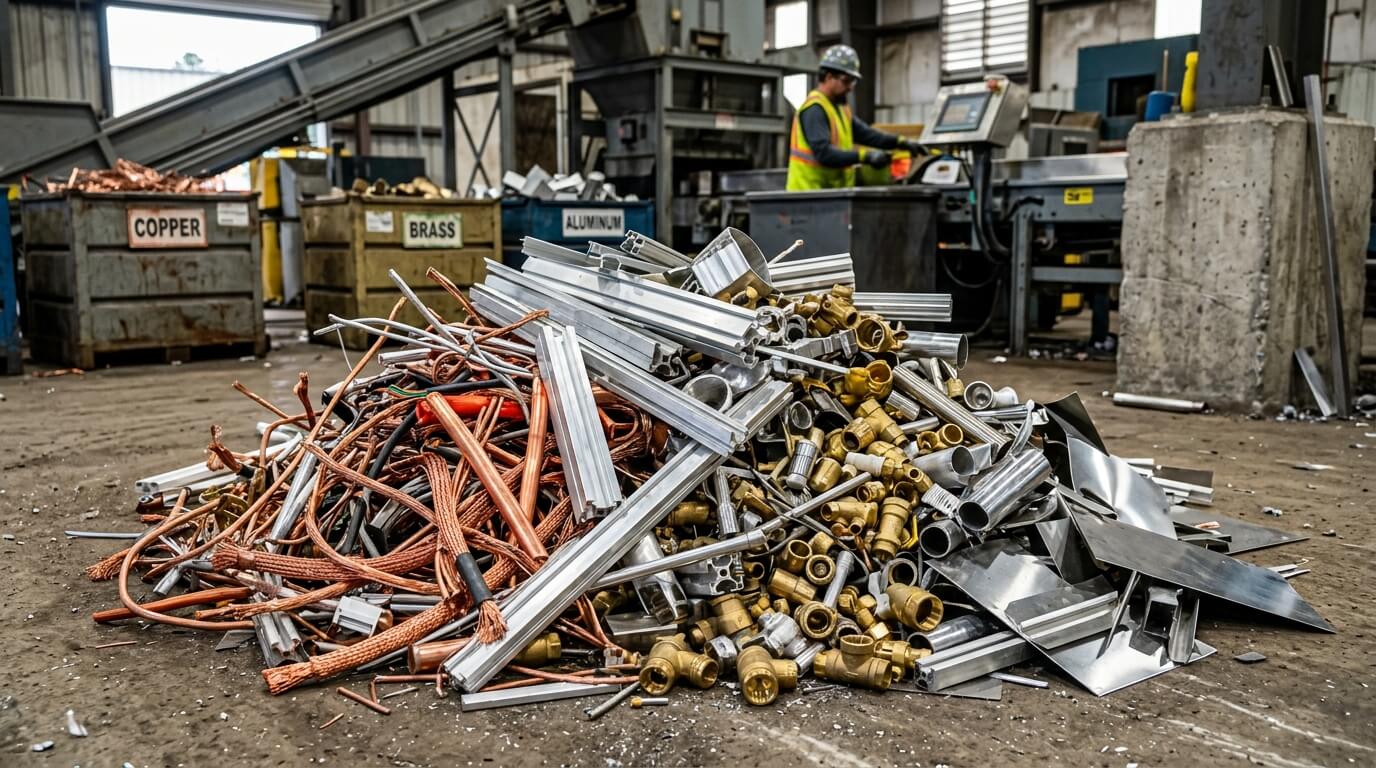
Non-ferrous metals like copper, aluminum, brass, and zinc play a major role in industrial recycling, yet many businesses fail to maximize their value due to poor storage and handling systems. A scrap management industries nonferrous warehouse is designed specifically to store, sort, and process these high-value recyclable materials in a controlled environment.
Without proper warehouse systems, non-ferrous scrap can get contaminated, mixed, or undervalued during resale, leading to significant financial loss. Industries dealing with manufacturing, electrical systems, construction, and automotive scrap rely heavily on structured warehouse setups to maintain purity and pricing efficiency.
What is a Non-Ferrous Scrap Warehouse in Scrap Management Industries?
A non-ferrous scrap warehouse is a specialized facility used to store and process metals that do not contain iron. These materials are highly valuable due to their resistance to corrosion and strong recycling demand.
Core Purpose:
- Safe storage of non-ferrous metals
- Preventing contamination and material mixing
- Improving scrap grading accuracy
- Maximizing resale value through proper sorting
- Supporting industrial recycling workflows
These warehouses are critical nodes in scrap management industries focused on metal recovery.
Types of Non-Ferrous Scrap Stored in Warehouses
1. Copper Scrap
- Electrical wiring
- Pipes and tubing
- Industrial components
- High resale value due to conductivity
2. Aluminum Scrap
- Vehicle parts
- Construction frames
- Packaging materials
- Lightweight and highly recyclable
3. Brass Scrap
- Plumbing fittings
- Industrial valves
- Decorative hardware
- High copper-zinc content value
4. Zinc & Lead Scrap
- Batteries
- Roofing materials
- Industrial coatings
- Used in chemical and construction sectors
How Non-Ferrous Scrap Warehouses Operate
Non-ferrous scrap warehouses operate through a structured material flow system designed to maximize purity, ensure accurate valuation, and streamline recycling or resale processes. Each stage focuses on maintaining material quality and improving operational efficiency.
Step 1: Scrap Receiving
Non-ferrous scrap is received from multiple sources such as manufacturing units, demolition sites, automotive dismantlers, and industrial facilities. Incoming materials are logged and initially inspected for type and contamination level.
Step 2: Sorting & Segregation
Materials are separated into distinct categories including copper, aluminum, brass, zinc, and mixed non-ferrous grades. Proper segregation at this stage is critical for maximizing recycling value and reducing processing costs.
Step 3: Quality Grading
Each scrap batch is assessed based on purity, oxidation level, contamination, and physical condition. Higher-grade materials command better market pricing and are prioritized for resale or direct recycling.
Step 4: Weighing & Documentation
Accurate industrial weighing systems are used to record material quantities. Documentation ensures traceability, pricing transparency, and compliance with trade and environmental standards.
Step 5: Storage Optimization
Scrap is stored in clearly labeled, segregated zones within the warehouse. This prevents cross-contamination between metal types and maintains material integrity for future processing.
Step 6: Dispatch or Recycling
In the final stage, materials are either sold to certified recyclers or transported to smelting facilities for reuse. This completes the value recovery cycle and supports efficient resource utilization in the non-ferrous scrap industry.
Non-Ferrous Scrap Pricing Overview
Pricing depends on global commodity markets, purity, and demand.
Indicative Price Table (AUD/kg)
| Metal Type | Price Range | Market Notes |
|---|---|---|
| Copper | 8 – 12 | Highest value non-ferrous metal |
| Aluminum | 1.5 – 3 | Lightweight and widely used |
| Brass | 5 – 8 | High copper content alloy |
| Zinc | 2 – 4 | Industrial and coating uses |
Importance of Non-Ferrous Warehouses in Scrap Management Industries
Non-ferrous scrap warehouses play a critical role in maintaining material quality, improving pricing accuracy, and ensuring efficient recycling operations across the scrap management ecosystem. Their structured handling systems directly impact profitability and supply chain performance.
1. Value Protection
Non-ferrous warehouses help prevent contamination between metals like copper, aluminum, and brass. This preserves material purity, which directly increases resale value and ensures higher returns in recycling markets.
2. Efficient Sorting
Advanced segregation systems and grading processes enable precise classification of scrap materials. This improves pricing accuracy and ensures each metal type is sold at its true market value.
3. Bulk Handling Capability
These warehouses are designed to manage large volumes of industrial scrap from manufacturing plants, construction sites, and demolition projects. This scalability supports continuous inflow without operational bottlenecks.
4. Supply Chain Optimization
Non-ferrous warehouses act as a key link between scrap generators and recyclers or smelters. They ensure a consistent, well-sorted supply of raw recyclable materials, improving downstream production efficiency.
5. Regulatory Compliance
Proper documentation, segregation, and handling practices help warehouses meet environmental and recycling regulations. This reduces legal risks while supporting sustainable waste management standards across industries.
Digital Transformation in Scrap Warehousing
Modern scrap management industries are adopting digital systems for better efficiency.
Key Features:
- Real-time inventory tracking
- AI-based scrap classification
- Automated weight recording
- Digital invoicing and payments
- Price integration with commodity markets
These systems improve transparency and reduce operational losses in non-ferrous scrap handling.
FAQs
1. What is a non-ferrous scrap warehouse?
A non-ferrous scrap warehouse is a facility that stores and manages metals like copper, aluminum, and brass without iron content. It ensures proper segregation, prevents contamination, and improves resale value in scrap management industries.
2. Why are non-ferrous warehouses important in scrap management?
They protect high-value metals from contamination, ensure accurate grading, and improve recycling efficiency. This leads to better pricing and reduced material losses in industrial scrap operations.
3. What metals are stored in non-ferrous scrap warehouses?
Common metals include copper, aluminum, brass, zinc, and lead. These materials are widely used in electrical, automotive, and construction industries.
4. How is non-ferrous scrap priced?
Pricing depends on global commodity markets, metal purity, demand, and local recycling rates. Copper generally has the highest value among non-ferrous metals.
5. Do scrap management industries use digital warehouse systems?
Yes, modern scrap management industries use digital tracking systems for inventory control, pricing updates, and automated scrap classification.
Conclusion
Non-ferrous scrap warehouses are a critical component of modern scrap management industries, ensuring high-value metals are properly stored, sorted, and processed for maximum recovery. By maintaining strict segregation and using efficient warehouse systems, businesses can significantly increase profitability and reduce material loss.
As scrap markets become more competitive, digital tracking and structured warehousing will play an even greater role in optimizing value recovery.