

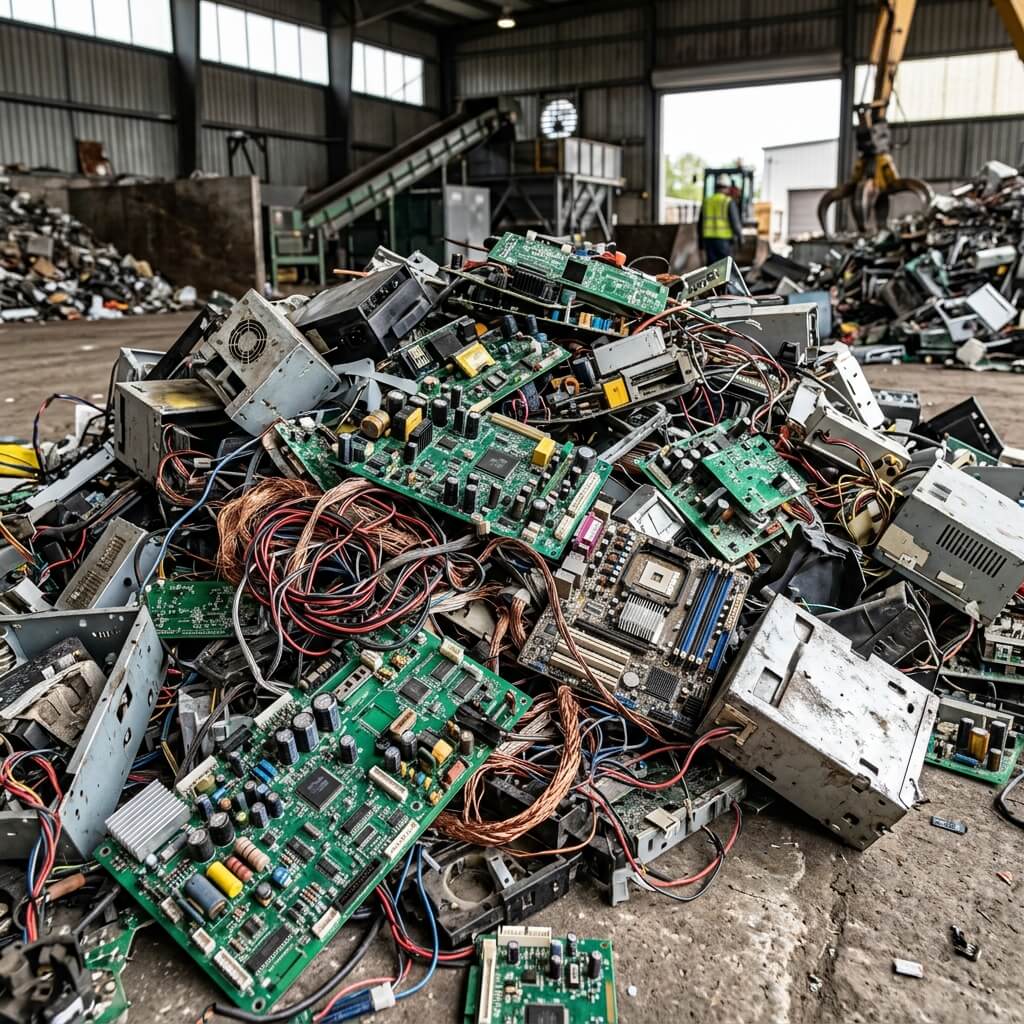
Electronic waste, commonly known as e-waste, is one of the fastest-growing waste streams worldwide. Businesses, data centers, manufacturers, schools, and households in San Jose regularly generate outdated computers, servers, networking equipment, circuit boards, and other electronic devices.
Many people don't realize that e-waste contains valuable materials such as copper, aluminum, gold, silver, and palladium that can be recovered through recycling. If you're looking to sell e-waste scrap in San Jose, understanding what materials are accepted and how pricing works can help maximize your returns while ensuring environmentally responsible disposal.
Why Sell E-Waste Scrap in San Jose?
As the heart of Silicon Valley, San Jose generates substantial volumes of electronic waste from technology companies, data centers, startups, educational institutions, government agencies, and households. Rapid technology upgrades and equipment replacement cycles create a continuous supply of obsolete electronics that still contain valuable recoverable materials. The city's advanced recycling infrastructure makes it easier for both businesses and individuals to monetize unwanted electronic devices while ensuring responsible disposal.
Benefits of E-Waste Recycling
E-waste recycling allows organizations and consumers to generate revenue from electronics that are no longer needed or operational. Many devices contain valuable materials that can be recovered and reintroduced into manufacturing supply chains.
Electronic scrap also contains recoverable metals such as copper, aluminum, gold, silver, palladium, and other precious metals that contribute to its recycling value. Proper processing helps reclaim these resources and reduces the need for new raw material extraction.
Recycling electronic waste significantly reduces landfill disposal by diverting computers, servers, circuit boards, and other devices from the waste stream. This helps minimize environmental impact and supports long-term sustainability goals.
Another important benefit is the safe handling of hazardous materials commonly found in electronic equipment. Responsible e-waste recycling ensures that batteries, heavy metals, and other potentially harmful substances are managed in accordance with environmental regulations, reducing risks to public health and the environment.
Common Types of E-Waste Scrap Accepted by Buyers
E-waste recyclers and electronic scrap buyers in San Jose accept a wide range of electronic devices and components generated by businesses, data centers, educational institutions, and consumers. The value of electronic scrap depends on factors such as metal content, component quality, age, and overall condition.
Computers and Laptops
Computers and laptops are among the most commonly recycled electronic devices due to their valuable internal components and recoverable metals. Frequent technology upgrades generate a steady supply of obsolete equipment suitable for recycling.
Common examples include desktop computers, laptops, workstations, and thin clients.
Servers and Data Center Equipment
San Jose's technology sector produces significant quantities of retired enterprise hardware. Data center equipment often contains high-value circuit boards, processors, memory modules, and metal components that make it attractive to recyclers.
Common sources include rack servers, storage systems, blade servers, and enterprise computing hardware.
Circuit Boards
Circuit boards are among the most valuable categories of e-waste because they contain copper, gold, silver, and other recoverable metals. Specialized recyclers process these materials to extract and refine valuable resources.
Common examples include motherboards, server boards, telecom boards, and industrial control boards.
Networking Equipment
Networking hardware is regularly replaced as organizations upgrade infrastructure and improve performance. These devices contain electronic components and metals that can be recovered through recycling.
Common examples include routers, switches, firewalls, and communication devices.
Consumer Electronics
Households and businesses frequently generate electronic scrap from outdated or non-functional consumer devices. Many of these products contain recyclable materials that can be processed responsibly.
Common examples include televisions, gaming consoles, audio equipment, printers, and other electronic devices.
Electronic Components
Individual electronic components are often recovered during equipment upgrades, repairs, and decommissioning projects. Many contain valuable metals and reusable materials that contribute to their recycling value.
Valuable Materials Found in E-Waste
Electronic waste contains a variety of valuable metals and materials that can be recovered and reused through specialized recycling processes. These recoverable resources are one of the primary reasons e-waste retains significant value even after devices become obsolete or non-functional.
Many electronic products contain precious metals, industrial metals, and recyclable structural materials that are extracted and reintroduced into manufacturing supply chains.
| Material | Common Source |
|---|---|
| Copper | Wiring, motors, transformers |
| Aluminum | Heat sinks, casings, structural components |
| Gold | Circuit boards, processors, connectors |
| Silver | Electrical contacts, switches, circuit boards |
| Palladium | Advanced electronic components and multilayer circuits |
| Steel | Device frames, server racks, enclosures |
Copper is one of the most commonly recovered materials due to its extensive use in wiring, power systems, and electronic assemblies. Aluminum is widely found in equipment housings and cooling components because of its lightweight and heat-dissipation properties.
Precious metals such as gold, silver, and palladium are present in smaller quantities but contribute significantly to the value of high-grade electronic scrap. These metals are used in connectors, circuit boards, and electronic contacts because of their excellent conductivity and corrosion resistance.
Which E-Waste Has the Highest Value?
Not all electronic scrap is valued equally. Devices and components containing higher concentrations of precious metals, advanced circuitry, or specialized enterprise hardware typically command the strongest prices in the e-waste recycling market.
Server-grade circuit boards are among the most valuable forms of electronic scrap because they often contain significant amounts of gold, copper, silver, and other recoverable metals. Similarly, telecommunications equipment is highly sought after due to its complex electronic assemblies and valuable components.
Processors (CPUs) can also carry substantial value, particularly older enterprise-grade models that contain gold-plated contacts and high-quality materials. Memory modules are another desirable category because of the precious metals used in their circuitry and connectors.
Gold-bearing connectors and edge cards are frequently separated and processed independently because of their elevated precious metal content. Enterprise networking equipment, including routers, switches, and communication systems, can also generate strong returns due to the quality of their circuit boards and internal components.
Current E-Waste Scrap Pricing Factors
Unlike traditional metal scrap markets, e-waste pricing in San Jose is highly variable because electronic devices contain a mix of base metals, precious metals, and reusable components. The final value depends heavily on the type of equipment, internal material composition, and processing requirements needed to recover valuable elements.
Factors Affecting E-Waste Value
Type of electronic equipment
Different devices carry different value levels. Server hardware, telecom systems, and enterprise IT equipment generally contain more valuable circuit boards and components than basic consumer electronics, resulting in higher scrap value.
Quantity available
Larger volumes of e-waste often attract better pricing. Bulk loads reduce processing and logistics costs for recyclers, allowing them to offer more competitive rates for consistent or high-volume suppliers.
Precious metal content
Devices containing higher concentrations of gold, silver, palladium, and copper typically command stronger prices. Circuit boards, processors, and connectors are especially important in determining overall value.
Equipment age
Older enterprise-grade electronics can sometimes be more valuable due to higher precious metal content, while newer devices may contain less recoverable material depending on design and miniaturization trends.
Market demand
E-waste pricing is influenced by demand for recovered metals and refurbished components. Shifts in commodity markets and electronics manufacturing cycles can directly affect scrap rates.
Data destruction requirements
Devices requiring certified data wiping or physical destruction may incur additional processing costs. Secure data handling needs can impact net payout depending on compliance standards.
Condition of reusable components
Equipment with functional or partially reusable parts such as RAM, CPUs, or power supplies may be valued higher due to resale potential in secondary markets.
How to Get the Best Price for E-Waste Scrap
Maximizing returns from e-waste scrap in San Jose depends on proper sorting, inventory management, and strategic selling. Since electronic waste contains a mix of low-value housings and high-value components, preparation plays a major role in determining final payout.
Separate Equipment by Category
Organizing electronics by type improves pricing accuracy and speeds up evaluation. Servers, networking equipment, computers, and consumer electronics are assessed differently, so clear categorization helps buyers assign correct value based on internal component quality and material content.
Preserve High-Value Components
Key components such as processors, memory modules, server-grade circuit boards, and gold-bearing connectors often carry the highest resale and recycling value. Keeping these parts intact and unaltered ensures they can be properly evaluated and priced at premium rates.
Sell in Bulk Quantities
Larger volumes of e-waste generally result in stronger pricing. Bulk loads reduce logistics costs, improve processing efficiency for recyclers, and often qualify sellers for enterprise-level pricing structures.
Request Multiple Quotes
E-waste pricing varies widely between recyclers due to differences in processing capabilities and resale channels. Requesting multiple quotes allows sellers to compare offers and choose the most competitive buyer based on both price and service terms.
Document Asset Inventories
Providing a clear inventory of electronic assets improves transparency and helps recyclers generate more accurate valuations. Detailed records of equipment type, quantity, and condition reduce estimation errors and can lead to more precise and potentially higher offers.
How the E-Waste Selling Process Works
Selling e-waste scrap in San Jose follows a structured process designed to evaluate equipment value, ensure proper data handling, and facilitate efficient recycling or resale of components. Understanding each step helps sellers maximize returns and streamline transactions.
Step 1 – Inventory Equipment
The process begins by creating a detailed inventory of all electronic devices. This includes listing quantities, device types, and general condition. Accurate documentation helps buyers assess potential value more efficiently and reduces delays during quotation.
Step 2 – Request a Quote
Once the inventory is prepared, sellers share equipment details with e-waste buyers or recycling companies. Quotes are generated based on device type, estimated material recovery value, and potential resale components such as circuit boards or processors.
Step 3 – Schedule Pickup
For larger volumes of electronic scrap, buyers typically arrange on-site pickup services. This is especially common for businesses, data centers, and organizations managing bulk equipment disposal. Smaller loads may require drop-off at designated recycling facilities.
Step 4 – Inspection and Evaluation
Upon collection, the buyer inspects and evaluates the equipment to confirm condition and classification. Devices are assessed for recoverable materials, component quality, and any data destruction requirements before final pricing is confirmed.
Step 5 – Receive Payment
After evaluation, payment is issued based on the agreed pricing structure and confirmed material grades. Depending on the buyer, payment may be processed immediately or through approved electronic transfer methods, ensuring a secure and transparent transaction.
Conclusion
Selling e-waste scrap in San Jose is an excellent way to recover value from outdated electronics while supporting sustainable recycling practices. By sorting equipment, protecting sensitive data, and comparing buyer offers, businesses and individuals can maximize returns from electronic waste.
Whether you're disposing of a few computers or managing a large-scale data center upgrade, partnering with reputable e-waste recyclers and using online scrap marketplaces can help you secure competitive pricing and environmentally responsible recycling services.