

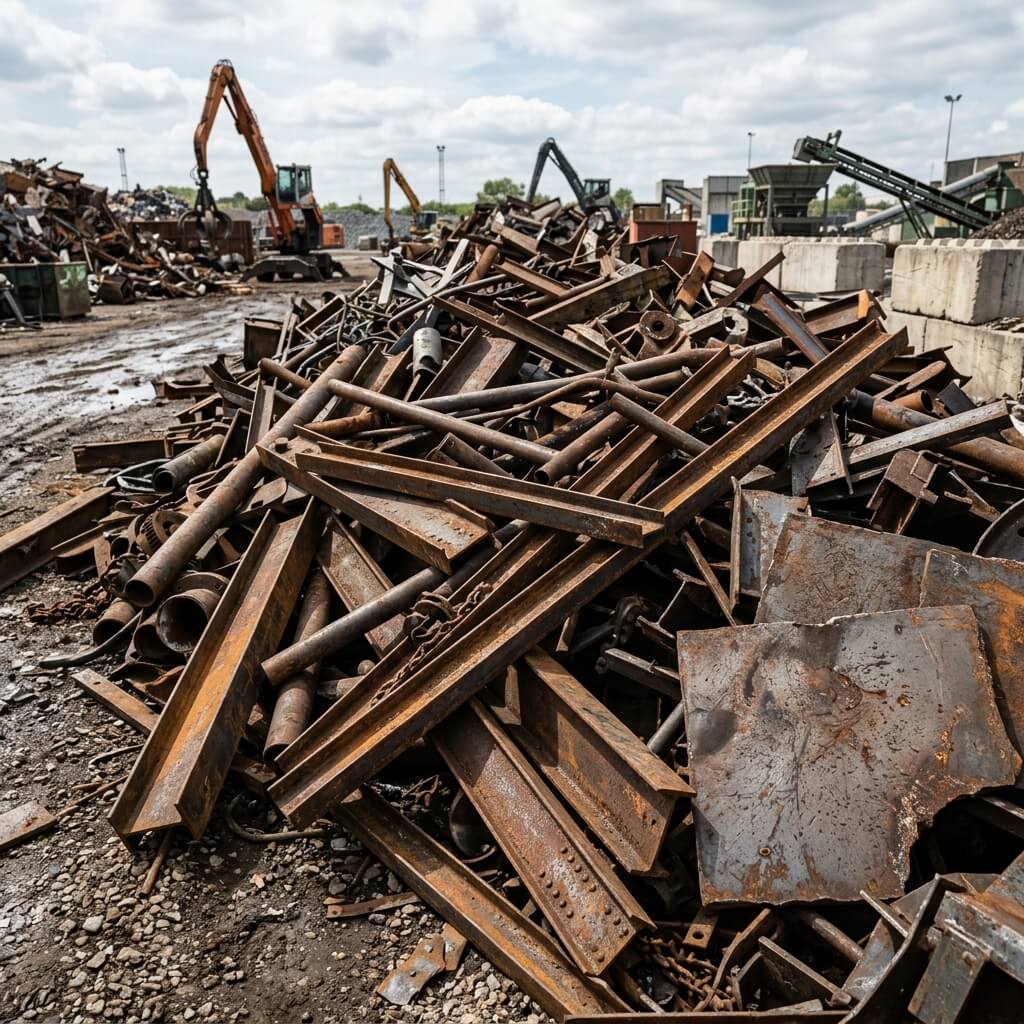
Selling ferrous scrap in Australia can often feel complex due to inconsistent pricing structures, varying grade classifications, and different buyer requirements across scrap yards and mills. Many sellers searching for terms like “sell ferrous metal Campbelltown” or “cash for heavy melt scrap” are unsure how value is actually calculated or why prices differ between buyers.
This guide breaks down the full process of ferrous scrap trading in Australia, from basic material classification to final pricing in domestic mills and export markets. It explains how common grades such as HMS 1&2, heavy melt, and light iron are defined, and how each category impacts payment rates.
What Is Ferrous Scrap in Australia?
Definition of Ferrous Scrap Metal
Ferrous scrap metal refers to iron-based metals that contain carbon and are typically magnetic in nature. These materials are widely used in construction and manufacturing due to their strength, durability, and cost-effectiveness.
Common Sources of Ferrous Scrap
Ferrous scrap is generated from a wide range of industrial, commercial, and residential activities across Australia.
Key sources include construction and demolition steel, which provides large volumes of structural material. Old machinery and industrial equipment also contribute significant quantities, particularly from manufacturing and heavy industry sectors. Vehicles and automotive parts are another major source, as end-of-life cars contain large amounts of steel components. Structural steel offcuts from fabrication and construction sites further add to the supply stream.
Why Ferrous Scrap Is Valuable
Ferrous scrap plays a critical role in the steel recycling ecosystem due to its efficiency and industrial demand.
It offers high recycling efficiency, as steel can be repeatedly recycled without significant loss of quality. It is also in strong demand from steel mills, where it is used as a primary feedstock in electric arc furnace production. Additionally, it serves as a cost-effective raw material substitute, reducing reliance on virgin iron ore extraction.
Types of Ferrous Scrap HMS 1&2, Heavy Melt, and Light Iron
HMS 1 & 2 Scrap Explained
HMS stands for Heavy Melting Scrap, a standard classification used in the Australian and global scrap trading industry to define structural steel suitable for recycling in furnaces.
HMS 1 refers to high-grade, heavy steel with minimal contamination. It typically includes clean structural sections, beams, and industrial offcuts that require little processing before melting.
HMS 2 consists of slightly lighter structural steel that may include minor attachments such as bolts, plates, or fittings. It still maintains strong furnace suitability but requires more sorting compared to HMS 1.
Heavy Melt Scrap (HMS vs Heavy Melt Pricing)
Heavy melt scrap refers to dense, high-quality steel material that is suitable for direct use in steel furnaces. It overlaps closely with HMS 1 but is often priced based on density, cleanliness, and ease of processing rather than strict classification.
This category is highly preferred by domestic steel mills because it reduces energy consumption during melting and improves production efficiency. As a result, heavy melt scrap typically achieves stronger pricing compared to mixed or lower-grade ferrous materials.
Ferrous Scrap Pricing in Australia
How Scrap Steel Prices Are Calculated
Ferrous scrap prices are based on global steel indices and iron ore benchmarks, then adjusted for transport and processing costs within Australia. These deductions reflect logistics, sorting, and contamination handling.
Typical Price Ranges (Indicative)
| Grade | Price (AUD/tonne) |
|---|---|
| HMS 1 | $300 – $500 |
| HMS 2 | $250 – $400 |
| Light iron | $180 – $300 |
How to Sell Ferrous Scrap in Australia Step-by-Step
Step 1 — Identify Scrap Type
Start by classifying your material into key ferrous categories such as HMS, heavy melt, or light iron. Correct identification helps determine pricing expectations and ensures you approach the right buyers.
Step 2 — Sort and Clean Material
Separate ferrous scrap from non-metal waste and remove contaminants like plastic, rubber, wood, and attachments. Cleaner material consistently achieves higher prices due to reduced processing requirements.
Step 3 — Find Buyers or Platforms
You can sell ferrous scrap through local scrap yards, industrial mills, or online trading platforms that connect buyers and sellers in real time.
Digital marketplaces such as Scrap Trade, Scrap Trade Australia, and Scrap Trade Now help improve price visibility and make it easier to compare offers across multiple buyers.
Step 4 — Get Price Quote
Buyers evaluate scrap based on weight, grade, and cleanliness. The final quote is usually confirmed after physical inspection and classification of the material.
Step 5 — Transport and Payment
Once pricing is agreed, scrap is either collected via pickup or delivered to the buyer’s yard. Payment is typically made through cash or bank transfer depending on the transaction size and buyer policy.
Common Mistakes When Selling Ferrous Scrap
Mixing Scrap Grades
Mixing different ferrous grades such as HMS, heavy melt, and light iron reduces overall value. Buyers typically price mixed loads at the lowest-grade equivalent, leading to lower returns.
Ignoring Market Timing
Selling during weak demand cycles can significantly reduce profitability. Ferrous scrap prices fluctuate based on steel mill demand, export activity, and global commodity conditions, so timing plays an important role in maximizing returns.
Not Comparing Buyers
Failing to compare multiple scrap buyers often results in missed price opportunities. Different yards and traders may offer varying rates based on inventory needs and market access, so checking multiple offers is essential for better pricing.
FAQs
What is considered ferrous scrap in Australia?
Ferrous scrap refers to iron-based metals such as steel beams, structural steel, machinery parts, and old equipment. These materials are magnetic and widely recycled in steel manufacturing and construction industries across Australia.
What is HMS 1 and HMS 2 scrap?
HMS 1 is clean, heavy structural steel with minimal contamination, while HMS 2 includes lighter or slightly mixed steel with attachments or minor impurities. Both are commonly used in steel production, but HMS 1 generally achieves higher pricing due to better quality.
How much is ferrous scrap worth per tonne?
Ferrous scrap prices typically range from $180 to $500 per tonne in Australia. The final value depends on grade, cleanliness, transport costs, and global steel market conditions.
Can I sell small amounts of ferrous scrap?
Yes, most local scrap yards accept small quantities starting from around 50 kg. Payments are usually made on the spot based on weight and material classification.
Who buys ferrous scrap in Australia?
Ferrous scrap is purchased by scrap yards, steel mills, recycling companies, and export traders. Buyers vary depending on volume, quality, and whether the material is destined for domestic use or international export.
Conclusion
Selling ferrous scrap in Australia requires a clear understanding of scrap classifications, pricing mechanisms, and buyer types across the recycling chain. Materials such as HMS 1&2, heavy melt, and light iron each carry distinct market values depending on quality, demand, and processing efficiency.
Profitability is largely determined by choosing the right sales channel whether scrap yards, steel mills, or trading intermediaries as each offers different pricing structures and purchasing conditions.