

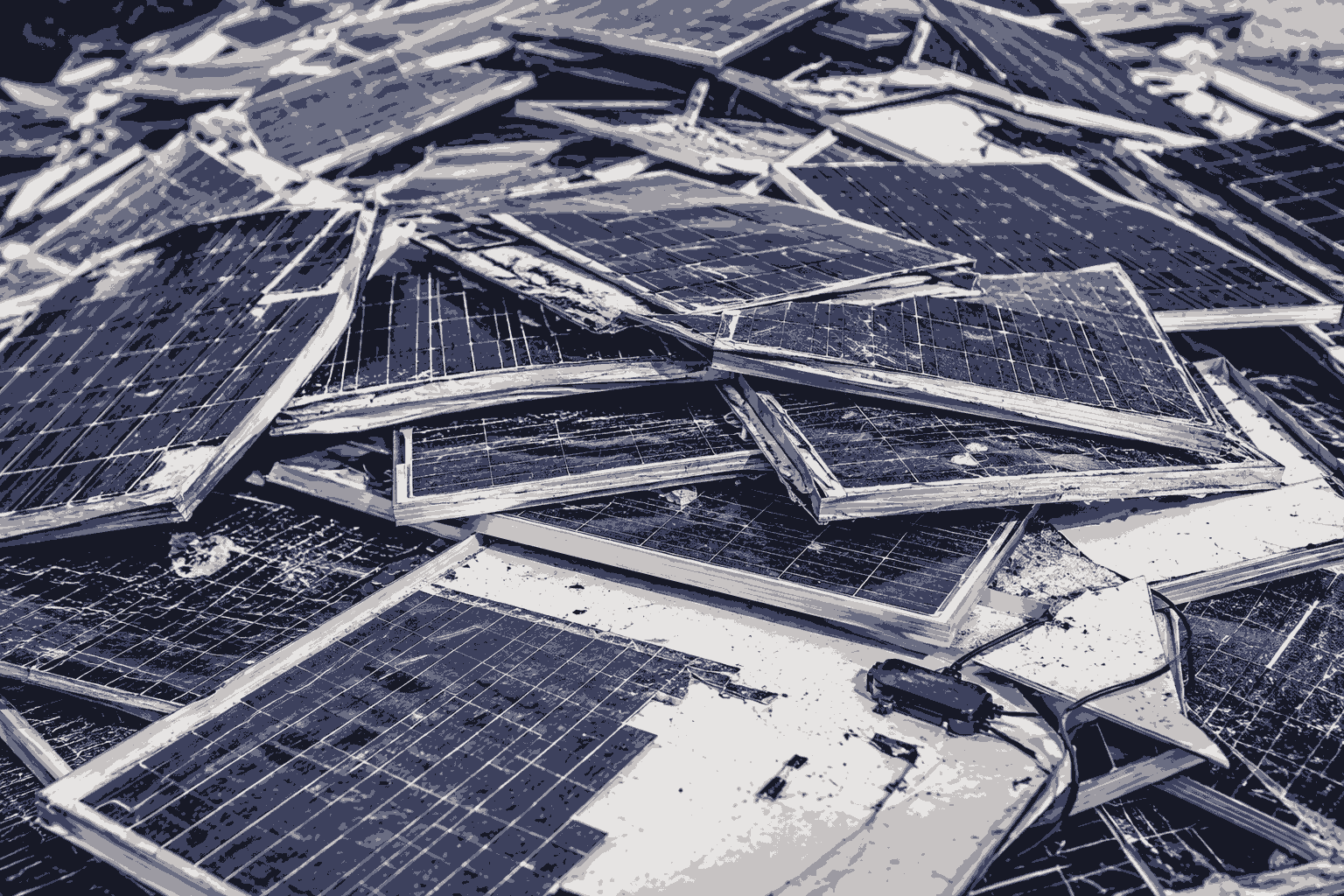
Solar panels help generate renewable electricity, but they do not last forever. Damaged modules, ageing installations, manufacturing defects, and solar farm upgrades can all create end-of-life photovoltaic (PV) equipment that needs to be assessed, reused, or recycled.
For scrap traders, recyclers, solar installers, manufacturers, and waste management businesses, this material presents a developing opportunity. Solar panels contain recoverable materials such as aluminium, glass, copper, and silicon. However, recovering those materials is more complicated than simply treating a panel as ordinary metal scrap.
The value and recyclability of a solar panel depend on its design, condition, material composition, processing requirements, transport costs, and access to suitable recycling facilities. Businesses should understand these factors before purchasing, processing, or selling solar panel scrap.
This guide explains what solar panels contain, where end-of-life panels come from, how recycling works, and how businesses can explore solar scrap trading through ScrapTrade.
Why Solar Panel Scrap Is a Growing Category
Solar energy installations have expanded across residential rooftops, commercial buildings, industrial facilities, and utility-scale solar farms. As installations age and equipment is replaced, end-of-life panels and related components become part of the waste and recycling stream.
Panels do not necessarily reach the end of their useful life only because they are old. Some are removed earlier because of physical damage, reduced performance, manufacturing faults, insurance events, or the upgrading and repowering of an existing installation. Other panels may remain suitable for testing, repair, or reuse instead of immediate recycling.
The International Energy Agency's Photovoltaic Power Systems Programme (IEA PVPS) identifies end-of-life management as an important issue as solar deployment increases. Its research also highlights ongoing challenges, including recycling costs, logistics, processing capacity, and the need to recover materials at higher purity levels. See the IEA PVPS research on photovoltaic module recycling.
For businesses, this creates several potential activities: collecting unwanted panels, arranging testing and sorting, supplying suitable loads to recycling facilities, recovering separate material fractions, and trading reusable equipment where appropriate.
However, solar panel scrap is not automatically profitable. Transporting intact panels can be expensive, while separating laminated glass, cells, and other components may require specialist equipment. Before accepting a load, businesses should evaluate the material condition, quantity, distance to a suitable facility, and confirmed buyer requirements.
What Is Inside a Solar Panel?
The materials inside a solar panel depend on its technology and design. Most conventional panels use crystalline silicon cells, although thin-film technologies have different material compositions and processing needs.
Understanding the main components helps traders describe loads accurately and avoid treating every panel as the same scrap grade.
Aluminium frame: Many conventional panels have an aluminium frame that provides structural support. Once removed and separated, the frame may enter the aluminium scrap stream. Its condition, attachments, contamination, and sorting quality can affect buyer acceptance.
Glass: Glass forms a substantial part of many PV modules. It is usually bonded to other layers, which makes clean separation challenging. Its suitability for recycling depends on the processing method, contamination, and the specifications of the receiving facility.
Silicon cells: Crystalline-silicon panels contain photovoltaic cells that convert sunlight into electricity. Recovering silicon from these cells can require more complex treatment than removing the external frame. Recovery quality and commercial suitability depend on the recycling process.
Copper: Copper may be present in electrical connections, ribbons, cables, and junction-box components. Some copper-bearing parts can be separated for metal recovery, provided they are identified and processed appropriately.
Junction box and wiring: The junction box connects the panel's electrical output to the wider system. It may contain wires, connectors, plastics, and other components. The materials should be assessed and separated according to the recycler's requirements.
Panels may also contain polymer encapsulants, backsheets, sealants, solder, and small quantities of other metals. Some thin-film technologies use semiconductor materials that require specific handling and recovery processes.
Where End-of-Life Panels Come From
Solar panel scrap can arise at several stages of the solar equipment lifecycle.
Residential and commercial installations: Rooftop systems may generate unwanted panels during maintenance, repairs, replacement projects, or upgrades. Individual quantities may be relatively small, so collection and aggregation can be important.
Utility-scale solar farms: Large installations can produce substantial batches when panels are replaced, damaged, or removed during site upgrades. These projects may require coordinated collection, inspection, transport, and documentation.
Solar installers and maintenance contractors: Businesses working on solar systems may accumulate damaged modules, defective equipment, and panels removed during service visits. Clear sorting procedures help distinguish reusable units from material intended for recycling.
Manufacturers and distributors: Manufacturing rejects, damaged inventory, returned products, and warehouse breakage may create panel-related waste. The condition and origin of the material should be documented.
Transport and storage damage: Panels damaged before installation may require assessment. Some might be repairable or suitable for other uses, while others may need recycling or controlled disposal.
Before sending panels directly for material recovery, businesses should consider whether intact units can be tested and safely reused. Reuse is not suitable for every panel, and electrical condition should be assessed by qualified personnel.
How Solar Panel Scrap Is Processed
Solar panel recycling generally involves identifying the panel type, assessing its condition, removing selected components, separating materials, and sending the resulting fractions to suitable recovery or treatment facilities.
The exact sequence varies by technology and equipment. Not every facility recovers every component, and the presence of a material does not guarantee that it can be economically recovered from a particular load.
Frame and Junction Box Removal
For many conventional framed panels, the aluminium frame can be removed before more advanced processing. This allows the separated metal to be assessed and prepared for the appropriate aluminium scrap stream.
The junction box, cables, and connectors may also be removed where the facility's process allows it. These components can contain copper and other materials that may be sorted separately.
Workers should follow suitable electrical and mechanical safety procedures. Panels may retain electrical output when exposed to light, and damaged wiring or glass can create additional hazards. Removal work should be performed by trained personnel using appropriate equipment.
Glass and Cell Separation
The glass, encapsulant, solar cells, and backsheet are bonded together in many panels. Separating these layers can be one of the more challenging parts of recycling.
Depending on the facility, processing may involve mechanical treatment, thermal methods, chemical processes, or combinations of technologies. Each approach has different equipment needs, operating costs, material yields, and output-quality considerations.
Recovered glass is not necessarily suitable for direct use in new solar panels. Its next application depends on purity, particle size, contamination, and buyer specifications. Similarly, separated cells and semiconductor materials may require additional treatment before they can be reused.
Metal Recovery
Once the panel has been dismantled or processed, recoverable metal fractions can be separated and prepared for downstream buyers. These may include aluminium, copper, and selected other metals, depending on the panel technology and the recycling method.
Material purity is important. Mixed components, polymer residues, glass fragments, and other contaminants may reduce acceptance or require further processing.
Businesses should not assume that all panels offer the same recovery profile. A recycling facility should confirm which materials it accepts, how it grades the output, and what preparation is required before a commercial load is delivered.
Handling, Storage and Transport Considerations
Solar panels need careful handling because glass can break, frames can bend, and damaged electrical components may create safety concerns. Poor storage can also make sorting and transport more difficult.
Before moving a load, businesses should establish whether the panels are intact, damaged, reusable, or intended exclusively for recycling. Keep different categories separate where practical, and label the material clearly so the receiving facility understands what is being supplied.
Store panels securely to reduce breakage and prevent unauthorised access. Use suitable racks, packaging, and lifting methods for the panel type and transport arrangement. Avoid handling broken glass without appropriate protective equipment and procedures.
Transport planning matters as well. Panels can be bulky relative to their recoverable metal content, so freight and handling expenses may influence whether a load is commercially viable. Confirm loading arrangements, vehicle or container suitability, weight limits, and the buyer's delivery requirements before dispatch.
Regulatory requirements vary by country and region. Depending on the material's condition, classification, and destination, businesses may need to check waste transport rules, electrical and electronic waste requirements, hazardous-material controls, export restrictions, or other applicable obligations. Do not assume that intact panels, damaged panels, and processed material fractions are subject to identical requirements.
How Solar Scrap Can Be Traded Online
Online B2B marketplaces can help businesses present available solar panel scrap to potential buyers without relying exclusively on local contacts. They can also help recyclers communicate their material specifications and sourcing requirements to a broader trading network.
Before listing a load, prepare a clear description. Include the approximate quantity, panel type if known, condition, location, packaging, and whether the material consists of complete modules or separated fractions. Photographs and available technical information can help potential buyers assess suitability.
It is also useful to clarify whether the panels are intended for reuse, dismantling, or material recovery. A buyer looking for reusable modules may have different requirements from a recycler purchasing damaged panels or an aluminium recovery business buying separated frames.
Compare offers using the complete transaction details rather than the quoted material price alone. Collection arrangements, freight, inspection, processing costs, contamination deductions, payment terms, and destination requirements can all affect the final outcome.
ScrapTrade is a global online marketplace that connects businesses interested in buying and selling scrap materials. It does not take ownership of the material or act as the scrap buyer or seller. Businesses can use the platform to present available material, review potential offers, and communicate with counterparties about the commercial terms.
How to List Solar Scrap on ScrapTrade
Businesses preparing to trade solar panel scrap can follow a straightforward listing process.
1. Identify the material. Confirm whether the load contains complete panels, damaged modules, removed aluminium frames, copper-bearing components, or processed recycling fractions. Do not describe mixed panels as pure metal scrap.
2. Record the quantity and condition. Provide a realistic estimate of the number of panels or total weight, along with information about damage, contamination, packaging, and storage.
3. Add clear photographs and details. Images of the overall load and relevant components can help buyers understand what is available. Include the location and any known panel specifications.
4. Set the commercial terms. Specify your asking price or other suitable offer conditions, minimum quantity, collection expectations, and any known preparation requirements. Confirm whether the buyer or seller will arrange transport.
5. Review buyer offers and requirements. Compare the proposed price with collection costs, material acceptance criteria, payment terms, and other deal conditions. Verify the counterparty and confirm any applicable compliance requirements before finalising the transaction.
To explore your options, visit the ScrapTrade marketplace or register to trade. For solar panel loads, provide accurate material details so potential buyers can evaluate the shipment against their processing capabilities.
FAQs
Can solar panels be recycled?
Yes. Many solar panels can be processed to recover materials such as aluminium, glass, and copper. Other materials may also be recoverable, depending on the panel technology and recycling facility. The actual recovery route varies by design and processing capability.
What valuable materials are found in solar panel scrap?
Common materials include aluminium, glass, copper, silicon, polymers, and smaller quantities of other metals. Their commercial value depends on material purity, quantity, processing costs, and buyer specifications.
Are damaged solar panels suitable for scrap trading?
They may be, but acceptance depends on the damage, panel type, handling risks, and the buyer's capabilities. Some damaged panels may be suitable for specialist recycling, while others may require specific treatment or controlled handling.
Can solar panels be sold for reuse instead of recycling?
Some intact panels may be suitable for reuse after appropriate inspection and testing. Their electrical condition, safety, performance, age, and applicable requirements should be assessed before resale. Panels that are unsuitable for reuse may need a suitable recycling route.
Conclusion
Solar panel scrap is a specialised category that combines recoverable metals with glass, silicon cells, polymers, and electrical components. As panels are replaced, damaged, or removed from installations, businesses need practical ways to assess their condition, arrange safe handling, and identify suitable reuse or recycling options.
Commercial success depends on more than identifying aluminium or copper. Accurate material descriptions, appropriate processing, transport planning, buyer specifications, and compliance checks all influence whether a load can be traded effectively.
ScrapTrade gives businesses a global online marketplace to connect with potential buyers and sellers of scrap materials. If your company collects, processes, or supplies end-of-life solar panels, prepare your material details and talk to us about listing solar scrap on ScrapTrade.