

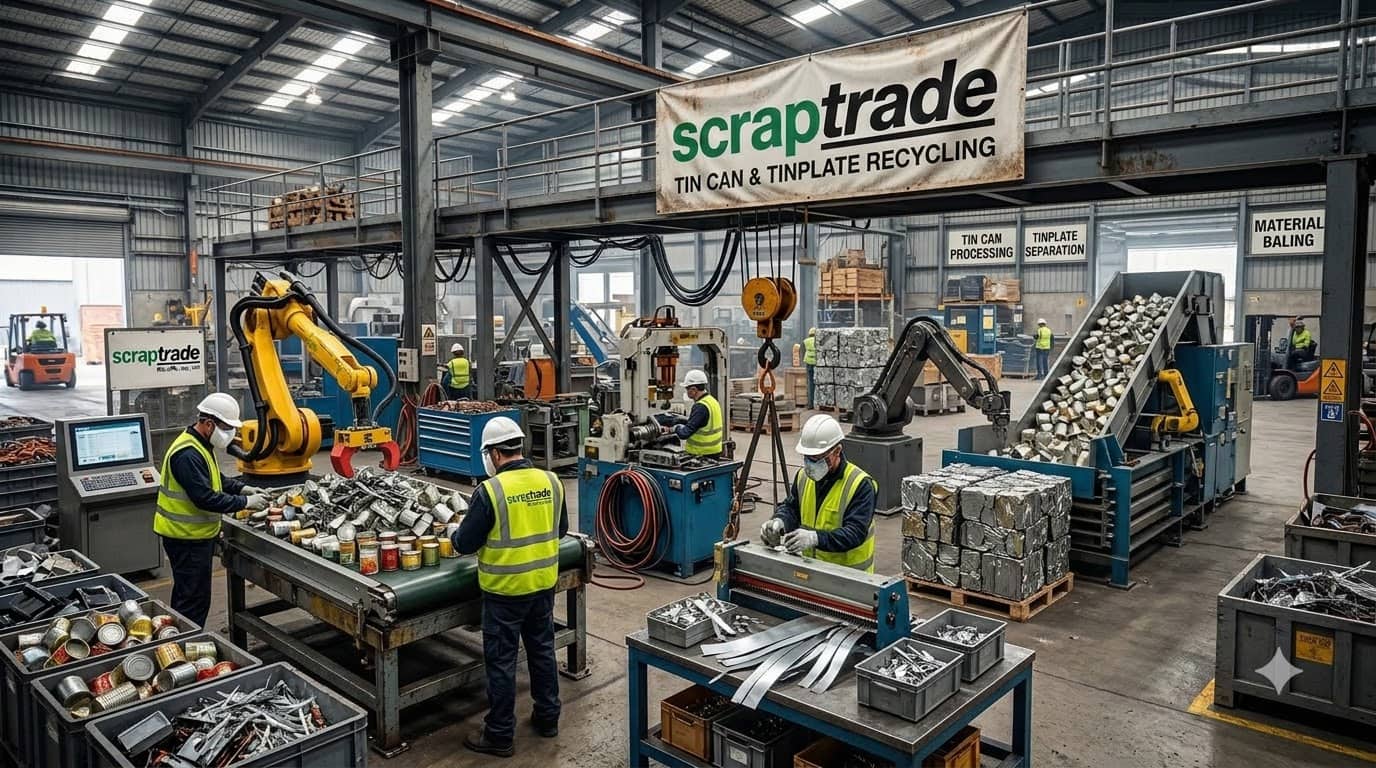
Tin cans and tinplate packaging may look like ordinary metal containers, but they are engineered from steel with a thin protective tin coating. Once used, these cans can enter established metal recycling streams and be transformed into new steel products. Understanding how tinplate recycling works is useful for food manufacturers, packaging businesses, scrap collectors, recyclers and metal traders.
The process generally involves collection, sorting, magnetic separation, preparation, shredding and steel recycling. Depending on the material and processing route, the tin coating may also be recovered or managed during steelmaking. For sellers, the condition of the scrap, contamination, preparation and consistency can all affect buyer acceptance.
This guide explains how steel cans are recycled, what happens to the tin coating, why food residue matters and what tinplate scrap buyers typically want.
Why Tinplate Is Recycled
Tinplate is a thin steel sheet coated with tin to provide corrosion resistance and protect the contents of the package. It is widely used for food cans, beverage containers, paint cans and other packaging applications.
Although the tin layer is thin compared with the steel body, the underlying steel represents a useful recyclable material.
Recycling tinplate packaging can:
- Recover steel for use as secondary raw material.
- Reduce the need to dispose of used metal packaging.
- Separate ferrous packaging from other waste streams.
- Return valuable material to steelmaking supply chains.
- Create a market for collected and processed packaging scrap.
Tinplate should not be confused with a solid tin container. In most common packaging applications, the main material is steel with a tin coating.
This distinction is important when buying or selling scrap because buyers may classify the material according to its steel content, coating, contamination and preparation.
How Steel Cans Are Recycled
The exact recycling process varies between facilities, but most tin can recycling systems begin with collection and sorting.
Collection and Magnetic Separation
Used steel cans can come from households, commercial premises, food manufacturers, restaurants, supermarkets and industrial packaging operations.
Once collected, the material is sorted to separate steel packaging from aluminium cans, plastics, glass and other waste.
Magnetic separation is particularly useful because steel is ferromagnetic. Magnets can attract steel cans and separate them from many non-ferrous materials.
At a recycling facility, magnetic equipment may be used at different stages of material handling. The objective is to create a cleaner ferrous-metal stream for further processing.
For scrap suppliers, keeping steel cans separate from aluminium and other packaging can make the material easier for buyers to classify.
Shredding, Baling and De-Tinning
After sorting, steel cans may be compacted, baled or shredded depending on the requirements of the recycling facility.
Shredding reduces the size of the cans and helps prepare the material for downstream processing. It can also expose more of the metal surface and make separation of attached materials easier.
Some tinplate scrap may undergo de-tinning or other treatment designed to remove or manage the tin coating. However, de-tinning is not necessarily a separate step at every recycling facility.
In conventional steelmaking routes, tin-coated steel can enter the ferrous scrap stream, with the coating handled as part of the steel recycling process. Where dedicated tin recovery is used, the process depends on the facility's technology and the composition of the feedstock.
The term de-tinning scrap therefore needs to be understood in context. A buyer may be looking specifically for tin-coated steel requiring coating removal, while another buyer may purchase the material for direct processing through an appropriate steelmaking route.
Melting into New Steel
Prepared tinplate scrap can be supplied to steelmaking facilities as a source of ferrous metallic material.
In the steelmaking process, scrap is melted in a furnace and processed according to the requirements of the steel producer. The molten metal can then be refined and converted into new steel products.
The recycled steel may ultimately become part of products such as:
- Construction steel
- Automotive components
- Industrial products
- Machinery and equipment
- New steel packaging
The exact destination depends on the steelmaking process, material specifications and market requirements.
The important point is that a discarded steel can does not have to remain a waste product. Its steel content can return to industrial production through the scrap recycling chain.
What Tin Recovery Means for Value
Tinplate contains two commercially relevant material components: the steel body and the tin coating.
However, the presence of tin does not automatically mean that every tinplate scrap load should be priced as high-value tin scrap.
The quantity and recoverability of the coating are different from the value of bulk tin metal. Most of the physical mass of a typical tinplate container is steel.
For traders, this means the material should be described accurately. Terms such as tinplate scrap, tin-coated steel, steel cans and de-tinned steel can refer to different material conditions and buyer requirements.
A buyer may evaluate:
- Steel content and grade
- Tin coating characteristics
- Whether the material is shredded or baled
- Amount of non-metal contamination
- Presence of aluminium or other metals
- Quantity available
- Moisture and packaging condition
- Whether the material has already been de-tinned
If a seller has a separated stream containing recoverable tin, the buyer may require additional information or testing before determining its commercial value.
For this reason, sellers should avoid assuming that a tinplate load has the same value as a pure tin-bearing material.
Contamination: Food Residue and Coatings
Contamination is one of the biggest quality issues for recycled metal packaging.
Used food cans can contain leftover food, oils, labels, plastics and other residues. Paint cans may contain residual coatings or product material. Industrial containers can also contain substances that require special handling.
Food residue
Food residue adds unwanted organic material to the scrap stream. Suppliers should empty containers and follow the buyer's preparation requirements before storage or shipment.
Labels and plastics
Paper labels, plastic lids, liners and other attached materials may remain on cans. Some processing systems can remove these materials, but excessive contamination can affect processing and buyer acceptance.
Coatings
Painted, lacquered or otherwise coated steel packaging may require different processing considerations from clean bare steel.
Sellers should clearly identify unusual coatings or residues rather than presenting the entire load simply as clean tinplate scrap.
Moisture
Wet scrap can increase handling weight and may contribute to storage and processing problems. Keeping metal packaging dry where practical can improve storage conditions and material consistency.
The exact contamination limits should always be confirmed with the intended buyer because specifications vary between facilities.
FAQs
What is tinplate recycling?
Tinplate recycling is the recovery of steel packaging made from steel coated with a thin layer of tin. The cans are collected, sorted, magnetically separated, prepared and processed through metal recycling systems. The steel can then be melted and used to manufacture new steel products.
Are tin cans made from pure tin?
No. Most common tin cans are primarily made from steel with a thin tin coating. The steel provides the main structural body, while the tin coating helps protect the surface. This is why used tin cans generally enter ferrous steel recycling streams.
What is de-tinning scrap?
De-tinning scrap generally refers to tin-coated steel that has undergone a process intended to remove or manage the tin coating. The exact meaning and specifications can vary between buyers and processing facilities, so sellers should confirm the buyer's definition before trading.
Can food cans be recycled with food residue?
Food cans can generally enter metal recycling systems, but excessive food residue and other contamination can affect material handling and processing. Sellers should follow the preparation and contamination requirements of the recycling facility or buyer.
Conclusion
Tin can and tinplate recycling provides a practical route for recovering steel packaging and returning it to the metal supply chain. The process can involve collection, magnetic separation, preparation, shredding and steelmaking, while some facilities may also use dedicated approaches for managing or recovering the tin coating.
For sellers, the most important factors are accurate material identification, contamination control and clear communication with buyers. Tinplate should be described as tin-coated steel rather than treated as pure tin scrap, and de-tinned material should only be described as such when it meets the relevant buyer specification.