

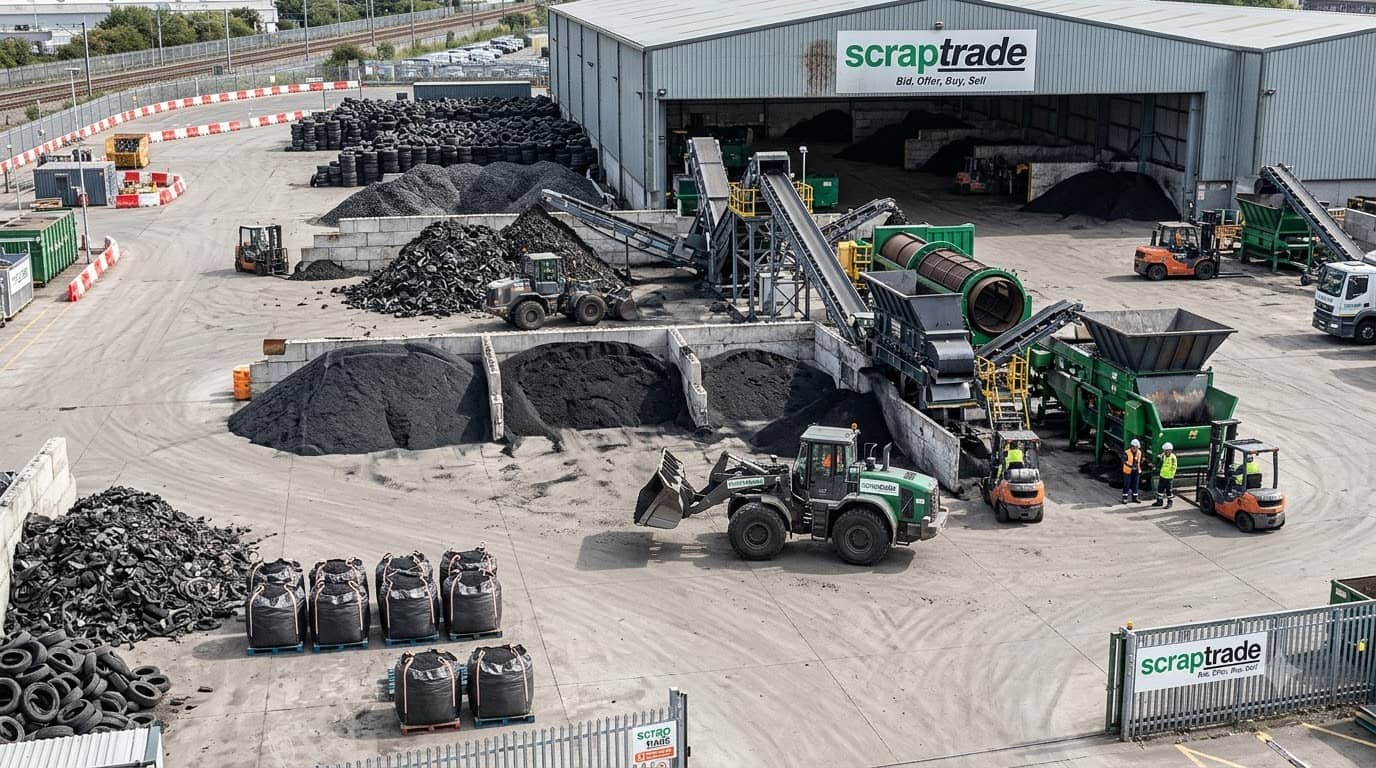
End-of-life tyres create a difficult recycling challenge because they combine rubber, steel, textile reinforcement and other components into a durable product designed to resist wear. Simply disposing of used tyres can waste recoverable materials and create storage and environmental management problems. Recycling provides several routes for converting old tyres into usable secondary materials.
The tyre recycling process can involve mechanical shredding, steel separation, crumb rubber production, pyrolysis or reuse through retreading. Each route produces different outputs and requires different equipment, quality controls and markets. For recyclers and tyre scrap sellers, understanding these routes is important when deciding how to prepare, classify and sell end-of-life tyres.
This guide explains how tyres are processed, what materials can be recovered, where contamination and steel content create challenges, and how businesses can approach the tyre scrap market.
Why Tyre Recycling Matters
End-of-life tyres are generated by passenger vehicles, trucks, buses, industrial equipment, agricultural machinery and other applications. Their construction makes them durable, but that same durability means they require specialised handling when they are no longer suitable for their original use.
Tyre recycling helps recover materials that can potentially enter other industrial applications. It can also support better waste management by directing suitable tyres toward reuse, material recovery or other controlled treatment routes.
The main reasons tyre recycling matters include:
- Material recovery: Tyres contain rubber, steel and textile components that can be separated and processed.
- Waste management: Recycling provides an alternative to uncontrolled dumping or unsuitable disposal.
- Secondary raw materials: Recovered rubber and steel can enter other manufacturing and industrial supply chains.
- Reuse opportunities: Some tyres can be inspected, repaired or retreaded rather than immediately processed as scrap.
- Specialised trading markets: Processed tyre-derived materials can have different buyers from whole end-of-life tyres.
The commercial opportunity depends heavily on local collection systems, processing costs, product specifications and regulations.
Main Tyre Recycling Routes
There is no single tyre recycling process. The appropriate route depends on the tyre's condition, composition, intended output and available technology.
Shredding and Crumb Rubber
Mechanical processing is one of the common approaches for recovering material from end-of-life tyres.
The tyres are first inspected and prepared for processing. They may then pass through primary shredders that reduce whole tyres into smaller pieces. Further processing can reduce the material into smaller rubber particles.
Steel is separated using magnetic equipment, while textile fibres can be separated through additional screening and air-classification processes, depending on the facility.
When rubber is processed into relatively small particles, the resulting material is commonly referred to as crumb rubber. Particle size and cleanliness can vary according to the processing system and intended application.
A typical mechanical route may involve:
- Collection and inspection
- Removal of unsuitable material
- Primary shredding
- Secondary size reduction
- Magnetic steel separation
- Fibre separation
- Screening and grading
- Packaging or bulk shipment
The final rubber product must meet the specifications of its intended buyer. Some applications require controlled particle size, low contamination and specific material characteristics.
Pyrolysis and Material Recovery
Tyre pyrolysis uses thermal treatment in a controlled environment with limited oxygen to break down the organic components of tyres.
Unlike mechanical recycling, pyrolysis does not simply grind the tyre into smaller pieces. Instead, heat causes the rubber and other organic compounds to decompose into different product streams.
Depending on the process and equipment, tyre pyrolysis can produce:
- Oil or liquid hydrocarbon fractions
- Gas
- Recovered carbon-rich solid material
- Recovered steel
The exact composition and commercial suitability of these outputs depend on the feedstock and process conditions. Recovered carbon material may require further treatment before it can meet the specifications of particular industrial applications.
Pyrolysis also requires careful control of emissions, operating conditions, feedstock preparation and product handling. It should therefore be treated as an industrial processing route rather than a simple alternative to shredding.
For scrap traders, this distinction matters. A buyer looking for whole tyres for pyrolysis may have different requirements from a rubber recycler purchasing tyres for crumb production.
Reuse and Retreading
Not every end-of-life tyre needs immediate material recycling.
Tyres with sufficient structural integrity may be suitable for reuse or retreading, depending on their condition, type, market requirements and applicable safety regulations.
Retreading involves replacing the worn tread of a suitable tyre while retaining the existing tyre casing. The casing must undergo inspection and processing before it can be considered suitable for retreading.
This route can extend the service life of suitable tyre casings and keeps more of the original material in use.
However, retreading is not appropriate for every discarded tyre. Damage, age, casing condition, previous repairs and applicable regulatory or safety requirements all influence whether a tyre can be retreaded.
What Recovered Materials Are Used For
Tyre recycling produces several material streams, and each has different potential applications.
Crumb rubber
Recovered crumb rubber can be used in products and applications such as rubber-modified materials, flooring products, mats and other manufactured goods, depending on its specification.
Some applications require specific particle sizes, cleanliness and rubber characteristics. Therefore, recyclers should not treat all crumb rubber as one standard commodity.
Recovered steel
Steel reinforcement is separated from tyres during mechanical processing and can be directed into metal recycling channels.
The steel must be separated effectively from rubber and other material before it is supplied to a steel recycler. Buyers may evaluate contamination, preparation, quantity and other specifications.
Carbon-rich material from pyrolysis
Pyrolysis can produce a carbon-rich solid fraction. Depending on the process, this material may require additional processing or upgrading before it can be used in higher-value applications.
Potential uses depend on quality and buyer specifications rather than simply the fact that the material came from tyres.
Pyrolysis oil and gas
Tyre pyrolysis can produce liquid and gaseous hydrocarbon fractions. Their handling, treatment and commercial use depend on process design, local requirements and product specifications.
These outputs should be traded and used only through appropriate industrial channels and within applicable regulations.
Challenges: Contamination and Steel Content
Tyre recycling economics depend on more than the weight of incoming tyres. Material composition, contamination, transportation and processing requirements all influence the value of the feedstock and recovered outputs.
Contamination
End-of-life tyres may contain mud, stones, water and other unwanted materials. Tyres collected from industrial or mixed waste streams may also arrive with additional contamination.
Recyclers should inspect incoming loads and establish acceptance criteria before purchasing large quantities.
Steel content
Steel reinforcement is an important part of tyre construction. It can be recovered through magnetic separation, but the resulting steel fraction may still contain rubber contamination.
Clean separation improves the suitability of recovered steel for downstream metal recycling.
Mixed tyre types
Passenger-car tyres, truck tyres, agricultural tyres and industrial tyres may have different dimensions and construction characteristics. A processing facility should understand the feedstock it is designed to handle.
Transportation
Whole tyres take up significant storage and transport space. Shredding or other processing before transportation can change the economics, but the decision depends on local equipment, transport costs and buyer requirements.
Compliance Considerations
Tyre waste is regulated differently across countries and jurisdictions. Businesses involved in collection, storage, transportation, processing, import or export should verify the rules that apply to their specific location and activity.
Important areas to check include:
- Requirements for registering or licensing waste-collection and recycling activities.
- Rules for storing large quantities of used tyres.
- Fire prevention and emergency requirements at tyre storage facilities.
- Transportation requirements for tyre waste.
- Environmental controls for shredding, processing and thermal treatment.
- Rules governing cross-border movement of used tyres and waste materials.
- Requirements for handling and selling recovered products.
International tyre shipments require particular care because a transaction involving used tyres may be treated differently depending on whether the tyres are intended for reuse, retreading, recycling or another purpose.
Businesses should verify current requirements with the relevant environmental, customs and waste-management authorities before arranging cross-border shipments. Regulations can change, and requirements can differ significantly between jurisdictions.
FAQs
What is the tyre recycling process?
The tyre recycling process can include inspection, shredding, steel separation, fibre removal and rubber sizing. Some tyres are processed into crumb rubber, while others may be directed toward pyrolysis or reuse and retreading, depending on their condition and the available technology.
What is crumb rubber?
Crumb rubber is rubber material produced by mechanically processing used tyres into smaller particles. Its particle size, cleanliness and composition vary by processing method and intended application. Buyers typically specify the characteristics required for their particular use.
What is tyre pyrolysis?
Tyre pyrolysis is a thermal treatment process that breaks down tyre material under controlled conditions with limited oxygen. It can produce several output streams, including liquid hydrocarbon fractions, gas, carbon-rich material and recovered steel.
Can all used tyres be retreaded?
No. Retreading depends on the condition and structural integrity of the tyre casing. Damage, wear, previous repairs, tyre type and applicable safety requirements all influence whether a tyre is suitable for retreading.
Conclusion
Tyre recycling can convert end-of-life tyres into several useful material streams, including crumb rubber, recovered steel and pyrolysis-derived products. Reuse and retreading provide additional options for suitable tyre casings before material recovery becomes necessary.
For recyclers and scrap traders, the most important factors are accurate material identification, contamination control, processing requirements, buyer specifications and regulatory compliance. Whole tyres, shredded tyres, crumb rubber and recovered steel should be treated as distinct trading products with different market requirements.
If you have tyre scrap available, prepare clear details about its type, quantity, condition and location, then explore the ScrapTrade marketplace to connect with businesses trading recyclable materials.