
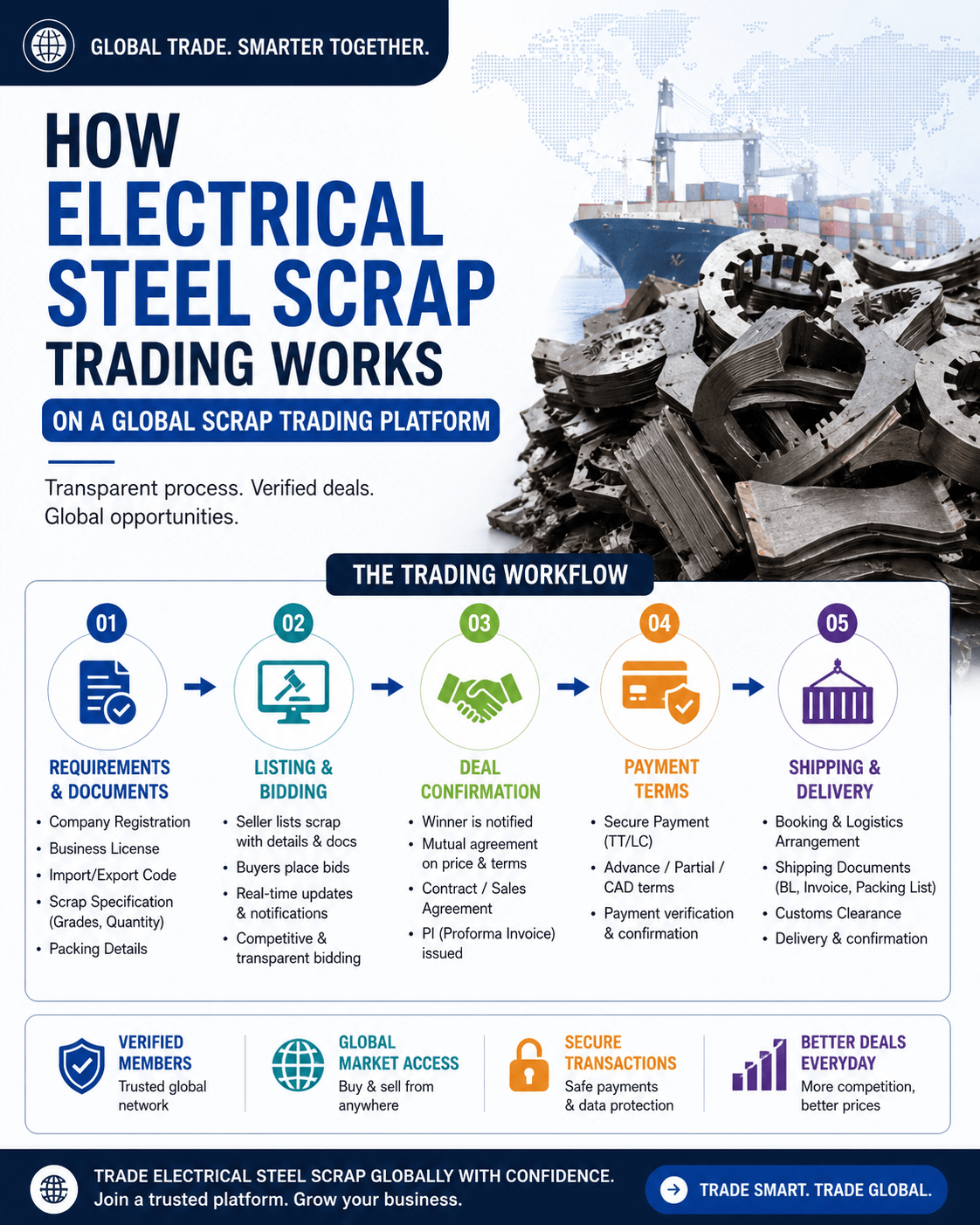
Introduction
International electrical steel scrap trading can be complex for first-time sellers and buyers. Many companies struggle with unclear documentation requirements, uncertain payment terms, non-transparent bidding systems, and lack of verified buyers.
A modern scrap trading platform simplifies this process by connecting verified global buyers and sellers in one secure marketplace. From onboarding and documentation to bidding, logistics, and trade closure, every step becomes more transparent and efficient.
In this guide, you will learn how electrical steel scrap trading works, what documents are required, how bidding functions, how deals are finalized, and what sellers should prepare before listing material on a scrap marketplace.
Whether you are selling CRGO scrap, CRNO scrap, transformer lamination scrap, or motor core scrap, this article will help you understand the complete workflow.
For international scrap trading opportunities, explore https://scraptrade.com.au/
What Is Electrical Steel Scrap?
Electrical steel scrap is a high-value ferrous scrap material generated from:
- Transformer manufacturing
- Motor production
- Electrical equipment dismantling
- Lamination cutting processes
- Industrial punching operations
This scrap contains silicon steel used for magnetic applications and energy-efficient electrical systems.
Common Types of Electrical Steel Scrap
CRGO Scrap
Cold Rolled Grain Oriented steel scrap commonly used in transformers.
CRNO Scrap
Cold Rolled Non-Oriented steel scrap used in motors and generators.
Transformer Lamination Scrap
Generated from transformer manufacturing and dismantling.
Motor Core Scrap
Recovered from industrial motors and electrical machinery.
Silicon Steel Punching Scrap
Produced during sheet cutting and punching operations.
Why Global Buyers Prefer Verified Scrap Trading Platforms
Traditional scrap trading often involves:
- Unverified buyers
- Delayed payments
- Poor communication
- Quality disputes
- Unclear pricing
- Fraud risks
A professional scrap marketplace solves these issues by creating a transparent trading ecosystem.
Key Benefits for Sellers
- Access to global buyers
- Competitive bidding
- Faster deal closures
- Better price discovery
- Verified buyer network
- Structured documentation workflow
- Easier logistics coordination
Key Benefits for Buyers
- Verified material listings
- Transparent bidding process
- Consistent supply opportunities
- Easier supplier communication
- Inspection visibility
- Reduced procurement risk
How the Scrap Trading Platform Works
The trading process is designed to make international scrap transactions simple and scalable.
Step 1: Seller Registration and Onboarding
The seller creates an account and submits company verification documents.
Required Seller Documents
| Document Type | Purpose |
|---|---|
| Company Registration Certificate | Legal company verification |
| VAT or Tax Registration | Tax compliance |
| Authorized Signatory ID | Identity verification |
| Company Address Proof | Operational verification |
| Bank Details | Payment processing |
| Export License | International shipment compliance |
| Material Ownership Declaration | Ownership confirmation |
Some buyers may also request:
- ISO certifications
- ESG compliance documents
- Recycling permits
- Previous export references
- Yard inspection photos
Step 2: Material Listing
Once verified, sellers can upload their electrical steel scrap listings.
Information Required in a Scrap Listing
- Scrap type
- Quantity available
- Monthly supply capacity
- Scrap grade
- Material thickness
- Loading location
- Photos and videos
- Preferred shipment terms
- Expected price range
Example Material Listing
| Parameter | Example |
|---|---|
| Material Type | CRGO Electrical Steel Scrap |
| Quantity | 200 MT |
| Origin | Italy |
| Packing | Loose / Bundled |
| Loading Port | Genoa |
| Monthly Availability | 500 MT |
| Incoterm | FOB |
The more detailed the listing, the better the buyer engagement and bidding activity.
How Scrap Bidding Works
One of the most important features of a modern scrap marketplace is transparent bidding.
Step-by-Step Bidding Process
Step 1: Buyers Review the Listing
Verified buyers inspect:
- Photos
- Videos
- Material specifications
- Quantity
- Shipment terms
- Inspection reports
Step 2: Buyers Submit Offers
Buyers place bids based on:
- Material quality
- Market conditions
- Logistics cost
- Destination country
- Scrap demand
Step 3: Seller Reviews Bids
The seller can:
- Accept an offer
- Negotiate pricing
- Request revised terms
- Reject offers
- Shortlist buyers
Step 4: Final Negotiation
Both parties finalize:
- Final price
- Payment terms
- Shipment timeline
- Inspection process
- Delivery terms
Step 5: Deal Confirmation
Once approved:
- Trade contract is generated
- Invoice is issued
- Shipment planning begins
Common Payment Terms in International Scrap Trading
Payment terms are critical in cross-border scrap transactions.
Popular International Payment Methods
| Payment Method | Description |
|---|---|
Stripe + Escrow Payment LC (Letter of Credit) | Payment Managed by ScrapTrade Bank-backed payment security |
| TT Advance | Wire transfer before shipment |
| SBLC | Standby Letter of Credit |
| Partial Advance + Balance Against BL | Common in scrap exports |
Most sellers prefer secure payment structures for first-time buyers.
Export Documents Required to Close a Scrap Trade
After deal confirmation, several export documents are required.
Seller-Side Documents
Commercial Invoice
Contains:
- Material details
- Quantity
- Price
- Buyer information
- Shipment terms
Packing List
Shows:
- Weight details
- Packaging information
- Container details
Weight Certificate
Confirms shipment weight.
Bill of Lading
Issued by the shipping line as shipment proof.
Certificate of Origin
Confirms country of origin.
Material Test Certificate
Optional but preferred for electrical steel scrap.
Logistics and Shipment Workflow
Efficient logistics are essential in international scrap trading.
Typical Shipment Process
- Material inspection
- Weight verification
- Container loading
- Customs clearance
- Port handling
- Ocean freight movement
- Buyer-side customs clearance
- Delivery confirmation
Popular Incoterms Used in Scrap Trading
| Incoterm | Responsibility |
|---|---|
| EXW | Buyer manages shipment |
| FOB | Seller delivers to port |
| CIF | Seller covers freight and insurance |
| CFR | Seller covers freight only |
Quality Requirements for Electrical Steel Scrap
Electrical steel scrap buyers pay close attention to contamination and grade quality.
Important Quality Parameters
Silicon Content
Higher silicon content often increases value.
Copper Contamination
Low copper contamination is preferred.
Rust and Oil Levels
Excess rust or oil reduces scrap quality.
Segregation Quality
Separated grades receive higher bids.
Moisture Content
Wet scrap may face deductions.
How Sellers Can Get Better Bids
Sellers who provide accurate and transparent listings typically receive stronger buyer interest.
Best Practices for Sellers
- Upload clear material photos
- Share videos of the stockyard
- Provide accurate weight details
- Mention contamination levels honestly
- Keep grades separated
- Offer inspection access
- Use clear shipment timelines
- Maintain documentation readiness
Why Detailed Listings Matter
Detailed listings:
- Build buyer trust
- Reduce negotiation time
- Increase bidding competition
- Improve final selling price
- Reduce disputes
Why Electrical Steel Scrap Has Strong Global Demand
Electrical steel scrap is widely used in:
- Transformer manufacturing
- EV motor production
- Renewable energy equipment
- Electrical machinery
- Industrial power systems
The growth of electric vehicles and energy infrastructure continues to increase demand for silicon steel and electrical steel scrap worldwide.
Digital Scrap Trading vs Traditional Scrap Brokerage
| Traditional Scrap Trading | Digital Scrap Marketplace |
|---|---|
| Limited buyer network | Global buyer access |
| Slow negotiations | Faster bidding |
| Low pricing transparency | Competitive price discovery |
| Manual communication | Centralized workflow |
| Higher fraud risk | Verified participants |
| Offline documentation | Structured digital process |
Frequently Asked Questions
What documents are required to sell electrical steel scrap internationally?
Sellers typically need company registration documents, VAT certificates, bank details, export licenses, packing lists, invoices, and shipment-related export documents. Some buyers may also request inspection reports and quality certifications.
How does scrap bidding work on a trading platform?
Verified buyers review material listings and submit price offers based on quantity, quality, and logistics costs. Sellers can accept, reject, or negotiate bids before finalizing the deal.
What payment methods are commonly used in scrap exports?
Common international payment methods include LC, TT advance, SBLC, CAD, and partial advance with balance payment against Bill of Lading documents.
Why is segregation important for electrical steel scrap?
Properly segregated scrap improves material quality, reduces contamination, increases buyer confidence, and usually results in better pricing during bidding.
Which industries buy electrical steel scrap?
Electrical steel scrap is commonly purchased by transformer manufacturers, motor producers, steel processors, renewable energy equipment manufacturers, and industrial recycling companies.
Conclusion
Global electrical steel scrap trading is becoming more digital, transparent, and scalable through modern scrap trading platforms. Sellers can now connect with verified international buyers, participate in competitive bidding, streamline documentation, and close deals faster.
By understanding the onboarding process, required documents, bidding workflow, payment structures, and quality expectations, sellers can improve buyer confidence and maximize trade value.
If you are planning to sell CRGO scrap, CRNO scrap, transformer scrap, or silicon steel scrap internationally, using a professional scrap marketplace can significantly simplify the process.
Explore global scrap trading opportunities at:
https://scraptrade.com.au/