

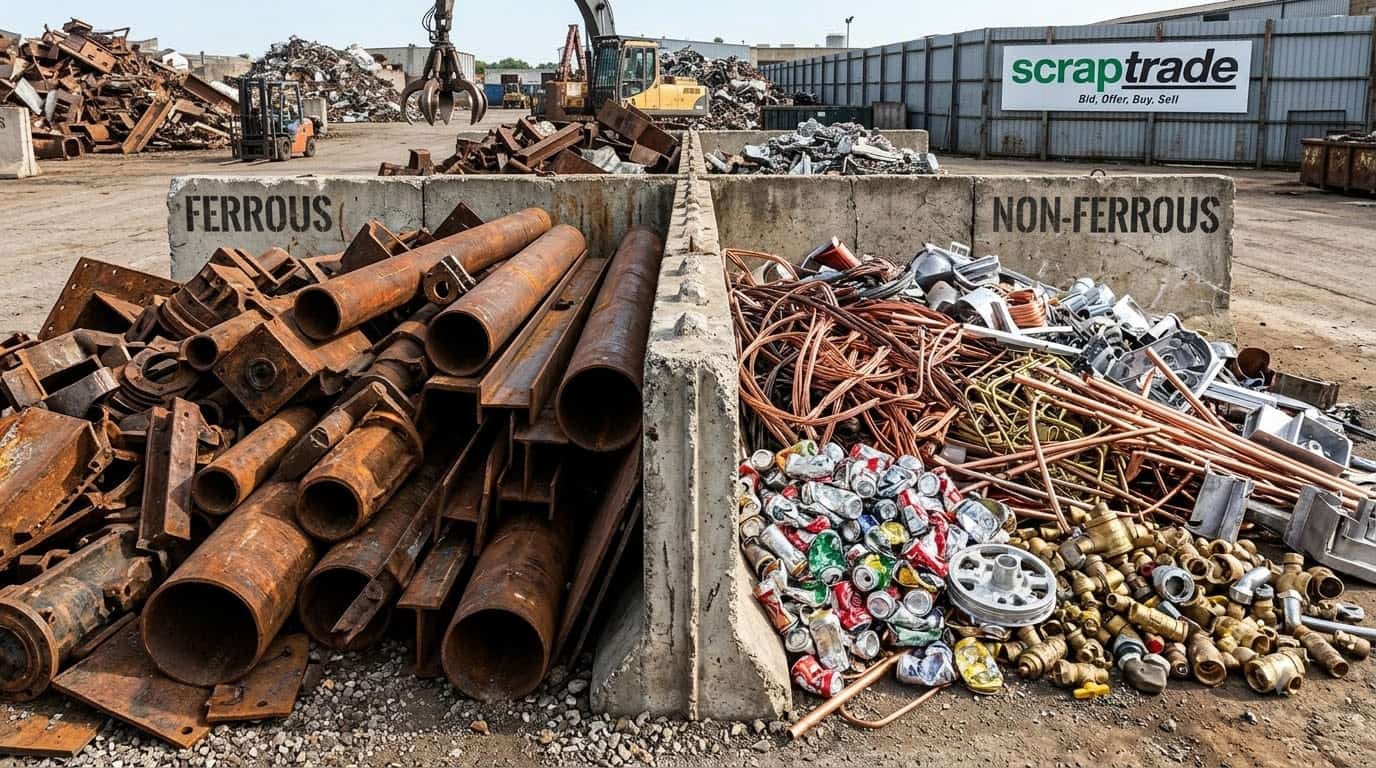
Ferrous and non-ferrous metals are two major categories in the scrap recycling industry. Both can be recovered and reused in manufacturing, but their recycling processes differ in material separation, preparation, melting, and quality control.
Ferrous metals, such as iron and steel, contain iron and are commonly separated using magnetic equipment. Non-ferrous metals, including copper, aluminium, brass, and lead, generally require other identification and separation methods because they are not separated by ordinary magnetic systems in the same way.
These differences influence how scrap is collected, sorted, processed, and sold. For scrap collectors, dealers, and recycling businesses, understanding the recycling process can help improve material preparation and identify suitable buyers.
This guide explains how ferrous and non-ferrous metals are recycled, why their processing methods differ, and what sellers should consider before listing their scrap.
Ferrous and Non-Ferrous: A Quick Recap
The main difference between ferrous and non-ferrous metals is their composition.
Ferrous metals contain iron as a principal component. Common examples include carbon steel, cast iron, and many types of stainless steel. These materials are widely used in construction, machinery, vehicles, infrastructure, and manufacturing.
Non-ferrous metals do not have iron as their principal metal component. Common examples include copper, aluminium, brass, bronze, zinc, lead, and nickel.
Both categories are important to metal recycling, but their properties influence how recyclers handle them.
| Feature | Ferrous metals | Non-ferrous metals |
|---|---|---|
| Main characteristic | Iron is a principal component | Iron is not the principal component |
| Common examples | Steel, cast iron | Copper, aluminium, brass, bronze |
| Magnetic separation | Commonly used for separation | Generally requires other separation methods |
| Common sources | Vehicles, machinery, construction | Cables, electrical equipment, packaging, fittings |
| Recycling considerations | Grade, size, contamination, and preparation | Alloy composition, grade, purity, and contamination |
How Ferrous Metals Are Recycled
Ferrous metal recycling focuses on recovering iron-bearing materials and preparing them for reuse in steelmaking, foundries, and other manufacturing operations.
Common ferrous scrap sources include old vehicles, structural steel, machinery, industrial offcuts, demolished buildings, pipes, and household appliances.
The process generally involves collection, sorting, preparation, melting, and the production of new metal products.
Magnetic Separation
Magnetic separation is one of the most widely used methods for sorting ferrous scrap.
Because many iron-bearing materials respond to magnetic fields, recycling facilities can use magnetic equipment to separate them from non-magnetic materials in mixed scrap streams.
Common equipment includes:
Overband magnets: Installed above conveyor belts, these magnets can remove ferrous objects from moving material streams.
Magnetic drum separators: These systems use rotating magnetic components to separate magnetic materials from other materials.
Magnetic pulley separators: Used at conveyor discharge points, these systems help separate ferrous materials from non-magnetic material flows.
Magnetic separation is useful for processing mixed waste, shredded vehicles, construction scrap, and industrial material.
However, it does not identify every metal grade. For example, some stainless steel grades have limited or different magnetic responses. Magnetic equipment should therefore be treated as a separation tool rather than a complete material-identification system.
After separation, ferrous scrap may undergo additional sorting to remove unwanted attachments, non-metal materials, and unsuitable grades.
Melting in Furnaces
Once the ferrous scrap has been prepared, it can be supplied to suitable steelmaking or foundry operations.
Electric arc furnaces are commonly used to melt steel scrap. Electrical energy generates the heat required to turn prepared metal into molten steel.
During processing, operators manage the metal's composition and quality. Additional materials may be introduced where necessary to achieve the required specifications.
Other furnace routes are used in foundries and different metal production operations, depending on the feedstock and final product.
After melting and treatment, the molten metal can be cast into suitable forms, such as billets, blooms, or slabs, for further manufacturing.
The final material may be used to produce structural steel, machinery components, automotive products, construction materials, and other manufactured goods.
For scrap sellers, the main commercial considerations include material grade, size, cleanliness, quantity, and the receiving facility's specifications.
How Non-Ferrous Metals Are Recycled
Non-ferrous metal recycling covers several different metals, including copper, aluminium, brass, bronze, zinc, lead, and nickel.
These metals are used in electrical systems, transport, construction, electronics, packaging, manufacturing, and industrial equipment.
Unlike many ferrous materials, non-ferrous metals generally cannot be separated using ordinary magnetic systems alone. Recycling facilities therefore use a combination of physical separation, material identification, and specialised processing methods.
Eddy Current and Density Separation
Eddy current separation is an important technology for recovering certain non-ferrous metals from mixed material streams.
The system uses a rotating magnetic field to create electrical currents in conductive non-ferrous objects. These currents generate a magnetic response that can cause suitable objects to move away from the main material flow.
Eddy current separators are particularly useful for separating aluminium and other suitable non-ferrous metals from mixed waste streams.
Other separation methods may also be used:
Density separation: Materials are separated according to differences in density using suitable equipment and processes.
Sensor-based sorting: Optical, X-ray, or other sensor systems can help identify and separate selected materials.
Manual sorting: Workers may identify and separate materials based on their appearance, product type, markings, or other characteristics.
Alloy identification: Suitable testing equipment, including XRF analysers, can help identify alloying elements and support the separation of different metal grades.
The most appropriate method depends on the material being processed. Aluminium packaging, copper cables, brass fittings, and mixed electronic scrap may require different preparation and separation routes.
Alloy-Specific Melting
Non-ferrous metals are often processed according to their individual metal type and alloy composition.
Different metals have different melting and processing requirements. Even within one metal category, alloys may need to be kept separate to meet the specifications of the final product.
For example:
Aluminium: Clean aluminium scrap may be sorted by product type and alloy category before remelting. Beverage cans, extrusion scrap, and cast aluminium components may follow different preparation routes.
Copper: Copper wire, pipes, busbars, and other copper-bearing materials are assessed according to grade and condition. Insulated cable may require mechanical processing to separate copper from insulation.
Brass and bronze: These copper-based alloys are generally kept separate because their compositions and applications differ.
Nickel-bearing materials: Certain stainless steel and nickel alloy scrap requires identification and suitable processing to retain the desired alloy composition.
During melting, the recycling facility controls the metal composition and removes or manages unwanted materials according to the process. The recovered metal may then be refined, treated, and cast into forms for manufacturing.
The key difference is that non-ferrous recycling often requires closer attention to the identity and composition of individual metal grades rather than treating all material as one general category.
Why Non-Ferrous Scrap Often Earns More
Non-ferrous scrap often attracts higher prices per kilogram than common ferrous scrap. Copper, aluminium, brass, and certain nickel-bearing materials have important industrial applications and distinct market values.
Several factors help explain these differences.
Metal characteristics: Non-ferrous metals have properties such as electrical conductivity, corrosion resistance, and low density that make them useful in specialised applications.
Industrial demand: Copper is important in electrical systems, aluminium is widely used in transport and packaging, and brass is used in fittings and industrial components. Demand varies by metal and application.
Material composition: Certain non-ferrous grades contain valuable alloying elements or have specifications that make them attractive to particular buyers.
Processing requirements: Some non-ferrous materials require specialised sorting, testing, or recovery methods. Their value depends on the quality and suitability of the recovered material.
Market conditions: Commodity prices, supply, demand, location, and buyer requirements influence the offers available.
However, a higher unit price does not automatically mean higher business profit. A small quantity of clean copper may have a higher value per kilogram than a large steel load, but transport, collection, and processing costs can change the final return.
Ferrous scrap can also generate substantial business revenue when collected and sold in efficient bulk quantities.
FAQs
What is the main difference between ferrous and non-ferrous metal recycling?
Ferrous recycling commonly uses magnetic separation to recover iron-bearing materials before melting. Non-ferrous recycling relies more on methods such as eddy current separation, sensor sorting, density separation, and alloy identification before metal-specific processing.
Why are magnets used in ferrous scrap recycling?
Many iron-bearing materials respond to magnetic fields. Magnets help recycling facilities separate ferrous metals from mixed waste and non-magnetic materials.
How are non-ferrous metals separated?
Facilities may use eddy current separators, density separation, sensor-based sorting, manual inspection, and alloy-testing equipment. The method depends on the metal and the condition of the scrap.
Is non-ferrous scrap always more valuable than ferrous scrap?
No. Non-ferrous metals often have higher prices per kilogram, but value depends on grade, condition, quantity, demand, and location. Bulk ferrous scrap can also provide commercially attractive opportunities.
Conclusion
Ferrous and non-ferrous metal recycling follow different processing routes because the materials have different compositions and physical properties.
Ferrous recycling commonly relies on magnetic separation and furnace melting to recover iron-bearing materials. Non-ferrous recycling uses additional separation technologies, alloy identification, and metal-specific melting or recovery processes to handle materials such as copper, aluminium, brass, and nickel-bearing scrap.
For scrap businesses, these differences matter before a load reaches the recycling facility. Separating metals, identifying grades, reducing contamination, and understanding buyer specifications can help sellers present better-quality material and compare offers more effectively.
If your business collects or supplies ferrous or non-ferrous scrap, list your scrap for sale on ScrapTrade and connect with potential buyers through a global online marketplace.