

Why Identifying Scrap Metal Matters
Accurate metal identification is the foundation of profitable scrap metal recycling and inventory management. Whether managing a commercial scrap yard, clearing manufacturing waste, or handling demolition debris, properly sorting metals directly impacts financial return. In the recycling industry, metals are primarily categorized into two distinct categories: ferrous and non-ferrous. Understanding the differences outlined in ferrous vs non-ferrous scrap is critical because non-ferrous metals such as copper, brass, and aluminum fetch significantly higher prices per pound or ton than standard ferrous metals like carbon steel and iron.
When scrap is delivered to a recycling facility unsorted, yards usually classify the entire consignment as "dirty" or mixed scrap 1 . Under this classification, the entire load is bought at the rate of the lowest-value material present, causing sellers to lose substantial revenue on high-grade non-ferrous items hidden inside the lot 1 . Beyond financial returns, proper sorting prevents material contamination 1 . Combining incompatible metals in a single melting charge at a foundry or secondary smelter can spoil an entire production batch 2 . Additionally, identifying unknown materials helps workers recognize potentially hazardous scrap such as lead-lined equipment, sealed pressure vessels, or coated items before transport, ensuring workplace safety and regulatory compliance 1 .
Simple Tests You Can Do Yourself
Accurately sorting scrap metal does not require expensive laboratory spectrometers or complex equipment. By using a systematic approach and basic hands-on techniques, sellers can reliably identify and separate common commercial metals.
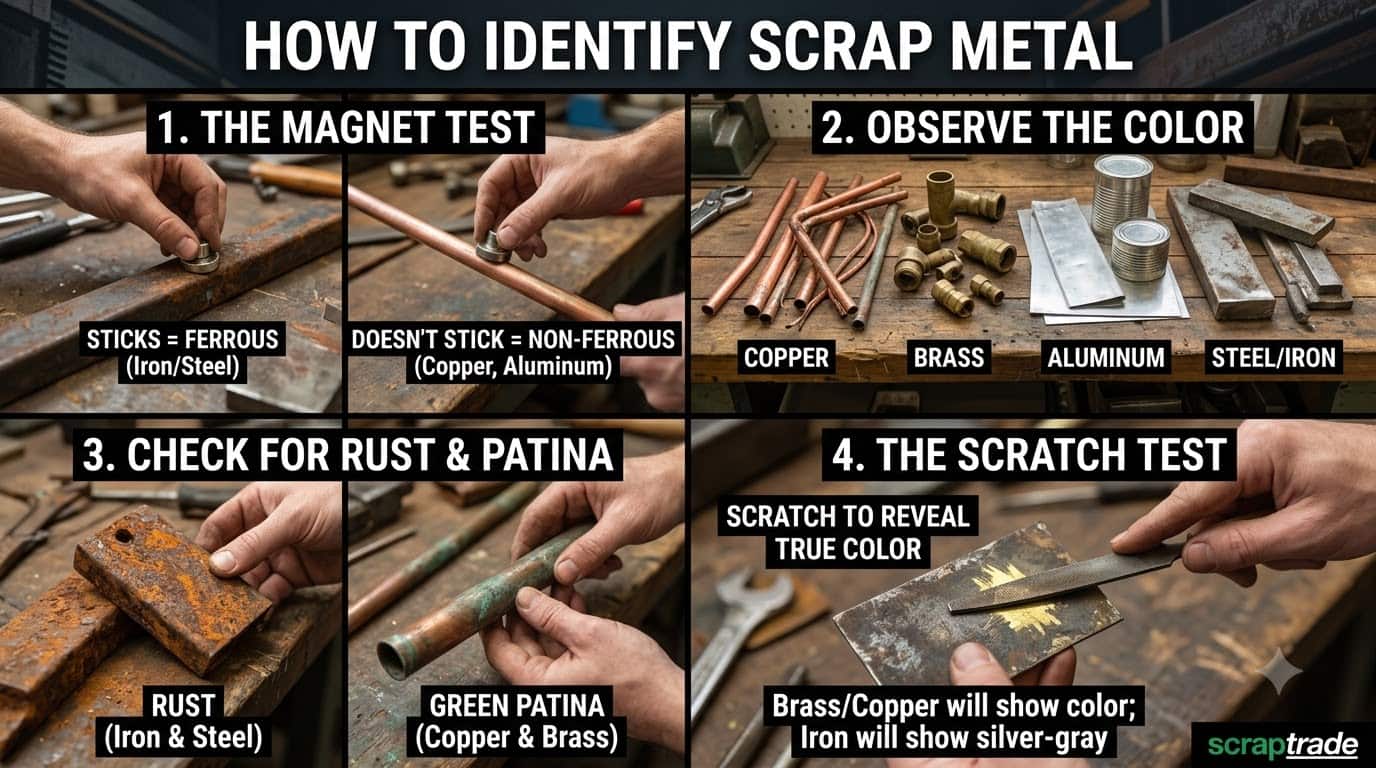
The Magnet Test
The magnet test is the fastest, simplest, and most essential non-destructive test in scrap metal triage. Carrying a strong handheld magnet (such as a pocket neodymium magnet) allows you to instantly perform an initial sorting pass.
- Ferrous Metals: If the magnet sticks firmly and strongly to the metal, the item contains iron or carbon steel. Common ferrous items include structural steel beams, heavy melting scrap (HMS), cast iron pipes, automotive body panels, and shredded steel fragments. Ferrous metals are abundant and lower in price compared to non-ferrous grades.
- Non-Ferrous Metals: If the magnet does not attract the metal at all, you are handling a non-ferrous metal. This category includes copper, brass, aluminum, lead, zinc, and nickel alloys. These materials command premium prices in commercial recycling markets.
- Special Exception (Stainless Steel): Some stainless steel alloys exhibit weak or zero magnetic attraction depending on their chemical structure. Standard 300-series austenitic stainless steel (like 304 grade) is generally non-magnetic, while 400-series ferritic stainless steel is magnetic.
Color and Appearance
Visual examination provides immediate clues about metal identity. Inspecting the item under clean lighting and lightly scraping surface oxidation or paint away with a file or utility knife—reveals the true base color.
- Copper: Displays a distinct, warm reddish-pink color when freshly cut or scraped. Unweathered copper has a bright salmon hue, whereas weathered outdoor copper develops a greenish verdigris patina.
- Brass: An alloy composed of copper and zinc, brass exhibits a bright yellow-gold color. It is visibly yellower than pure copper and lacks the reddish undertone.
- Aluminum: Appears light silvery-grey with a soft, dull finish. Unlike polished chrome or stainless steel, aluminum forms a thin, chalky white oxide coating over time rather than red rust.
- Lead: Presents a dark, dull grey appearance. Freshly scratched lead exposes a shiny, soft silvery streak that oxidizes quickly back to dull grey.
- Stainless Steel: Shows a bright, silver metallic appearance that remains shiny and clean without forming flaky reddish-brown rust, even when exposed to moisture.
Separating Metals Apart (e.g. copper vs brass, stainless vs steel)
When two metals look similar on the surface, targeted comparisons help distinguish between them:
- Copper vs. Brass: Scrape a small section of the metal surface with a hand file. If the exposed metal beneath is bright reddish-pink, it is pure copper. If the metal reveals a distinctly yellowish or gold color, it is brass. Copper is significantly softer and more malleable than brass.
- Stainless Steel vs. Carbon Steel: Apply your magnet and check for surface rust. Carbon steel rusts easily into flaky red-orange iron oxide and attracts magnets strongly. Austenitic stainless steel resists surface corrosion completely and shows little to no magnetic pull.
- Aluminum vs. Stainless Steel: While both metals are silver-colored and can be non-magnetic, stainless steel is significantly heavier and extremely hard. Aluminum is lightweight and scratches easily when rubbed with a steel screwdriver or file.
Weight and Density
Performing a manual "heft test" by holding equal-sized pieces of different metals helps identify them by density.
- Low Density (Lightweight): Aluminum is famously lightweight, weighing roughly one-third the mass of steel or copper for a piece of equivalent volume.
- Medium to High Density: Carbon steel, copper, and brass feel solid and heavy in the hand.
- Very High Density: Lead feels exceptionally dense and heavy relative to its physical size. A small lead block feels noticeably heavier than a steel or aluminum piece of identical size.
Flexibility and Surface
Evaluating a metal's physical hardness and flexibility offers further diagnostic information:
- Malleable and Soft Metals: Lead is extremely soft; it can be indented easily with a fingernail or pocket blade and bends under hand pressure. Pure copper wire and soft copper tubing bend smoothly without cracking.
- Rigid and Brittle Metals: Cast iron is hard but brittle; striking cast iron with a hammer causes it to fracture cleanly rather than bend. High-strength carbon steel resists bending, while extruded 6063 aluminum profiles hold rigid structural shapes but yield slightly under heavy mechanical force without snapping.
Markings and Source
Examining the original source and searching for manufacturer stampings provides instant context:
- Plumbing & HVAC: Water pipes, refrigeration lines, and electrical busbars are almost exclusively copper. Plumbing valves, pipe fittings, and water meters are typically made of brass.
- Electrical Utilities: Heavy power transmission cables contain copper or high-purity aluminum conductors.
- Architectural & Construction: Window frames, door channels, siding trim, and ladder frames are typically extruded aluminum. Structural I-beams, rebar, and plate scrap are carbon steel.
- Industry Markings: Check for stamped grade codes. Stainless equipment often features "304" or "316" stamps; aluminum profiles may feature alloy series codes such as "6063"; and electrical wire insulation frequently lists copper content specifications.
When to Seek Expert Assistance
While practical DIY sorting methods effectively identify standard scrap, certain situations require professional assessment. Complex high-temperature nickel alloys, tool steels, titanium, and specialized aerospace scrap cannot be identified with complete certainty using basic physical tests alone.
When dealing with large commercial lots, high-value industrial consignments, or unknown industrial materials, consult a licensed recycling yard or commercial scrap buyer. Commercial recyclers utilize specialized non-destructive testing tools such as X-ray Fluorescence (XRF) analyzers or Optical Emission Spectrometers (OES) to determine exact elemental percentages within seconds.
Additionally, exercise caution when encountering sealed tanks, containers with chemical residue, radioactive medical scrap, or heavy lead-bearing items. Never attempt hazardous testing procedures, such as chemical acid etching, spark grinding without full protective gear, or heating unknown metals. When in doubt, isolate the material safely and consult an expert commercial buyer.
FAQs
Why does some stainless steel stick to a magnet while other pieces do not?
Stainless steel magnetism depends on its microstructural crystal family. Austenitic stainless steels (such as 304 and 316 grades) contain high levels of nickel, making them non-magnetic or only weakly magnetic. Ferritic and martensitic stainless steels (such as 410 or 430 grades) contain little to no nickel and remain magnetic. Additionally, bending or cold-working 304 stainless can induce mild magnetism around the bend area.
What is the easiest way to tell copper wire from copper-clad aluminum (CCA) wire?
Cut the wire diagonally with wire cutters and look directly at the center cross-section of the core. Pure copper wire is solid reddish-pink throughout. Copper-clad aluminum wire features a thin outer copper skin over a bright silver aluminum center. CCA wire is lighter and less valuable than solid copper wire.
How much extra money can I earn by sorting my scrap before selling it?
Sorting scrap metal can increase total lot earnings significantly. Separating non-ferrous metals (like aluminum, copper, and brass) from bulk iron and steel prevents the entire load from being priced as low-grade mixed scrap. Depending on the mix of materials, pre-sorting can increase overall payout by 40% to 60% compared to selling unsorted loads.
Is it safe to cut or clean unknown scrap metal before taking it to the yard?
You should only perform simple physical sorting, such as removing large rubber attachments or separating loose steel brackets. Do not cut sealed vessels, pressure tanks, or unknown electrical transformers, as they may contain pressurized gases, flammable liquids, or toxic fluids. Always wear protective gloves and safety eyewear when handling rough scrap.
Conclusion
Mastering simple DIY identification tests such as using the magnet test, checking color and patina, evaluating density, and inspecting physical flexibility allows scrap sellers to categorize material efficiently and avoid costly sorting errors. Taking the time to properly categorize inventory prevents contamination penalties and ensures you receive true market value for every pound of metal.
Once your scrap lot is sorted and categorized, review our complete guide on how to sell scrap metal to prepare your material for commercial buyers. Ready to sell or verify your bulk lot? Use our interactive platform tool to create a scrap listing and connect directly with verified buyers today.