
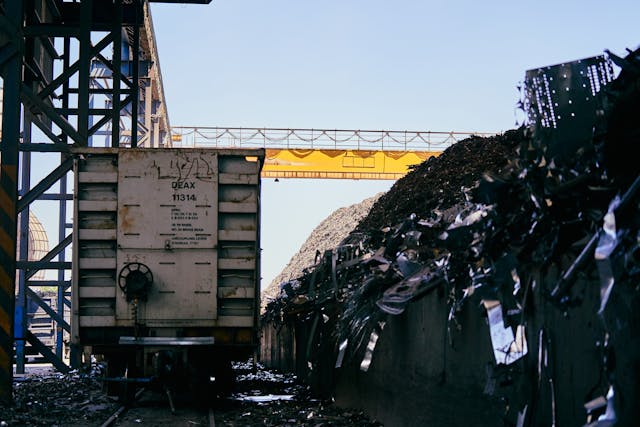
Industrial production generates more than finished goods; it also produces large volumes of secondary outputs that were traditionally treated as waste. Today, these materials are increasingly recognized as tradable assets within global recycling and recovery systems.
An industrial byproduct trading network connects manufacturers, recyclers, processors, and industrial buyers to enable structured exchange of these materials across international markets. This improves material efficiency, reduces disposal costs, and supports circular economy models.
As industries face rising raw material costs and stricter environmental regulations, the role of byproduct trading networks continues to expand across global supply chains.
What Is an Industrial Byproduct Trading Network?
An industrial byproduct trading network is a structured system that facilitates the exchange of secondary materials generated during manufacturing and industrial processes.
It connects:
- Manufacturing facilities
- Recycling operators
- Industrial processors
- Export-import traders
- Commodity buyers
The purpose is to recover value from production outputs and reintroduce materials into industrial cycles.
How Industrial Byproduct Trading Networks Work
Industrial byproduct systems operate through structured recovery and trade flows.
Byproduct generation
Materials originate from industrial processes such as:
- Metal fabrication
- Chemical production
- Mining operations
- Construction activities
- Manufacturing lines
Sorting and classification
Materials are categorized based on:
- Composition
- Quality
- Contamination level
- Reusability
Listing and sourcing
Suppliers provide:
- Material type
- Quantity
- Condition
- Location
- Pricing details
Trade execution
Once matched:
- Pricing is negotiated
- Logistics are coordinated
- Materials are shipped
- Processing or reuse begins
Key Industrial Byproducts Traded Globally
Metal byproducts
- Steel slag
- Aluminum dross
- Copper residues
- Zinc ash
Chemical byproducts
- Industrial salts
- Process sludge
- Acid residues
Plastic byproducts
- Polymer offcuts
- Manufacturing scrap
- Regrind materials
Mining and construction byproducts
- Tailings
- Concrete waste
- Asphalt residues
- Wood waste
Benefits of Industrial Byproduct Trading Networks
For manufacturers
- Reduced waste disposal costs
- Improved resource efficiency
- Additional revenue streams
For recyclers
- Reliable material supply
- Increased processing efficiency
- Expanded sourcing opportunities
For industrial buyers
- Lower material procurement costs
- Access to secondary raw materials
- Supply chain diversification
For the environment
- Reduced landfill dependency
- Lower emissions
- Improved resource recovery
Digital Transformation in Byproduct Trading
Modern industrial byproduct networks are increasingly digitalized with:
- Automated material matching systems
- Real-time inventory visibility
- Digital trade documentation
- AI-driven pricing models
- Traceability systems
These innovations improve transparency and efficiency across global recycling ecosystems.
Future of Industrial Byproduct Trading Networks
The sector is evolving toward fully integrated circular economy systems with:
- AI-powered optimization
- Blockchain-based verification
- Automated global logistics
- Carbon tracking integration
- Zero-waste manufacturing alignment
FAQs
What is an industrial byproduct trading network?
It is a global system that enables the exchange of secondary materials generated during industrial production.
What types of materials are traded?
Metal residues, chemical byproducts, plastics, mining waste, and construction materials.
Why are these networks important?
They reduce waste, improve efficiency, and support circular economy systems.
Who uses these systems?
Manufacturers, recyclers, traders, exporters, and industrial buyers.
Are industrial byproducts valuable?
Yes, many byproducts can be recovered, processed, and reused as raw materials.
Conclusion
Industrial byproduct trading networks are transforming how manufacturing waste is managed by converting it into valuable trade assets. These systems improve efficiency, reduce environmental impact, and strengthen global material recovery chains.