
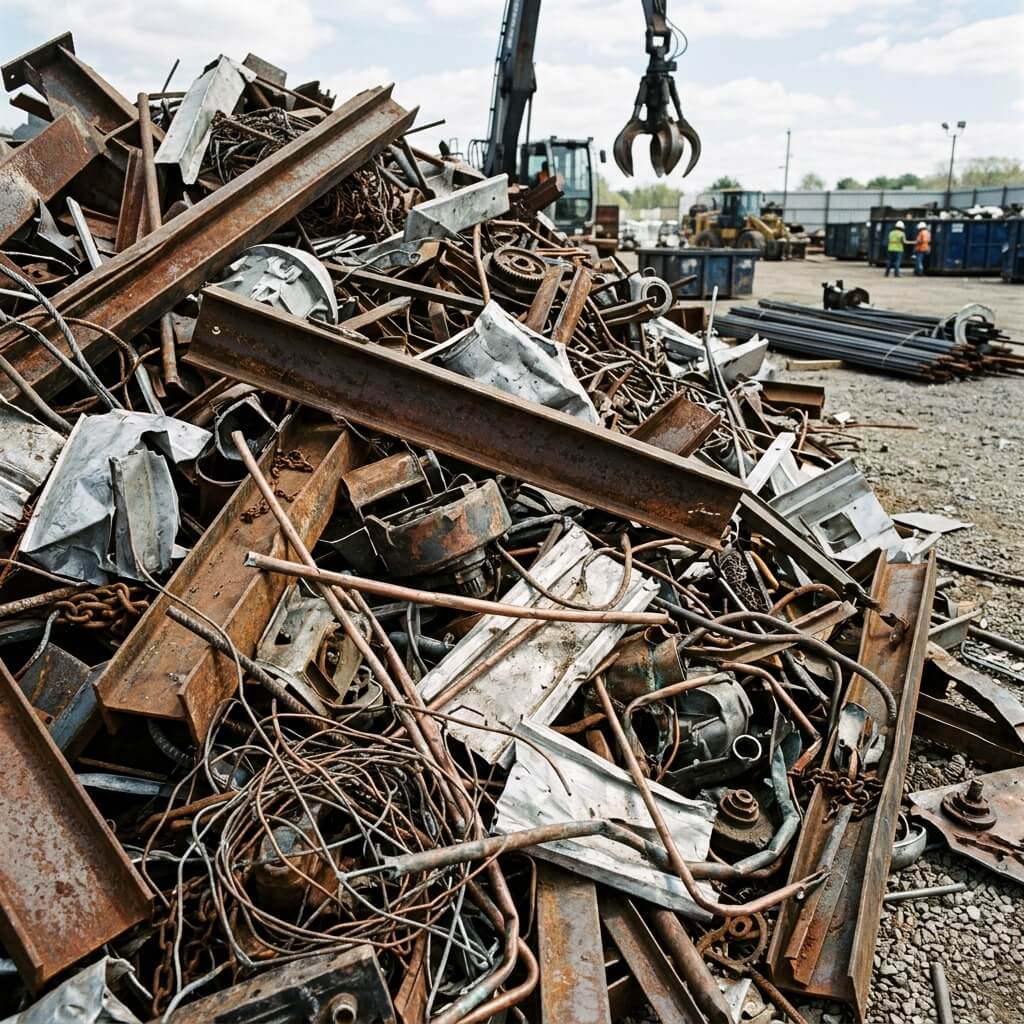
Manufacturing facilities across Australia generate continuous volumes of scrap metal, yet much of this material is still treated as low-value waste instead of a recoverable revenue stream. From machining turnings and stamping punchings to sheet metal offcuts and rejected components, industrial scrap can represent a consistent and often overlooked source of income when properly managed.
This guide explains how manufacturing scrap is classified in Australia, how pricing is determined across ferrous and non-ferrous materials, and why rates vary depending on grade, contamination, and processing requirements. It also outlines how manufacturers can establish structured supply agreements with scrap traders and recyclers to ensure stable returns.
What Is Manufacturing Scrap Metal?
Definition of Scrap Manufacturing Waste
Manufacturing scrap metal refers to metal waste generated during industrial production processes. This includes machining residues such as turnings and shavings, stamping punchings, trimming offcuts, and defective or rejected parts that do not meet quality standards.
Why Manufacturing Scrap Has Value
Manufacturing scrap is highly valuable within the recycling ecosystem due to its predictable supply and material consistency.
It provides a continuous feedstock source for recyclers and steel mills, helping stabilize production inputs. Because it is generated from controlled production environments, it is generally easier to classify, sort, and grade compared to mixed or contaminated scrap streams.
Types of Manufacturing Scrap in Australia
Metal Turnings (Machining Scrap)
Metal turnings are generated during CNC machining, milling, and lathe operations. They include steel, aluminium, and brass shavings produced when raw metal is shaped into precision components.
Offcuts and Trimmings
Offcuts are leftover sections of sheet metal or structural material from fabrication processes. They commonly include steel plates, aluminium sheets, and structural profiles.
Punchings and Stampings
Punchings and stampings are small, uniform metal pieces created during press and stamping operations in manufacturing lines. These materials are generally consistent in size and composition.
Defective or Rejected Parts
Manufacturing rejects consist of finished or semi-finished components that fail quality control standards. Depending on contamination and coatings, these parts may still retain full scrap value.
Value Comparison Table
| Scrap Type | Value Level | Notes |
|---|---|---|
| Offcuts | High | Clean structural material |
| Punchings | Medium–High | Consistent shape, easy processing |
| Turnings | Medium | Requires cleaning from oils |
| Defective parts | Variable | Depends on contamination |
How Scrap Manufacturing Waste Is Priced
Key Pricing Factors
Manufacturing scrap pricing in Australia is determined by a combination of material characteristics and global market signals.
Metal type is the primary driver, with copper and aluminium typically achieving higher rates than ferrous steel. Contamination level also plays a major role, as oil, paint, and coolant residues increase processing costs and reduce net value.
Indicative Price Ranges (AUD per Tonne)
| Material | Price Range |
|---|---|
| Clean steel offcuts | $300 – $520 |
| Aluminium scrap | $1,200 – $2,300 |
| Steel turnings | $180 – $350 |
| Mixed punchings | $250 – $450 |
How Processing Affects Price
Post-production handling has a direct impact on final scrap value.
Cleaning and de-oiling metal turnings significantly improves classification and increases resale value. Proper segregation by metal type ensures more accurate grading and reduces contamination penalties. Additionally, baling and compaction improve transport efficiency, lowering logistics costs and improving net returns per tonne.
Scrap Supply Agreements for Manufacturers
Why Long-Term Contracts Matter
Long-term scrap supply agreements help manufacturers stabilise both revenue and operational efficiency. They provide predictable waste handling costs, reduce reliance on spot pricing, and simplify logistics planning across production cycles.
Types of Supply Agreements
Manufacturing scrap contracts are typically structured in different pricing models depending on market exposure and risk tolerance.
Fixed-price contracts lock in a set rate per tonne, offering certainty but limited upside during market spikes. Index-linked pricing uses benchmarks such as LME metals pricing, allowing rates to fluctuate with global commodity movements. Volume-based tier pricing adjusts rates depending on monthly output, rewarding higher consistency with better per-tonne returns.
Typical Contract Structure
Most scrap supply agreements include a minimum monthly volume commitment to ensure predictable supply flow. Collection schedules are usually defined as weekly or monthly pickups depending on production levels.
Role of Scrap Suppliers and Traders
What Scrap Suppliers Do
Scrap suppliers play a key operational role in the industrial recycling chain by collecting and transporting manufacturing scrap from production facilities. They also handle initial sorting and grading of materials to separate ferrous and non-ferrous metals before resale.
In addition, suppliers act as a bridge between manufacturers and downstream buyers such as steel mills and export processors, ensuring material flows efficiently into the recycling market.
Scrap Traders and Market Intermediaries
Scrap traders and intermediaries operate at a larger scale by aggregating material from multiple manufacturing sites. This consolidation allows them to negotiate improved pricing based on volume and market demand.
They also manage export logistics, ensuring compliance with shipping requirements, documentation, and international buyer specifications.
Their role is essential in connecting fragmented scrap supply with global demand centers.
Benefits of Working with Traders
Working with experienced scrap traders often improves financial and operational outcomes for manufacturers. Higher per-tonne value is typically achieved through bulk aggregation and better market access. Operational burden is reduced as traders manage logistics, grading, and buyer coordination.
Most importantly, traders provide access to broader domestic and international markets that individual sellers cannot easily reach.
How to Optimize Manufacturing Scrap Value
Segregation at Source
One of the most effective ways to improve scrap value is separating materials at the point of generation. Steel, aluminium, and copper streams should be kept distinct to prevent grade dilution and pricing penalties.
Reducing Contamination
Contamination has a direct impact on scrap pricing. Manufacturing turnings should be drained of oils and coolants wherever possible, as residual fluids reduce processing efficiency and lower value.
Keeping scrap dry, clean, and free from non-metallic materials improves grading outcomes and increases buyer competitiveness.
Improving Logistics Efficiency
Efficient handling systems significantly improve both operational flow and scrap profitability. Installing dedicated scrap bins at production points helps maintain segregation and reduce handling errors.
Challenges in Manufacturing Scrap Management
Price Volatility
Manufacturing scrap prices are heavily influenced by global commodity markets, making revenue less predictable for producers. Fluctuations in steel, aluminium, and copper benchmarks can quickly impact scrap returns.
Contamination Issues
Contamination is a major challenge in industrial scrap management. Oils, coolants, and lubricants commonly found in machining waste reduce material value and increase processing costs.
Mixed metals also lower grading quality, often resulting in downgraded pricing or additional sorting requirements.
Storage Constraints
Manufacturing facilities often face limited space for scrap storage, especially in high-output operations. Poor storage management can create safety risks, handling inefficiencies, and compliance issues.
FAQs
What is manufacturing scrap metal?
Manufacturing scrap refers to metal waste generated during industrial production processes. It includes materials such as offcuts, machining turnings, punchings, and rejected components that do not meet quality specifications but remain recyclable.
How is manufacturing scrap priced in Australia?
Manufacturing scrap pricing is based on metal type, contamination levels, and global commodity benchmarks. In Australia, values typically range from around $180 per tonne for lower-grade ferrous scrap to over $2,000 per tonne for high-value non-ferrous metals like aluminium and copper.
Can manufacturers sell scrap on long-term contracts?
Yes, many manufacturers enter long-term agreements with scrap suppliers and traders. These contracts often use fixed pricing or index-linked models tied to global metal markets, with agreed monthly or weekly volumes.
What is the most valuable manufacturing scrap?
Clean aluminium and copper scrap generally achieve the highest market value due to strong industrial demand and high recyclability. Clean steel offcuts also perform well when contamination is minimal.
Why should manufacturers separate scrap types?
Segregating scrap improves grading accuracy, reduces processing costs, and significantly increases resale value. Mixed or contaminated loads are typically downgraded, resulting in lower overall returns from traders and recyclers.
Conclusion
Manufacturing scrap should be viewed as a continuous revenue stream rather than disposable waste. When industrial facilities implement proper segregation systems, control contamination, and coordinate effectively with reliable scrap suppliers, the financial return from production waste can increase significantly while improving operational efficiency.
Structured agreements such as long-term contracts and index-linked pricing models help manufacturers manage exposure to volatile commodity markets. This transforms scrap handling from an unpredictable by-product into a stable and measurable income component within the broader production system.