

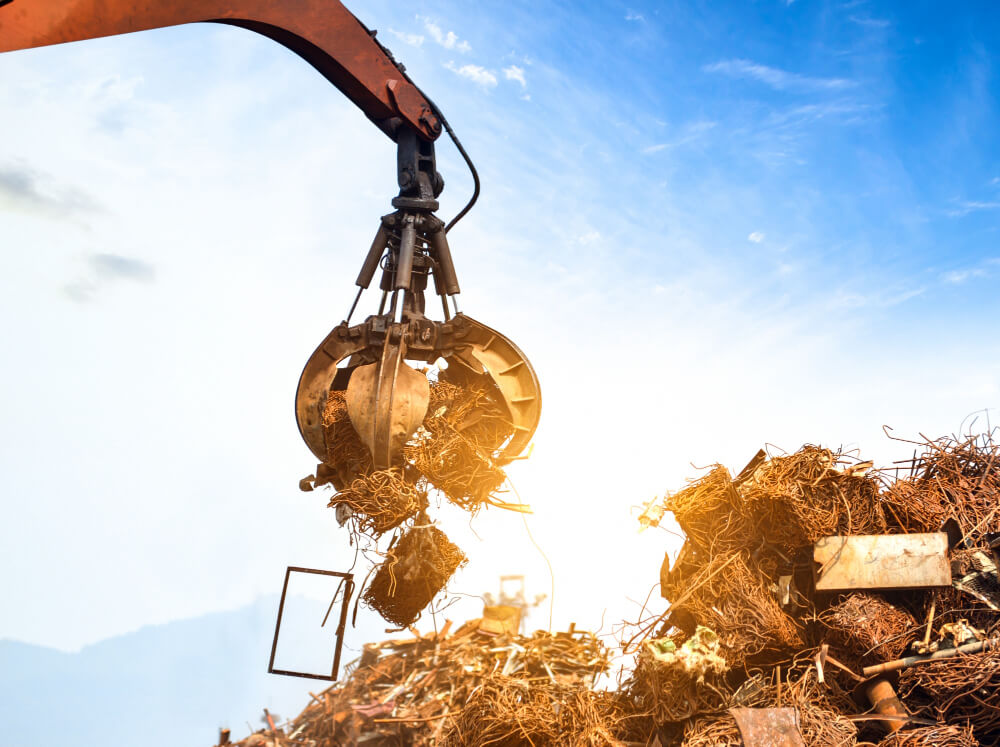
Most people selling scrap metal in Australia assume scrapyards all operate the same way but pricing, convenience, and transparency can vary significantly. Traditional scrapyards often rely on in-person inspections, bulk pricing models, and fixed internal rate sheets, which can leave sellers with lower returns than expected.
Understanding how scrapyards work in Australia helps you see where value is gained and more importantly, where it is lost. Transport costs, inconsistent grading, and limited buyer competition often reduce final payouts.
How Scrapyards Work in Australia
Scrapyards in Australia operate as key recycling hubs where recyclable metals are collected, sorted, processed, and prepared for resale to manufacturers and exporters. Their main role is to convert end-of-life materials into reusable raw commodities such as steel, copper, aluminium, and brass.
Step 1 : Scrap Collection
Scrapyards receive scrap metal through multiple supply channels depending on the source and volume of material. These include walk-in customers bringing household or small-scale scrap, scheduled pickups from trades and businesses, long-term industrial contracts, and large demolition or construction waste streams.
Materials arrive either as mixed scrap or pre-sorted loads. Pre-sorted materials typically receive faster processing and more accurate grading, while mixed loads require additional sorting before valuation and resale.
Step 2 : Weighing and Identification
Once scrap is delivered to a scrapyard, it is first weighed using industrial-scale systems to determine total load weight. After weighing, materials undergo inspection where staff visually assess the composition and quality of the scrap. Based on this evaluation, metals are sorted into primary categories such as ferrous metals (steel and iron), non-ferrous metals (copper, aluminium, brass), and special materials like batteries or electronic waste.
Step 3 : Sorting and Processing
After classification, scrapyards begin the processing stage where materials are separated more precisely by type and grade. Contaminants such as plastic, rubber, and non-metal attachments are removed to improve material purity. Depending on the facility, metals may then be shredded, compacted, or baled to prepare them for efficient transport and resale. These processed materials are later sold to manufacturers or exported as raw recyclable commodities.
Step 4 : Pricing and Payment
Scrap pricing is determined using a combination of internal rate sheets, global commodity benchmarks such as London Metal Exchange (LME) pricing, and local supply-demand conditions. This ensures that rates reflect both international market movements and regional availability.
Payment methods vary depending on the seller type. Walk-in customers typically receive immediate payment upon completion of weighing and grading, while commercial suppliers and contracted businesses may operate on scheduled billing cycles or account-based payment terms.
Why Online Scrap Marketplaces Perform Better
Online scrap marketplaces improve pricing efficiency by shifting the model from single-buyer valuation to a competitive bidding environment. This creates more transparency in how scrap metal is priced and increases the likelihood of higher returns for sellers.
How It Works
Instead of relying on a single scrapyard to evaluate and price your material, online platforms allow multiple buyers to review the same listing simultaneously. Each buyer assesses the scrap based on type, quantity, and location, then submits competing offers.
This competitive structure allows sellers to compare multiple prices in one place, reducing the risk of undervaluation and improving overall market efficiency.
Key Advantages
Higher price competition between multiple buyers
No need to travel between different scrapyards for quotes
Faster and more efficient comparison of offers
Access to a wider network of verified scrap buyers
Improved pricing transparency across the market
Scrapyard Model vs Online Marketplace Model
| Feature | Traditional Scrapyard | Online Marketplace |
|---|---|---|
| Pricing | Single buyer determines value | Multiple buyers compete |
| Transparency | Low visibility into pricing logic | High transparency across offers |
| Convenience | Limited, requires travel | High, managed from one platform |
| Transport burden | Often seller responsible | Often buyer-assisted or arranged |
| Price competition | None or minimal | Competitive bidding improves value |
Who Benefits Most From Online Scrap Selling?
Online scrap selling is most effective for individuals and businesses that regularly generate recyclable metal waste and want faster, more competitive pricing without visiting multiple scrapyards.
Homeowners
Homeowners benefit when clearing out household or renovation waste that contains recyclable metals. Common materials include old appliances, copper pipes from plumbing upgrades, and general renovation debris that still holds scrap value.
Tradespeople
Tradespeople such as electricians, plumbers, and builders generate consistent small-to-medium scrap volumes from job sites. This includes electrical offcuts, copper wiring, brass fittings, and mixed site cleanup materials that can be easily monetised through online platforms.
Businesses
Businesses dealing with larger and recurring scrap streams gain the most from online selling. Manufacturing scrap, warehouse cleanouts, and industrial waste flows can be listed in bulk, attracting multiple buyers and improving overall returns through competitive pricing.
FAQs
How do scrapyards in Australia make money?
Scrapyards generate profit by purchasing scrap metal at lower local prices, then sorting, processing, and reselling it to smelters, manufacturers, and export markets. The difference between purchase cost and resale value often linked to global commodity prices forms their primary revenue stream.
Why do scrap yards offer different prices?
Scrap prices vary between yards due to differences in operating costs, export agreements, processing capacity, and current inventory levels. Local demand and how quickly a yard can move material also influence the rates they are willing to offer.
Is it better to sell scrap directly to a scrapyard?
Selling directly to a scrapyard is simple and fast, but it often results in lower returns. This is because pricing comes from a single buyer, meaning there is no competitive bidding or comparison between multiple offers for the same material.
What is the advantage of online scrap marketplaces?
Online scrap marketplaces create competition by allowing multiple buyers to view and price your material. This increases transparency, improves price discovery, and often leads to higher final payouts compared to single-yard transactions.
Do scrapyards charge for scrap pickup?
Some scrapyards offer free pickup, especially for bulk or high-value loads. In other cases, transport costs may be deducted from the final payment depending on distance, load size, and material type.
Conclusion
Scrapyards in Australia operate on a simple buy, sort, and resell model, converting scrap metal into processed commodities for domestic and export markets. While efficient, the traditional system often limits seller returns due to single-offer pricing, transport responsibilities, and inconsistent rates between yards.
As a result, sellers may not always receive the best possible value for their material, especially when there is no competitive pricing pressure.