

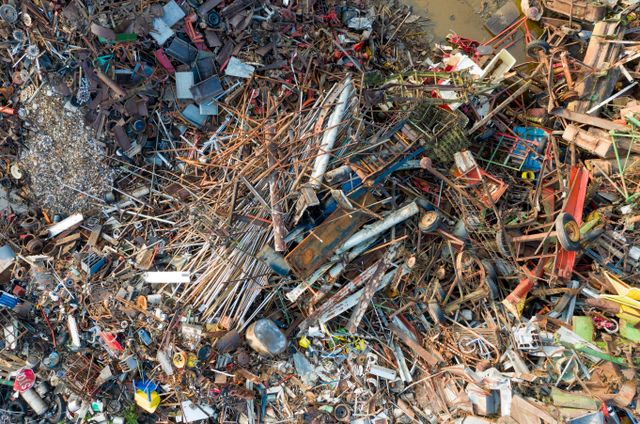
Selling industrial scrap metal in Australia is significantly different from household scrap sales. Factories, manufacturers, demolition contractors, and engineering firms typically deal with high-volume materials such as steel offcuts, copper cable, aluminium extrusion waste, and mixed demolition scrap.
The challenge is not availability it’s pricing efficiency. Industrial sellers often lose revenue by selling bulk scrap without grading, weighing accuracy, or comparing buyers. Because margins depend heavily on tonnage pricing, even small rate differences per kg can result in large financial impacts.
What Is Industrial Scrap Metal in Australia?
Industrial scrap metal in Australia refers to large-volume metal waste generated from manufacturing, construction, engineering, fabrication, mining, and heavy industry operations. Unlike household scrap, it is produced in continuous cycles and typically sold in bulk quantities, often priced per tonne rather than per item.
The value of industrial scrap depends mainly on material type, cleanliness, and how well metals are separated before sale. Copper and aluminium usually achieve higher returns, while steel-based scrap is lower in value but traded in much larger volumes.
Common industrial scrap streams include structural steel from demolition work, copper cable from electrical systems, aluminium extrusion waste from fabrication, stainless steel offcuts from engineering and food processing, and heavy machinery steel classified as HMS. Proper sorting and accurate weighing are critical because even small pricing differences per kilogram can significantly impact total revenue at industrial scale.
Industrial Scrap Metal Pricing in Australia
Industrial scrap metal pricing in Australia is typically calculated on a bulk per-tonne basis, with significant variation depending on material type, grade, and global commodity markets. Higher-value non-ferrous metals like copper and aluminium command substantially stronger returns compared to steel-based scrap, which is priced lower due to abundance and processing costs.
Average Bulk Scrap Prices Per Tonne
| Material Type | Price Range (AUD/tonne) |
|---|---|
| Mixed Steel Scrap | $100 – $250 |
| HMS 1 Steel | $450 – $520 |
| Structural Steel | $200 – $350 |
| Clean Copper Scrap | $8,000 – $15,000 |
| Aluminium Scrap | $1,500 – $4,000 |
| Stainless Steel | $1,500 – $4,500 |
How Industrial Scrap Pricing Works
Industrial scrap pricing in Australia is based on a structured system that links global commodity markets with local processing costs. Prices are not fixed and change depending on material quality, market demand, and logistics efficiency.
Key Pricing Mechanism
Pricing is primarily driven by LME commodity benchmarks for metals like copper, aluminium, and nickel. These global prices set the baseline before local adjustments are applied.
Material grade classification also plays a major role, with clean metals such as HMS steel or copper cable achieving higher returns than mixed or contaminated loads.
Other factors include contamination levels, moisture content, and transport and handling costs, all of which affect processing efficiency and final payouts.
Export demand from mills and refineries further influences pricing, especially for high-value non-ferrous metals.
Why Volume Changes Pricing
Higher scrap volumes generally result in better pricing due to improved operational efficiency for buyers.
Bulk loads reduce transport and processing costs per tonne, allowing recyclers to offer higher per-unit rates. Larger, consistent supply also gives sellers stronger negotiating power, often leading to more competitive long-term pricing arrangements.
Types of Industrial Scrap Buyers in Australia
Industrial scrap buyers in Australia vary significantly based on scale, processing capability, and end-market access. Choosing the right buyer type has a direct impact on pricing, especially for high-volume materials like steel, copper, and aluminium.
Scrap Metal Yards (Local Buyers)
Local scrap metal yards typically handle smaller industrial loads as well as mixed commercial scrap. They are widely accessible and offer fast transaction cycles, making them suitable for businesses needing quick disposal. However, pricing is often less flexible, and rates may sit below specialist industrial buyers due to higher handling overheads and limited export access.
Bulk Industrial Scrap Buyers
Bulk industrial buyers focus on large-scale supply agreements with factories, demolition contractors, and manufacturing facilities. They operate at higher volumes and are able to offer more competitive pricing for consistent material streams. These buyers typically prefer pre-sorted metals and long-term supply relationships, which allow for better negotiation outcomes and improved per-tonne rates.
Export-Oriented Scrap Dealers
Export-focused dealers aggregate large quantities of scrap metal for shipment to overseas mills and refineries. Because they operate within international commodity channels, they often provide higher payouts for clean, well-sorted materials, particularly copper, aluminium, and HMS steel. Their pricing is strongly influenced by global demand and currency movements, making them more responsive to international market trends.
Industrial Scrap Contracts vs Spot Selling
Contract Selling (Preferred for Large Businesses)
Contract-based selling involves fixed or semi-fixed pricing agreements between industrial suppliers and scrap buyers. This model is commonly used by factories, demolition companies, and manufacturing plants that generate consistent scrap volumes.
It provides fixed pricing agreements, which help businesses stabilise revenue and reduce exposure to market volatility. Sellers benefit from predictable cash flow, making it easier to plan operations and manage budgets over time. Another advantage is the development of long-term buyer relationships, which often leads to smoother logistics, priority collection, and more efficient processing arrangements.
Spot Market Selling
Spot selling refers to selling scrap metal at current market rates without a fixed agreement. This approach offers greater flexibility but comes with higher price fluctuations.
It allows sellers to take advantage of short-term price spikes, particularly in commodities like copper and aluminium when global demand increases. However, it also introduces pricing volatility, meaning returns can vary significantly depending on timing. Spot selling is often used for irregular scrap loads or when market conditions are temporarily favourable.
FAQs
1. How do I sell industrial scrap metal in Australia?
Industrial scrap metal is typically sold by sorting materials by type and grade, ensuring accurate weighing, and approaching bulk scrap buyers or industrial recyclers. Businesses can also use competitive marketplaces to compare multiple offers. Getting several quotes is important because per-tonne pricing can vary significantly between buyers.
2. What is the best industrial scrap metal to sell?
Copper consistently delivers the highest value in industrial scrap due to strong demand and limited supply. Aluminium and stainless steel also provide solid returns depending on cleanliness and grade. Steel generates lower per-tonne value but remains profitable due to high-volume availability in industrial operations.
3. Do industrial scrap buyers in Australia offer pickup?
Yes, most industrial scrap buyers offer pickup services for large-scale loads, particularly from factories, construction sites, and demolition projects. Collections are often processed using weighbridge systems to ensure accurate measurement and transparent pricing.
4. How is industrial scrap metal priced?
Industrial scrap metal is priced per tonne based on global commodity benchmarks, material grade, contamination levels, and logistics costs. Clean, well-sorted scrap typically achieves higher rates because it requires less processing and yields better recovery efficiency.
5. Can factories get long-term scrap contracts?
Yes, many industrial scrap buyers offer long-term contracts with fixed or index-linked pricing. These agreements are commonly used by manufacturing plants and demolition firms to ensure stable supply agreements and predictable revenue from ongoing scrap generation.
Conclusion
Selling industrial scrap metal in Australia is most profitable when materials are properly sorted, accurately weighed, and sold through competitive buyer channels. At scale, even small differences in per-tonne pricing can significantly impact overall revenue, making process efficiency just as important as market timing.
Bulk sellers typically achieve the best outcomes by leveraging high-volume supply, clean material streams, and structured pricing agreements, including contract-based arrangements where suitable. This reduces volatility and improves predictability in cash flow.
To maximise returns, businesses should avoid relying on single-quote sales and instead compare multiple industrial scrap buyers or use verified marketplace platforms. A structured, competitive approach ensures pricing stays aligned with market conditions and helps unlock the full value of industrial scrap materials.