

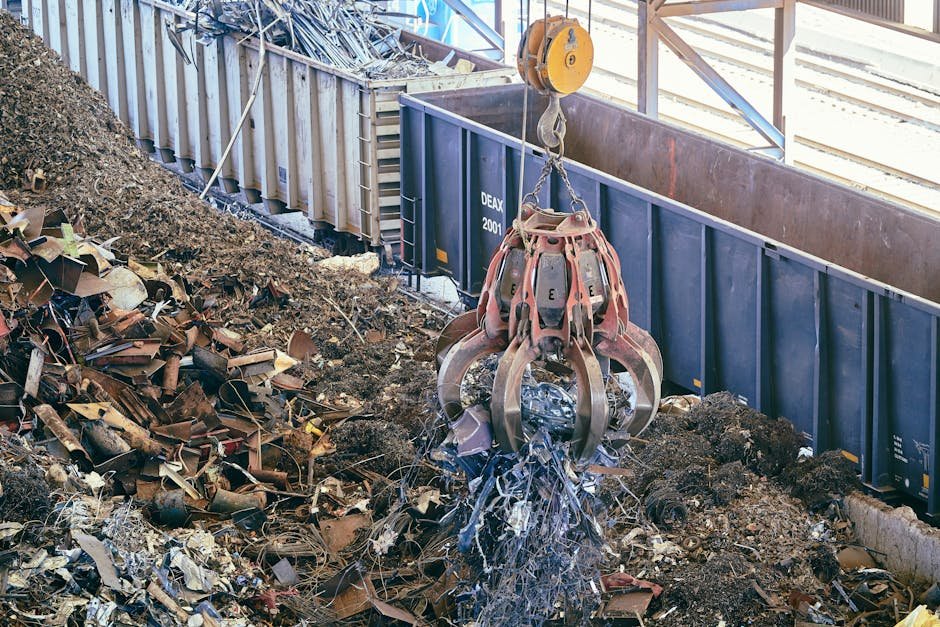
The global shift toward circular economy models has made international secondary raw materials exchange one of the fastest-growing sectors in industrial trade. Yet, most businesses still struggle to understand how scrap metals, plastics, textiles, and industrial waste move across borders and become valuable secondary resources instead of ending up as landfill.
If you are working in recycling, scrap trading, or industrial supply chains, understanding this ecosystem is critical for pricing, sourcing, and scaling profitably. In this guide, you will learn how the international secondary raw materials exchange works, what drives pricing, and how digital marketplaces are transforming global scrap trade efficiency. We will also connect how platforms like ScrapTrade help streamline global material flows and improve transparency in secondary raw material markets.
What is International Secondary Raw Materials Exchange?
The international secondary raw materials exchange refers to the cross-border trading of recyclable and reusable materials derived from waste streams. These include:
- Ferrous and non-ferrous metals (steel, copper, aluminum)
- Plastic scrap and polymers
- Used textiles
- Paper and packaging waste
- Industrial by-products and electronic scrap
These materials are recovered, processed, and reintroduced into manufacturing supply chains as substitutes for virgin raw materials.
Global trade in these materials is already deeply embedded in manufacturing systems, with metals and paper representing some of the most actively traded secondary commodities worldwide .
How the Global Secondary Raw Materials Market Works
The international scrap and secondary materials ecosystem operates through a multi-layered value chain:
1. Generation (Waste Creation)
Industries, construction, manufacturing plants, and consumers generate scrap materials.
2. Collection & Sorting
Local aggregators and scrap yards collect and sort materials based on grade and purity.
3. Processing & Recycling
Materials are shredded, melted, refined, or reprocessed into usable industrial inputs.
4. Export & International Trade
Processed scrap is exported to countries with demand gaps in raw materials.
5. Re-manufacturing
Secondary raw materials are used in automotive, construction, electronics, and packaging industries.
The system enables industries to reduce dependence on virgin extraction while lowering energy consumption and emissions.
Key Drivers of International Secondary Raw Materials Exchange
1. Global Manufacturing Demand
Manufacturing hubs in Asia, Europe, and the Middle East rely heavily on imported scrap for cost-effective raw materials.
2. Price Volatility of Virgin Materials
When ore or crude material prices rise, secondary raw materials become more competitive.
3. Sustainability Regulations
Governments are pushing recycling targets and recycled-content mandates.
4. Digital Scrap Trading Platforms
Online marketplaces are improving transparency and cross-border efficiency in scrap trade .
Pricing Structure in Secondary Raw Materials Exchange
Pricing depends on multiple technical and economic factors:
| Factor | Impact on Price |
|---|---|
| Material purity | Higher purity = higher price |
| Global demand | Strong industrial demand increases value |
| Processing cost | Higher processing reduces margins |
| Logistics cost | Shipping impacts export competitiveness |
| Regulation & tariffs | Can restrict or increase trade cost |
Example Pricing Snapshot (Indicative Market Logic)
- Clean copper scrap → highest value category
- Mixed aluminum scrap → medium value
- Contaminated steel scrap → lower value
- Mixed plastic waste → highly variable pricing
Role of Digital Platforms in Global Scrap Trade
Digital transformation is reshaping the international secondary raw materials exchange by:
- Connecting global buyers and sellers directly
- Reducing middleman dependency
- Improving price discovery
- Standardizing material classification
- Increasing cross-border liquidity
Platforms like ScrapTrade are part of this evolution, enabling faster and more transparent secondary raw material transactions across industries.
You can explore more here:
Challenges in International Secondary Raw Materials Exchange
Despite strong growth, the sector faces key challenges:
- Lack of standardized grading systems globally
- Export/import restrictions on scrap materials
- Quality inconsistency across suppliers
- High logistics and shipping costs
- Regulatory fragmentation between countries
These challenges often limit pricing efficiency and cross-border trade volume.
Opportunities in Global Secondary Raw Materials Market
The sector is rapidly expanding due to industrial and environmental pressures:
- Rising demand for recycled metals in manufacturing
- Growth of circular economy policies worldwide
- Increasing adoption of ESG and sustainability frameworks
- Expansion of digital scrap trading ecosystems
- Industrial demand for cost-efficient raw materials
Global secondary materials trade is already valued in the hundreds of billions USD annually and continues to grow with industrialization and sustainability mandates .
FAQs – International Secondary Raw Materials Exchange
1. What is secondary raw materials exchange?
It is the global trade of recycled and reusable materials derived from waste, including metals, plastics, and industrial scrap, which are reprocessed into usable manufacturing inputs.
2. Which materials are most traded internationally?
Steel, aluminum, copper, paper, and plastic scrap dominate global secondary raw material trade due to high industrial demand and recyclability.
3. Why is scrap exported internationally?
Countries export scrap to regions with lower processing costs, higher industrial demand, or stronger recycling infrastructure.
4. Is secondary raw material trade profitable?
Yes. Profit depends on material purity, global demand, logistics efficiency, and regulatory conditions affecting import/export.
5. How is digitalization changing scrap trading?
Online platforms improve transparency, pricing efficiency, and global buyer-seller connectivity, making trade faster and more scalable.
Conclusion
The international secondary raw materials exchange is becoming a core pillar of global manufacturing and sustainability. As industries shift toward circular supply chains, secondary materials are no longer waste they are strategic assets.
Businesses that understand global scrap flows, pricing drivers, and digital trading systems are better positioned to scale and stay competitive.