

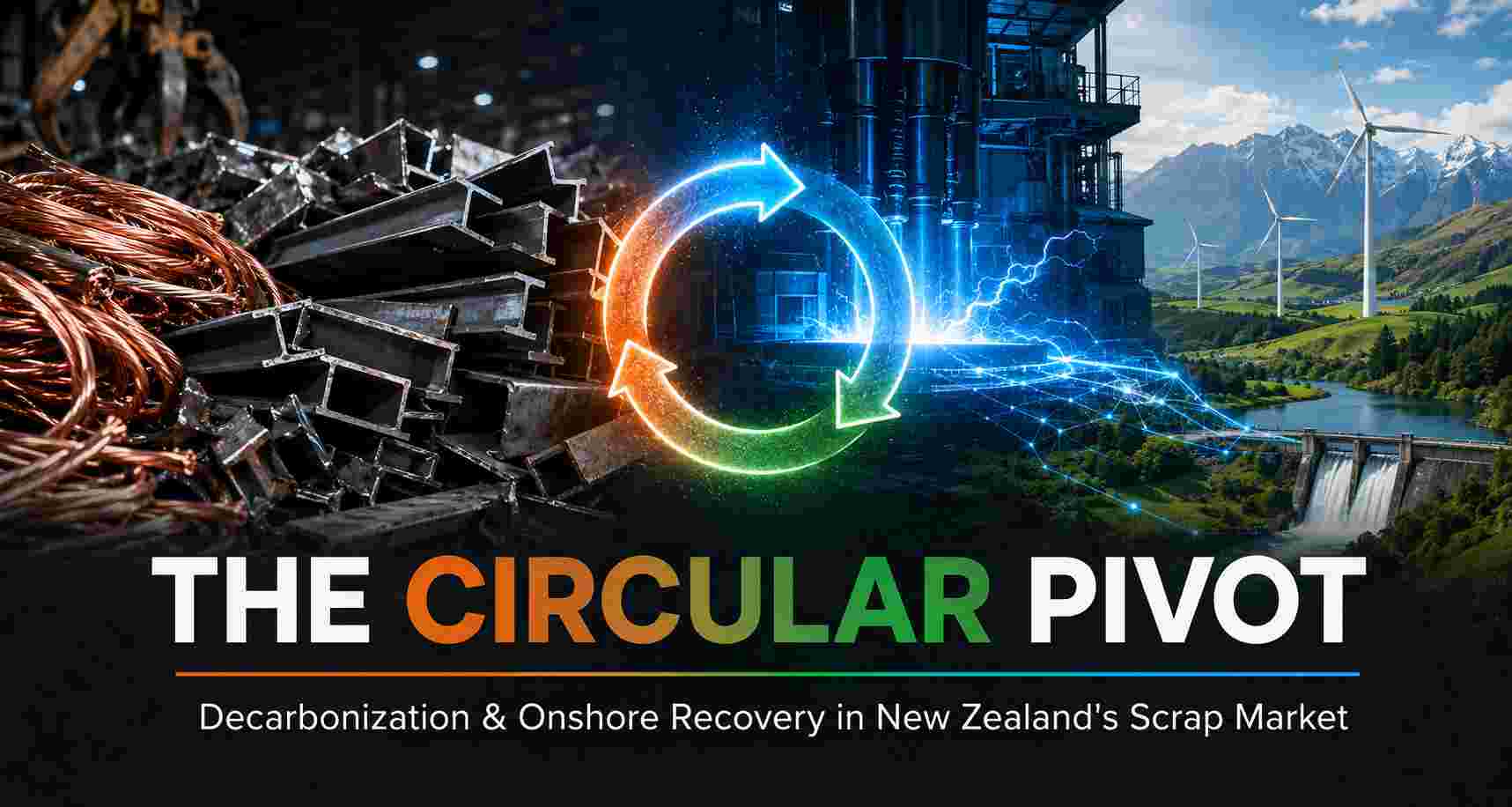
Dematerialization and Decarbonization: Current Dynamics and Future Scope of the New Zealand Scrap and Resource Recovery Market
Macro-Environmental Drivers and the Circular Economy Transition
The global metal scrap market is undergoing a structural paradigm shift, evolving from a highly fragmented, commodity-driven waste sector into a sophisticated, strategically vital component of the global decarbonization agenda. Valued at USD 245.43 billion in 2024 and projected to reach USD 262.66 billion in 2025, the global scrap market is expected to expand at a compound annual growth rate (CAGR) of 7.35%, reaching USD 433.12 billion by 2032. This trajectory is mirrored in the broader metals market, which is experiencing a 6% global growth rate through 2025, catalyzed by rapid urbanization, infrastructure expansion, and a collective commercial focus on green building practices and supply chain transparency. Consequently, scrap metal is no longer viewed merely as a secondary material but as an embedded-value resource essential for achieving closed-loop manufacturing and reducing industrial reliance on high-emission primary ore extraction.
Technological adoption in the scrap sector is moving beyond basic mechanical processing. The global metals sector is leveraging new artificial intelligence tools, which provide operators with the capability to cost-efficiently scope, plan, and optimize transport routes. Parallel developments in digital traceability and blockchain pilots have started to establish credible verified claims regarding recycled content provenance, enhancing downstream buyer confidence. This is particularly critical as procurement teams and product designers increasingly integrate recycled-material specifications into early-stage product design, directly influencing scrap valuation and creating incentive structures for improved collection and traceability.
In New Zealand, this transition is accelerating as government regulatory frameworks align with private and public commercial interests to promote a national circular economy. Historically operating as an export-centric exporter of raw, unprocessed scrap, New Zealand is rapidly building onshore recovery capabilities. This shift is propelled by the Waste Minimisation Act 2008, which mandates product stewardship schemes, and the progressive expansion of the national Waste Disposal Levy, which systematically increases the cost of landfill disposal. Together, these regulatory "push" factors, combined with commercial "pull" factors such as rising primary metal costs and corporate scope-three emissions targets, are reshaping the operational models of local scrap merchants, recyclers, and industrial consumers.
The landscape of licensed metal scrap recovery in New Zealand is coordinated by professional bodies like the Scrap Metal Recycling Association of New Zealand (SMRANZ) and populated by established players, including Macaulay Metals, Sims Metal, Phoenix Recycling, Endless Metals, McCamish Metals, Metalcorp, Metalman, and localized family-owned operators such as Central Metals Limited.
| Operator | Primary Focus and Materials Handled | Scale and Technical Infrastructure |
|---|---|---|
| Macaulay Metals | Private ferrous and non-ferrous scrap merchant | New Zealand's largest privately owned scrap metal business |
| Sims Metal | Multi-material post-consumer and industrial scrap | Nationwide collection network; contracted to supply 200,000 t/yr of ferrous scrap to Glenbrook EAF |
| Phoenix Recycling | Heavy machinery, industrial alloys, domestic non-ferrous | Logging 302,362 loads in FY24; 98.21% recycling rate; Toitu audited carbon efficiency |
| Endless Metals | Commercial and residential copper, brass, aluminium, motors | Specialized transport yards in Auckland (Onehunga and Wairau) with transparent pricing ranges |
| Central Metals Limited | Localized scrap metal recycling | Family-owned and locally operated with nearly 30 years of operational experience |
| PRNZ | Construction-grade polymers (uPVC, mPVC, HDPE) | WM New Zealand and Aliaxis joint venture; targeting 6,700 tonnes of annual capacity by 2027 |
| Pact Group | Consumer PET, HDPE, PP, and LDPE packaging | Flight Plastics integration; Lower Hutt food-grade rPET decontamination facility |
The Ferrous Scrap Sector: Industrial Decarbonization and Feedstock Constraints
The domestic ferrous scrap market is experiencing a profound transition, highlighted by the introduction of local steel recycling capabilities that will alter historic export dependencies. Historically, New Zealand exported approximately half of its post-consumer steel scrap—averaging 300,000 tonnes annually—to overseas markets for recovery, absorbing substantial logistics costs and carbon miles in the process. For instance, international trade patterns show specialized transactions such as the export of USD 95.57 thousand of ferrous waste and scrap to Germany in 2022. However, local market monitoring historically suffered from structural blind spots; the Parliamentary Commissioner for the Environment noted that while the Ministry for Primary Industries monitors markets, its focus is primarily export-oriented, failing to accurately capture internal circular material flows.
This dynamic is being redefined by two major industrial projects. BlueScope-owned New Zealand Steel is developing an Electric Arc Furnace (EAF) at its Glenbrook Steelworks in South Auckland. This project, representing a capital expenditure of approximately USD 300 million co-funded by the Government's Government Investment in Decarbonising Industry (GIDI) fund, replaces half of the coal-fired basic oxygen furnace capacity at Glenbrook with electricity to directly recycle scrap steel. Powered by an average of 30 MW of firmed renewably generated electricity, the Glenbrook EAF is expected to reduce the plant's carbon footprint by 800,000 tonnes of $CO_2\text{-eq}$ annually—representing a 45% reduction in plant emissions and eliminating roughly 1% of New Zealand's total annual greenhouse gas footprint. Under this framework, global recycler Sims Metal has contracted to supply New Zealand Steel with at least 200,000 tonnes of ferrous scrap annually, ensuring a steady feedstock pipeline.
Simultaneously, the Government has fast-tracked the development of National Green Steel Limited’s planned steel recycling plant in Waikato. This facility is designed to process 200,000 tonnes per year of recycled steel into structural steel utilizing EAF technology, integrated with an on-site scrap shredding plant and a dedicated solar farm to optimize energy costs.
These twin EAF operations introduce a major supply-chain challenge regarding domestic feedstock availability. New Zealand's domestic scrap steel generation—originating from demolition, manufacturing waste, and automotive recycling—totals only 60,000 to 80,000 tonnes annually. While the domestic supply covers only a portion of these planned capacities, developers must establish robust import channels, anticipating the need to import 120,000 to 140,000 tonnes of scrap steel annually from Australia and other Pacific Rim sources to achieve necessary operational scale. The structural and environmental benefits of these EAF systems compared to traditional steelmaking are summarized below:
| Technical and Operational Metrics | Traditional Blast Furnace | Glenbrook Electric Arc Furnace | National Green Steel EAF |
|---|---|---|---|
| Primary Feedstock | Coal, Coke, Iron Ore | Post-Consumer Scrap, Electricity | Recycled Steel Scrap, Electricity |
| Emissions Profile ($CO_2\text{-eq}$ per tonne of steel) | 1.8 – 2.3 tonnes | Up to 1.6 tonnes (initial, reducing over time) | 0.15 – 0.6 tonnes (grid/solar dependent) |
| Operational Steel Capacity | Large-scale base metal | Replaces 50% of coal-based steelmaking | 200,000 tonnes annually |
| Target Scrap Feedstock Sourcing | N/A | At least 200,000 tonnes annually | 200,000 tonnes annually |
| Electricity Consumption / Power Demand | Low external electrical load | 30 MW average firmed renewable power | 130–150 MW average; >200 MW peak load |
| Melting Cavity Operating Temperature | High blast heat | 1,650°C – 1,700°C | 1,650°C – 1,700°C |
| Graphite Electrode Consumption | N/A | 2 – 3 kg per tonne of steel produced | 2 – 3 kg per tonne of steel produced |
| Sourcing Origin Demographics | Global iron ore and coal | Domestic NZ scrap supply | 60,000–80,000 t domestic; 120,000–140,000 t imported |
The national electricity system operates with a total installed generation capacity of approximately 18,000 MW, supporting a peak summer demand of around 7,500 MW. Drawn from renewable energy sources that account for 82-84% of total generation (with hydroelectric power contributing approximately 60% of the national electricity mix), the transition to electric steelmaking represents a highly efficient utilization of the country's grid infrastructure.
High-Value Non-Ferrous Recovery and Logistical Pricing Volatility
The non-ferrous recovery market is characterized by high-value commodities, with recycled copper acting as a key driver. The New Zealand recycled copper market is valued at approximately USD 1.1 billion based on a five-year historical analysis, supported by structural demand from electrical wiring, plumbing, and renewable energy infrastructure. In addition to domestic scrap collection, this market is supported by strong import growth from key trade partners, including Australia, the United Kingdom, the United States, French Polynesia, and Singapore. Key urban centers, notably Auckland, Wellington, and Christchurch, dominate this space due to concentrated industrial activity, consumer scrap generation, and established logistics networks.
However, non-ferrous recycling operations face continuous challenges, including global commodity price volatility, limited localized processing infrastructure, competition from primary imported metals, and escalating regulatory compliance costs. This is particularly critical given the extreme growth in high-value recovery segments; New Zealand's precious metal exports rose by USD 223 million or 172 percent in December 2025 to reach USD 352 million compared with the previous year, highlighting the escalating value of refined scrap vectors. In response, major recycling operators, such as Endless Metals and Phoenix Recycling, have focused on operational transparency and logistics optimization to stabilize margins.
Phoenix Recycling demonstrates the scale of modern operations, logging 302,362 total loads across its New Zealand weighbridges in its fiscal year 2024 data. Phoenix’s operations, spanning facilities like Te Kamo in the North Island and Blenheim in the South Island, highlight the decarbonization potential of scrap, recycling 9.46 tonnes of materials for every 1 tonne of carbon dioxide emitted, and achieving a 98.21% recycling rate across all received materials.
The pricing of non-ferrous scrap is highly sensitive to regional logistics and material purity. For example, Endless Metals utilizes a localized pricing tier where buy-back rates at its Onehunga yard are structurally higher than those at its Wairau yard. This variation is directly tied to transport efficiencies, as Onehunga's proximity to downstream freight shipping hubs reduces regional transport overheads, allowing the operator to pass these savings back to the supplier. Consequently, these pricing lists are heavily utilized by tradespeople, electrical contractors assessing recovered cable value, and plumbers analyzing copper pipe returns. Furthermore, non-ferrous scrap valuation relies heavily on strict sorting and grade separation :
- Copper Grades: High-purity "bright and shiny" bare copper wire commands premium pricing, whereas mixed copper, copper radiators, or PVC-insulated cables are heavily discounted to account for the mechanical stripping, separation, and purification processes required downstream.
- Aluminium Grades: Clean, contaminant-free extruded aluminium (such as window frames free of nylon thermal breaks, screws, or sealants) and manufacturing off-cuts (clip) are processed with high efficiency, whereas domestic aluminium cast, painted sheets, and post-consumer beverage cans require specialized sorting to avoid alloy contamination during melting.
- Specialty and Mixed Alloys: Materials such as brass, lead-acid batteries, zinc, starter motors, and catalytic converters require distinct hazardous handling and technical recovery processes, which are reflected in volatile regional buy-back ranges.
Comparative Industrial Recovery Ecosystems: Fibre and Polymers
While metallurgy represents the largest financial segment of the circular economy, parallel developments in the paper and plastics sectors highlight similar trends of industrial consolidation, strict regulatory compliance, and localized reprocessing.
This industrial integration is exemplified by Oji Fibre Solutions, New Zealand's largest producer of biofuel renewable energy. Oji derives over 80% of its process energy from renewable sources, utilizing more than 21 PJ of energy from wood-based biomass—such as Kraft black liquor and wood residues—and 1.5 PJ of geothermal steam. Although Oji generates approximately 350 GWh of electricity per annum through cogeneration plants utilizing this process heat, it remains one of the largest industrial electricity consumers in New Zealand, with a gross load of approximately 900 GWh per year.
The consolidation of its recycling operations to the Kinleith Mill near Tokoroa, following the closure of its Penrose facility in Auckland, allows Oji's Fullcircle program to process 90,000 tonnes of cardboard annually. This commercial volume represents the majority of the national fibre recovery stream; for comparison, the Packaging Forum reported a total of 7,081 tonnes of recycling collected by its reporting organizations in a previous annual period, of which 34% (2,412 tonnes) consisted of paper and cardboard, with commercial collections driving 54% of that volume.
In the plastics sector, specialized recycling ventures have emerged to address high-density industrial and consumer polymers. Polypropylene (PP) recycling presents a major market discrepancy; while it is technically one of the easiest polymers to recycle locally, domestic collection rates remain low, necessitating the import of 1,000 tonnes of recycled PP materials from overseas to satisfy manufacturing demand. Other plastics like PVC (Type 3) and certain complex resins (Type 7) are not commonly processed through municipal channels, though specialized private ventures like FuturePost are actively transforming Type 7 soft plastics and LDPE wrap into heavy-duty agricultural fence posts.
Pact Group, which operates a state-of-the-art PET recycling plant in Lower Hutt constructed by Flightform, decontaminates rPET flakes into food-grade resins. This is complemented by PRNZ (Plastics Recycling New Zealand), a joint venture between Waste Management NZ and Aliaxis, which operates processing facilities in Auckland and Christchurch, targeting a 6,700-tonne annual recycling capacity of construction-grade uPVC, mPVC, and HDPE by 2027.
| Polymer Type | Annual Recycled Volume in New Zealand | Typical Post-Consumer Application | Downstream Remanufacturing Goal |
|---|---|---|---|
| PET (Type 1) | 1,570 tonnes | Soft drink bottles, protein and bakery trays | Food-grade rPET resin for fresh food punnets and bottles |
| HDPE (Type 2) | 925 tonnes | Milk bottles, shampoo and laundry containers | Food-grade dairy containers and heavy-duty drainage pipes |
| PP (Type 5) | 430 tonnes | Ice cream tubs, yoghurt containers | Plant pots, paint pails, and material handling crates |
| LDPE (Type 4) | 70 tonnes | Pallet wrap, shrink wrap, soft plastic bags | Builders' film, silage wrap, and heavy-duty garbage bags |
Pact Group currently averages 16% recycled content across all manufactured products, with an established corporate goal of reaching 30% by 2030. To enforce circularity for hard-to-recycle materials, the Government has declared farm plastics and agrichemical containers as priority products under the Waste Minimisation Act, mandating regulated, industry-funded product stewardship schemes like Agrecovery to divert agricultural packaging from rural landfills.
Regulatory Steering: Waste Levies and International Conventions
The economic viability of resource recovery in New Zealand is increasingly determined by deliberate regulatory interventions designed to penalize landfilling and restrict the unregulated international movement of waste. The primary fiscal mechanism is the progressive expansion of the national Waste Disposal Levy, administered under the Waste Minimisation Act 2008. Historically restricted to municipal landfills, the levy has been systematically expanded to encompass construction, demolition, and managed fills, creating an escalating financial penalty for disposal.
| Landfill Facility Class | 1 July 2023 | 1 July 2024 | 1 July 2025 | 1 July 2026 | 1 July 2027 |
|---|---|---|---|---|---|
| Class 1 (Municipal Landfill) | $50 | $60 | $65 | $70 | $75 |
| Class 2 (Construction and Demolition) | $20 | $30 | $35 | $40 | $45 |
| Class 3 and 4 (Managed or Controlled) | $10 | $10 | $15 | $15 | $20 |
In the 2024 Budget, the New Zealand Treasury noted that expanding the spending scope of the Waste Disposal Levy to include activities that reduce environmental harm and increase environmental benefits enabled approximately USD 220 million in operating savings. This policy change was accompanied by a $5 per annum step increase in levy rates from 1 July 2025, generating an estimated USD 236 million in additional revenue over the forecast period to be shared equally between central and local governments. Territorial authorities utilize their 50% allocation to execute localized Waste Management and Minimisation Plans, while the central government prioritizes regional recovery infrastructure and remediating vulnerable legacy landfills.
Concurrently, transboundary scrap flows are tightly regulated by the Environmental Protection Authority (EPA) under international environmental treaties, including the Basel Convention, the Waigani Convention, and OECD transboundary waste decisions. These frameworks require Prior Informed Consent (PIC) permits for all imports and exports of hazardous materials, such as waste lead-acid batteries and e-waste.
The transboundary movement of e-waste has been severely tightened under the Basel Convention. Since 1 January 2025, all international e-waste shipments require Prior Informed Consent under the Basel Convention. Under these revised international rules, hazardous and non-hazardous e-waste alike must secure bilateral approval. While New Zealand has fully operationalized permits for hazardous e-waste through the Environmental Protection Authority, domestic regulations to facilitate PIC permits for non-hazardous e-waste are still in development. This has resulted in a structural backlog where local recyclers must stockpile non-hazardous e-waste onshore until the necessary regulatory amendments are enacted.
Similarly, mixed plastic waste has required EPA permits since 1 January 2021, and PVC waste requires a permit for both import and export even when separated and clean. This aligns with the Waigani Convention, which bans the transboundary movement of hazardous and radioactive waste into Pacific Forum Island Countries, but permits Australia and New Zealand to import and process such wastes from the Pacific, acting as regional recovery hubs for materials like waste oils and lead-acid batteries.
Strategic Future Scope and Market Conclusions
The New Zealand scrap and resource recovery market is transitioning from an export-dependent waste model to a highly integrated, domestic circular economy. This evolution is driven by escalating landfill levies, strict transboundary regulations under the Basel Convention, and the industrial-scale transition toward electrified, low-carbon manufacturing.
The most significant structural shift is occurring in the ferrous scrap market, where the commissioning of the Glenbrook EAF and the fast-tracking of National Green Steel’s Waikato facility will consolidate New Zealand's steel scrap supply domestically. While this transition successfully avoids the carbon cost of shipping raw scrap overseas, it introduces a domestic sourcing challenge. New Zealand's local steel scrap generation is structurally capped at 60,000 to 80,000 tonnes annually, whereas the combined planned EAF capacity exceeds 400,000 tonnes per year. To bridge this gap, local steel recyclers will shift from being net exporters to net importers of scrap metal, relying on regional supply chains in Australia and the Pacific Rim.
For non-ferrous and non-metal recovery sectors, long-term commercial success will depend on regional logistics optimization, automated separation technologies, and transparent, grade-based pricing models. As the Waste Disposal Levy rises to its projected 2027 peaks, the financial cost of landfilling will continue to drive corporate waste diversion. Consequently, recycling operators that secure consistent, high-purity feedstock through structured supply agreements, commercial partnerships, and digital traceability systems will be best positioned to lead New Zealand’s industrial circular economy.