

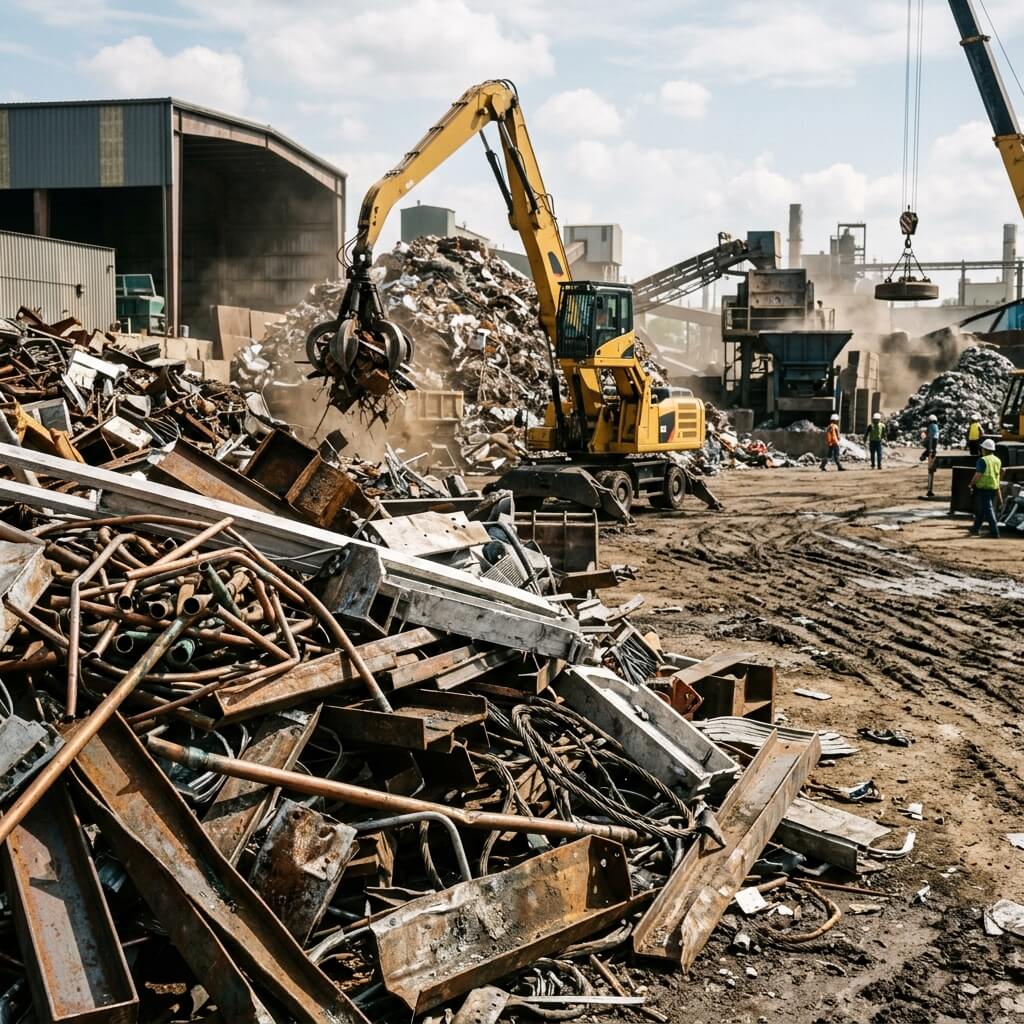
Most industries generate large volumes of waste materials daily, yet a significant portion of this scrap still holds real economic value. Without structured systems, companies lose revenue through inefficient disposal, poor segregation, and lack of market access. This is where scrap management industries play a crucial role in transforming waste into a structured recycling and revenue ecosystem.
From manufacturing plants and construction sites to automotive and e-waste sectors, scrap is now treated as a recoverable asset rather than waste. Modern scrap management industries use organized workflows, digital platforms, and recycling networks to maximize material recovery and minimize environmental impact.
What Are Scrap Management Industries?
Scrap management industries are sectors that generate, process, recycle, or trade scrap materials as part of their operational cycle. These industries focus on converting waste into reusable raw materials or resale value through structured systems.
Core Objectives:
- Efficient scrap collection and segregation
- Maximizing material recovery value
- Reducing landfill and disposal costs
- Supporting circular economy practices
- Ensuring environmental compliance
These systems are essential for industries that deal with large-scale production or material usage.
Manufacturing Industry Scrap Management
Manufacturing is one of the largest contributors to industrial scrap generation.
Common Scrap Materials:
- Steel and aluminum offcuts
- Copper wiring and shavings
- Machine rejects and defective parts
- Packaging waste
Why It Matters:
Manufacturing scrap is continuous and high-volume, making it a stable source of recycling revenue.
Example:
Automotive manufacturing plants recycle metal shavings directly back into production cycles, reducing raw material costs.
Construction Industry Scrap Management
Construction generates heavy and high-value scrap during infrastructure development.
Common Scrap Materials:
- Structural steel beams
- Copper wiring and pipes
- Aluminum frames
- Concrete debris
Key Advantage:
Large-scale scrap recovery significantly reduces disposal and transportation costs on project sites.
Example:
Demolition projects often recover steel and copper worth thousands in resale value.
Automotive Industry Scrap Management
Automotive industry scrap management focuses on recovering high-value materials generated across vehicle production, maintenance, and end-of-life processing. Because vehicles are built with a high concentration of metals and engineered components, the sector plays a major role in global recycling and circular economy systems.
Scrap Sources
The automotive sector generates scrap from multiple stages of the vehicle lifecycle, including:
- End-of-life vehicles (ELVs): Decommissioned cars and trucks dismantled for recyclable parts
- Engine components: Gear systems, blocks, and transmission parts containing steel and aluminium
- Body panels and frames: Steel and aluminium structures from vehicle exteriors
- Batteries and electrical systems: Lead-acid and lithium-ion batteries, wiring harnesses, and electronic modules
These materials require structured dismantling and sorting to maximize recovery value and ensure safe handling, especially for battery systems.
Key Advantage
A major advantage of automotive scrap management is the reintegration of recovered metals back into manufacturing supply chains. Steel, aluminum, and copper extracted from vehicles are reused in new automotive production, reducing reliance on virgin raw materials and lowering overall production costs. This supports both sustainability targets and long-term resource efficiency across the industry.
Electronics & E-Waste Industry Scrap Management
E-waste is one of the fastest-growing and most valuable scrap categories.
Common Scrap Materials:
- Circuit boards
- CPUs and semiconductors
- Cables and connectors
- Old laptops, servers, and devices
Packaging & FMCG Scrap Management
- Fast-moving consumer goods industries generate large volumes of recyclable packaging waste.
Common Scrap Materials:
- Plastic packaging
- Cardboard and paper waste
- Shrink wraps and films
- Pallets and crates
Scrap Value Comparison Across Industries
Industry Scrap Type Value Potential Frequency Manufacturing Metal scrap High Continuous Construction Steel, copper High Project-based Automotive Vehicle scrap Very High Lifecycle Electronics (E-waste) Precious metals Very High Rapid growth FMCG/Packaging Plastic, paper Medium Daily
How Scrap Management Industries Operate
Scrap management industries operate through a structured lifecycle that converts waste materials into reusable resources or marketable commodities. This system ensures efficiency in material recovery, pricing transparency, and environmental compliance across industrial supply chains.
Step 1: Scrap Generation
Scrap is generated during manufacturing, construction, demolition, automotive use, or general consumption cycles. This includes leftover materials, defective products, and end-of-life assets that still hold recyclable value.
Step 2: Collection & Segregation
Collected scrap is sorted at source or centralized facilities into categories such as metal, plastic, paper, and e-waste. Proper segregation improves recycling efficiency and increases resale value by reducing contamination.
Step 3: Storage & Handling
After sorting, scrap materials are stored in designated areas under controlled conditions. This prevents rusting, degradation, and mixing of different material types, ensuring higher quality output during processing.
Step 4: Weighing & Valuation
Scrap is weighed using industrial scales and evaluated based on material type, purity, and current market demand. Pricing is determined by commodity rates, quality grade, and regional scrap market conditions.
Step 5: Recycling or Resale
In the final stage, scrap is either sold to certified recyclers or processed into reusable raw materials. Metals may be melted and refined, plastics reprocessed, and e-waste dismantled to extract valuable components, completing the circular resource loop.
Scrap Pricing in Industrial Management
Scrap value depends on global commodity rates, purity, and demand.
Indicative Scrap Pricing Table (AUD/kg)
| Material Type | Price Range | Notes |
|---|---|---|
| Copper Scrap | 8 – 12 | High conductivity metal |
| Aluminum Scrap | 1.5 – 3 | Lightweight recyclable |
| Steel Scrap | 0.2 – 0.6 | Bulk industrial waste |
| E-waste | 2 – 10 | Depends on components |
Benefits of Scrap Management Industries
Scrap management industries deliver measurable value by converting industrial waste into recoverable resources while improving operational efficiency and sustainability performance.
Revenue Generation
Scrap management transforms waste materials into a consistent income stream. Metals, plastics, and e-waste can be sold to recyclers or reprocessed, creating recurring revenue opportunities for businesses across manufacturing, construction, and automotive sectors.
Cost Efficiency
Effective scrap handling reduces expenses related to waste disposal, transportation, and landfill usage. By minimizing unnecessary waste handling, companies can significantly lower operational overheads.
Environmental Sustainability
Recycling and recovery processes reduce dependency on virgin raw materials and lower overall carbon emissions. This supports circular economy practices and helps industries reduce their environmental impact.
Operational Optimization
Structured scrap tracking and segregation improve internal workflow efficiency. Businesses gain better visibility over waste generation patterns, enabling smarter resource planning and reduced material loss.
Compliance Assurance
Scrap management systems help industries comply with environmental regulations and waste disposal laws. Proper documentation and recycling practices reduce the risk of penalties while improving corporate sustainability reporting.
FAQs
1. What are scrap management industries?
Scrap management industries are sectors that generate, process, and recycle waste materials such as metal, plastic, and e-waste. They focus on recovering value from scrap and reducing environmental impact through structured recycling systems.
2. Which industries produce the most scrap?
Manufacturing, construction, automotive, and electronics industries produce the highest scrap volumes. These sectors generate continuous or high-value recyclable materials like metal, plastic, and electronic waste.
3. Why is scrap management important for industries?
It reduces waste disposal costs, increases revenue through scrap sales, and improves environmental compliance. It also supports sustainable production practices and circular economy models.
4. How is industrial scrap sold?
Industrial scrap is sold through scrap dealers, recyclers, or digital platforms. Many companies now use online scrap systems for transparent pricing and efficient logistics.
5. What is the future of scrap management industries?
The future is digital, with AI-based pricing, automated tracking systems, and integrated recycling networks improving efficiency, profitability, and sustainability.
Conclusion
Scrap management industries are essential for turning industrial waste into valuable resources. From manufacturing to electronics, every sector benefits from structured scrap collection, pricing transparency, and recycling systems.
As industries adopt digital platforms and automation, scrap management will become more efficient, profitable, and environmentally sustainable. Businesses that implement modern scrap strategies will gain both financial and operational advantages.