
Market Analysis and Operational Guide to Selling Scrap Materials via the ScrapTrade Digital Platform
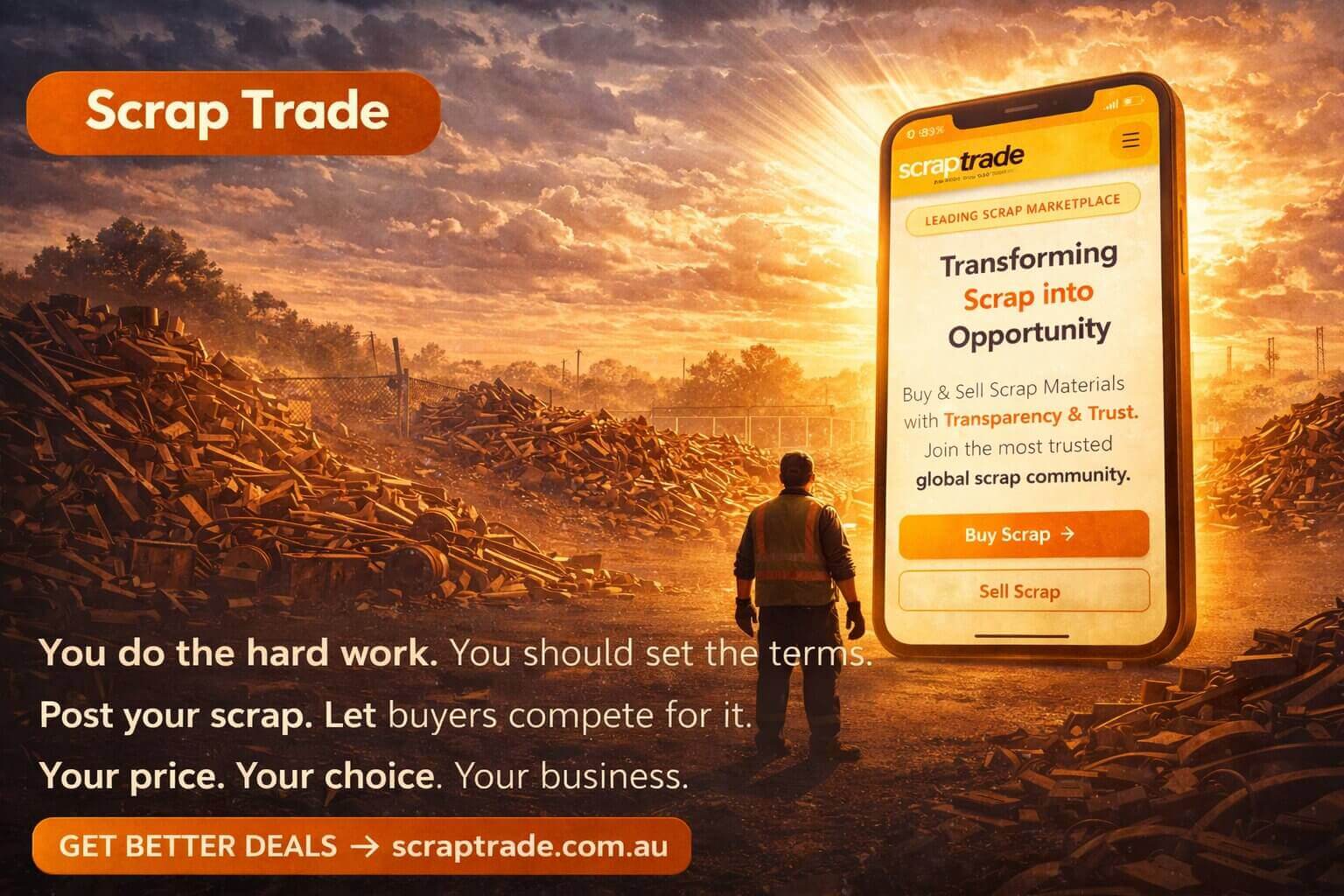
The global secondary materials market is undergoing a profound structural realignment driven by high commodity volatility, tightening environmental laws, and the fast-paced digitization of industrial commerce. Historically, trading scrap metal and industrial recyclables was a highly fragmented, localized, and opaque endeavor. Sellers routinely experienced suppressed valuations due to asymmetric information, localized monopolies, and hidden broker margins. The emergence of digital marketplaces like ScrapTrade has fundamentally modernized this ecosystem. Operated by Mobeius Technologies Pty Ltd (ABN: 49 693 656 932), ScrapTrade functions as a global, compliance-driven digital marketplace built to eliminate intermediaries, directly connecting verified sellers with industrial buyers. The platform expands the trade of scrap beyond localized postcodes into a highly liquid, data-driven, and traceably secure market.
To capture diverse segments of the market, ScrapTrade operates several specialized platforms under its digital umbrella. For general recyclable materials, the core portal scraptrade.com.au and its counterpart sellscrap.com.au link domestic sellers with commercial recyclers and exporters across major Australian cities including Sydney, Melbourne, Brisbane, Perth, and Adelaide. Simultaneously, specialized channels like sellmetalscrap.com provide dedicated workflows for high-volume metal merchants and industrial fabricators to negotiate directly with global smelters and foundries without incurring broker commission deductions. This comprehensive digital architecture enables scrap-producing entities to treat secondary materials not as operational waste, but as strategic financial assets.
The Seller Liquidation and Transactional Workflow
The liquidation process on ScrapTrade is designed as a direct, structured workflow that ensures payment security and regulatory compliance. Sellers can list materials and receive competitive offers by completing a series of sequential operational steps:
To begin trading, sellers are required to register a business profile and complete a mandatory identity verification process. This onboarding stage requires the submission of an Australian Business Number (ABN), corporate registration, contact details, and any applicable environmental or recycling licenses. ScrapTrade's Know Your Customer (KYC) protocol evaluates each application, activating the seller profile within twenty-four hours to maintain a verified, high-trust marketplace free of scrapers or fraudulent entities. Once verified, sellers may schedule a dedicated onboarding call with platform technicians to optimize their profile or connect existing enterprise resources to the platform's bulk listing manager.
The creation of a listing involves uploading material photographs and inputting standardized data, including exact material grades, estimated quantity, physical location, and target pricing. To maximize visibility, the platform offers integrated artificial intelligence tools that automatically suggest precise material grades and real-time pricing benchmarks based on current international market conditions. Once published, the listing is broadcast to verified buyers. Sellers can communicate with interested parties using an in-platform messaging system to negotiate price tolerances, transport terms, and physical inspections without the interference of a third-party broker.
When an agreement is finalized, the platform provides flexible shipping options to streamline bulk transit. Sellers can coordinate self-managed transport, leverage ScrapTrade's integrated shipping and freight partnerships for automated shipping quotes, or choose buyer-managed yard pickup. Payment security is maintained through a secure escrow system. Before shipping begins, the buyer's payment is secured in an escrow account. Once the material is delivered and the buyer verifies the weight and grade on-site, the escrow system automatically releases the funds to the seller. This mechanism protects sellers from delayed payments and eliminates payment collection risks.
Structured Market Valuations and Live Pricing Benchmarks
A significant challenge in traditional scrap metal commerce is the lack of standardized pricing, which often leads to local yards offering below-market rates. ScrapTrade addresses this issue by integrating a live market pricing dashboard directly into the seller workspace. Physical scrap prices fluctuate in correlation with primary international commodity indices, including the London Metal Exchange (LME) and COMEX, adjusted for local supply, transportation costs, and regional legislative fees. Non-ferrous scrap, such as copper, brass, and aluminium, commands a premium over ferrous metals, though ferrous scrap remains the primary driver of bulk industrial recycling volumes.
To assist sellers in timing their liquidations, the platform tracks real-time spot rates and regional averages. The following data details the standardized pricing benchmarks and indicative ranges for various recyclable commodities:
| Commodity | Typical Grade / Specification | Indicative Price (Tonne) | Indicative Price (kg) | Market Trend / Status |
|---|---|---|---|---|
| Copper | Mixed Grade / Berry & Candy | $9,240 / tonne | $8.80 – $9.40 / kg | Upward (+2.4%) |
| Aluminium | 6061, UBC, Extrusions | $2,680 / tonne | $3.55 / kg | Upward (+1.1%) |
| Brass | Clean Fittings / Mixed Honey | $6,890 / tonne | $9.67 / kg | Upward (+3.2%) |
| Steel & Iron | Heavy Melting Steel (HMS) | $520 / tonne | $0.28 – $0.38 / kg | Downward (-0.8%) |
| Lead | Clean Pipe & Cable | $2,090 / tonne | $0.50 – $1.20 / kg | Upward (+0.5%) |
| E-Waste | Mixed Printed Circuit Boards | Premium Bids | $1.60 – $1.95 / kg | High Volatility |
These benchmark values illustrate the commercial advantage of utilizing transparent digital trading. Sellers can leverage these transparent figures to counter buyer bids with confidence, ensuring they do not undersell their materials.
Advanced Features and Marketing Capabilities for Large-Scale Sellers
For commercial scrap yards, metal recyclers, and large manufacturing firms, ScrapTrade provides advanced tools that go beyond simple listing directories. The platform functions as an Account-Based Marketing (ABM) engine designed to optimize high-volume scrap liquidation. These business-to-business (B2B) features allow enterprise sellers to track buy-side behaviors and capture transactional intent before making contact.
A core component of these advanced features is the collection of buyer intent signals. Sellers can access real-time search logs, tracking which metals and grades buyers are actively looking for, how often they return to specific listings, and what price thresholds trigger their interest. This behavioral tracking captures the complete B2B decision-making process across the industrial supply chain. By analyzing multi-site behavior logs, a demolition contractor or recycler can identify buyers operating across multiple project locations, allowing them to segment and target repeating high-volume accounts.
Furthermore, the platform's reverse auction database allows sellers to distinguish between price-sensitive buyers and urgency-driven purchasers. Sellers can also utilize programmatic campaign hooks to retarget prospects off-platform through customized digital advertisements or direct email campaigns. For larger enterprises looking to maintain their own brand identity, ScrapTrade offers white-label data integrations and co-branded marketing campaigns. This allows organizations to merge the platform's buyer intent engine directly into their existing enterprise resource planning (ERP) systems.
This advanced infrastructure supports the dual-sided trading model, which utilizes automated systems to optimize traditional transaction processes. Under this framework, reverse selling and reverse buying operate as parallel market mechanisms:
| Trading Model | Primary Mechanism | Strategic Advantage for Sellers |
|---|---|---|
| Reverse Selling | Sellers proactively send target offers directly to high-intent buyers based on search logs. | Increases inventory turnover and speeds up the liquidation of excess stock. |
| Reverse Buying | Industrial buyers post custom requirements, and verified sellers place bids to fulfill them. | Eliminates cold-calling and aligns supply with verified, immediate buyer demand. |
Regional Regulatory Landscapes and Compliance Obligations
Trading scrap materials is heavily regulated by state and federal laws designed to curb metal theft, prevent the laundering of stolen vehicles, and maintain clear tax records. Sellers operating on ScrapTrade must navigate varying regional policies regarding identity verification and payment methods. Failing to comply with these state-level laws can result in severe financial penalties, operational shutdowns, and legal prosecution.
The regulatory environment across Australia is defined by a consistent push toward digital traceability, though distinct statutory differences exist between states. In Victoria, New South Wales, and Western Australia, cash payments for scrap metal are strictly banned under second-hand dealer acts, requiring all settlements to be executed via traceable bank transfers or cheques.
In Queensland, the legislative path has historically taken a different approach. Under the Waste Reduction and Recycling Act 2011 and the Second-hand Dealers and Pawnbrokers Act 2003, the state initially focused on high-penalty structures and strict identity checks rather than an outright cash ban, attempting to support legitimate small businesses while targeting illegal operators. However, subsequent government reviews and parliamentary recommendations have moved Queensland toward adopting the cashless model used in neighboring states, banning cash and cryptocurrency transactions to prevent illegal trade.
The following comparison matrix outlines the state-level compliance mandates that sellers must adhere to when executing trades:
| State / Territory | Governing Legislation | Cash Payment Status | Mandatory Documentation & ID | Record Auditing Requirements |
|---|---|---|---|---|
| Victoria | Second-Hand Dealers and Pawnbrokers Act 1989 | Prohibited (Bank transfer or non-transferable cheque only) | Valid photo ID (License/Passport), proof of residence, vehicle registration, receipt | Transactions logged; records kept for police audit; penalties up to 200 penalty units |
| New South Wales | Scrap Metal Industry Act 2016 | Prohibited (Electronic transfer or cheque only) | Current government photo ID, exact material description, vehicle plate number | Mandatory transaction logging uploaded directly to the NSW Police SHDP portal |
| Queensland | Waste Reduction and Recycling Act 2011 | Prohibited (Recent transition to cashless; crypto banned) | Valid photo ID, ABN for commercial entities, vehicle weight details | Transaction records must be stored and available for inspection for a minimum of 5 years |
| Western Australia | Criminal Code Amendment (Metal Theft) Act 2011 | Prohibited (Strict cashless enforcement) | Government-issued photo ID, traceable transaction records, vehicle transport logs | Subject to regular unannounced WA Police inspections of dealer records |
| South Australia | Second-Hand Vehicle Dealers Act 1995 & associated regulations | Prohibited (EFT settlement mandatory) | Full personal details, photographic ID, precise item descriptions | Logged second-hand vehicle parts and processing weights must be recorded |
By managing transactions through ScrapTrade's digital workflow, sellers automate compliance by generating digital receipts, capturing KYC-verified buyer profiles, and ensuring payments are processed electronically. This digital record-keeping protects compliant businesses from audit failures and operational penalties.
Commercial Access and Subscription Architectures
To accommodate various trading volumes, ScrapTrade utilizes a tiered subscription software-as-a-service (SaaS) pricing model. This structure allows independent renovators, commercial scrap yards, and industrial manufacturing plants to select a plan tailored to their listing and analytics requirements. The subscription plans are organized into three primary operational tiers:
| Subscription Plan | Cost (Monthly) | Listing Capacity | Included Features & Analytics | Target User Profile |
|---|---|---|---|---|
| Free Tier | $0 | Up to 5 listings per month | Basic platform messaging, community-driven support, live market prices | Households, tradespeople, and small-scale renovators |
| Pro Tier | $49 | Unlimited listings | Priority placement, advanced analytics, escrow protection, dedicated support, API access | Commercial scrap yards, demolition firms, and metal recyclers |
| Enterprise Tier | Custom Quote | Unlimited / Bulk upload | White-label integrations, custom volume discounts, dedicated account manager, SLA guarantee | Foundries, mining firms, government contractors, and heavy manufacturers |
This commercial structure allows organizations to scale their scrap trading operations. Small businesses can utilize the Free Tier to liquidate occasional material accumulations, while high-volume metal merchants can leverage the Pro or Enterprise Tiers to access advanced search placement and bulk listing tools.
Environmental Benefits and Strategic Industry Outlook
The transition of the scrap trading industry to digital B2B platforms is closely tied to corporate environmental, social, and governance (ESG) goals. As businesses face pressure to demonstrate circular material sourcing and reduce Scope 3 greenhouse gas emissions, scrap is increasingly viewed as a key resource for green manufacturing. Utilizing recycled materials requires significantly less energy than refining primary ores. For example, recycling steel reduces energy consumption by 75% compared to manufacturing from virgin ore, while secondary aluminium processing saves up to 95% of the energy required for primary smelting.
ScrapTrade helps industries meet these sustainability objectives by tracking transaction details and providing traceable shipping logs. The platform automatically records the origin, material specifications, and transport path of each transaction. This compliance data is easily exportable, allowing manufacturing plants and foundries to include verified scrap sourcing in their annual ESG and tax reports.
Furthermore, regional regulations and rising landfill fees are driving businesses to adopt circular supply chains. In major construction markets, disposal fees for non-diverted waste have made landfilling scrap materials economically unviable. By listing demolition and site clearance materials directly on digital platforms, construction firms can convert waste management expenses into a revenue stream. The integration of real-time market data, digital payment solutions, and strict verification protocols positions ScrapTrade as a key driver of modern recycling commerce, helping industries build more resilient and sustainable supply chains.