

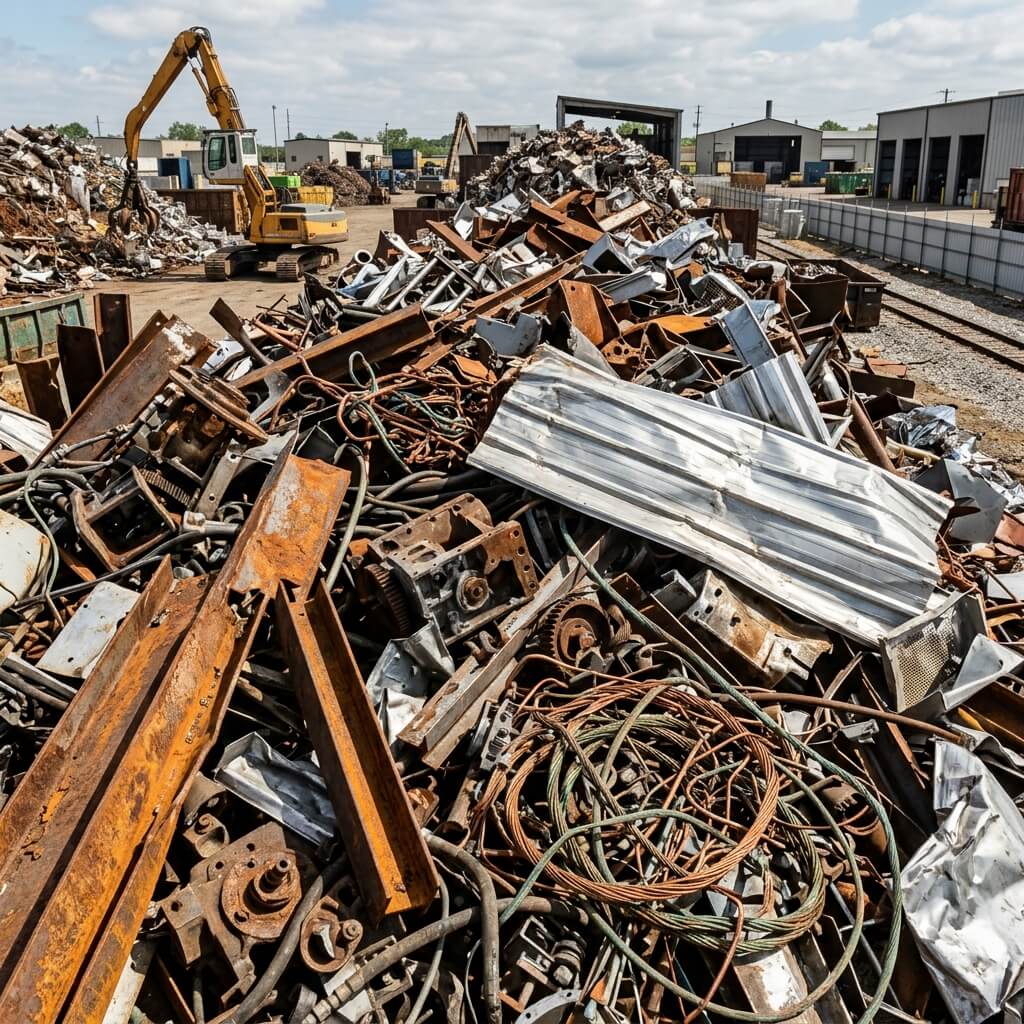
The Australian scrap metal trade is a highly structured supply chain that moves metal from small local collection points through processing facilities and ultimately into domestic manufacturing or global export markets. Although many users search for terms like “scrap trade online” or “scrap metal traders,” the underlying system is more complex than simple buying and selling.
In reality, scrap metal pricing and movement are shaped by logistics, grading standards, commodity markets, and international demand. From household cleanouts and demolition sites to large industrial suppliers, every stage of the supply chain contributes to final pricing and material flow.
Overview of the Scrap Metal Trade in Australia
What Is the Scrap Trade Industry?
The scrap metal trade industry in Australia refers to the commercial system that collects, processes, trades, and recycles used metal materials into reusable raw resources. It forms a key part of the broader circular economy by keeping valuable metals in circulation instead of sending them to landfill.
The industry typically involves two main categories of materials: ferrous metals such as steel and iron, and non-ferrous metals including copper, aluminium, brass, and stainless steel. Each category has different pricing structures, processing requirements, and demand levels.
In practice, the scrap trade acts as a bridge between waste generation and industrial reuse, supplying raw material for construction, manufacturing, and export markets.
Why Australia Is a Key Scrap Export Market
Australia plays a significant role in the global scrap metal supply chain due to its strong industrial base and established recycling infrastructure.
Key reasons include:
- A large mining and industrial sector that generates consistent scrap volumes
- High recycling compliance standards that ensure material quality and traceability
- Strong export demand from Asia, where recycled metals are heavily used in manufacturing and infrastructure development
Scrap Metal Collection Process in Australia
Sources of Scrap Metal
Scrap metal in Australia originates from multiple industrial, commercial, and residential streams, creating a continuous supply for the recycling industry.
Common sources include construction and demolition sites, where structural steel, reinforcing bars, and mixed metal components are recovered during building activity. Automotive recycling yards also contribute significant volumes through end-of-life vehicles that contain steel, aluminium, copper wiring, and various alloys. Manufacturing facilities generate consistent scrap through production offcuts and machinery maintenance waste. Household scrap collection, including appliances, wiring, and renovation debris, adds smaller but steady volumes to the overall supply chain.
These combined sources ensure a stable flow of recyclable metals into the Australian scrap trade system.
Collection Methods
Scrap metal is collected through several established channels depending on volume, material type, and supplier profile.
Local scrap yards act as primary aggregation points where individuals and small businesses deliver materials directly. Mobile pickup services are commonly used for larger household or commercial loads, allowing buyers to collect scrap from the source. Industrial bulk collection contracts are typically arranged with manufacturers, demolition companies, and construction firms that generate high-volume, ongoing scrap streams.
Processing and Grading of Scrap Metal
Why Processing Is Necessary
Processing is a critical step in the Australian scrap metal trade because raw collected material cannot be efficiently reused or exported in its initial state. Refinement improves the overall quality and commercial value of scrap by removing impurities and standardising material composition.
Key reasons processing is required include improving material purity, increasing export value, and reducing smelting costs for downstream manufacturers. Clean, well-processed scrap requires less energy during remelting, which makes it more attractive to both domestic steel mills and international buyers.
| Grade | Description | Value Impact |
|---|---|---|
| Heavy steel scrap | Thick industrial steel from demolition and machinery | High |
| Light scrap | Mixed household and commercial metal waste | Medium |
| Non-ferrous metals | Copper, aluminium, brass, stainless steel | Very High |
Non-ferrous metals consistently achieve the highest value due to stronger industrial demand and higher refining efficiency.
Processing Stages
Once collected and initially sorted, scrap metal undergoes several industrial processing stages to prepare it for resale or export.
The material is first shredded or crushed to reduce size and improve handling efficiency. Magnetic separation is then used to isolate ferrous metals from non-ferrous materials. Finally, the processed scrap is baled or compacted into dense bundles to reduce transport costs and improve logistics efficiency.
Domestic Scrap Metal Market in Australia
Role of Local Scrap Metal Traders
Local scrap metal traders form the backbone of Australia’s domestic recycling ecosystem by acting as intermediaries between suppliers and end users. They are responsible for price discovery, constantly adjusting buying rates based on real-time supply conditions and global benchmark movements.
These traders also facilitate yard-to-yard trading, where material is redistributed between different scrap yards depending on demand, processing capacity, and export opportunities. In addition, they handle industrial procurement, sourcing large volumes directly from construction firms, manufacturers, and demolition projects.
Domestic Steel Mills and Consumers
Domestic steel mills and industrial consumers play a major role in absorbing processed scrap metal within Australia. Steel manufacturers use scrap as a primary feedstock in electric arc furnaces to produce new steel products, reducing reliance on virgin iron ore.
Foundries and recycling plants also consume scrap metal to produce cast components and refined metal products used in construction, automotive manufacturing, and infrastructure development.
Pricing Mechanism in Local Market
Scrap metal pricing in the Australian domestic market is closely linked to global commodity benchmarks, particularly iron ore and steel indices. However, local prices are not fixed and are continuously adjusted based on regional operating conditions.
Key adjustments include transportation costs, which vary significantly between metropolitan and regional areas, and processing costs, which depend on contamination levels, sorting efficiency, and material grade. Market competition between buyers also plays a role in determining final purchase rates.
Scrap Metal Export Process from Australia
Why Scrap Is Exported
Australia exports a significant portion of its scrap metal due to structural and economic advantages in global trade flows.
Key reasons include higher demand overseas, particularly in fast-growing manufacturing economies that rely on recycled metals for production. Limited domestic processing capacity also means not all collected scrap can be refined locally at scale. In addition, price arbitrage opportunities exist when international buyers offer higher returns compared to domestic mills or recyclers.
Key Export Destinations
Australian scrap metal is primarily shipped to major industrial and manufacturing hubs across Asia, where demand for recycled metals is consistently strong.
Key destinations include China, India, Southeast Asia, and South Korea. These regions use imported scrap extensively in steel production, automotive manufacturing, electronics, and infrastructure development.
Export Logistics Chain
The export process follows a structured logistics pathway designed to move large volumes of processed scrap efficiently from domestic facilities to international buyers.
Scrap is first transported in bulk to major Australian ports, where it is consolidated and prepared for shipment. It is then containerized or loaded as bulk cargo depending on material type and export requirements. Finally, shipments undergo customs clearance, documentation checks, and international shipping before reaching overseas processing facilities..
Role of Scrap Metal Brokers and Traders
Who Are Scrap Metal Brokers?
Scrap metal brokers act as intermediaries in the recycling supply chain, connecting material suppliers with end buyers such as processors, mills, and exporters. Their primary role is to facilitate transactions, negotiate pricing based on market conditions, and coordinate logistics for efficient material movement.
By leveraging market knowledge and buyer networks, brokers help ensure that scrap metal is allocated to the highest-value processing or export channel available at any given time.
In many cases, brokers improve pricing efficiency by bridging gaps between fragmented suppliers and large-scale industrial buyers.
How Scrap Trading Platforms Work
Modern scrap trading platforms have digitised much of the traditional brokerage process by directly matching buyers and sellers in real time.
These systems provide dynamic price visibility, allowing participants to view current market rates and adjust offers accordingly. They also support contract facilitation, enabling structured agreements for bulk supply, recurring deliveries, or spot transactions.
Importance of Online Scrap Trading
Online scrap trading has significantly improved efficiency and transparency within the Australian scrap metal industry.
Faster transactions are achieved through automated matching and digital communication channels. Businesses also gain better market access, allowing smaller suppliers to reach larger buyers that were previously difficult to engage. In addition, transparent pricing helps reduce information asymmetry, leading to more competitive and fair market outcomes.
How Scrap Metal Prices Are Determined in the Trade Chain
Global Commodity Influence
Scrap metal prices are anchored to global benchmarks such as LME pricing and steel futures. Iron ore trends and international demand shifts also influence baseline pricing across copper, aluminium, and steel markets.
Local Cost Adjustments
Australian scrap prices are adjusted for transport distances, processing costs, and export-related expenses. These factors create regional price differences across the supply chain.
Quality and Grade Impact
Clean, well-sorted scrap achieves higher prices, while contaminated or mixed loads reduce value. Non-ferrous metals like copper and aluminium consistently outperform ferrous scrap in pricing.
Challenges in the Australian Scrap Trade Industry
Price Volatility
The scrap metal trade is highly sensitive to global market movements, making pricing unpredictable over short periods. Changes in international demand, commodity cycles, and currency exchange rates can quickly impact scrap values across Australia.
This volatility creates uncertainty for both buyers and sellers when planning transactions or contracts.
Logistics and Transport Issues
Logistics remains one of the biggest operational challenges in the industry. Rising freight costs directly affect profit margins, especially for regional suppliers who must transport materials to major processing hubs or ports.
Port congestion can also delay exports, creating bottlenecks in the supply chain and affecting cash flow for traders and exporters.
Regulatory Compliance
The scrap metal industry operates under strict environmental and export regulations. Businesses must comply with licensing requirements, environmental standards, and detailed export documentation processes.
Future of Scrap Metal Trade in Australia
Digital Transformation of Scrap Trading
The industry is shifting toward online platforms and AI-driven pricing tools, replacing traditional broker-heavy systems with faster, more transparent digital trade networks.
Sustainability and Circular Economy Growth
Stronger recycling targets and green manufacturing incentives are increasing demand for recycled metals as part of Australia’s circular economy transition.
Rising Global Demand for Recycled Metals
Global infrastructure growth and EV manufacturing are boosting long-term demand for copper, aluminium, and steel, supporting stronger scrap trade conditions.
FAQs
How does the scrap metal trade work in Australia?
The scrap metal trade in Australia works through a structured supply chain that collects, processes, and redistributes metal waste. Materials are sorted by type and grade, then sold to domestic mills or exported internationally based on global commodity prices and demand conditions.
Who are the main players in the scrap metal industry?
The industry includes a wide network of participants such as scrap collectors, yard operators, brokers, processing facilities, steel mills, and export logistics companies. Each plays a specific role in moving material from collection to final reuse.
Why is scrap metal exported instead of used locally?
Scrap metal is exported when overseas markets offer higher prices or when domestic processing capacity is insufficient. Exporting allows traders to maximise value while balancing supply and demand across global markets.
What factors affect scrap metal prices in Australia?
Prices are influenced by global commodity benchmarks, metal quality and grade, transport and logistics costs, currency exchange rates, and overall industrial demand from construction and manufacturing sectors.
Is online scrap trading replacing traditional scrap dealers?
Online scrap trading platforms are not fully replacing traditional dealers but are significantly reshaping the industry. They improve pricing transparency, speed up transactions, and directly connect buyers and sellers, making the market more efficient and competitive.
Conclusion
The scrap metal trade in Australia operates as a structured, multi-stage system that moves material from collection points through processing, grading, domestic trading, and finally into export markets. Each stage adds measurable value by improving material quality, reducing impurities, and aligning supply with industrial demand.
Final pricing is shaped by the interaction between local logistics, processing efficiency, and global commodity benchmarks, making the industry highly dynamic and responsive to both domestic and international conditions.