
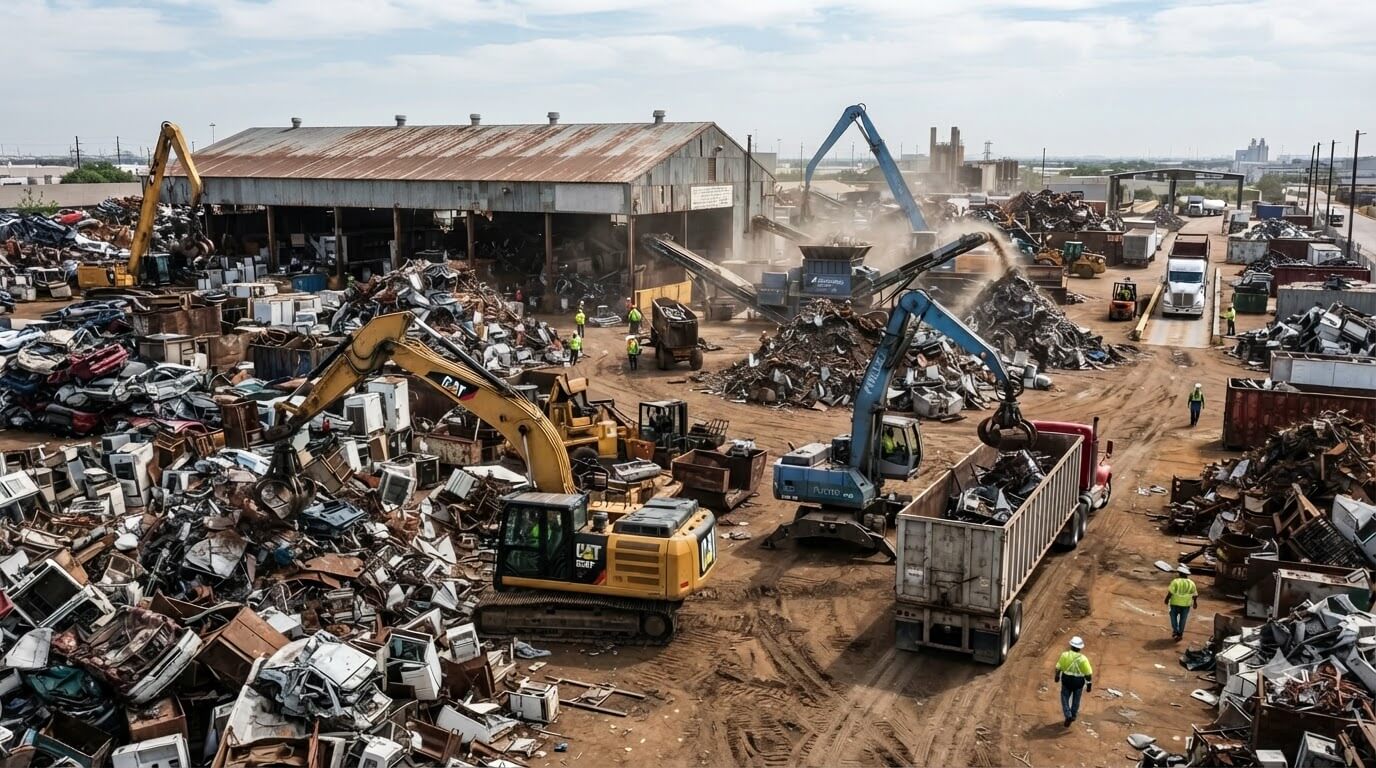
What Is an Industrial Scrap Metal Yard?
An industrial scrap metal yard is a recycling and purchasing facility designed to handle large quantities of metal and industrial materials generated by businesses. These facilities typically have the equipment, storage capacity, weighing systems, and processing capabilities needed to manage bulk scrap efficiently.
Understanding Industrial Scrap Yards
Industrial scrap yards differ from standard scrap yards mainly in their ability to handle higher volumes and heavier materials. They may manage materials such as structural steel, machinery, production offcuts, copper, aluminium, brass, and industrial equipment.
Industrial yards commonly provide:
- Large-capacity storage and handling areas for bulk scrap
- Industrial weighing and material classification systems
- Sorting, cutting, shredding, baling, and other processing capabilities
- Collection and transportation services for commercial and industrial customers
These capabilities allow businesses to move large quantities of scrap into the recycling supply chain more efficiently.
Who Uses Industrial Scrap Metal Yards?
Industrial scrap yards are commonly used by businesses that generate regular or high-volume scrap, including:
- Manufacturing plants with production waste and metal offcuts
- Factories replacing machinery, equipment, or components
- Construction companies handling structural and demolition scrap
- Engineering businesses generating fabrication and machining scrap
- Warehouses managing obsolete equipment and metal inventory
- Automotive manufacturers producing metal production scrap and components
- Demolition contractors handling large volumes of recoverable metals
Types of Industrial Scrap Metal Accepted
Industrial scrap metal yards handle a broad range of materials generated by factories, manufacturing plants, engineering facilities, construction projects, and other industrial operations. Accepted materials vary by yard, but bulk ferrous, non-ferrous, production, and equipment scrap are commonly handled.
Ferrous Industrial Scrap
Ferrous scrap contains iron and is commonly generated during construction, manufacturing, fabrication, and demolition. Typical materials include steel, iron, HMS, structural steel, and cast iron. These materials are usually sorted by grade and prepared for further processing.
Non-Ferrous Industrial Scrap
Non-ferrous metals are widely used in electrical, engineering, construction, automotive, and manufacturing applications. Common industrial scrap includes copper, aluminium, brass, stainless steel, zinc, and lead. Separating these metals by type and grade can make valuation and processing more efficient.
Industrial Production Scrap
Manufacturing and fabrication processes generate various forms of production scrap, including metal offcuts, CNC machining scrap, metal turnings, fabrication waste, and sheet and plate scrap. Keeping different grades and alloys separated can help businesses avoid unnecessary value loss.
Industrial Equipment Scrap
Industrial facilities may also generate scrap from obsolete or damaged machinery, motors, factory equipment, and industrial components. These items can contain recoverable metals such as steel, copper, and aluminium. Depending on their condition, some equipment may have reuse value in addition to its scrap-metal value.
How an Industrial Scrap Metal Yard Works
An industrial scrap metal yard manages the movement of large quantities of scrap from collection through processing and recycling. The process helps businesses clear unwanted materials while preparing recyclable metals for processors and manufacturers.
Step 1: Scrap Collection
Industrial scrap can be collected according to the business's volume and operational requirements. Services may include scheduled pickup, bulk collection, on-site containers, and industrial cleanouts. Collection arrangements are usually planned around material quantity, site access, loading requirements, and frequency.
Step 2: Weighing and Inspection
After the scrap reaches the yard, the material is inspected and weighed. Gross and net weight may be recorded to determine the actual quantity being traded. The yard also identifies the material type, grade, condition, and potential contamination before calculating its value.
Step 3: Sorting and Classification
Scrap is separated into ferrous and non-ferrous materials and then classified by specific metal grades. Contaminants and unwanted materials may be removed to improve the quality of the recyclable material and prepare it for further processing.
Step 4: Scrap Processing
Depending on the material, industrial scrap may be cut, shredded, baled, compacted, or mechanically separated. Processing reduces material volume, improves handling efficiency, and prepares scrap for transportation to downstream recycling facilities.
Step 5: Recycling and Resale
Processed scrap is supplied to recyclers, metal processors, and manufacturers. Recovered steel, copper, aluminium, brass, and other metals can re-enter manufacturing and production cycles as secondary raw materials, reducing the need for some virgin resources.
Benefits of Using an Industrial Scrap Metal Yard
Industrial scrap metal yards help factories and businesses manage large volumes of recyclable materials while recovering value from unwanted metal. A suitable yard can also simplify collection, processing, and recycling.
Recover Revenue From Industrial Scrap
Businesses can sell steel, copper, aluminium, brass, machinery, production offcuts, and other recyclable materials instead of treating them as general waste. Proper sorting and grading can help improve the accuracy of scrap valuations.
Reduce Waste Disposal Costs
Recycling suitable metal scrap can reduce the volume of material sent to general waste disposal. This may help businesses lower disposal, handling, and transportation expenses.
Free Up Factory and Warehouse Space
Accumulated scrap can occupy valuable production and storage areas. Regular collection helps remove unwanted materials and creates more usable space for normal business operations.
Improve Scrap Management
Industrial scrap yards can provide structured collection, weighing, sorting, and processing services. Businesses can establish scheduled pickups and maintain better control over recurring scrap streams.
Reduce Environmental Impact
Recycling industrial metals keeps valuable materials in circulation and reduces the need for disposal. Recovering metals such as steel, copper, aluminium, and brass can support more resource-efficient manufacturing.
Simplify Bulk Scrap Handling
Large quantities of heavy scrap can be difficult for businesses to manage independently. Commercial pickup, containers, loading equipment, and bulk transportation can make the removal process more efficient.
Support Circular Manufacturing
Recovered metals can be processed and supplied to manufacturers as secondary raw materials. This helps keep materials within the supply chain and supports circular economy and resource-recovery objectives.
How Businesses Can Get Better Value for Industrial Scrap
Businesses can improve the value recovered from industrial scrap by preparing materials properly, maintaining accurate records, and comparing suitable buyers. These practices can make scrap easier to grade and create stronger opportunities for competitive offers.
Sort Metals at the Source
Separate steel, iron, copper, aluminium, brass, stainless steel, and other metals as soon as scrap is generated. Source-level sorting reduces mixing and makes the material easier for buyers to inspect, classify, and price.
Separate High-Value Non-Ferrous Metals
Keep copper, brass, aluminium, and other valuable non-ferrous metals separate from ferrous scrap. Combining different materials can make accurate grading more difficult and may reduce the value of the overall load.
Keep Scrap Free From Contamination
Remove unnecessary plastic, dirt, insulation, packaging, and other contaminants where it is safe and practical. Clean scrap generally requires less preparation and can make the grading and recycling process more efficient.
Track Scrap Quantities
Record the type, grade, weight, and frequency of scrap generated by each operation or facility. Accurate data helps businesses identify their most valuable scrap streams and negotiate more effectively with industrial buyers.
Monitor Current Market Prices
Scrap metal prices can change due to global metal markets, supply, demand, material quality, and regional conditions. Monitoring current market information gives businesses a useful benchmark when evaluating buyer quotations.
Compare Multiple Industrial Buyers
Request offers from several suitable buyers instead of relying on a single supplier relationship. Compare the complete transaction, including material price, deductions, weighing procedures, transportation costs, pickup services, and payment terms.
Consider Bulk Transactions
When practical, combine compatible materials into larger, well-sorted loads. Bulk quantities can make collection and transportation more efficient and may attract commercial buyers looking for consistent industrial scrap supplies. Businesses can also use online B2B platforms such as ScrapTrade to reach additional potential buyers.
How to Choose an Industrial Scrap Metal Yard
Choosing the right industrial scrap metal yard is important when your business handles large or recurring volumes of scrap. Look beyond the quoted price and evaluate collection, weighing, processing, payment, and buyer reliability.
Check Accepted Industrial Materials
Confirm that the yard accepts your specific materials, grades, and quantities. This is especially important for machinery, production scrap, metal turnings, alloys, mixed loads, and specialized industrial materials.
Compare Scrap Pricing
Request quotations from multiple industrial buyers and compare rates for the same material and grade. Consider deductions, contamination charges, transportation costs, and other fees when calculating the actual value of each offer.
Verify Weighing Procedures
Ask how the scrap will be weighed and how gross, tare, and net weights are calculated. A clear and documented weighing process helps ensure that the final payment accurately reflects the quantity delivered.
Review Pickup and Logistics
For bulk industrial scrap, confirm whether the buyer provides scheduled pickup, containers, loading equipment, or transportation. Check collection areas, minimum quantities, scheduling, and who is responsible for freight costs.
Check Recycling Capabilities
Evaluate whether the yard has suitable equipment for sorting, cutting, shredding, baling, compaction, and material separation. Strong processing capabilities can be particularly important for large or complex industrial scrap loads.
Confirm Payment Terms
Understand how the final price is calculated, when payment is made, and whether deductions apply. For recurring transactions, ask about commercial accounts, invoicing, payment schedules, and transaction documentation.
Common Industrial Scrap Metal Yard Challenges
Industrial scrap metal yards and their business customers can face several challenges when handling large volumes of recyclable materials. Understanding these issues helps businesses plan collection, storage, pricing, and recycling more effectively.
Fluctuating Metal Prices
Scrap values can change with global metal markets, supply and demand, manufacturing activity, and regional conditions. A price available today may not remain the same when a future shipment is collected or delivered.
Mixed Scrap Grades
Industrial facilities often generate different metals and grades at the same time. Mixing steel, copper, aluminium, brass, or different alloys can make identification and valuation more difficult and may affect the final offer.
Contamination
Plastic, insulation, dirt, oil, coatings, and other unwanted materials can reduce scrap quality. Contamination may increase processing requirements and can lead to deductions depending on the buyer and material.
High Transportation Costs
Moving heavy industrial scrap over long distances can be expensive. Fuel costs, loading requirements, distance, equipment, and shipment size can all influence the overall economics of a scrap transaction.
Large Scrap Volumes
Factories and industrial sites may generate tonnes of scrap over short periods. Managing these quantities requires suitable containers, handling equipment, storage areas, transportation, and reliable collection schedules.
Limited Storage Capacity
Accumulated scrap can quickly consume valuable factory or warehouse space. Businesses need efficient collection schedules and dedicated storage areas to prevent scrap from interfering with production, access routes, or normal operations.
FAQs
What is an industrial scrap metal yard?
An industrial scrap metal yard is a recycling and purchasing facility equipped to handle large volumes of metal from factories, manufacturing plants, construction sites, warehouses, and other industrial businesses. It typically provides collection, weighing, sorting, processing, recycling, and scrap purchasing services.
What types of industrial scrap metal can be sold?
Businesses can commonly sell steel, iron, HMS, structural steel, cast iron, copper, aluminium, brass, stainless steel, zinc, lead, metal offcuts, machining scrap, turnings, machinery, motors, and industrial equipment. Accepted materials and grades vary by buyer.
Do industrial scrap yards offer pickup services?
Many industrial scrap yards provide commercial pickup services for bulk and recurring scrap. Options may include scheduled collection, on-site containers, bulk removal, and industrial cleanouts. Availability depends on the material volume, location, site access, and transportation requirements.
How are industrial scrap metal prices calculated?
Prices are generally based on material type, grade, weight, purity, condition, contamination, and current market conditions. Transportation, processing
Conclusion
Industrial scrap metal yards provide practical solutions for factories and businesses handling large quantities of recyclable metal. Proper sorting, grading, clean storage, and accurate quantity records can help businesses improve scrap value and simplify collection.
For bulk transactions, businesses should choose buyers that offer reliable pickup, transparent weighing, clear payment terms, and suitable recycling capabilities. Comparing multiple offers can also improve price discovery.